Explore Cyprus with Our Interactive Map

Explore our top stories and discover ideas worth your time.

Mediterranean hawthorn (Azarole)

Mediterranean hawthorn (Azarole)

Wander almost any rocky hillside or sunlit maquis in Cyprus during a warm spring day, and you may spot a graceful small tree loaded with clusters of snowy-white flowers that seem to glow against the green. Later in the season those flowers give way to plump, golden-orange fruits that look like miniature apples or medlars hanging like little lanterns among the leaves. This is the azarole hawthorn, a quiet treasure of the island’s wild places that has sweetened Cypriot tables and stories for thousands of years. A Rose-Family Gem of the Mediterranean Crataegus azarolus, commonly known as the azarole, Mediterranean hawthorn or Mediterranean medlar, belongs to the vast Rosaceae family the same clan as apples, roses and cherries. In Cyprus it grows as a deciduous shrub or small tree, usually reaching 3–8 metres tall, perfectly at home in the mosaic of maquis and open woodland that covers so much of the island. Roots Deep in Ancient Soil and Texts The azarole has been part of Cyprus’s landscape since long before recorded history. When Dr F. Unger and Dr Th. Kotschy explored the island in 1862, they recorded it (often under the older name Crataegus aronia) as a common shrub whose tasty fruits were gathered and eaten by locals. Even earlier, the great ancient physician Dioscorides described a “second kind of…

Read more
Cypriot Family Meals – Where Belonging Forms

Cypriot Family Meals – Where Belonging Forms

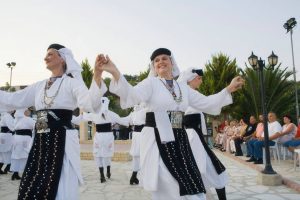
In Cyprus, the family meal functions as a social infrastructure, keeping relationships, hierarchy, and care active through repeated gatherings around shared dishes. Even as work schedules and screens disrupt weekday routines, families maintain the expectation of eating together, especially on Sundays, because the table remains the simplest way to renew belonging across generations. This article explains how meal timing, shared plates, outdoor spaces, and hospitality habits turn eating into one of Cyprus's most durable forms of community life. More Than Nutrition A family meal in Cyprus is never just about nourishment. It functions as a social anchor that brings multiple generations into the same physical and emotional space. Grandparents, parents, children, and extended relatives are not occasional guests at the table; they are expected participants. The act of sitting together reinforces hierarchy, responsibility, and care in a way that daily conversation elsewhere does not. The table becomes a forum where family identity is rehearsed and preserved. Through repetition rather than instruction, younger members learn how respect is shown, how hospitality is practised, and how family roles are understood. A Shared Culture Across a Divided Island Despite the political division of Cyprus, the structure of the family meal remains remarkably consistent across communities. Greek Cypriot and Turkish Cypriot households share the same fundamental approach: food is communal, time is flexible, and…

Read more
Cyprus Big Root Dandelion

Cyprus Big Root Dandelion

Scattered across Cyprus's fields and paths, a sunny yellow flower known as the Cyprus dandelion catches the eye like a little burst of cheer. This humble plant, often mistaken for its common cousins, has roots in ancient remedies and a knack for thriving where others might not. But what makes it stand out in the crowd of dandelions, and why has it been cherished for centuries? Getting to Know This Cheerful Meadow Dweller The Cyprus dandelion, or Taraxacum cyprium, is a wild flowering plant that's part of the vast dandelion family. It's like the familiar backyard weeds we all know, with yellow blooms that turn into fluffy seed balls, but this one has a special Cypriot twist. Locally called "Πικραλίδα" (pikralida), meaning "bitter one," it gets its name from the sharp, tangy taste of its leaves—a flavor that's been both a delight and a medicine for locals. A Story Rooted in Cyprus's Ancient Soils Dandelions have dotted the Mediterranean landscape for millions of years, evolving as the island of Cyprus rose from ancient seas through volcanic and tectonic shifts. Taraxacum cyprium was first described in 1931 by Finnish botanist Harald Lindberg, but its genus name comes from Greek words for "disorder remedy," hinting at how ancient healers in Cyprus and beyond used similar plants for everything from tummy aches to…

Read more