Cyprus Youth Music and Dance Initiatives

Cyprus Youth Music and Dance Initiatives

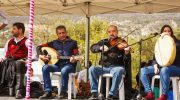
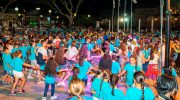
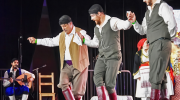
In Cyprus, music and dance often arrive in a young person’s life long before anyone calls them “heritage.” They appear in school assemblies, in family celebrations, and in the easy confidence of a village circle dance that seems to know its own steps. Youth initiatives across the island connect inherited traditions with contemporary expression, shaping identity and confidence while helping the next generation reinterpret culture in a society built at a crossroads. avia-discount A Cultural Education That Starts Early For many children, traditional rhythms and movements are first encountered casually, through school programs, local associations, or community gatherings, where participation matters more than perfection, and the goal is simply to join in. financialmirror-com Two learning paths tend to develop side…

Read more
Antikristos Ballos Cypriot Dances

Antikristos Ballos Cypriot Dances

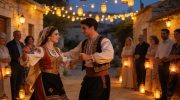
Along the Cypriotшнрлрло coast, some of the island’s most elegant traditions unfold not in grand halls but in village squares, wedding courtyards, and seaside promenades. Antikristos and Ballos are couple dances shaped by restraint rather than spectacle, where movement becomes a quiet dialogue between two people standing face to face. This article explores where these dances come from, how they are performed, why they developed along the coast, and how they continue to live on in modern Cyprus. nazillianlik-com Where Elegance Meets the Sea Cyprus has many folk dances, but coastal communities developed a style distinct from the energetic, high-leaping dances of the Troodos Mountains. In fishing towns and port cities, dance became more measured and composed, shaped by maritime…

Read more
Cypriot Flutes and Reed Pipes

Cypriot Flutes and Reed Pipes

Long before recorded music or concert halls, Cyprus learned to speak through breath and reed. Across mountains, fields, and village squares, flutes and reed pipes carried news, marked rituals, guided dances, and filled long hours of solitude with sound. These instruments were never background decoration. They were tools of daily life, shaping how people worked, celebrated, and understood their place in the world. metmuseum-org This article explores the traditional flutes and reed pipes of Cyprus, focusing on how they were made, who played them, and why their sound still carries meaning today across both Greek Cypriot and Turkish Cypriot communities. Sound Born From the Land Cyprus did not invent its wind instruments in workshops. It grew them. pflanzkompass-at Most traditional…

Read more
Cyprus Folk Dances And Weddings Festivals

Cyprus Folk Dances And Weddings Festivals

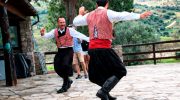
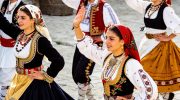
Cyprus folk dances represent living traditions that connect modern Cypriots to Byzantine heritage through choreographed movements, traditional costumes, and communal participation. These dances appear at weddings, religious festivals, harvest celebrations, and family gatherings, serving social functions beyond entertainment by reinforcing community bonds, facilitating courtship under supervision, and displaying cultural identity.  In-Cyprus The basic repertoire includes syrtos and kartzilaumas, performed as paired confrontational dances or circle formations, alongside specialty performances like tatsia where dancers balance wine-filled glasses on sieves, and drepani, the sickle dance demonstrating agricultural skills.  apetcher.wordpress.com Men and women traditionally danced separately, with social conventions restricting female dancing primarily to weddings while men performed at coffee shops, threshing floors, and festivals. The movements emphasize improvisation within communal constraints, with…

Read more
Cypriot Syrtos Island Dance

Cypriot Syrtos Island Dance

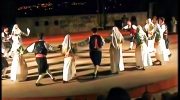
If there is one dance that captures how Cyprus moves, remembers, and gathers, it is the Syrtos. Performed in an open circle, grounded rather than leaping, it has survived centuries of occupation, division, and social change without losing its core rhythm. The Syrtos is not a performance meant to impress from a distance. It is a shared action, designed to include rather than exclude, where the movement matters less than the connection it creates. To understand the Syrtos is to understand how Cypriots express identity without words. A Dance Built on Contact with the Ground The word Syrtos comes from the ancient Greek verb meaning “to drag” or “to pull,” and the name describes the movement precisely. Feet stay close…

Read more
Syrtos of Cyprus

Syrtos of Cyprus

Syrtos of Cyprus (Local Variants) is a restrained, grounded dance form that emphasizes communal movement and continuity, with subtle differences from mainland Greek versions shaped by the island's unique cultural blend. Performed in circles or lines, it features slow, deliberate steps that foster group harmony and emotional expression, often accompanied by laouto and violin. This dance reflects Cyprus's historical crossroads, preserving ancient rhythms while adapting to local traditions, making it a living symbol of the island's resilient spirit. hellenicaworld-com A Timeless Dance Form Syrtos in Cyprus represents a core element of the island's folk dance heritage, a form where participants link hands in a circle or line, moving with measured, flowing steps that prioritize collective rhythm over individual flair. Unlike…

Read more
Pentozali Cyprus Dance

Pentozali Cyprus Dance

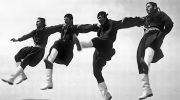
The Pentozali is one of the most powerful dances ever to cross the sea between Crete and Cyprus. Born in the mountains of western Crete as a dance of resistance and endurance, it later became part of Cyprus’s festival life, folk education, and stage tradition. When performed on Cypriot soil today, the Pentozali is not treated as a foreign import, but as a shared expression of strength, memory, and collective identity within the wider Hellenic world. This is not a dance meant to decorate an evening. It is meant to command attention. A Dance Built on Movement, Not Decoration Pentozali belongs to the family of pidichtos dances, a term that refers to leaping, high-impact movement rather than flowing steps. The…

Read more
Sousta (Cypriot Style)

Sousta (Cypriot Style)

Sousta (Cypriot Style) is a dynamic folk dance from Cyprus that emphasizes balance, agility, and gender dialogue, traditionally performed in social gatherings rather than formal stages. Characterized by intricate footwork, playful interactions between partners, and rhythmic accompaniment, it reflects the island's cultural blend of Greek, Ottoman, and local influences. This dance serves as a living expression of community and courtship, preserving ancient movement patterns while adapting to contemporary celebrations. fetchpik-com A Dynamic Expression of Cypriot Culture Sousta in its Cypriot form stands as one of the island's most energetic and interactive folk dances, where pairs or groups move in synchronized steps that highlight physical coordination and social connection. Originating from communal events like weddings and festivals, it involves men and…

Read more
Cyprus Folk Dances and Festivals

Cyprus Folk Dances and Festivals

Cyprus folk dances represent living traditions that connect modern Cypriots to Byzantine heritage through choreographed movements, traditional costumes, and communal participation. These dances appear at weddings, religious festivals, harvest celebrations, and family gatherings, serving social functions beyond entertainment by reinforcing community bonds, facilitating courtship under supervision, and displaying cultural identity. incyprus-com The basic repertoire includes syrtos and kartzilaumas, performed as paired confrontational dances or circle formations, alongside specialty performances like tatsia where dancers balance wine-filled glasses on sieves, and drepani, the sickle dance demonstrating agricultural skills. incyprus-com Men and women traditionally danced separately, with social conventions restricting female dancing primarily to weddings while men performed at coffee shops, threshing floors, and festivals. The movements emphasize improvisation within communal constraints, with…

Read more