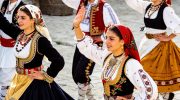
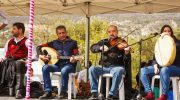
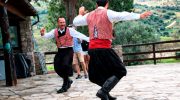
In Cyprus, music and dance often arrive in a young person’s life long before anyone calls them “heritage.” They appear in school assemblies, in family celebrations, and in the easy confidence of a village circle dance that seems to know its own steps. Youth initiatives across the island connect inherited traditions with contemporary expression, shaping identity and confidence while helping the next generation reinterpret culture in a society built at a crossroads.
A Cultural Education That Starts Early
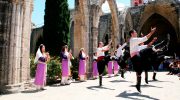
For many children, traditional rhythms and movements are first encountered casually, through school programs, local associations, or community gatherings, where participation matters more than perfection, and the goal is simply to join in.
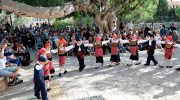
Two learning paths tend to develop side by side. State-supported education introduces structure through music schools and organised dance instruction, prioritising technical skill and preservation of established forms. At the same time, community-based groups such as youth clubs, folklore associations, and informal workshops offer a more flexible approach that emphasises shared experience and learning by doing. Together, these routes allow young Cypriots to experience culture as both discipline and everyday practice, rather than choosing one and rejecting the other.
Learning Beyond the Classroom
Some of the strongest youth initiatives thrive outside formal education, because tradition in Cyprus is most alive when it sits inside social life instead of being separated from it. In villages and urban neighbourhoods alike, young people rehearse for festivals, panigyria, and public events where tradition is lived rather than displayed, and where mistakes are corrected in real time, not judged from a distance.
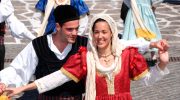
In these settings, learning is often intergenerational. Older dancers pass down steps through repetition, correction, and example, while young musicians learn rhythm by playing alongside more experienced performers, absorbing timing, restraint, and improvisation as much as technique. The outcome is cultural knowledge that feels embodied and social, not stored away like a classroom subject.
Dance as Memory in Motion
Traditional Cypriot dances are closely tied to communal history, with many reflecting agricultural cycles, courtship rituals, and village roles. Youth initiatives continue to teach these dances not as static routines, but as expressions of shared memory that can still speak in the present tense.
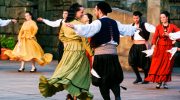
Group dances build coordination and awareness of others, because you cannot stay in the circle without listening to others. Solo or paired dances demand control, balance, and confidence, asking the dancer to hold attention without forcing it. Together, these forms teach young performers that movement can communicate identity without words. What matters is not just accuracy, but presence, because tradition is something you inhabit, not something you memorise.
Music That Carries Local Voice
For young musicians, traditional Cypriot music offers a distinct sound shaped by regional modes and instruments. Violins, laouto, flutes, and percussion form the backbone of many youth ensembles, creating music that feels both familiar and expressive, especially when it is played in conversation with dancers rather than performed at them.
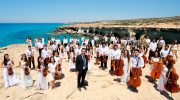
Learning these instruments involves more than technique. Players must listen closely, adapt to subtle shifts in rhythm, and respond to dancers in real time, which develops musical sensitivity while reinforcing the collective nature of performance. At the same time, many young musicians also study Western classical or contemporary styles, moving between traditions without treating them as opposites, and that ease becomes part of the island’s modern cultural fluency.
When Tradition Meets Experimentation
A growing number of initiatives encourage creative reinterpretation rather than strict preservation. Young performers blend folk rhythms with modern genres, experiment with new arrangements, and introduce contemporary themes into traditional frameworks, not to replace tradition, but to keep it relevant and personally owned.

This matters because relevance is not automatic. When young people are given space to experiment, they are more likely to claim cultural inheritance as something they can carry forward, rather than something they must protect behind glass. The result is a living culture that evolves while remaining recognisably Cypriot.
Inclusion Through Shared Rhythm
Youth music and dance initiatives in Cyprus increasingly serve social goals as well as cultural ones. Programs aimed at migrants, refugees, and disadvantaged youth use collective performance as a way to build belonging, because rhythm and shared movement can communicate welcome faster than words.
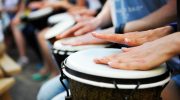
Learning a rhythm together or moving in unison lowers language barriers and creates shared experience. For many participants, these initiatives offer artistic skills, confidence, routine, and social connection, and in a divided and diverse society, shared cultural practice becomes a subtle form of bridge-building.
The Role of Technology and Access
Some initiatives now use digital tools to expand access to music and dance education, including video tutorials, interactive learning platforms, and online archives that allow young people to engage with tradition beyond physical rehearsal spaces.

These tools are especially valuable for youth living abroad or in rural areas, helping maintain a connection to Cypriot cultural forms even at a distance. Technology does not replace live teaching, but it supports continuity and curiosity, keeping the door open for young people who might otherwise drift away from cultural participation.
Why These Initiatives Matter
Youth music and dance initiatives matter because they keep culture active rather than symbolic. They teach discipline without rigidity, tradition without nostalgia, and creativity without detachment from the past.
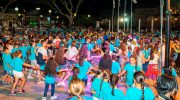
For young participants, these programs offer more than artistic training. They provide a way to understand where they come from while imagining where they can go, and in movement, rhythm, and shared effort, Cypriot youth continue to shape an identity that is both inherited and evolving.