Daily village life in Cyprus revolved around close-knit family networks, communal labor, religious observances, and social gatherings that defined rural existence. Villages functioned as extended families where relatives lived in adjacent compounds, sharing courtyard spaces, agricultural tools, and economic responsibilities across generations.

The rhythm of days followed agricultural cycles, with sunrise fieldwork interrupted by midday meals and coffee breaks, followed by afternoon labor and evening social gatherings in village squares. Women drew water from communal fountains where they exchanged information while washing clothes and filling vessels, creating female social networks parallel to male coffee shop culture.
Children grew up supervised by grandparents, aunts, and neighbors who collectively ensured safety and transmitted traditional knowledge through daily interaction. This interconnected social structure provided economic security through mutual aid, emotional support during hardships, and collective celebration during festivals and life milestones.
Morning Routines and Agricultural Work
Village days began before sunrise, when women woke to prepare breakfast before men and children left for fields. The meal typically consisted of bread, olives, halloumi cheese, and yogurt with honey, supplemented by seasonal vegetables from kitchen gardens. Coffee brewed in long-handled pots called briki accompanied breakfast, providing caffeine for the day’s physical labor ahead.

Men departed for fields by 6:00 or 7:00 AM, carrying simple tools including hoes, sickles, and pruning shears. Donkeys transported heavier equipment and water vessels for midday drinking. The working day was structured around Cyprus’s hot climate, with intense labor during cool morning hours before the sun reached its peak. Farmers cultivated diverse crops including wheat, barley, vegetables, grapes, olives, and carobs, rotating fields to maintain soil fertility without chemical inputs.
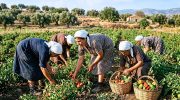
Women’s agricultural participation was substantial, with mid-20th century data showing rural females comprising 51 percent of agricultural workers. They weeded vegetable plots, harvested fruits, gathered olives, and performed detailed tasks requiring manual dexterity rather than raw physical strength. Older children assisted parents after completing morning school attendance, learning farming techniques through hands-on participation that prepared them for adult responsibilities.
Midday Breaks and Family Meals
Work paused around noon when temperatures reached uncomfortable levels making outdoor labor dangerous. Families reunited for the main meal of the day, typically the largest and most elaborate food preparation. Women spent morning hours cooking while managing other household duties, timing meal completion to coincide with workers’ return from fields.

Traditional meals featured seasonal vegetables cooked in olive oil with tomatoes and onions, a preparation called yahni shared across Greek and Turkish Cypriot communities. Meat appeared primarily on Sundays and feast days, with daily protein coming from dairy products, legumes, and occasional poultry or fish. Bread accompanied every meal, often baked weekly in outdoor ovens that produced enough loaves for several days.
The midday meal served social functions beyond nutrition. Extended family members gathered to eat together, with conversation covering agricultural conditions, village news, and family matters requiring collective decisions. Elders presided over meals, their opinions carrying weight in resolving disputes or planning major expenditures. The shared eating reinforced family hierarchy while creating opportunities for information exchange and emotional bonding.
Afternoon Labor and Communal Tasks
After midday rest lasting one to two hours, work resumed in cooler afternoon temperatures. Men returned to fields for less strenuous tasks than morning labor, while women often engaged in courtyard activities including food processing, textile work, and child supervision. The gender division of labor was strict, with men handling heavy agricultural and construction work while women managed household production and childcare.
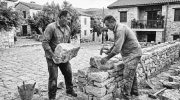
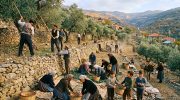
Communal tasks brought neighbors together for projects requiring collective effort. Olive harvesting involved multiple families gathering at a single property to collect fruit, with reciprocal arrangements ensuring everyone received assistance during their harvest period. House construction, roof repairs, and well digging mobilized male neighbors who contributed labor with expectation of future reciprocity when their own projects required additional workers.
Women’s communal activities centered on textile production, food preservation, and childcare. Groups gathered in courtyards to spin wool, weave fabric, and embroider while conversing about family matters, arranging marriages between families, and resolving conflicts through informal mediation. These sessions functioned as female governance structures operating parallel to but separate from male-dominated public institutions.
Evening Gatherings in Village Squares
As sunset approached and fieldwork concluded, villages transitioned to social mode. Men gathered at coffee shops surrounding central squares, ordering Cyprus coffee prepared in traditional briki pots heated on sand-filled trays. The coffee was served with mandatory glasses of cold water, consumed slowly while playing backgammon, discussing politics, and exchanging village gossip.

Coffee shop culture was exclusively male, with women’s presence prohibited by social norms maintaining strict gender separation. The establishments functioned as informal governance bodies where community decisions emerged through consensus-building conversations rather than formal voting procedures. Men arranged business deals, resolved property disputes, and planned collective projects during hours spent at coffee shop tables.
Women’s evening social life occurred in private courtyards and during visits to relatives’ homes. These gatherings allowed discussion of topics inappropriate for mixed company, including intimate family matters, marital problems, and detailed health concerns. The female networks provided emotional support, practical advice, and assistance during childbirth, illness, and family crises that men’s coffee shop culture could not address.
Children’s Experiences and Education
Village children experienced childhood vastly different from modern urban counterparts. They played in streets and courtyards under constant adult supervision from relatives and neighbors who collectively ensured safety. Games used simple materials including stones, sticks, and imagination rather than manufactured toys. Children participated in adult work from young ages, performing tasks appropriate to their capabilities while learning skills necessary for adult roles.

Formal education occurred in village schools, typically single-room buildings where one teacher instructed all ages simultaneously. Attendance was irregular during planting and harvest seasons when children’s labor was needed, creating educational disadvantages compared to urban students. Literacy rates remained lower in rural areas throughout the 20th century, though government efforts gradually improved access and attendance.
The extended family structure meant children developed relationships with numerous relatives who provided affection, discipline, and practical instruction. Grandparents told traditional stories transmitting cultural values and historical memory. Aunts and uncles supplemented parental guidance, creating distributed childcare that prevented any single adult from bearing sole responsibility. This collective child-rearing produced strong kinship bonds and clear understanding of family obligations.
Support Systems During Life Events
Birth, marriage, and death mobilized entire villages in collective responses demonstrating community cohesion. When women gave birth, female relatives and neighbors provided assistance with delivery, postpartum care, and household duties the new mother could not perform. The communal support lasted 40 days, the traditional confinement period when mothers and infants remained inside protected from evil influences.

Weddings involved elaborate multi-day celebrations engaging extended family networks and entire communities. Preparation required weeks of cooperative labor to produce food, decorate venues, and coordinate complex rituals. The celebrations reinforced social bonds while publicly announcing new family alliances that altered village social dynamics. Wedding attendance was nearly universal, as absence would insult hosting families and damage community relationships.
Death brought immediate community response, with female relatives preparing the body for burial while men constructed coffins and dug graves. The entire village attended funerals regardless of personal relationships with the deceased, demonstrating collective solidarity with bereaved families. Memorial services at 40 days, six months, and yearly anniversaries maintained connection to the deceased while providing ongoing emotional support to surviving relatives.