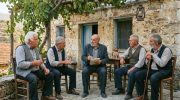
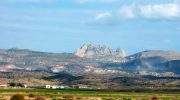
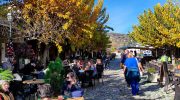
While modern cities rise along Cyprus’s coasts, hidden in the island’s hills and mountains are stone villages that have barely changed in centuries. These aren’t open-air museums or tourist recreations—they’re living communities where narrow cobblestone streets still wind past churches older than nations, where women still make lace using techniques passed down through generations, and where the rhythm of life follows patterns shaped by water, terrain, and survival. To visit these villages is to step into a Cyprus that exists outside of time, where the past and present speak to each other in stone, wine, and thread.
Where Old Cyprus Still Lives
Traditional Cypriot villages are the island’s cultural heartbeat, preserving customs, crafts, dialects, and ways of life that have largely disappeared from urban centers. These settlements grew organically over centuries, shaped by geography, climate, and the practical needs of survival rather than by modern planning or tourism. Most sit inland—tucked into hillsides, nestled in mountain valleys, or perched on slopes—rather than along the vulnerable coastline where pirates and invaders once threatened.
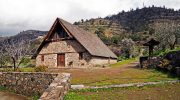
These villages aren’t relics frozen in amber but living communities that have adapted while maintaining their essential character. Stone houses still cluster around churches and monasteries, narrow streets still provide shade and defense against summer heat, and communal spaces still bring neighbors together. While many younger Cypriots moved to cities during the 20th century, recent decades have seen a revival as people return to open cafés, guesthouses, craft workshops, and small businesses that blend heritage with modern entrepreneurship.
Built by Geography and History
Traditional villages in Cyprus emerged from the island’s distinctive geography and its long history of foreign rule. For centuries, Cypriots built settlements where three essential elements could be found: water, fertile land, and protection from coastal raiders. This drove communities inland and upward, into the Troodos Mountains and surrounding foothills where springs flowed, terraced hillsides could support vines and olives, and elevation provided natural defense.

Byzantine, Frankish, Venetian, Ottoman, and British rulers all influenced village life over the centuries, but the basic pattern remained remarkably stable. Stone houses clustered around a church or monastery formed the village core. Narrow, winding streets radiated outward, designed both for shade and to confuse potential invaders. Fields and orchards spread beyond the settlement, with each family’s plots scattered across different terrain types to hedge against crop failure.
These villages were not accidental—every architectural choice reflected careful thinking about climate, defense, and community needs. Windows often faced inward toward private courtyards rather than outward to streets, providing privacy and security. Streets twisted uphill in irregular patterns, slowing invaders and blocking the worst of the hot summer winds. Buildings hugged slopes to preserve precious flat farmland in the valleys below.
As coastal cities modernized during the 20th century, absorbing international influences and losing older traditions, villages became the guardians of authentic Cypriot identity. Crafts like lace-making, traditional dialects with ancient Greek roots, farming rituals tied to the seasons, and religious customs survived longest in these rural communities. Villages became living archives, preserving knowledge that might otherwise have vanished completely.
What Makes Villages Recognizable
Traditional Cypriot villages share distinctive characteristics that make them immediately recognizable even to first-time visitors. Houses are built from local stone—pale limestone in the lowlands, darker volcanic rock in the Troodos range—with thick walls providing insulation against both summer heat and winter cold. Roofs are either red-tiled in wetter mountain areas or flat in drier regions, sometimes with white plaster reflecting the harsh sun.

Streets are narrow, winding, and cobblestoned, creating shade corridors and encouraging slow movement. This wasn’t just aesthetic—narrow streets meant less area to pave and maintain, and their twisting paths broke hot winds into cooling breezes. Courtyards served as the true center of domestic life, providing private outdoor space for cooking, working, and socializing away from public view.
Every village organized itself around key communal spaces that reinforced social cohesion. The church stood at the spiritual and often geographic center, its bell tower visible from surrounding fields. The village square (plateia) hosted markets, celebrations, and gatherings. The kafeneio (traditional coffee shop) served as the men’s social club where news, gossip, and political opinions circulated. Women gathered at communal ovens for baking bread, at fountains for washing, and at threshing floors during harvest.
Terraced hillsides surrounding villages show centuries of agricultural engineering. Stone walls built without mortar hold soil in place on steep slopes, creating level planting areas for vines, olives, almonds, and vegetables. These terraces represent thousands of hours of family labor, maintained and expanded across generations, turning mountainsides into productive farmland.
Village layouts reflected practical concerns. Houses faced inward for privacy and defense. Streets wound uphill to slow attackers and create defensible positions. Churches occupied high ground, serving as both spiritual centers and potential refuges during raids. Everything had a purpose beyond appearance, though the accumulated effect created undeniable beauty.
Remarkable Village Stories
- Leonardo’s Lace Legend – Lefkara is world-famous for Lefkaritiko lace, and legend claims Leonardo da Vinci himself purchased lace here in 1481 for Milan Cathedral’s altar cloth. Whether or not the story is true, Lefkara lace became so renowned that it’s now a UNESCO Intangible Cultural Heritage, and the village’s prosperity from centuries of lace and silk trade is visible in its elaborate stone houses.

- Wine Presses in Houses – Villages like Omodos built wine presses directly into residential buildings, with storage rooms and fermentation vessels integrated into the architecture. This wasn’t just practical—it showed how completely agriculture and daily life were intertwined, with homes functioning as both living spaces and production facilities.
- Villages That Moved – Many Cypriot villages relocated entirely during their history, abandoning one site for another due to drought, raids, or disease. The current location of a village might be the third or fourth site the community has occupied, with ruins of earlier settlements visible in surrounding hills.
- Names That Describe Land – Village names often describe geography or history in vivid language. Kakopetria means “bad stone,” possibly referring to a legendary rock that fell and nearly crushed newlyweds. Kalopanayiotis means “good Saint Panayiotis,” linking the settlement to its monastery founder. Names preserve ancient stories in everyday speech.
- Traveling Fresco Painters – Skilled fresco artists traveled from village to village painting church interiors, creating a recognizable artistic style across the Troodos region. The same workshop might decorate churches in different villages over decades, spreading similar iconographic programs and artistic techniques.
- Villages Older Than Crusades – Some settlements trace their origins to Byzantine times or earlier, making them older than the medieval Crusades. Centuries of continuous habitation mean modern residents literally walk streets their ancestors used a thousand years ago.
How Villages Specialized and Survived
Different village locations across Cyprus developed economic specializations based on their terrain and resources. Mountain villages in the Troodos focused on wine production, timber harvesting, and summer grazing. Foothill villages raised olives, kept livestock, and produced dairy. Valley villages grew fruit in irrigated orchards. Plain villages cultivated grain and pulses. Mining villages near copper deposits developed metalworking skills. These specializations shaped not just economies but also local dialects, customs, crafts, and even architectural styles.
Water determined everything. Villages formed around springs, wells, streams, or cisterns because without reliable water sources, settlement was impossible. Fountains became social centers where women gathered, news circulated, and community bonds formed over the shared resource everyone depended upon. Many villages built elaborate aqueduct systems, channeling water from distant springs to communal fountains and from there to individual households.
Monasteries profoundly influenced village development. Religious foundations like the Monastery of the Holy Cross at Omodos or the Kykkos Monastery near Kakopetria didn’t just provide spiritual leadership—they managed land, taught crafts, provided education, and hosted pilgrims. Villages grew around these institutions, with monastery feast days shaping the annual calendar and creating pilgrimage routes that connected isolated communities.
Ottoman rule left lasting marks, especially in mixed or Muslim villages. Courtyard houses became standard, providing privacy in accordance with Islamic customs. Mosques shaped village layouts just as churches did in Christian communities. Markets and coffeehouses clustered near fountains. This architectural and social influence remains visible today, particularly in the Turkish-occupied part of Cyprus.
Communal infrastructure reinforced cooperation and interdependence. Shared ovens, threshing floors, wine presses, olive mills, and washing areas weren’t just economically efficient—they created regular opportunities for neighbors to work together, share knowledge, resolve disputes, and maintain social bonds. Villages survived through cooperation as much as through individual effort.
Villages in the Modern World
Traditional villages now represent authentic Cypriot identity and have become central to how the island presents itself culturally. They appear in school curricula as symbols of resilience and continuity, featured in textbooks alongside ancient ruins and Byzantine churches. National imagery—tourism posters, cultural promotions, government branding—regularly uses village scenes to communicate what makes Cyprus distinctive.

Many villages experienced serious depopulation during the 20th century as younger generations moved to cities for education and employment. Some became nearly abandoned “ghost villages,” their stone houses crumbling and orchards returning to wilderness. But recent decades have brought revival through multiple channels: craft tourism (especially Lefkara lace), wine tourism (particularly Omodos and Pelendri), religious pilgrimage to monastery villages like Kalopanayiotis, eco-tourism emphasizing traditional lifestyles, and cultural festivals celebrating local music, dance, and foodways.
Young Cypriots increasingly return to ancestral villages, not necessarily to farm but to open boutique guesthouses, restaurants serving traditional cuisine, craft workshops, and small businesses that blend heritage preservation with modern entrepreneurship. Villages like Kakopetria have successfully balanced tourism development with architectural preservation, maintaining their traditional character while accommodating visitors.
Villages preserve cultural practices largely vanished elsewhere. Older Greek dialect forms survive in rural speech. Local saints’ legends and miracle stories remain part of village geography, with sacred trees, healing springs, and holy rocks marking the landscape. Agricultural rituals tied to planting and harvest seasons continue, along with herbal medicine traditions passed through families. These practices make villages living museums of Cypriot culture.
The 1974 division of Cyprus turned some villages into political symbols. Abandoned villages in buffer zones or across the dividing line represent loss and displacement. Revived villages become statements about cultural preservation and return. Tourism to traditional villages thus carries subtle political meanings alongside its cultural and economic dimensions.
Experiencing Village Life
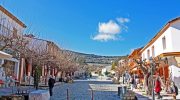
- Lefkara – This hillside village offers world-famous lace-making demonstrations where visitors can watch artisans create intricate Lefkaritiko patterns using techniques unchanged for centuries. Stone houses with carved doorways and wooden balconies reflect prosperity from the lace trade. The atmosphere is artistic and refined, with galleries and craft shops alongside traditional kafeneia. Plan to spend at least two to three hours wandering streets and visiting the lace museum.
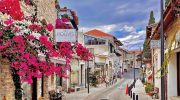
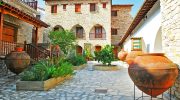
- Omodos – Centered on the Monastery of the Holy Cross, this wine village feels festive and communal. Walk cobbled streets lined with wine jars and traditional presses, visit the monastery’s ornate interior, and taste local wines at family-run tavernas. The shaded central square hosts festivals and celebrations. The atmosphere blends religious devotion with agricultural celebration, showing how faith and wine production were inseparable.
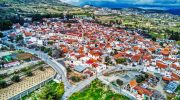
- Kakopetria – Nestled in Troodos foothills, this village offers cool mountain air, Byzantine churches with stunning frescoes, stone bridges over rushing streams, and slate-roofed houses adapted to winter rains. The atmosphere is refreshingly cool even in summer, making it popular for weekend escapes. Hike nearby trails to painted churches and enjoy traditional mountain cuisine in tavernas.
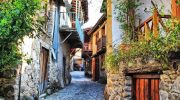
- Kalopanayiotis – This spiritual village combines a medieval monastery with natural hot springs believed to have healing properties. Stay in renovated traditional houses, visit the Monastery of Saint John Lampadistis with its extraordinary frescoes, and experience sulfur springs that have attracted pilgrims for centuries. The atmosphere is contemplative and restorative.
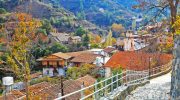
- Moutoullas – Home to the UNESCO-listed Church of Panagia tou Araka, this small village demonstrates how sacred art and rural life coexisted. The 12th-century frescoes are among Cyprus’s finest, yet the church sits casually among homes and fields. The village is quiet and unpretentious, offering authentic rural atmosphere without heavy tourism development.
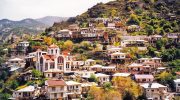
- Vavla – This classic mountain village preserves communal traditions like shared baking ovens and olive pressing. Walk cobblestone streets virtually unchanged in centuries, see traditional architecture without modern intrusions, and experience rural Cyprus at its most authentic. The atmosphere is peaceful and genuinely traditional.
Why Villages Matter
Traditional villages are the soul of Cyprus—the places where cultural memory lives most vividly and where scientists and laypeople alike can still see how geography, climate, and community shaped survival across centuries. While coastal cities show Cyprus’s global connections and modern development, villages preserve inner continuity, demonstrating how families, faith, and land created identity that endured through conquest, colonization, and change.

Stone houses, frescoed churches, terraced vineyards, and lace workshops aren’t museum pieces or staged recreations but expressions of living memory carried quietly through generations in mountain valleys and shaded courtyards. These settlements show that culture isn’t just grand monuments or famous artifacts—it’s the accumulated wisdom of ordinary people solving everyday problems of shelter, food, water, and community.
To walk through a Cypriot village is to step into a landscape where past and present remain in active conversation, where ancient techniques still produce wine and lace, where Byzantine churches still host worship, and where the rhythm of life still follows patterns older than nations. This continuity makes villages irreplaceable—not as tourist attractions but as proof that tradition can survive, adapt, and remain meaningful across centuries of change.