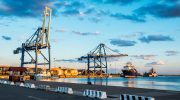
Cyprus has committed over 1.3 billion euros to infrastructure development in 2025, representing one of the most ambitious public investment programs in the island’s recent history. President Nicos Christodoulides announced this figure in January 2025, emphasizing the government’s determination to modernize public works legislation and introduce electronic systems to increase transparency and efficiency.

The infrastructure push covers multiple sectors, from road networks and smart city technologies to hospital construction and educational facilities. These projects aim to transform Cyprus into a more connected, sustainable, and economically competitive nation. However, several flagship projects have faced significant setbacks, including the troubled 1.2 billion euro Larnaca port and marina redevelopment, which saw its original concession terminated in 2024 after years of delays and financing problems.
The Road Network Modernization Program
The Ministry of Transport, Communications, and Works has prioritized road infrastructure development, allocating 439.3 million euros through September 2026 for a comprehensive highway and road network upgrade. The program includes ten major projects designed to reduce travel times, improve safety, and decrease urban congestion. These infrastructure interventions represent the most significant road construction effort in Cyprus in over a decade.
The Nicosia Perimeter Motorway represents the centerpiece of this program. Phase A1, which connects the Lakatamia Industrial Area to the Dali Industrial Area, includes 7.5 kilometers of four-lane highway plus approximately 10 kilometers of secondary roads. Construction began in March 2020, with completion originally scheduled for April 2024. The project integrates existing road networks while providing crucial bypass capacity for Nicosia’s heavily congested urban center.

The Nicosia to Palaichori highway project focuses on the Anagia to Agrokipia section, spanning approximately 8.1 kilometers with four traffic lanes. Construction started in March 2023 with a September 2026 completion target. The 71.4 million euro project includes a level junction at Ergates, uneven junctions at Ayios Ioannis and Malounda, three bridges, and multiple vehicular accesses connecting existing roads. This route provides critical access to the Troodos mountain communities while improving emergency response times.
The Paphos to Polis Chrysochous highway section from Ayios Marinouda to Stroumbi represents another significant investment. Phase A1 carries an 86.8 million euro price tag, with construction that began in May 2021 and a December 2025 completion date. The overall project spans 31 kilometers when complete, dramatically reducing travel times between the northwestern coastal communities and major urban centers.
Smart Cities Initiative and Digital Infrastructure
Cyprus has embraced smart city technologies through a nationwide implementation plan covering 30 municipalities. The project received funding through the EU Recovery and Resilience Plan, with completion targeted for June 2026. The initiative coordinates existing smart city programs into a unified national platform focusing on smart parking, smart lighting, and smart waste collection management.

The technical scope includes installation of at least 97,000 smart sensors across participating municipalities, connection to a central smart cities platform, and development of three mobile applications for each vertical solution. The Deputy Ministry of Research, Innovation and Digital Policy issued an expression of interest to all municipalities in January 2023 after completing a platform development study in June 2022. This infrastructure creates the foundation for data-driven municipal management, reducing energy consumption, optimizing waste collection routes, and improving parking availability through real-time monitoring.
Cyprus has also invested heavily in 5G network deployment and fiber-optic infrastructure. The 2025 Digital Decade Country Report shows Cyprus demonstrating strong performance in connectivity indicators, with outstanding results in 5G and gigabit coverage. The nationwide rollout of advanced telecommunications infrastructure supports the government’s broader digital transformation agenda, which includes digitalizing key workflows in several ministries and central government services.
Electric Vehicle Charging Infrastructure Expansion
The government allocated 6 million euros to subsidize installation of at least 1,200 electric vehicle charging points across Cyprus, with 1,000 installed in publicly accessible locations. Phase B of the grant scheme aims to complete all installations by the end of 2026. The program provides up to 50 percent funding intensity with maximum amounts varying by charger type.

This infrastructure development supports the parallel electric vehicle adoption scheme, which budgets 45 million euros to subsidize purchase of 5,750 electric vehicles and bicycles while promoting removal of at least 3,150 older polluting vehicles from circulation. By January 2023, Cyprus had approved 774 applications for electric vehicle purchases and 398 applications for scrapping polluting vehicles. The combined programs create the foundation for transitioning Cyprus away from fossil fuel dependence in transportation.
The Larnaca Port and Marina Saga
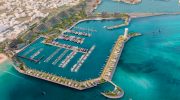
The Larnaca port and marina redevelopment stands as Cyprus’s most troubled major infrastructure project. Originally conceived as a 1.2 billion euro flagship investment, the project was awarded to Cypriot-Israeli consortium Kition Ocean Holdings in 2020. The ambitious plan envisioned transforming 332,449 square meters of port and marina area into a modern facility with 650 yacht berths, a passenger terminal capable of handling large cruise ships, hotels, a retail park, a private island, and residential properties.
Kition Ocean Holdings took control of the port and marina in December 2020 but immediately encountered serious problems. The company struggled with financing, labor issues, and disputes over port tariffs. These difficulties worsened during coronavirus-imposed shutdowns. The fundamental breakdown came in April 2024 when negotiations reached a deadlock over financial guarantees. Despite a compromise agreement reached in the presence of President Christodoulides allowing a 4.2 million euro letter of guarantee instead of the required 10 million euros, Kition refused to renew the guarantee for Larnaca port. The government terminated the concession on May 27-28, 2024, citing contractual breaches.
Following termination, the Cyprus Ports Authority assumed day-to-day control of the port while the Cyprus Marine and Maritime Institute took temporary management of the marina. The government moved quickly to maintain operations and employment while advancing priority works. A marina dredging package got underway with completion targeted for late 2025. In January 2025, President Christodoulides assigned Greece’s Hellenic Republic Asset Development Fund to prepare a new masterplan and recommend next steps.
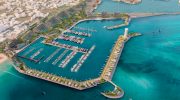
The HRDAF advisers recommended in February 2026 that the port and marina should proceed as two distinct but parallel projects rather than as a unified development. This approach offers three alternative scenarios for each project, assessed separately. The framework leaves all potential port uses open for consideration, potentially lifting the current cap on commercial activity regardless of Cyprus’s obligations under the Limassol port concession agreement. The Limassol concession currently sets a ceiling of 900,000 tonnes on Larnaca’s commercial port activity, but advisers argue that any new investment shaping the site for the next 50 years cannot be constrained by an earlier contract.
Transport Minister Alexis Vafeades confirmed in May 2025 that the marina dredging tender was under evaluation and would be awarded shortly. The Council of Ministers had approved 1.5 million euros for these works, with additional funds allocated for repairing damaged infrastructure from years of neglect. A separate 240,000 euro allocation went toward architectural competition for a new yacht club building, with plans to integrate it with Europe Square to breathe new life into Larnaca’s city center.
Healthcare and Educational Facility Development
Cyprus has invested in public facilities including new hospitals, schools, and cultural centers. A major medical facility is planned for Mesogi village in Paphos district, featuring two buildings covering a hospital block and an office block. The total land allocation spans 27,426 square meters, with 21,780 square meters occupied by high-rise buildings.

The island has also moved forward with plans for a maritime technology, science, and sustainable development school under the Cyprus University of Technology. Larnaca Mayor Andreas Vyras expects an official decision from the Cyprus president within the month, with establishment planned for the Mackenzie area by September 2027 if approved.
The Key Role of Infrastructure Investment in Cyprus’ Future
Major infrastructure projects serve multiple strategic purposes beyond their immediate functional benefits. They create employment during construction phases, stimulate economic activity through supply chains, and position Cyprus as a modern European destination for business and tourism. The 1.3 billion euro investment announced for 2025 represents approximately 4 percent of Cyprus’s GDP, a substantial commitment demonstrating government prioritization of long-term development over short-term budget balancing.
However, the Larnaca port debacle reveals the challenges of large-scale public-private partnerships. The project promised 4,000 new jobs and 12 billion euros in government revenues over the concession lifetime. Instead, it has consumed years in negotiations, legal disputes, and restart planning without producing any of the promised benefits. This experience has made Cyprus more cautious about future concession agreements, with officials emphasizing the need for careful study, stakeholder consultation, and realistic assessment of private sector capabilities before awarding major projects.
The success of Cyprus’s infrastructure modernization depends critically on learning these lessons while maintaining momentum on projects that can realistically deliver promised improvements to the island’s connectivity, sustainability, and economic competitiveness.