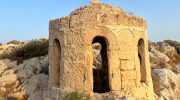
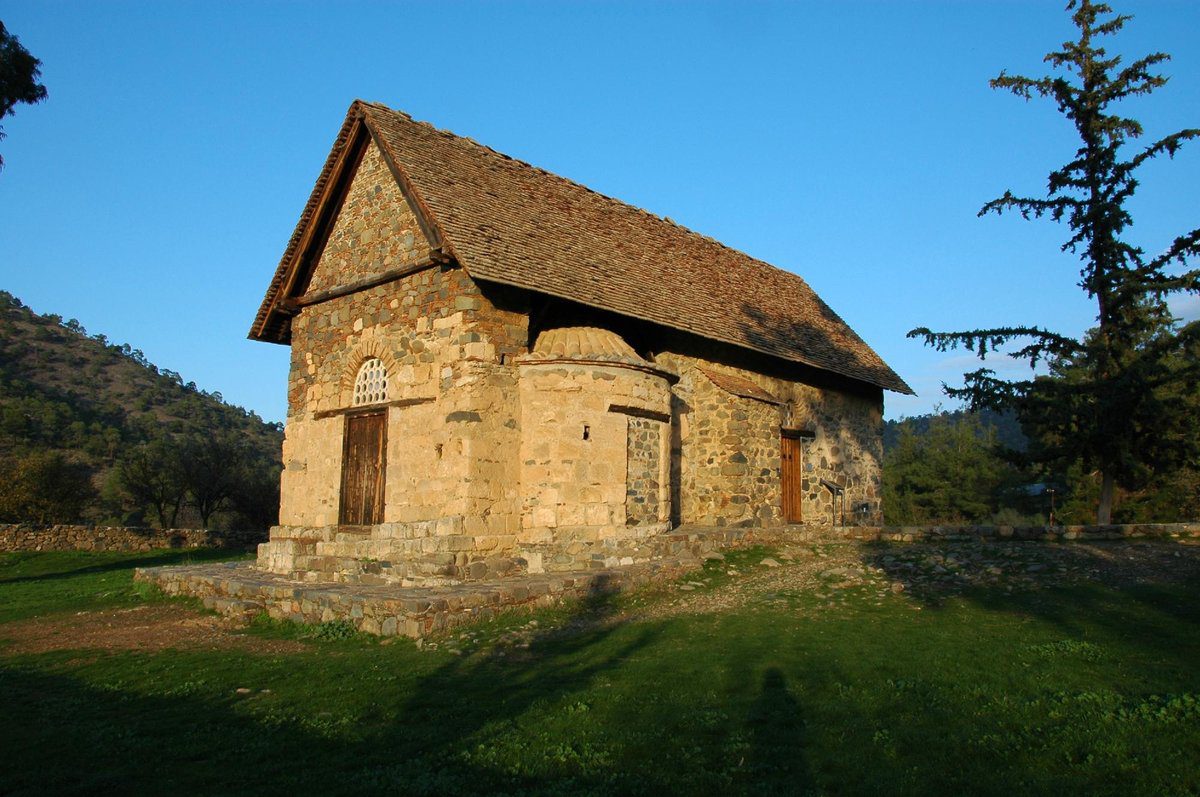
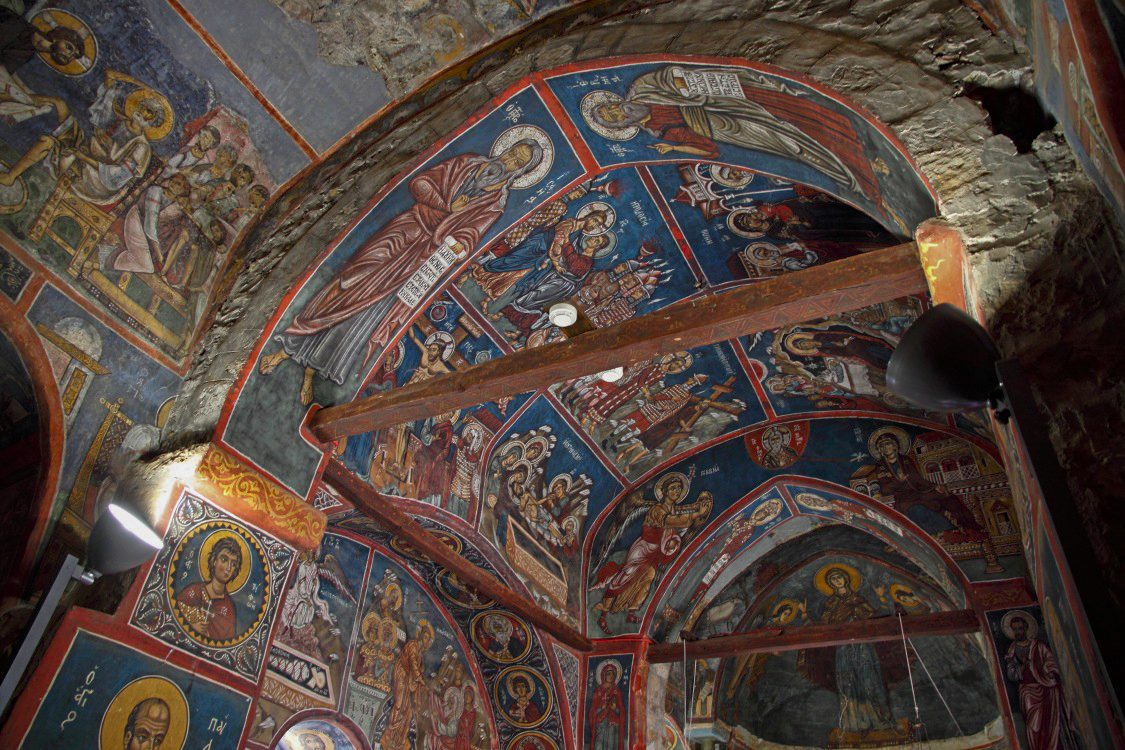
Church of Panagia Phorbiotissa, also known as Asinou Church, is a 12th-century Byzantine gem hidden in Cyprus’s Troodos Mountains, famed for its complete cycle of frescoes that act as a visual guide to medieval Christian theology. Part of the UNESCO-listed Painted Churches, it captures sophisticated trends from Constantinople through vivid biblical scenes and symbolic details. This hidden site evokes the spiritual depth of medieval Cyprus, where art served as a bridge to divine teachings.
A Timeless Byzantine Chapel
Panagia Phorbiotissa exemplifies the refined yet intimate nature of Byzantine religious architecture in Cyprus’s mountainous interior, dedicated to the Virgin Mary and characterized by its compact form and exceptional interior decoration. Constructed in a secluded valley, the church reflects the period’s monastic ideals, where isolation fostered deep contemplation away from worldly distractions. Its walls, alive with frescoes, narrate theological stories that once guided illiterate congregations, embodying the era’s use of art as a teaching tool. As one of the ten Painted Churches inscribed on UNESCO’s World Heritage List in 1985, it contributes to a collective portrait of Cyprus’s medieval Orthodox heritage, where rural sites preserved imperial artistic traditions adapted to local contexts.
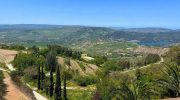
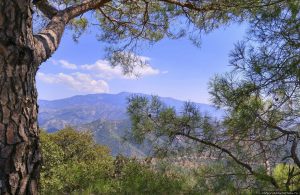
The church’s setting in the Asinou Valley, surrounded by dense pine forests and seasonal streams, enhances its mystical aura, making it a natural retreat for monks and villagers. This location was no accident; the Troodos region’s high elevation and inaccessibility provided safety during times of coastal raids, allowing such chapels to flourish as centers of spiritual and communal life. The name “Phorbiotissa” derives from “phorbi,” a local term for pasture, tying the site to the pastoral economy of medieval Cyprus, where faith intertwined with agrarian rhythms. Over nine centuries, it has withstood earthquakes, invasions, and neglect, its survival a testament to Byzantine engineering and the enduring devotion of island communities.
From Monastic Beginnings to Layered Legacy
The church’s construction dates to 1105-1106 AD, as confirmed by a faded inscription in the narthex naming the donor, a magister named Nicephorus Magister, who funded it as a family memorial. This places it firmly in the Comnenian era (1081-1185), a time of Byzantine revival following the iconoclastic controversies (726-843 AD), when art flourished under emperors like Alexios I Komnenos. Initially part of a small monastic hermitage, it served monks fleeing urban unrest after the Seljuk conquests in Anatolia, part of a broader migration that brought skilled icon painters to Cyprus.
Excavations and surveys since the 1960s, led by the Department of Antiquities with support from the Dumbarton Oaks Center for Byzantine Studies, have revealed the site’s phased development. The original single-nave basilica, measuring 12 meters long, was expanded in the 14th century with a narthex for preparatory rites, reflecting Palaiologan influences after the 1261 reconquest of Constantinople. Ottoman rule from 1571 added protective elements like reinforced doors, while the 18th century saw minor repainting to refresh fading frescoes. Restorations in the 1980s, using techniques like lime plaster matching originals, uncovered multiple layers, with infrared photography exposing 11th-century underdrawings that show initial sketches in red ochre.
The church’s legacy extends to its role in Cyprus’s religious history: during Lusignan (1192-1489) and Venetian (1489-1571) periods, it resisted Catholic pressures, remaining Orthodox and preserving Byzantine rites. Folklore from the Ottoman era tells of hidden services here, where villagers gathered secretly, tying it to the island’s crypto-Christian traditions. UNESCO’s listing emphasized its frescoes as exemplars of Comnenian art, comparable to those in Cappadocia or Macedonia, but with Cypriot adaptations like warmer color palettes suited to the island’s light.
A Canvas of Faith and Form
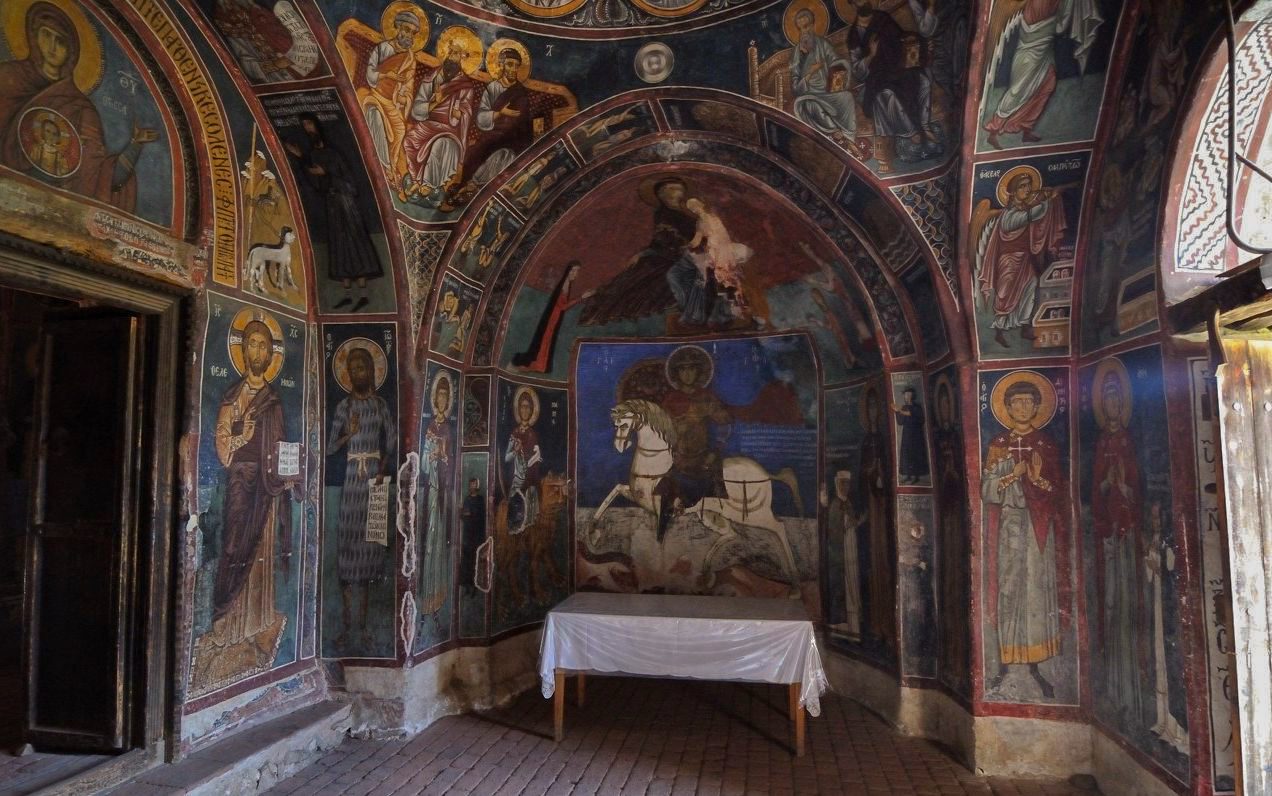
The church’s architecture features rubble stone walls coated in plaster, with a pitched tile roof designed to shed snow, typical of Troodos adaptations for durability. The interior divides into a narthex for catechumens and a naos (main area) under a barrel vault, creating a progression from worldly to sacred space. Small windows filter light to dramatize the frescoes, which cover 90 square meters in a complete cycle – one of the most comprehensive in Cyprus.
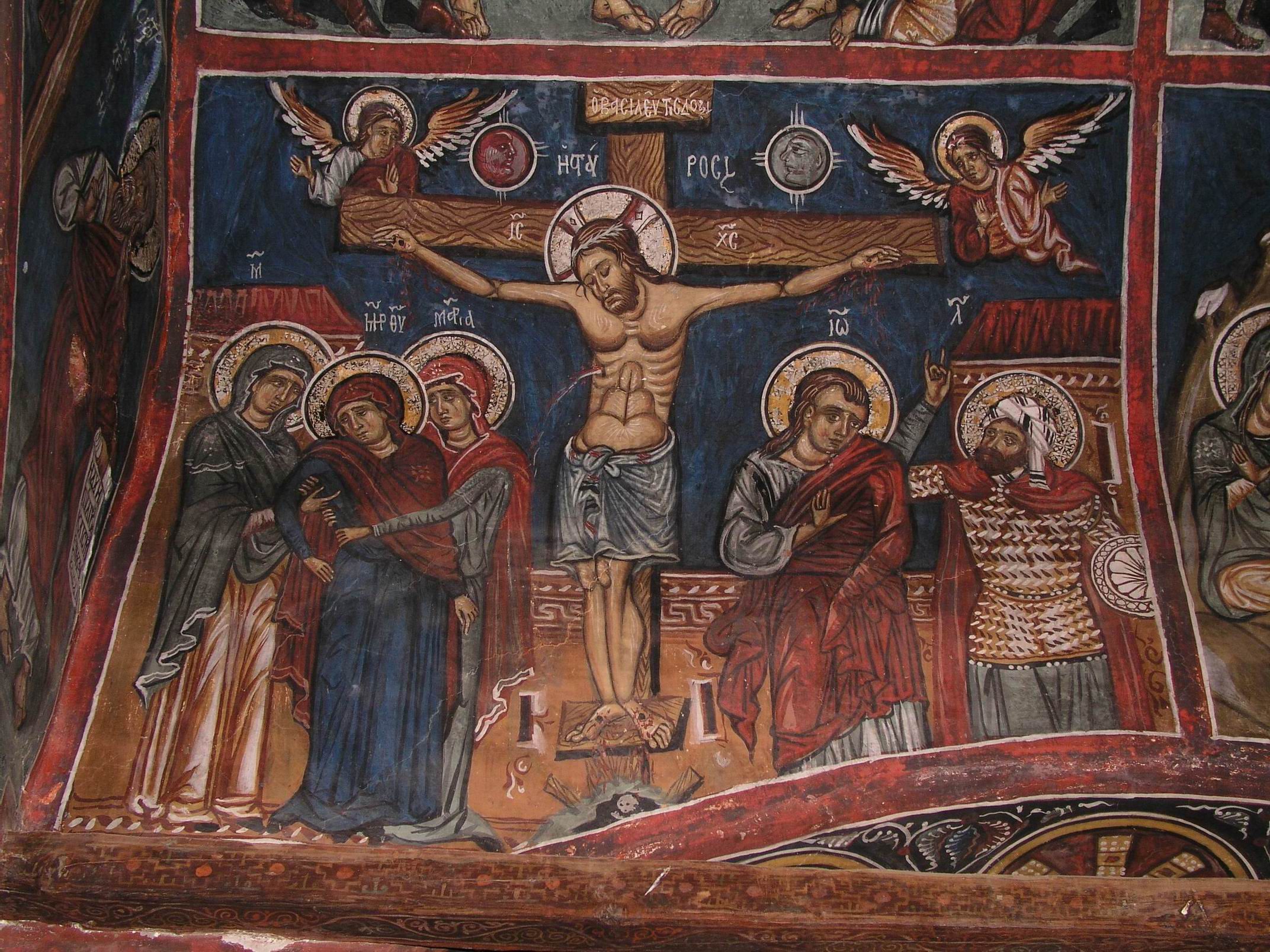
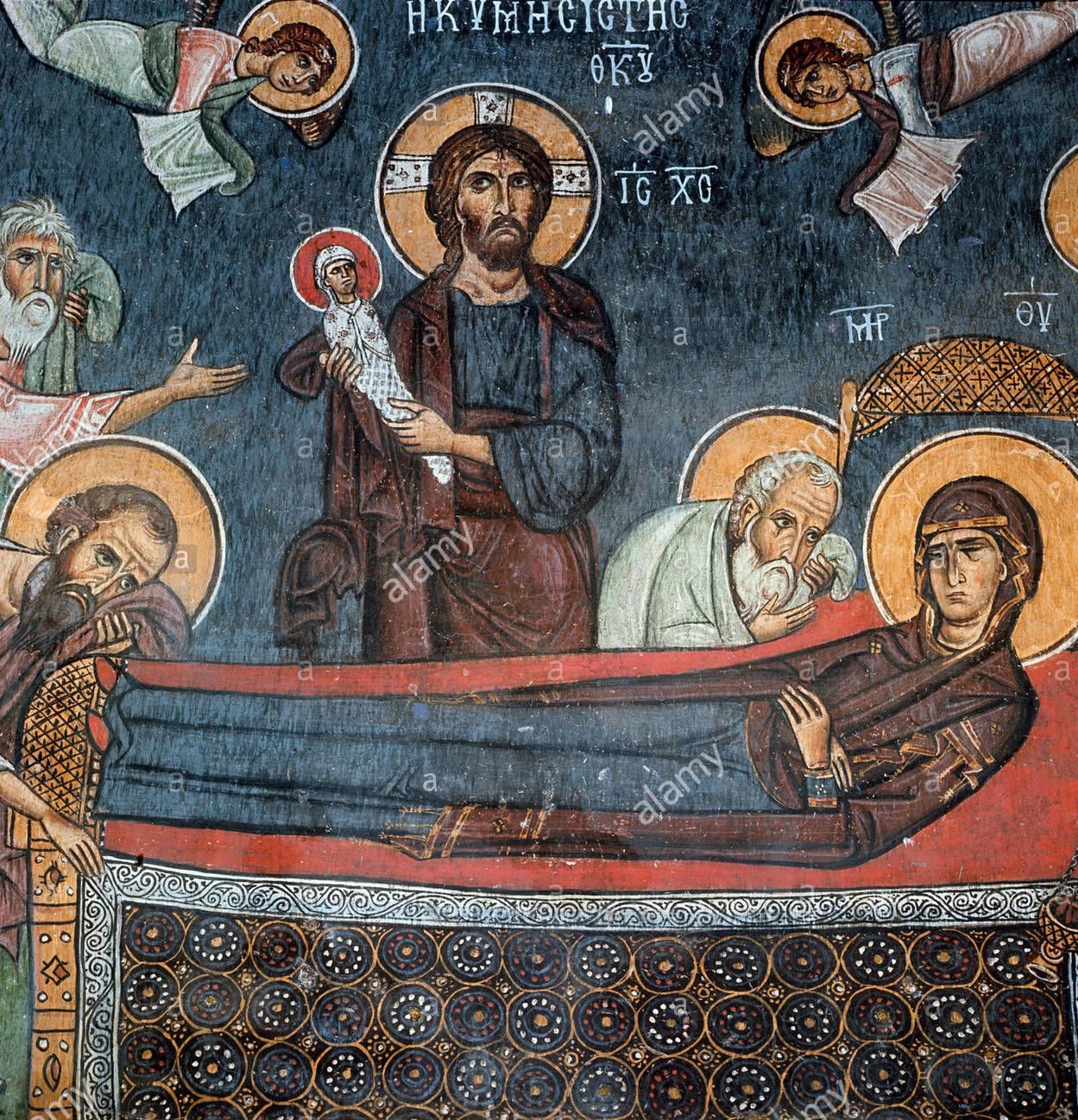
The paintings, executed in 1105 by an artist possibly from Constantinople, use fresco buono technique (pigment on wet plaster) for longevity, depicting over 50 scenes in gold, blue, and red from mineral sources like azurite and cinnabar. Biblical narratives unfold hierarchically: the dome holds Christ Pantocrator, walls show the Virgin’s life and apostles, while the narthex features the Last Judgment with emotional sinners. Later 14th-century additions introduce Palaiologan humanism, with softer faces and dynamic gestures, influenced by the Renaissance in Constantinople. Symbols abound: doves for the Holy Spirit, lilies for purity, all arranged to guide meditation during liturgies.
Acoustic resonance from the vault amplifies chants, enhancing immersion in an era of oral tradition. The altar area, with its bema screen fragments, suggests veiled mysteries during the Eucharist, tying architecture to ritual secrecy.
Notable Details That Add Depth
The frescoes include a vivid Harrowing of Hell, where Christ pulls Adam and Eve from tombs with expressive urgency, rare for its emotional intensity in rural Byzantine art. A donor inscription names Nicephorus and his family in elaborate robes, providing rare evidence of 12th-century Cypriot nobility and their ties to imperial court fashions. The narthex’s Judgment scene features local animals in hell’s beasts, blending theology with island fauna. Folklore claims the Virgin icon “wept” during droughts, prompting rain prayers, a tradition echoed in silver votives found nearby. Restorations revealed a hidden 11th-century layer with abstract crosses, possibly anti-iconoclastic symbols. The site’s water channel system, diverting streams for ablutions, ties to purification rites, uncovered in 1980s surveys.
Unraveling Deeper Layers of Theology
The art serves as a “visual encyclopedia” of medieval Orthodox theology, with cycles illustrating doctrines like the Incarnation and divine mercy, emphasizing the Virgin’s intercessory role. Comnenian influences from Constantinople appear in hierarchical arrangements and gold auras symbolizing eternity, but Cypriot adaptations add intimate, folk-like details, reflecting rural worship’s focus on personal salvation. The architecture’s progression – from narthex (preparation) to naos (revelation) – mirrors spiritual ascent, aligning with beliefs in faith as a journey amid worldly trials.
This fusion positions Cyprus as a Byzantine periphery, where imperial trends like emotional iconography met local customs, such as including Cypriot saints for regional relevance. Excavations around Asinou have uncovered burial sites with symbolic amulets, suggesting the church served pilgrimages for healing or vows, tying art to lived devotion. Influences from the Comnenian Revival, a response to theological debates, brought narrative freedom, allowing rural artists to convey complex ideas through accessible imagery.
Resonance in Modern Cyprus
Panagia Phorbiotissa resonates in contemporary Cyprus, inspiring conservation amid tourism growth and environmental shifts in the Troodos, like forest fires. As part of the Painted Churches, it attracts those seeking spiritual heritage, fostering cultural pride in a diverse society. Modern artists reference its frescoes in icons or murals exploring faith and identity, while architects adapt its vaulting in eco-friendly designs for mountain retreats. Festivals in nearby villages blend Byzantine chants with local music, sustaining traditions of communal devotion. This continuity highlights Cyprus’s ability to weave ancient theology into current expressions of resilience and unity.
Opportunities for Exploration
The church in Nikitari village opens daily from 9 AM to 4 PM in winter and until 6 PM in summer, with free entry though donations support maintenance. Paths from the road lead through pines, and informational boards explain the frescoes. Guided tours from the Department of Antiquities cost €10-15, offering expert insights. Spring or fall provides mild weather, pairing well with hikes or other Painted Churches like Podithou. Accessibility involves steps to the interior, with quiet observation recommended to maintain serenity.
A Church That Whispers Eternal Faith
Panagia Phorbiotissa matters as a living record of Cyprus’s medieval theology, where frescoes unfold faith’s stories in vivid detail, linking the island to Constantinople’s cultural heights. This site captures Cyprus’s essence: a refuge where art and devotion merged to inspire across ages. Its preservation ties to broader Byzantine legacies, reminding of how visual narratives shaped understanding. In a dynamic world, it offers a serene testament to timeless wisdom.