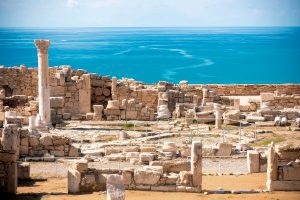
Ancient Kourion sits on a limestone cliff nearly 100 meters high along the southwestern coast of Cyprus, overlooking Episkopi Bay. The site was first inhabited during Neolithic times, with the earliest evidence dating back to 4,500 to 3,900 BC, but the town itself was founded in the 13th century BC by the Argives.
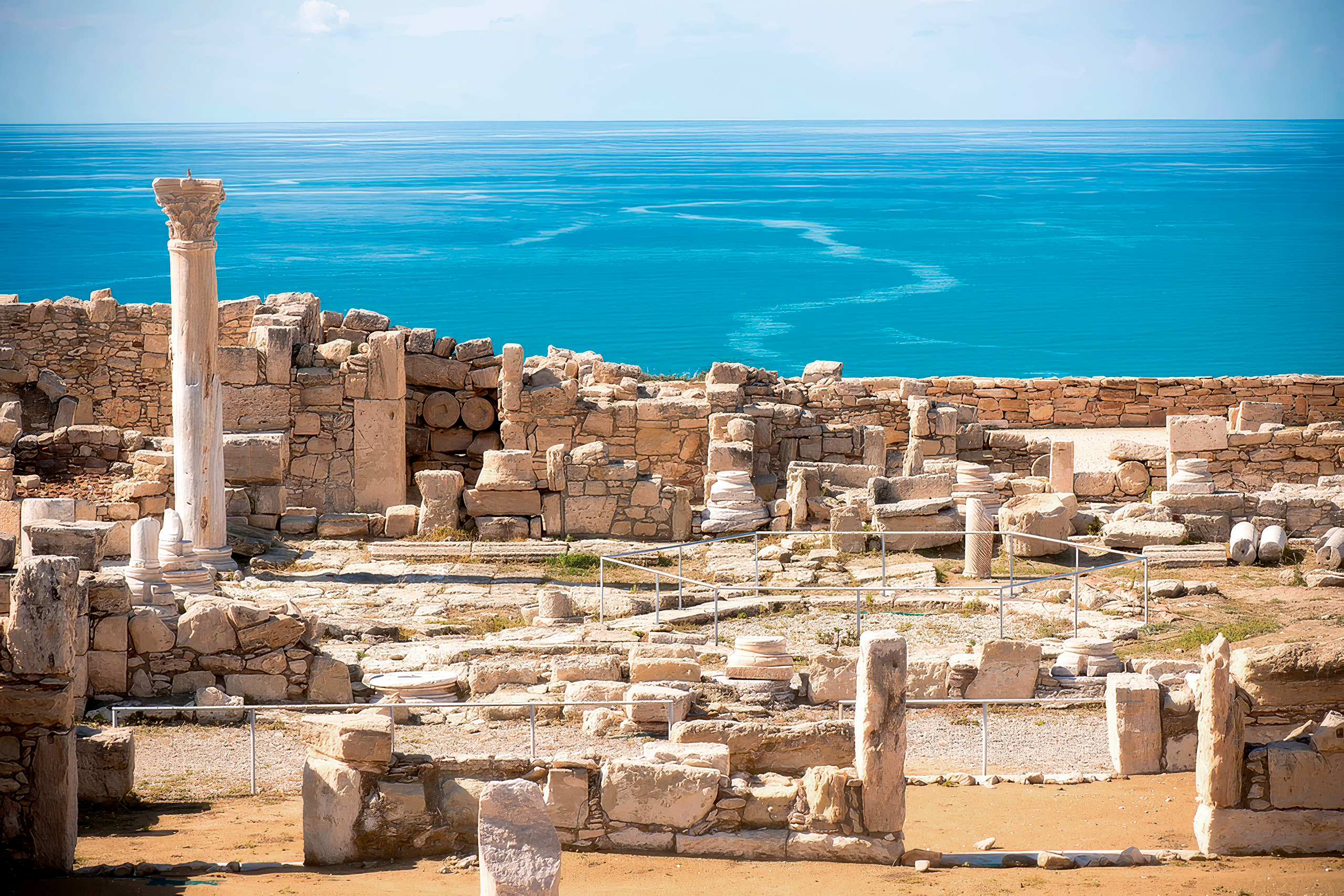
The city-kingdom was built on the hills of the area and overlooked and controlled the fertile valley of the river Kouris. Archaeological finds suggest that Kourion was associated with the Greek legend of Argos of Peloponnese, and its inhabitants believed they were descendants of Argean immigrants.
The site stands as one of Cyprus’s most impressive archaeological areas, preserving remains that span from the Bronze Age through the Byzantine period. The ruins tell stories of prosperity, political intrigue, natural disaster, and religious transformation.
Historical Background
According to Herodotus, Kourion was founded by Argives in the Late Bronze Age and was named for Koureus, the son of Cinyras, the first king of Cyprus. The Assyrian kings Sargon II and Esarhaddon mentioned Damasu, king of Kuri, in their records. During the Cypriot uprising against Persia in the 5th century BC, its king Stasanor betrayed his country, lending his support and troops to the Persians.
However, Kourion later supported Alexander the Great’s fight against the Persians in the 4th century BC. The last king, Pasicrates, joined Alexander’s campaign. The city flourished under Roman rule and became one of Cyprus’s most important urban centers. Inscriptions from Kourion attest elected offices that included Archon of the City, the council, clerk of the council and people, the clerk of the market, and various priesthoods including priests and priestesses of Apollo Hylates.
Kourion flourished and quality of life increased due to good trade with the rest of the Roman Empire. The city developed a theater, stadium, aqueduct, and elaborate public buildings that demonstrated wealth and sophistication.
The catastrophic earthquake that froze time
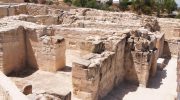
At around dawn on July 21, 365 AD, an earthquake decimated the ancient Roman city of Kourion. The quake was the biggest to hit the Mediterranean at the time. From 365 to 370, Kourion was hit by five strong earthquakes, as attested by the archaeological remains throughout the site, presumably suffering near-complete destruction. Among the team’s findings was a housing complex that had been buried in the quake, known now as Kourion’s Earthquake House.
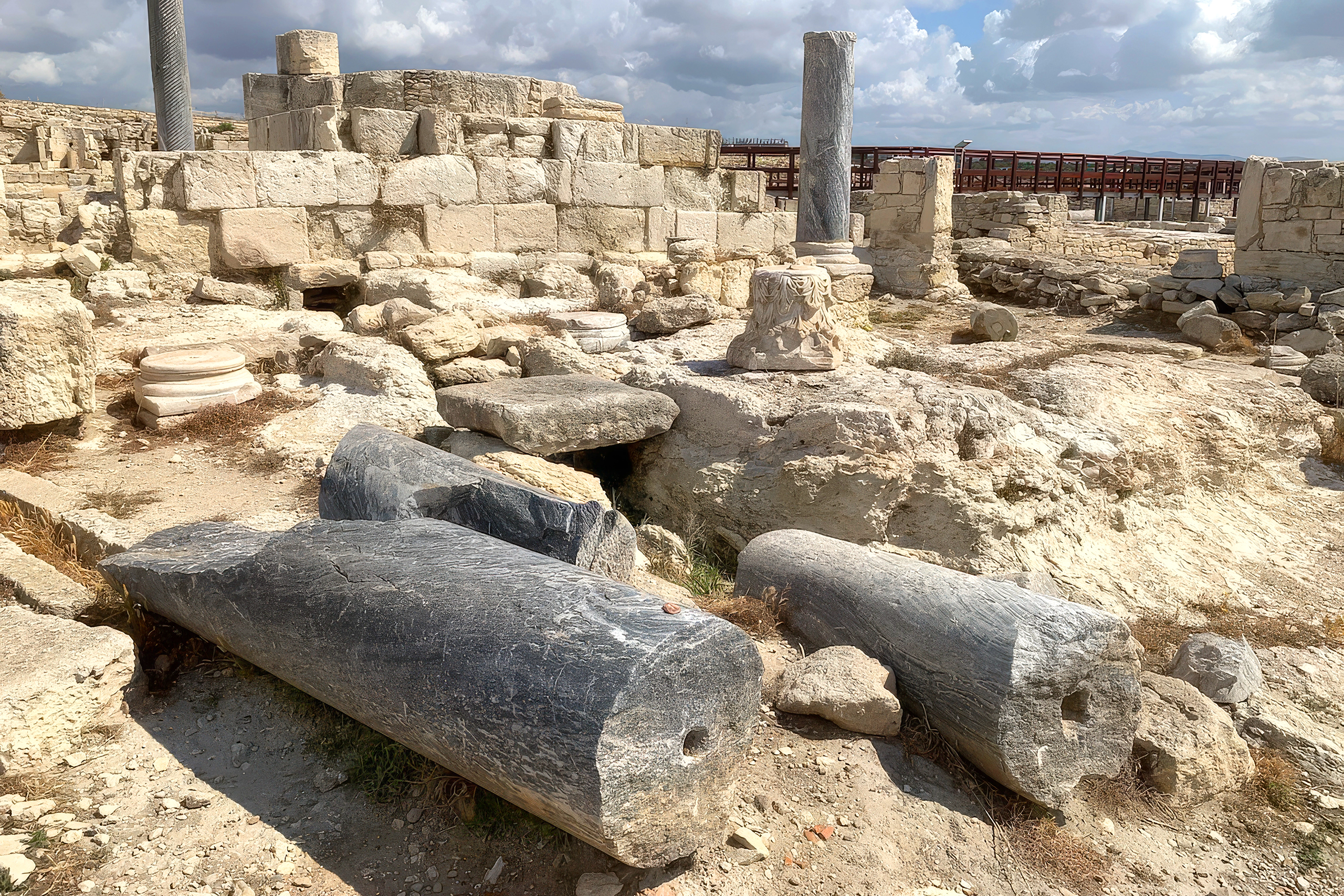
One scene the team revealed inside the complex in 1986 was particularly striking, three skeletons, two adults and a baby, cradled against each other with limbs shielding bodies, crushed under fallen plaster and 150-pound stone blocks. Within the damaged building, the skeletons of nine people were excavated, seven adults, a young girl, and a baby.
An 800-pound stone feeding trough was found in the courtyard, cracked in two by the earthquake, and tethered by an iron chain to the trough was the skeleton of a mule. The house was never rebuilt. This sealed archaeological context provides an unparalleled snapshot of daily life in the late Roman period.
A city that knew both gods and God
The Sanctuary of Apollo Hylates stood about 2.5 kilometers west of the acropolis. It was one of the main religious centers of ancient Cyprus, where Apollo was worshipped as god of the woodlands. The worship of Apollo on this site began as early as the eighth century BC and continued until the fourth century AD. The precinct is entered by two gates, the Kourion Gate and the Paphos Gate, with remains of a long Doric portico extending the whole way between the two gates.
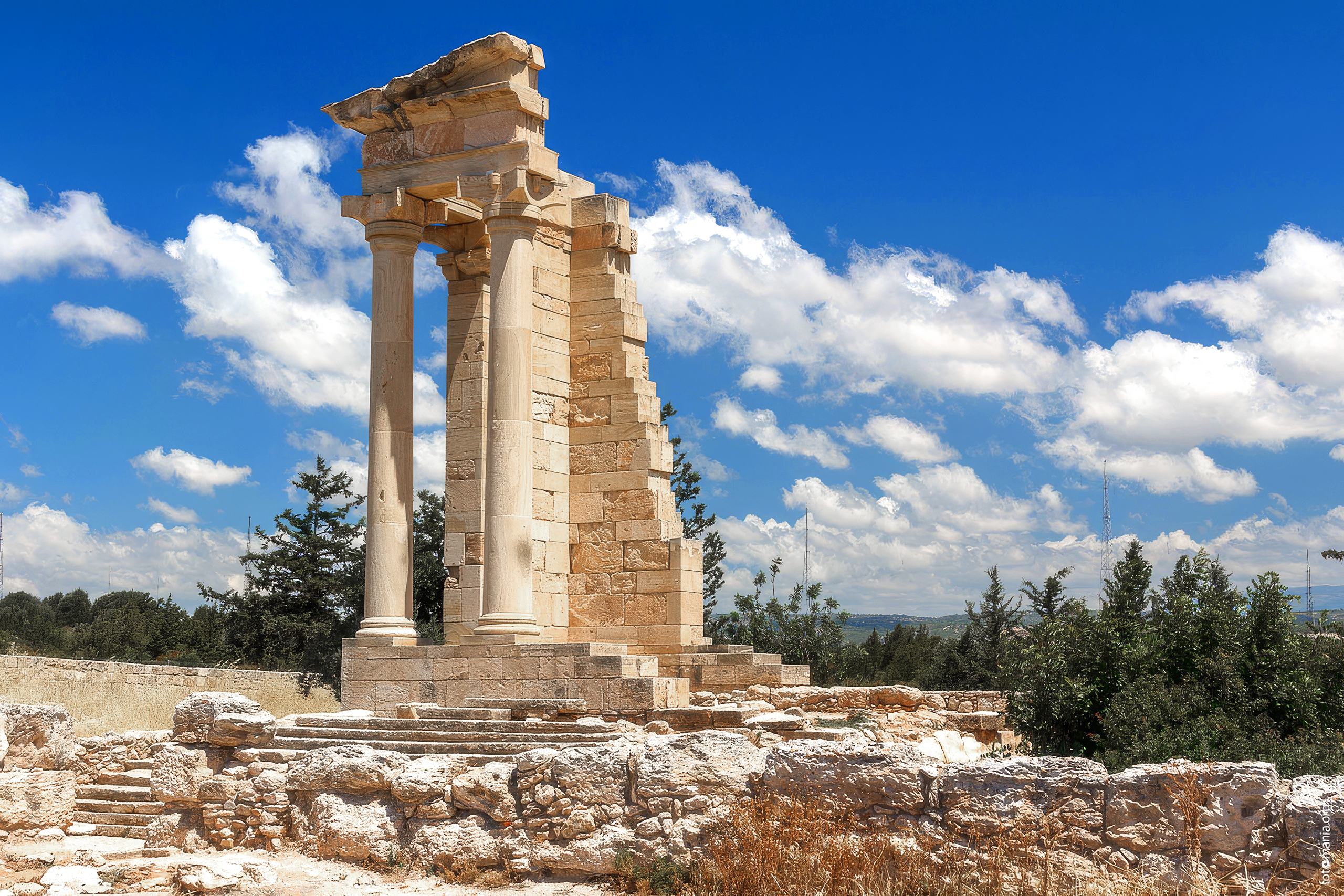
The inscription set in the front wall over one of the doors tells us that two of the rooms were erected by the emperor Trajan in AD 101. The sanctuary housed periodic festivals that included running races at a stadium located midway between Kourion and the temple complex. The temple was destroyed during the severe earthquakes of AD 332 and 342, when the sanctuary seems to have been definitely abandoned.
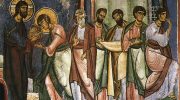
After the earthquakes, Christianity rapidly became dominant. In the late fourth and early fifth centuries, Kourion was reconstructed, though portions of the acropolis remained abandoned. The reconstruction included the ecclesiastical precinct on the western side of the acropolis.
Mosaics that speak across centuries
The site preserves spectacular mosaic floors that showcase Roman artistic achievement. The principal monuments uncovered to date include the House of Achilles, the House of the Gladiators, and the House of Eustolios, all paved with mosaics of the 4th and 5th centuries AD. The first panel of the Gladiators mosaic shows two gladiators fully armed with helmets, shields, and swords facing each other and ready to strike, with their names or nicknames indicated above them as ΜΑΡΓΑΡΕΙΤΗΣ and ΕΛΛΗΝΙΚΟΣ.
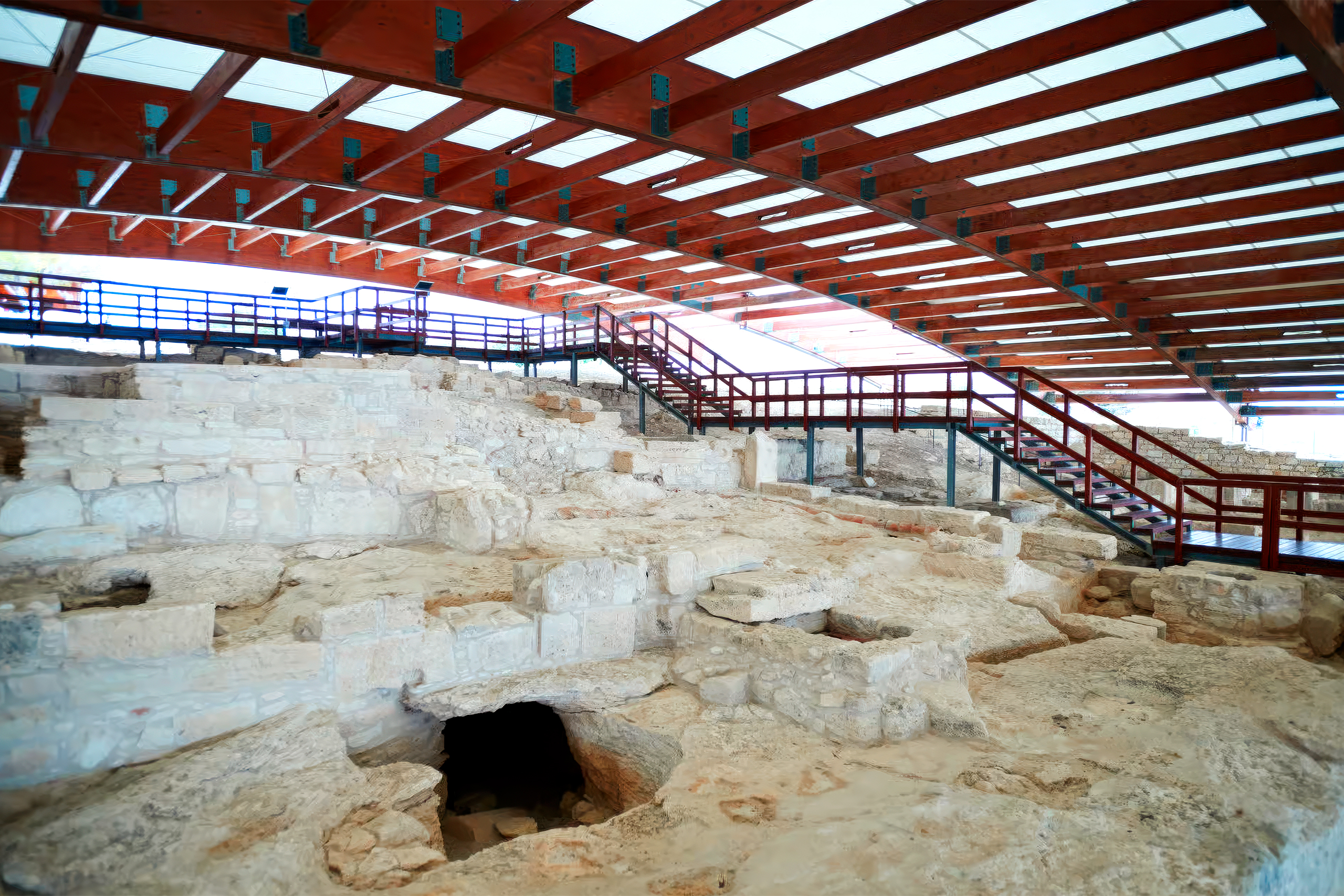
The second panel shows again two gladiators facing each other but with an unarmed figure between them. The House of Eustolios contains mosaics with inscriptions that document the transition from paganism to Christianity. One inscription gives the name of Eustolios, the builder of the baths, and refers to Phoebus Apollo as the former patron of Kourion, while another inscription specifically mentions Christ, an interesting commentary on the gradual transition from paganism to Christianity. These floors provide visual evidence of how religious identity transformed in the 5th century.
The magnificent theater overlooking the sea
The magnificent Greco-Roman theater, the site’s centerpiece, was built in the 2nd century BC and extended in the 2nd century AD. The theater has been restored and is now used for open-air musical and theatrical performances, mainly during the summer months, making it one of the most popular settings for high-caliber cultural events.
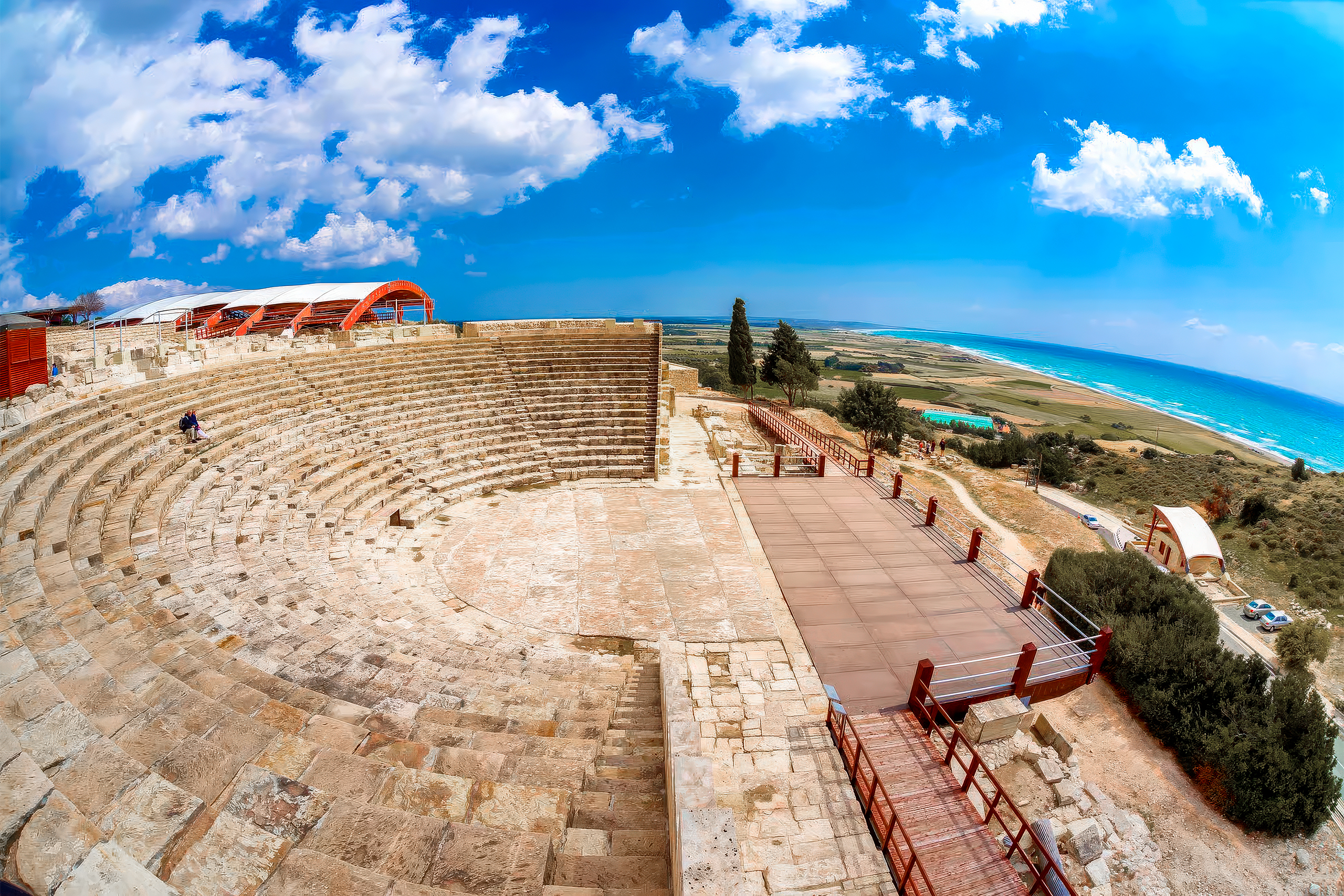
The theater could accommodate approximately 3,500 spectators. The theater was renovated twice, first under Caracalla around 214 to 217 CE to stage wild beast hunts, and again later in the century when it was converted back to its original function. The theater commands spectacular views over the Mediterranean, with the sea providing a dramatic backdrop for performances.
The restoration of the theater allows modern audiences to experience performances in the same space where ancient Cypriots watched Greek tragedies and comedies. The International Festival of Ancient Greek Drama uses the venue, connecting contemporary theater with its classical roots.
The stadium where athletes competed
The stadium of Kourion, located 0.5 km west of the acropolis and 1.1 km east of the Sanctuary of Apollo Hylates, was constructed during the Antonine period around 138 to 180 AD. The stadia at Kourion was 187 m long with a starting line marked by two circular stone posts set wide enough to accommodate eight runners. The dromos was enclosed on the north, west and south by a free-standing curved seating structure measuring 217 m long and 17 m wide, consisting of seven rows of seating supported by a 6 m thick ashlar wall.
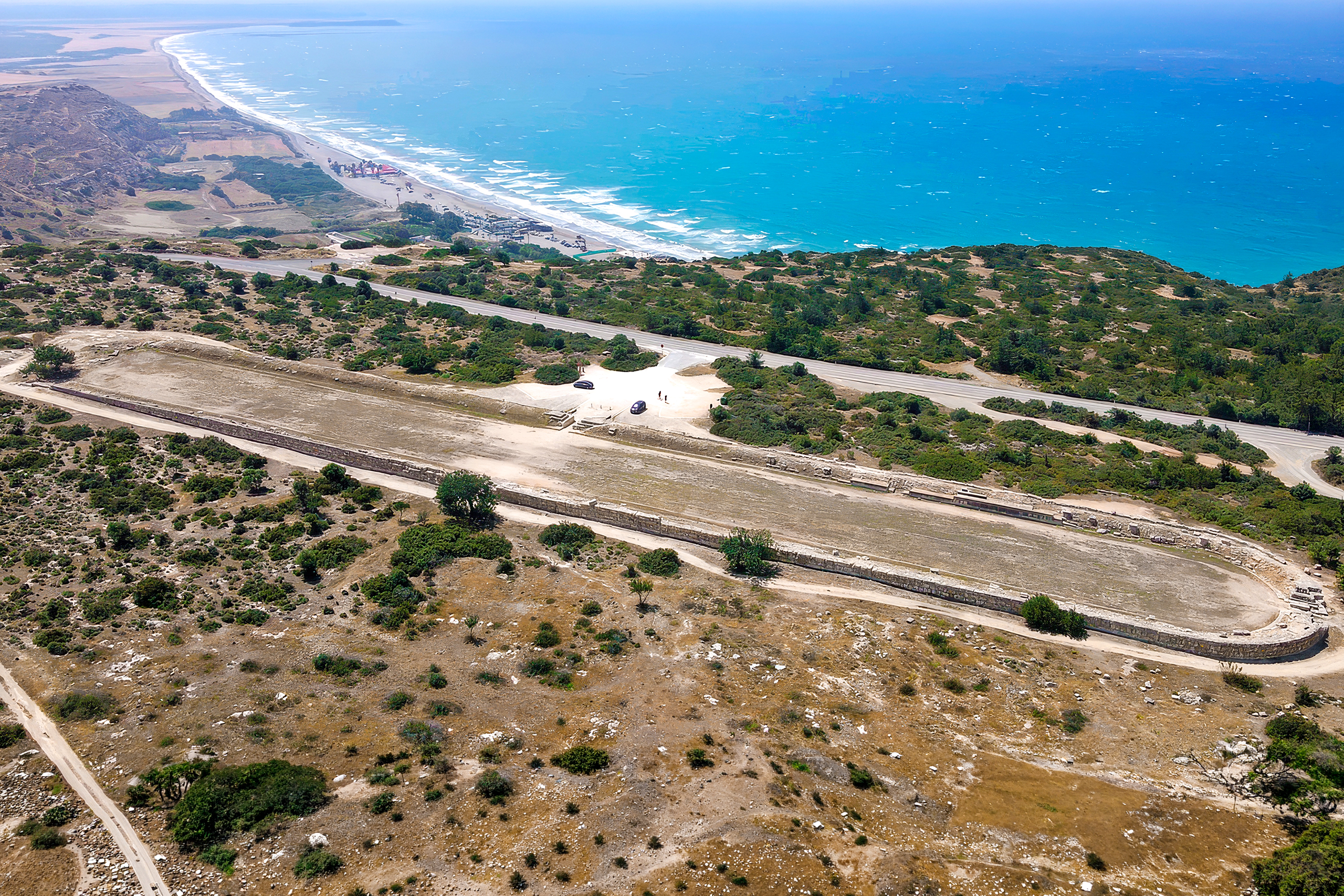
This structure provided sufficient seating for approximately 6,000 spectators. The stadium was 229 m long with seven rows of seating that could accommodate up to 6,000 spectators. The stadium was abandoned in the latter half of the 4th century after the catastrophic earthquakes. The stadium represents the only excavated example of its kind in Cyprus, making it particularly valuable for understanding ancient athletics on the island.
Planning your visit to ancient Kourion
The archaeological site is located approximately 19 kilometers west of Limassol on the road toward Paphos. The easiest access is by car via the A6 junction, a drive of about 30 minutes from Limassol city center. Public transportation is available on bus line 16 from Archiepiskopu Makariou III Avenue in Limassol toward Kourion Beach, a ride of about 40 minutes, followed by a ten-minute walk to the site. The site operates daily from 8:30 to 17:00 during winter months and from 8:30 to 19:30 during summer.
Admission costs 4.50 euros and includes access to the Kourion Museum in nearby Episkopi village. The museum houses artifacts from excavations and provides essential context for understanding the site. Visitors should wear comfortable shoes as the site covers a large area with uneven terrain. Sunscreen and water are essential, especially during summer, as shade is limited. A visitor center near the parking area contains a scale model that helps orient visitors to the site layout. The Sanctuary of Apollo Hylates requires a separate admission and is located 2.5 kilometers west along the road to Paphos. The stadium lies one kilometer to the west. Most visitors spend two to three hours exploring the main site.
Why Kourion matters to understanding Cyprus
Ancient Kourion provides tangible evidence of how Cyprus participated in the larger Mediterranean world for over 3,000 years. The city’s strategic location gave it control over fertile agricultural land and maritime trade routes. The archaeological remains demonstrate sophisticated urban planning, artistic achievement, and economic prosperity. The earthquake preservation allows modern researchers to study ancient life with a level of detail rarely available at other sites.
The transition from pagan worship at the Sanctuary of Apollo to Christian basilicas on the acropolis illustrates one of history’s most significant religious transformations. For Cyprus, Kourion represents continuity between ancient and modern identity, showing how the island has always been a crossroads of cultures, religions, and civilizations. The fact that performances still occur in the ancient theater creates a living connection between past and present, demonstrating that ancient spaces can still serve their original purposes after more than two millennia.