Explore Cyprus with Our Interactive Map

Explore our top stories and discover ideas worth your time.

Backbone Grain and Cereal Crops

Backbone Grain and Cereal Crops

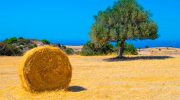
Wheat and barley have shaped Cyprus more deeply than many of its monuments or political eras. Grown across central plains and foothills, these cereals supported village life, defined everyday food traditions, and helped communities endure drought, famine, and political change. This article explores how cereal farming developed on the island, why it mattered socially and culturally, and how grain continues to influence Cypriot life today. cyprusfoodmuseum-com An Island Fed by Grain, Not Spectacle Cyprus is often described through coastlines, ruins, and mythology, yet for most of its history, the island was sustained by something far more modest. Wheat and barley were not symbols of wealth or power. They were tools of survival. For thousands of years, grain farming shaped daily routines rather than grand narratives. Sowing followed the first autumn rains, harvest arrived before the summer heat became destructive, and storage was as important as production itself. In this sense, cereals formed the island’s quiet infrastructure, supporting life without drawing attention to themselves. Where Grain Grows and Why It Grows There Cereal cultivation in Cyprus has always been closely tied to geography. The broad central lowland known as the Mesaoria Plain lies between the Troodos Mountains and the Kyrenia range. Its relatively flat terrain and workable soils made it the island’s most reliable grain-producing region. fergusmurraysculpture-com Smaller cereal fields also…

Read more
Sanctuary of Opaon Melanthios

Sanctuary of Opaon Melanthios

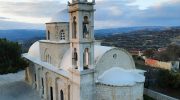
A rural shrine dedicated to a local healing deity (Melanthios), illustrating the existence of indigenous Cypriot gods worshipped alongside the Greek pantheon. google-com The Sanctuary of Opaon Melanthios stands as a profound example of Cyprus's religious syncretism, where an indigenous deity associated with shepherds and rural healing was venerated in harmony with Greek gods like Pan and Apollo. Situated on the 'Petros Anthropos' hill north of Amargeti in the Paphos district, this rural shrine highlights the island's unique spiritual landscape, blending local Cypriot traditions with Hellenistic influences. As a healing deity, Opaon Melanthios, whose name translates to "Dark Shepherd", was invoked for protection over flocks, health, and fertility, reflecting the agrarian society's reliance on divine intervention for well-being and prosperity. This site underscores Cyprus's role as a cultural crossroads, where native gods coexisted with imported pantheons, fostering a resilient worship that endured from the Archaic period through Roman times, and continues to intrigue archaeologists today. A Rural Shrine of Syncretism The Sanctuary of Opaon Melanthios, perched on a modest hill overlooking the verdant valleys of Amargeti, embodies the quiet devotion of Cyprus's rural communities to a deity who bridged local folklore and Greek mythology. Chatgpt-reconstruction Covering a small area of rocky terrain dotted with ancient olive trees, the site features remnants of a temple structure, altars, and votive deposits that…

Read more

Archangelos Michael Church

Archangelos Michael Church

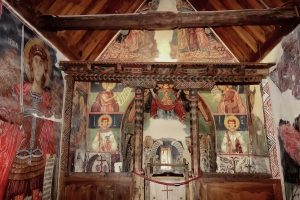
The Church of Archangelos Michael stands in the mountain village of Pedoulas in the Troodos region of Cyprus and forms part of the UNESCO World Heritage group known as the Painted Churches of the Troodos Region. Dated to 1474 by an inscription inside the building, the church belongs to the late Byzantine period, a time when Cyprus had passed through political change yet retained strong Orthodox artistic traditions. Unlike earlier monuments that reflect close ties to Constantinopolitan styles, this church is celebrated for its vivid and more rustic wall paintings, which represent a local interpretation of Byzantine artistic language. The monument therefore offers valuable insight into how artistic traditions continued to evolve in rural settings during the later medieval centuries. sobory-ru Pedoulas was a small mountain community where agriculture and local craftsmanship shaped daily life. In such villages, churches were central to communal identity, serving as places of worship, gathering, and cultural continuity. The Church of Archangelos Michael emerged within this context as both a spiritual center and a statement of local devotion. Its modest scale and materials reflect the resources of a rural population, yet its decoration demonstrates that even remote communities participated actively in the visual culture of the Orthodox world. The church preserves a moment when Byzantine art had become more regional in character while maintaining its…

Read more