All Articles

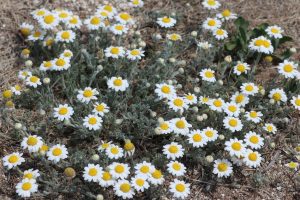
Anthemis or Mayweed in Cyprus

Anthemis or Mayweed in Cyprus

Picture a sun-drenched Cypriot meadow in spring, dotted with cheerful daisy-like flowers that bob like tiny suns on slender stems, their delicate scent mingling with the salty sea air. These are the Anthemis or Mayweed species, often mistaken for their chamomile cousins, a group of wildflowers that paint the island's landscapes with subtle beauty. But what tales do these unassuming blooms tell of Cyprus' wild heart? Getting Acquainted with the Island's Daisies Anthemis is a genus of flowering plants in the vast Asteraceae family, which includes everything from sunflowers to dandelions, showing how these humble herbs fit into a broader world of composite blooms that rely on wind and insects for their spread. In Cyprus, they're known as wild chamomiles…

Read more
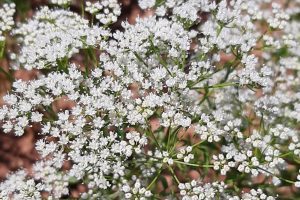
Wild Anise (in Cyprus)

Wild Anise (in Cyprus)

On warm spring mornings across Cyprus, a subtle licorice-like fragrance drifts through sunlit fields and village gardens. This comes from a graceful little herb known as Anise, or Pimpinella anisum. Though modest in size, it has woven itself into the island’s traditions for flavour, comfort, and quiet beauty inviting us to look closer at one of the Mediterranean’s most aromatic treasures. Discovering the Gentle Anise Herb Anise is a charming annual plant belonging to the Apiaceae family the vast “umbellifer” clan that also includes carrots, parsley, fennel, and dill. In broader terms, these plants are famous for their umbrella-shaped flower clusters and distinctive scents. Here in Cyprus, our species stands out as a delicate member of this group, offering sweet…

Read more
Mediterranean hawthorn (Azarole)

Mediterranean hawthorn (Azarole)

Wander almost any rocky hillside or sunlit maquis in Cyprus during a warm spring day, and you may spot a graceful small tree loaded with clusters of snowy-white flowers that seem to glow against the green. Later in the season those flowers give way to plump, golden-orange fruits that look like miniature apples or medlars hanging like little lanterns among the leaves. This is the azarole hawthorn, a quiet treasure of the island’s wild places that has sweetened Cypriot tables and stories for thousands of years. A Rose-Family Gem of the Mediterranean Crataegus azarolus, commonly known as the azarole, Mediterranean hawthorn or Mediterranean medlar, belongs to the vast Rosaceae family the same clan as apples, roses and cherries. In Cyprus…

Read more
Agaves

Agaves

Stand on a rocky hillside in southern Cyprus at the end of a long, dry summer and you may suddenly notice a giant green starburst on the slope. Then, one day, a towering stalk shoots skyward like a living flagpole, topped with a candelabra of creamy-yellow flowers. This is the agave of Cyprus a dramatic New-World succulent that has quietly become one of the island’s most eye-catching landscape characters. Meet the Agaves Agaves belong to the asparagus family (Asparagaceae), in the subfamily Agavoideae. These are tough, rosette-forming succulents perfectly built for arid life. The genus Agave contains around 200 species, nearly all native to the deserts and dry hills of Mexico, the southern United States and Central America. In Cyprus…

Read more
Cyprus Big Root Dandelion

Cyprus Big Root Dandelion

Scattered across Cyprus's fields and paths, a sunny yellow flower known as the Cyprus dandelion catches the eye like a little burst of cheer. This humble plant, often mistaken for its common cousins, has roots in ancient remedies and a knack for thriving where others might not. But what makes it stand out in the crowd of dandelions, and why has it been cherished for centuries? Getting to Know This Cheerful Meadow Dweller The Cyprus dandelion, or Taraxacum cyprium, is a wild flowering plant that's part of the vast dandelion family. It's like the familiar backyard weeds we all know, with yellow blooms that turn into fluffy seed balls, but this one has a special Cypriot twist. Locally called "Πικραλίδα"…

Read more
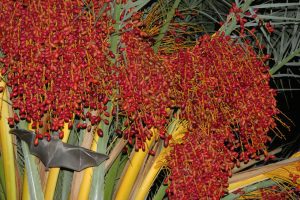
Cyprus Bats

Cyprus Bats

Wings in the Order of Things Bats belong to the order Chiroptera, a name that comes from the Greek words cheir (hand) and pteron (wing) literally, "hand-winged." With over 1,300 species worldwide, bats form the second largest order of mammals on Earth, surpassed only by rodents. Despite what many people assume, they are not related to mice or rats at all. Genetically speaking, bats are in fact closer to humans than they are to rodents. The order is split into two broad groups: the megabats large, fruit-eating species that navigate primarily by sight and the microbats, smaller insect-hunters that navigate through the darkness using echolocation, a biological sonar so precise it can detect a moth's wing-beat in total blackness. Cyprus…

Read more
Common Myrtle In Cyprus

Common Myrtle In Cyprus

Picture yourself on a sun-drenched slope in Cyprus, where the air carries a sweet, spicy fragrance whenever a breeze stirs the shrubs. Amid the rocky terrain and scattered pines, you encounter clusters of glossy green leaves dotted with delicate white flowers. This is the common myrtle, a quiet but ever-present companion in the island’s wild landscapes. A Shrub Steeped in Mediterranean Grace Myrtus communis, known simply as the common myrtle, belongs to the Myrtaceae family a group that includes fragrant giants like eucalyptus and clove trees. In Cyprus it grows as an evergreen shrub or small tree, reaching up to five metres tall. It is one of only two species in its genus worldwide, the other being a rare Saharan…

Read more
Bosea Cypria of Cyprus

Bosea Cypria of Cyprus

High on a sun-bleached limestone cliff in the Akamas or along a rocky gulley near Paphos, you might spot a graceful evergreen shrub with deep-green leaves cascading like a living curtain. In late summer its branches glow with clusters of bright red berries that shine like tiny rubies against the rock. This is Bosea cypria, a quiet but extraordinary survivor that has clung to the island’s rugged edges for millions of years. An Ancient Shrub from the Amaranth Family Bosea cypria belongs to the Amaranthaceae family – the same group that gives us spinach, beetroot and colourful garden amaranths. Unlike most of its relatives, which are soft-stemmed herbs, this species is a woody evergreen shrub, one of only three living…

Read more
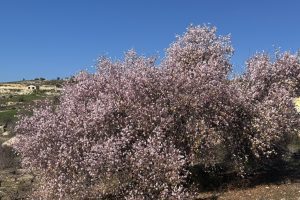
Almond Tree In Cyprus

Almond Tree In Cyprus

Picture a Cypriot hillside in late February, when most trees are still bare. Suddenly, clouds of delicate pink and white flowers appear as if by magic, painting the landscape in soft pastel tones weeks before any leaves unfold. This early burst of beauty belongs to the almond tree, a cherished symbol of spring and one of the island’s most generous gifts. A Tree Steeped in Mediterranean Sweetness Prunus amygdalus, the almond tree, belongs to the Rosaceae family – the same group as peaches, cherries and roses. In Cyprus it grows as a graceful deciduous tree, usually 4–10 metres tall, with a rounded crown and slender branches. It thrives in the sunny, well-drained soils of the island’s valleys, hillsides and traditional…

Read more