4 minutes read See on map

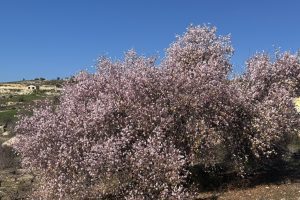
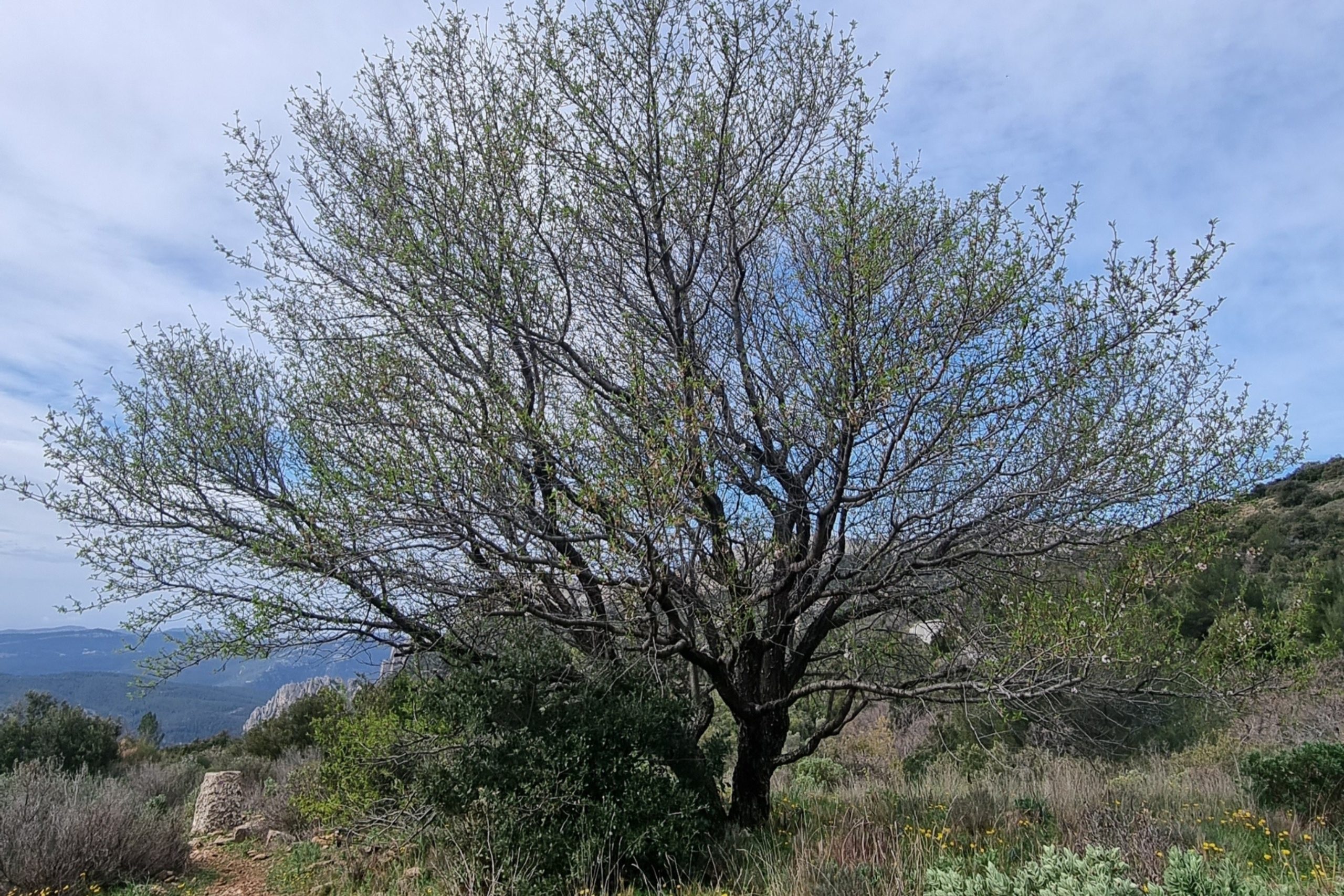
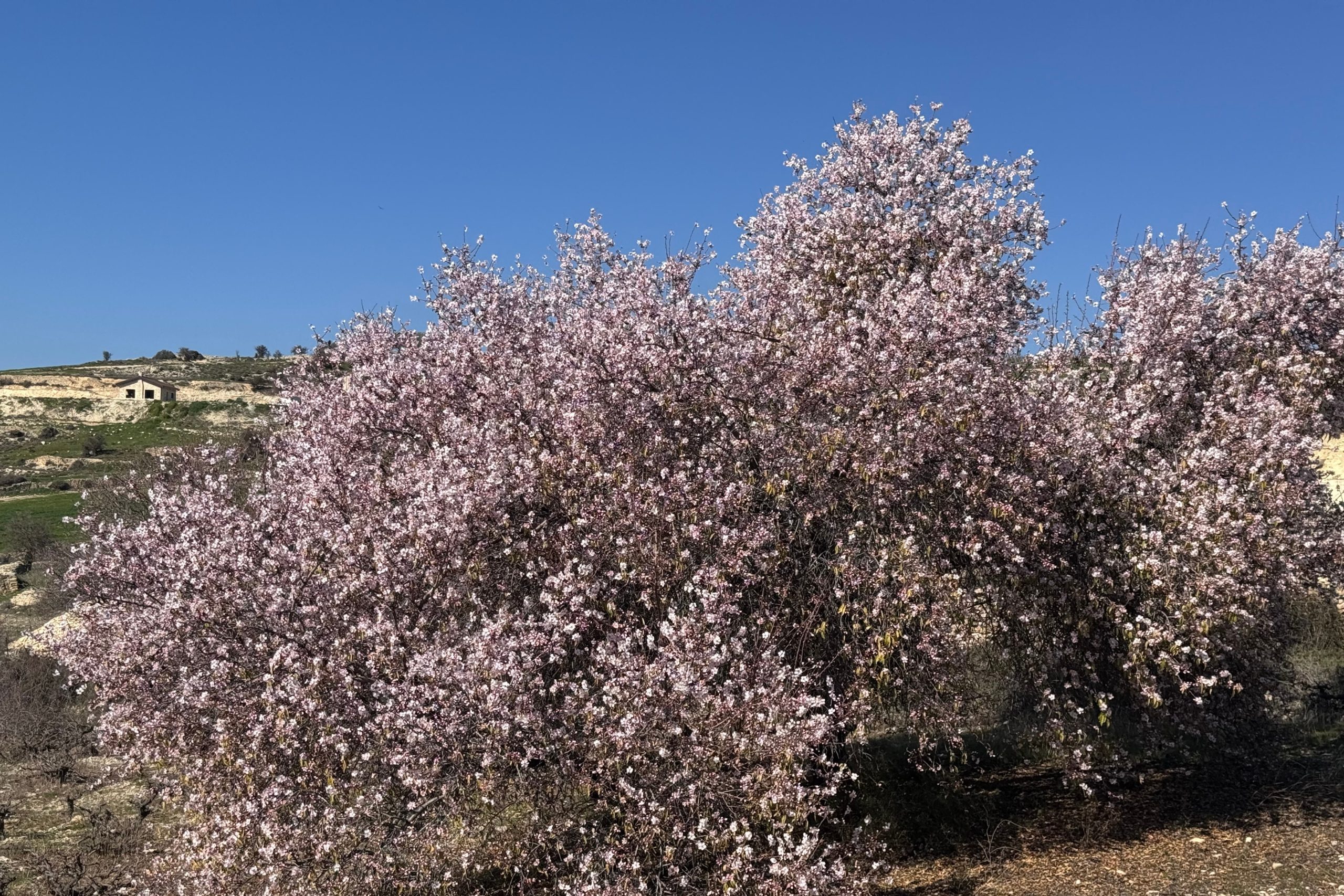
Picture a Cypriot hillside in late February, when most trees are still bare. Suddenly, clouds of delicate pink and white flowers appear as if by magic, painting the landscape in soft pastel tones weeks before any leaves unfold. This early burst of beauty belongs to the almond tree, a cherished symbol of spring and one of the island’s most generous gifts.
Konstantin-Solovev

A Tree Steeped in Mediterranean Sweetness

Prunus amygdalus, the almond tree, belongs to the Rosaceae family – the same group as peaches, cherries and roses. In Cyprus it grows as a graceful deciduous tree, usually 4–10 metres tall, with a rounded crown and slender branches. It thrives in the sunny, well-drained soils of the island’s valleys, hillsides and traditional orchards.

Roots in the Dawn of Agriculture

Almonds are among the very first fruit trees domesticated by humans, with archaeological evidence from the Early Bronze Age in the Levant and remains found in Tutankhamun’s tomb. The wild ancestor likely grew in the hills of western Asia and the eastern Mediterranean. In Cyprus, cultivation dates back thousands of years; the tree appears in ancient texts and has been part of village life for generations. Early naturalists such as Unger and Kotschy noted almond orchards during their 1862 explorations, while modern forest and agricultural records show how the almond has been woven into the island’s cultural and economic fabric ever since.
www.inaturalist.org

Elegant Flowers and Hidden Treasures

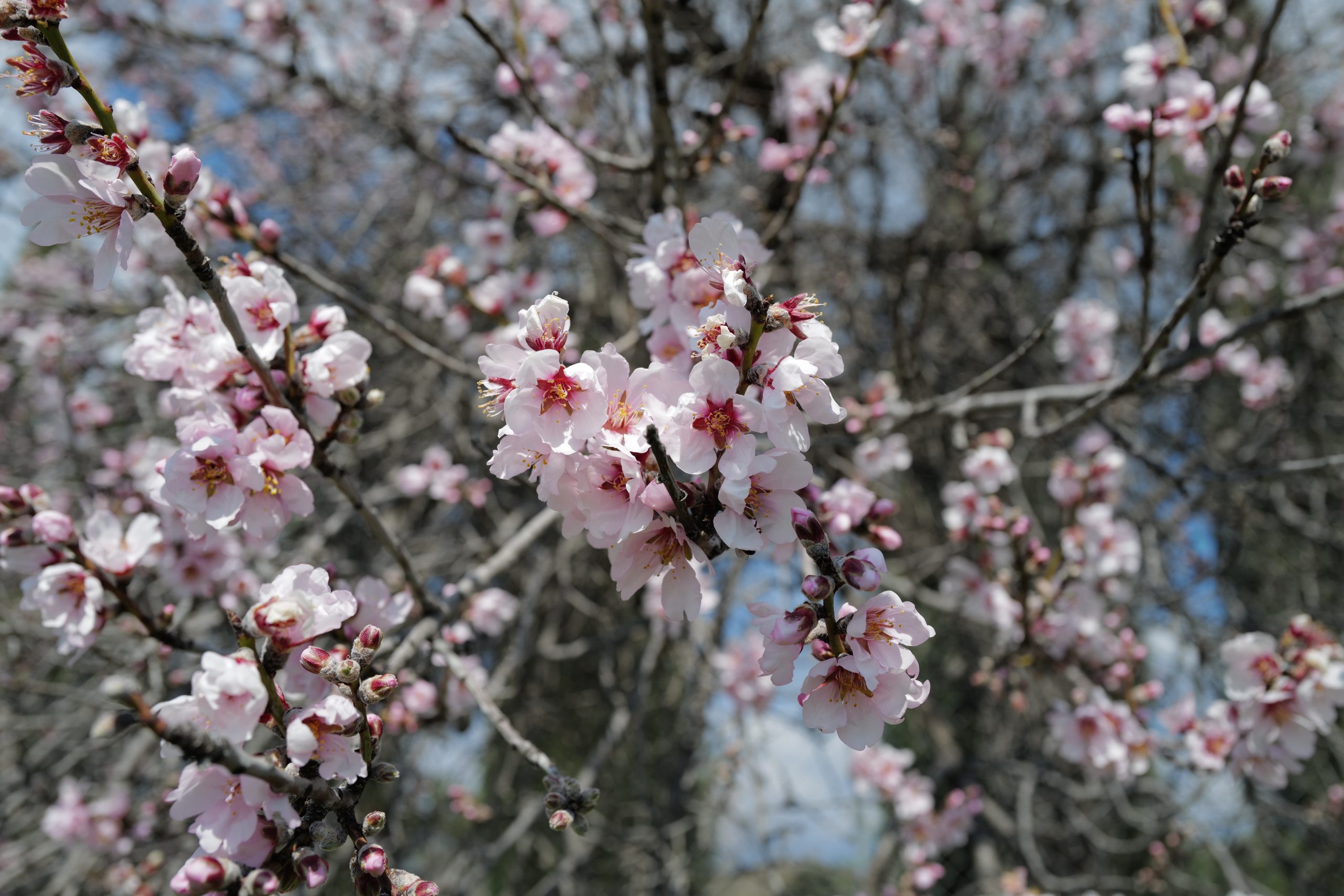
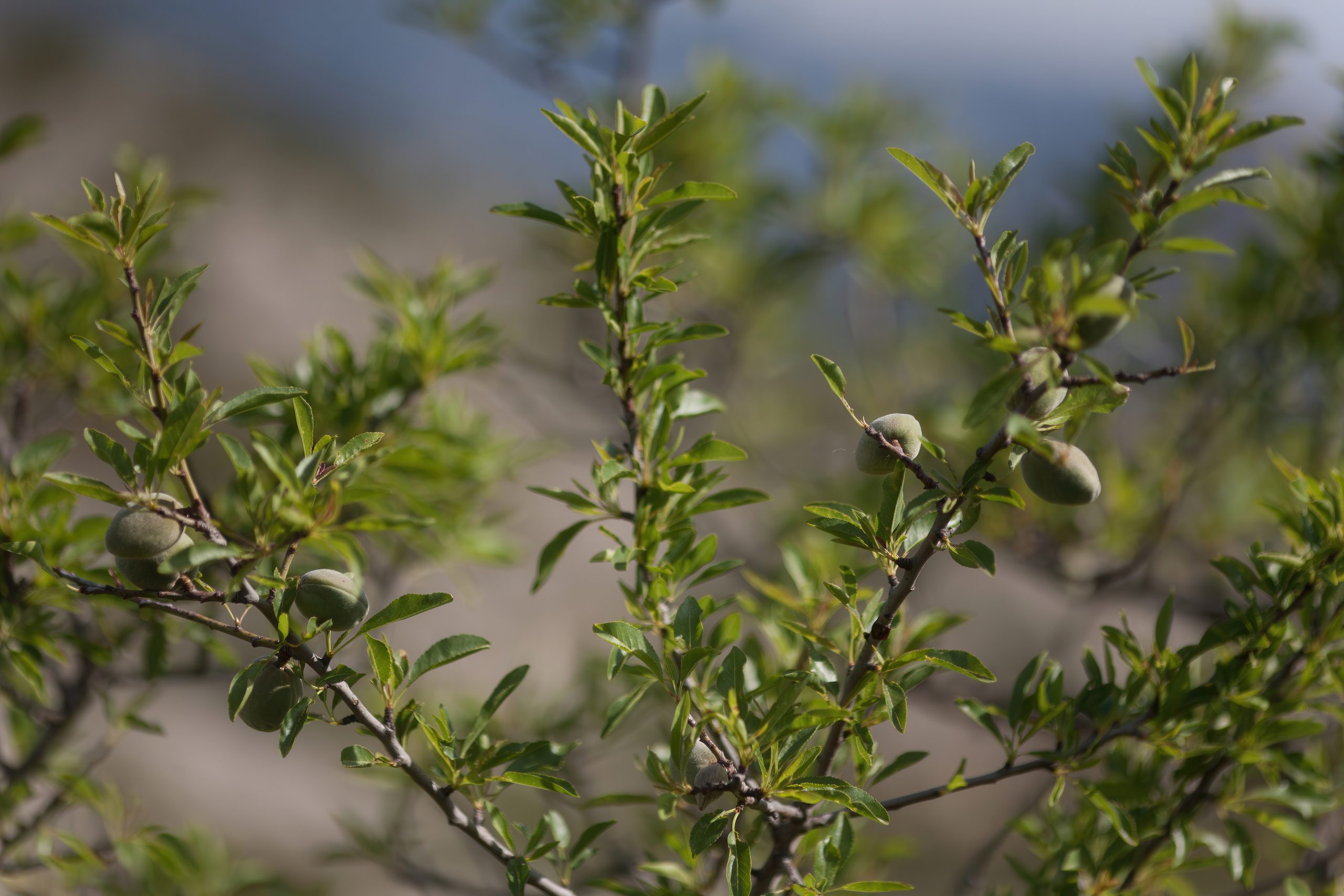
The almond is famous for flowering before its leaves appear – usually from February to March. The blossoms are 3–5 cm across, white to pale pink, with five petals and a sweet fragrance that draws bees from far and wide. The leaves that follow are long, lance-shaped and finely toothed. By late summer the fruit ripens: an oval drupe with a green, velvety hull that splits open to reveal a hard, pitted shell protecting the familiar almond kernel. Sweet varieties are eaten fresh, roasted or turned into Cyprus specialities; bitter ones are used sparingly for their aromatic oil.

Fun Facts to Share Under the Blossoms

  • In Cyprus it is called Αμυγδαλιά (Amygdalía) – the ancient Greek word ἀμυγδάλη that also gave us the English “almond” and even the brain structure “amygdala” because of the kernel’s shape.
  • Almonds were one of the earliest domesticated trees because they can grow true from seed – no grafting needed.
  • In the LIFE-ArgOassis project, Prunus amygdalus was carefully selected as one of only 18 resilient species for hedgerow planting in burnt and degraded lands; its deep roots and drought tolerance make it ideal for restoring soil and fighting desertification.
  • Green (unripe) almonds are a spring delicacy in Cyprus – eaten whole with salt or in traditional meze.
  • A single mature tree can produce 10–20 kg of nuts in a good year.
www.inaturalist.org

Deeper Roots in Nature and Tradition

Botanically, the almond is superbly adapted to Mediterranean climates: it needs a short winter chill to flower but loves the long, dry summers of Cyprus. In the broader landscape it grows alongside wild olive, pistachio and carob, enriching the maquis and providing early nectar for pollinators. Its kernels are packed with healthy fats, vitamin E, protein and minerals – making them a nutritional powerhouse in traditional Cypriot sweets like soutzoukos (grape must rolls with almonds), amygdalota biscuits and Easter koulouria.

Today the almond remains a cornerstone of Cypriot agriculture and culture. You see it in village gardens, commercial orchards around Limassol and Paphos, and now in the new resilient hedgerows of the LIFE-ArgOassis project, where it helps farmers combat climate change while producing a valuable crop. Its early blossoms are celebrated in spring festivals, and its nuts flavour everything from coffee to wedding sweets linking ancient heritage with modern life.

Experiencing the Almond for Yourself

The most magical time is late February to early March, when entire valleys burst into bloom. Drive or walk through the almond orchards near Akrotiri, the hills around Omodos, or the roads between Platres and Troodos. In autumn, visit during harvest to see (and taste!) the fresh nuts. Many farms offer picking experiences or guided tours. No special equipment needed – just comfortable shoes and a camera to capture the pink clouds against blue skies.
Konstantin-Solovev

Why the Almond Matters

In a changing climate the almond tree shows us how beauty, resilience and usefulness can grow together. From its ancient origins in the Levant to its role in today’s LIFE-ArgOassis hedgerows, Prunus amygdalus continues to nourish both body and soul on our island. Next time you see those first pink blossoms lighting up the bare hills, remember: the almond is not just a tree – it is a promise of renewal, a taste of Cyprus history, and a sweet reminder that even in tough times, life finds a way to bloom.
Discover more about the fascinating edges of Cyprus

Endangered Plants of Cyprus

Endangered Plants of Cyprus

Cyprus hosts approximately 2,000 plant species, with 146 being endemic to the island. This means they exist nowhere else on Earth. The flora of Cyprus developed over millions of years through a combination of geographic isolation, diverse geology, and varying climate zones. Roland Tsantekidis Today, around 258 plant taxa are classified as threatened according to international conservation standards. These include species listed as Critically Endangered, Endangered, or Vulnerable by the International Union for Conservation of Nature. Historical Background The island's plant diversity reflects its position at the crossroads of three continents. Cyprus sits in the eastern Mediterranean where Europe, Asia, and Africa meet. This location allowed species from different regions to colonize the island over time. The Troodos Mountains, formed from ancient oceanic crust pushed above sea level, created unique habitats on igneous and serpentine rocks. These challenging soils fostered the evolution of specialized plants found only in Cyprus. Human activity has shaped the landscape since 8200 BC. Traditional agriculture created semi-natural habitats where wild plants thrived alongside cultivated crops. However, modern development pressures have accelerated habitat loss, particularly in coastal areas where tourism infrastructure expands rapidly. Notable Endangered Species The Cyprus Cedar (Cedrus brevifolia) grows exclusively in five small locations within the Troodos Mountains at elevations of 1,200 to 1,900 meters. This tree is classified as Vulnerable, with only…

Read more
Rare Plants and Animals of Cyprus High-Elevation Zones

Rare Plants and Animals of Cyprus High-Elevation Zones

Cyprus hosts an extraordinary concentration of endemic species in its high-elevation zones, particularly within the Troodos Mountains. At altitudes between 1,000 and 1,952 meters, unique geological conditions combine with Mediterranean climate variations to create habitats found nowhere else on Earth. The island supports 143 endemic plant species, with 47 of these confined exclusively to the Troodos range above 1,000 meters. These mountains function as a natural laboratory where volcanic soils, steep valleys, and climate extremes have shaped remarkable biodiversity over millions of years. kiprinform-com The Troodos Mountain Environment Mount Olympus, also called Khionistra, rises to 1,952 meters and represents the highest point in Cyprus. The Troodos range occupies roughly half the island's total area, its core composed of igneous rocks formed from elevated ocean shell and lithospheric mantle. This volcanic substrate creates serpentine soils with mineral compositions drastically different from the island's lowlands. commons-wikimedia-org Deep valleys carved by streams such as Pedios, Yelias, Serakhias, Ezousa, Diarizos, and Xeropotamos provide north and northwest-facing slopes where humidity accumulates and temperatures moderate. dreamstime-com Between the thermophilous lower slopes and the semi-alpine summit zone, elevation creates distinct vegetation bands. Black pine forests dominate from 1,300 to 1,950 meters, replacing Calabrian pine at the transition point. The highest slopes support foetid juniper in what approaches an alpine environment. Annual precipitation ranges from 300 millimeters on…

Read more
Whispers from the Wild Stalks

Whispers from the Wild Stalks

Imagine wandering through the sun-drenched fields of Cyprus, where a plant towers like a sentinel from ancient myths, its yellow blooms catching the breeze. This article invites you on a gentle journey to discover the giant fennel, a resilient Cypriot native that bridges legends of fire-thieves and hidden fungal treasures, leaving you pondering the quiet wonders hidden in everyday landscapes. www.inaturalist.org A Gentle Giant's Greeting The giant fennel, known scientifically as Ferula communis, is a member of the vast carrot family, Apiaceae, which includes familiar herbs like parsley and dill. It's a perennial plant that dies back each summer only to burst forth anew, standing tall in open meadows and reminding us of nature's enduring cycles in the Mediterranean world. Echoes from Mythical Times In the mists of ancient history, giant fennel played starring roles in Greek legends that echoed across the sea to Cyprus. Prometheus, the daring Titan, famously hid stolen fire from the gods inside its hollow stem to gift humanity warmth and light. Followers of Dionysus, the god of wine and revelry, wielded staffs made from its stalks wrapped in ivy and topped with pine cones as symbols of joy and fertility during ecstatic festivals. www.inaturalist.org On Cyprus itself, historical accounts from 19th-century explorers describe locals crafting stools and decorative items from its sturdy wood, a practice…

Read more