All Articles

Cyprus Medieval Naval Fortresses

Cyprus Medieval Naval Fortresses

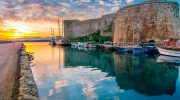
Cyprus has always occupied a strategic position between continents, and during the medieval period this geography transformed the island into one of the most heavily fortified maritime strongholds in the Mediterranean. Control of Cyprus meant control of ports, sea lanes, and access to trade routes linking Europe, the Middle East, and North Africa. As a result, successive powers reshaped its coastline with castles, harbor defenses, and naval infrastructure, turning the island itself into a living system of maritime control. This is not a story of isolated fortresses. It is the story of how the sea dictated power, architecture, and survival in medieval Cyprus. Why the Sea Defined Power in Medieval Cyprus In the medieval Mediterranean, maritime power was less about…

Read more

How Taxis Complement Public Transport in Cyprus

How Taxis Complement Public Transport in Cyprus

Cyprus divides taxi services into three distinct categories. Urban taxis operate within city limits and run 24 hours daily. These white or beige vehicles display a taxi sign on the roof and use meters to calculate fares based on government regulations. Rural taxis serve villages and small towns outside major urban areas. These vehicles cannot pick up passengers from airports or seaports unless they have written instructions for specific customers. Rural taxis do not use meters and instead charge fixed rates based on distance and destination. Shared intercity taxis bridge the gap between cities through Travel Express, the only licensed provider of this service. These 8-seater air-conditioned minibuses run between major towns at fixed rates, offering a faster alternative to…

Read more
Christian Minority Traditions

Christian Minority Traditions

Cyprus is home to several officially recognized minority communities that form part of its broader religious and cultural landscape. Alongside the Greek Orthodox majority, three long-established minority groups are traditionally identified in official records: Maronites, Armenians, and Latin Catholics. Together, these communities represent a small but historically significant portion of the population, estimated at under five percent in total. The 1960 Constitution of the Republic of Cyprus formally recognized these groups as religious minorities and provided parliamentary representation for each community. This arrangement reflects the island’s multi-layered social structure, shaped by centuries of migration, trade, and political change in the eastern Mediterranean. Each community developed its own linguistic, cultural, and institutional identity while also integrating into wider Cypriot society. Their…

Read more
Central squares of Cyprus

Central squares of Cyprus

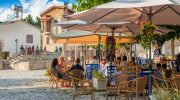
Across Cyprus, the village square is the island’s most durable social design: a shared open space where movement, news, rest, and routine naturally meet. Shaped by walkable village layouts, scarce flat ground in mountain settlements, and practical features like fountains and cafés, the square became a daily system rather than a decorative centre. This article explains how Cypriot squares formed, what details make them work, and how they still balance continuity with modern pressure.  The Village’s Shared Living Room At first glance, a Cypriot village square may appear simple: a paved open area, a few cafés, perhaps a church or mosque nearby. But simplicity here is deliberate. The square was never designed as a monument. It grew organically as a…

Read more
Cultural Events in Cyprus

Cultural Events in Cyprus

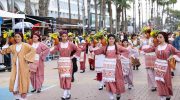
Cyprus hosts a vibrant calendar of festivals and cultural events that showcase the island's heritage, agricultural traditions, and artistic achievements. These celebrations transform towns and villages into centers of music, dance, food, and community spirit. The annual cycle includes religious festivals that blend ancient pagan customs with Orthodox Christianity, agricultural celebrations honoring harvests and traditional products, athletic competitions that draw international participants, and arts festivals featuring world class performances. Unlike generic tourist entertainment, these events emerge organically from Cypriot culture and attract both locals and visitors seeking authentic experiences. The calendar reflects Cyprus's position as a Mediterranean crossroads where Greek, Middle Eastern, and European influences merge to create distinct traditions. Limassol Wine Festival pours free drinks for nine days The…

Read more
Artos Cultural and Research Foundation (Nicosia)

Artos Cultural and Research Foundation (Nicosia)

The Artos Cultural and Research Foundation is a contemporary arts and science center located in the Acropolis neighborhood of Nicosia. Established as both a cultural venue and research platform, it operates where creativity and scientific inquiry meet. The foundation occupies a restored building that once served as the parish bakery for the Agii Omologites area. Its name translates from Greek as "bread," which acknowledges the building's former purpose while symbolizing the nourishment of ideas and cultural growth. Historical Background The foundation's history begins with artists Achilleas Kentonis and Maria Papacharalambous, who legally established the organization on October 26, 2000. Kentonis studied electronic engineering and physics at the University of South Alabama and later worked on NASA research programs before shifting…

Read more
Community Solidarity in Cyprus

Community Solidarity in Cyprus

Community solidarity in Cyprus is a long-running social system that spread risk through trust, shared labour, and reciprocity, especially during foreign rule, hardship, and displacement. In villages, it acted as a practical safety net through kinship ties, communal work, and rituals that redistributed time, food, and care when families were vulnerable. This article explains how those habits formed, how they still operate in modern cities through associations and digital networks, and why mutual support remains one of Cyprus's most durable survival strategies. Surviving Without Reliable Institutions For much of its history, Cyprus existed under external rule, shifting borders, and limited self-determination. In this environment, survival depended less on state protection and more on community reliability. Villages became self-sustaining units where…

Read more
Cyprus Corporate Tax System

Cyprus Corporate Tax System

The corporate income tax rate increased from 12.5% to 15% on January 1, 2026. This change aligns Cyprus with the OECD's Pillar Two global minimum tax framework. Parliament approved the comprehensive tax reform package on December 22, 2025, marking the most significant update to the Cyprus tax system in over two decades. Despite the rate increase, Cyprus maintains competitive positioning within the European Union. The 15% rate remains lower than most EU member states. The reform preserved key exemptions and deductions that define the Cyprus tax advantage. Companies earning profits before 2026 can still apply the previous 12.5% rate to retained earnings under specific conditions. Large multinational enterprises with annual revenues exceeding €750 million face additional considerations. These companies already…

Read more
Ancient Fertility Rites of Cyprus

Ancient Fertility Rites of Cyprus

Cyprus holds a unique position in the history of fertility worship in the Mediterranean world. Archaeological evidence shows that a cult of female fertility developed intensively around 3000 BC in the Paphos region, with limestone and clay figurines representing birth-giving women in cruciform shapes.  These early statuettes, ranging from 2 to 40 centimeters high, predate the famous Cycladic idols and center on protection during childbirth, crucial in societies where infant mortality ran high. This ancient worship eventually evolved into the cult of Aphrodite, the Greek goddess of love, beauty, and fertility, who became inseparably linked to Cyprus as her mythological birthplace. The Great Sanctuary at Paphos The Sanctuary of Aphrodite at Paphos, located at modern Kouklia, became the main center…

Read more