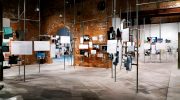
The Artos Cultural and Research Foundation is a contemporary arts and science center located in the Acropolis neighborhood of Nicosia. Established as both a cultural venue and research platform, it operates where creativity and scientific inquiry meet.
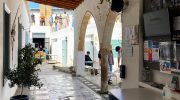
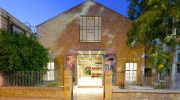
The foundation occupies a restored building that once served as the parish bakery for the Agii Omologites area. Its name translates from Greek as “bread,” which acknowledges the building’s former purpose while symbolizing the nourishment of ideas and cultural growth.
Historical Background
The foundation’s history begins with artists Achilleas Kentonis and Maria Papacharalambous, who legally established the organization on October 26, 2000. Kentonis studied electronic engineering and physics at the University of South Alabama and later worked on NASA research programs before shifting to fine arts.
He pursued postgraduate studies in multimedia aesthetics and new technologies at the Museo Internacional de Electrografia in Cuenca, Spain. Papacharalambous trained in visual arts and developed a practice that combines traditional media with conceptual approaches.
The couple collaborated throughout the 1990s on architectural projects, including the restoration of traditional houses in Nicosia. One renovation uncovered four ancient tombs from 450 BC, which led to international cultural events in 1995 during the European Cultural Month. This project earned them a Europa Nostra award in 1998 for their contribution to European cultural heritage conservation and representation at the 1997 European Biennial for Young Artists in Turin, Italy.

The foundation concept emerged from these experiences. After establishing the legal entity in 2000, the founders spent four years refurbishing and equipping the old bakery premises on Ayion Omoloyiton Avenue. The space officially opened to the public in 2004. The entire restoration was completed through private funding, with the founders personally involved in the physical work and design implementation, which kept the project flexible and independent from institutional constraints.
A Multifaceted Cultural Platform
Artos operates across several distinct programs that address different aspects of cultural and scientific development. The space houses exhibition areas, a performance stage, research facilities, and workshop rooms. Unlike commercial galleries or state museums, it functions as a platform where artists, scientists, and researchers can develop projects without commercial pressure.
The foundation developed three notable initiatives that reflect its interdisciplinary approach. Kids University started in 2005 as a program for children aged 6 to 12, which engages them in multidisciplinary workshops that combine creative expression with scientific knowledge. Sessions have covered topics from virtual reality and space exploration to traditional crafts and environmental science, always structured to build both skills and confidence.
Hack66 emerged in 2013 as a physical hackerspace that brings together artists, programmers, and makers. The foundation hosted this community between 2013 and 2017, providing space for people to experiment with open technology and collaborative production. Projects ranged from robotics and CNC machines to digital art installations, all following principles of technological freedom and shared knowledge.
Innovation Gym functions as an urban intervention platform that connects local authorities, cultural partners, and citizens in collaborative processes. This program applies creative and design thinking to urban challenges, using the foundation’s space for workshops, brainstorming sessions, and prototype development.
Notable Facts and Recognition
The University of Cyprus awarded the foundation recognition in 2008 for its contribution to Cypriot culture and society. This acknowledgment came after eight years of programming that included over 200 events across theatre, visual arts, music, film, and scientific seminars.
The founders work collaboratively as Binary Art Group, which has exhibited at international venues including the 55th Venice Biennale in 2013, where they participated in the Maldives Pavilion. Their artistic practice often addresses social themes, and one of their best-known projects is Bank of Commons, which launched in 2012. This conceptual work creates a virtual bank based on giving rather than exchange, which asks participants to contribute acts of critical thought, care, and compassion rather than money.
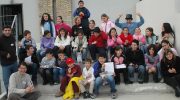
Artos has participated in several European cultural programs. Between 2013 and 2014, it hosted the TRIBE project, which connected artist-run spaces across the Balkans and Eastern Europe through residencies and research platforms. The foundation maintains international networks with cultural organizations in Greece, Spain, Albania, and beyond.
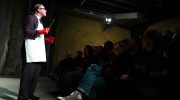
The space hosted a successful theatrical production in 2017, Dark Vanilla Jungle, which received critical acclaim for its intense examination of abuse and survival. The performance demonstrated the foundation’s commitment to challenging contemporary work that addresses difficult social subjects.
Educational and Research Dimensions
Beyond public events, Artos emphasizes research and education. The foundation aligns with European Union cultural directives while maintaining independence from government cultural services. This positioning allows it to serve as both a complement to state programs and an alternative venue for experimental work that might not fit institutional frameworks.
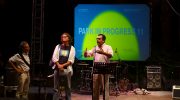
The educational programs go beyond standard workshops. Summer Kids University sessions have explored topics like brainwave research, technological interfaces, and creative problem-solving. These programs introduce children to both artistic and scientific methodologies, which reflects the foundation’s core belief that these fields share common approaches to inquiry and discovery.
Research projects at Artos have examined subjects as varied as electromagnetic interference on human cognition, music therapy, urban social divisions, and participatory democracy. Many of these investigations combine data collection with artistic production, which results in work that functions simultaneously as research output and cultural intervention.
Why This Foundation Matters Now
Artos represents a working model of how private cultural initiatives can operate sustainably in Cyprus. The foundation demonstrates that cultural infrastructure need not depend entirely on state funding or commercial viability. Its structure as a private legal entity with non-profit status allows it to accept European grants, private donations, and space rental fees while maintaining programming freedom.
The foundation’s approach addresses a specific gap in Cyprus’s cultural landscape. When it opened in 2004, Nicosia had few venues dedicated to experimental contemporary art or interdisciplinary research. State museums focused on historical collections, while bank-funded cultural centers prioritized established artists. Artos provided space for emerging practitioners, unconventional formats, and work that crossed traditional disciplinary boundaries.
The organization evolved over time. In 2021, after 21 years as ARTos Foundation, the organization transitioned to Artos Cultural and Research House, which reflects an expansion of its activities to include more emphasis on entrepreneurship, innovation training, and social entrepreneurship alongside its cultural programs. This evolution shows how independent cultural spaces adapt to changing contexts while maintaining core values.
Experiencing the Space
The foundation occupies 64 Ayion Omoloyiton Avenue in the Acropolis area, which is a residential neighborhood just outside central Nicosia’s commercial zone. The building maintains its original character while incorporating modifications for cultural use. The conversion preserved architectural elements from its bakery past, which creates an atmosphere distinct from standard gallery white boxes.
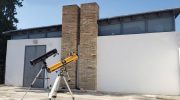
Programming varies considerably, from formal exhibitions and conferences to informal gatherings and open studio sessions. The foundation operates on a schedule determined by its projects rather than fixed hours. Theater performances, film screenings, and performances typically happen in evening slots, while workshops and research sessions occur during daytime hours.
A Cultural Laboratory Worth Knowing
Artos matters because it demonstrates what becomes possible when artists take direct responsibility for creating cultural infrastructure. The foundation shows that sustained independent operation requires both ideological commitment and practical flexibility. Its 20-plus year history proves that private cultural initiatives can contribute substantially to a city’s intellectual and creative life without losing their experimental edge.
The foundation’s significance extends beyond its specific programs. It helped establish precedent in Cyprus for artist-run spaces that operate professionally while maintaining independence. The restoration of the old bakery building contributed to preserving neighborhood architectural character while demonstrating adaptive reuse possibilities. The emphasis on combining arts with sciences, children’s education with adult research, and local community with international networks created a model that influenced subsequent cultural projects across Cyprus. For anyone interested in how cultural spaces can function as sites for both artistic production and social engagement, Artos offers concrete evidence of what dedicated individuals can build and sustain.