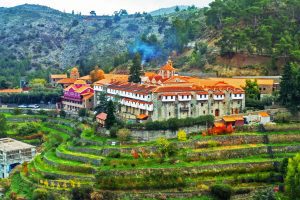
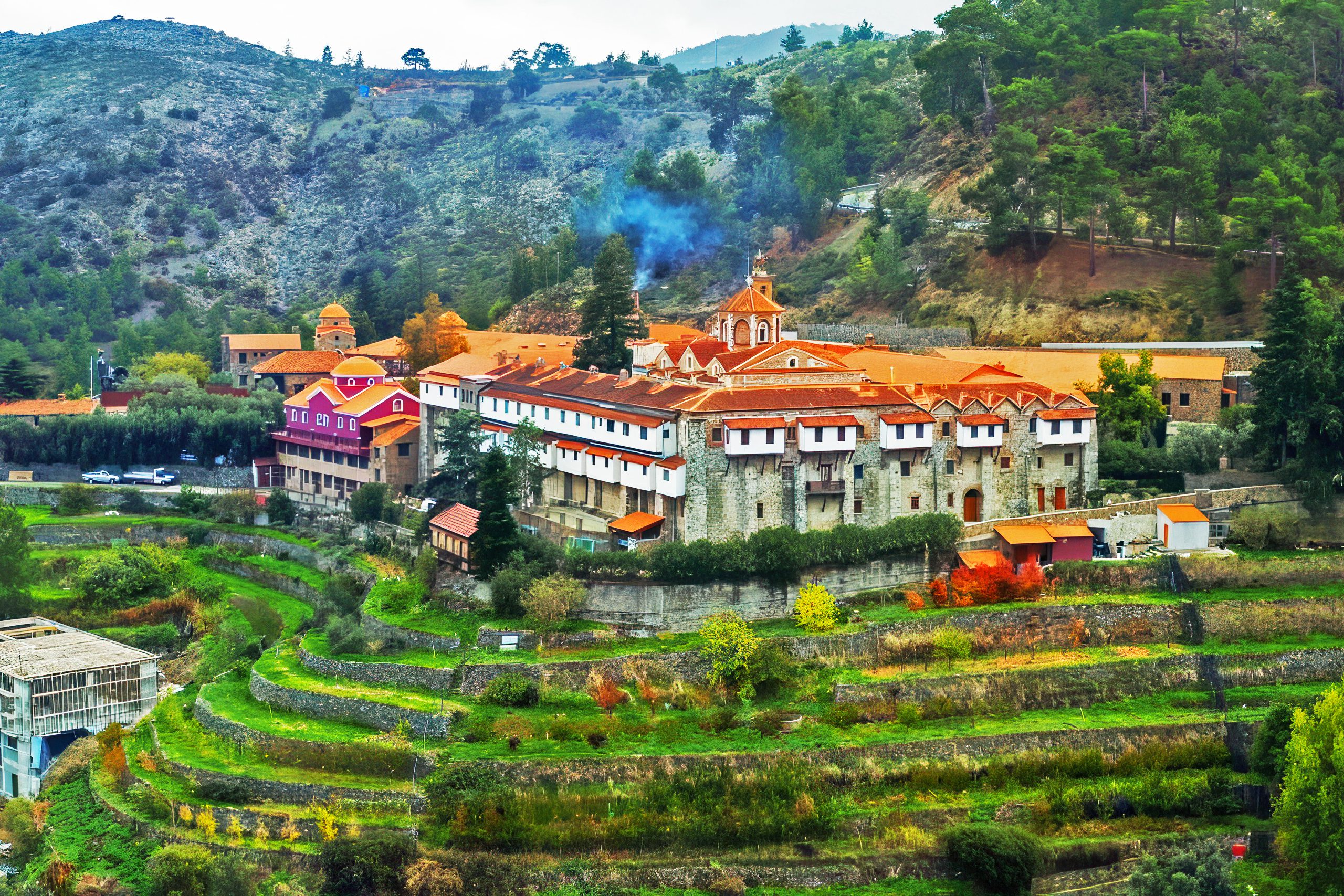
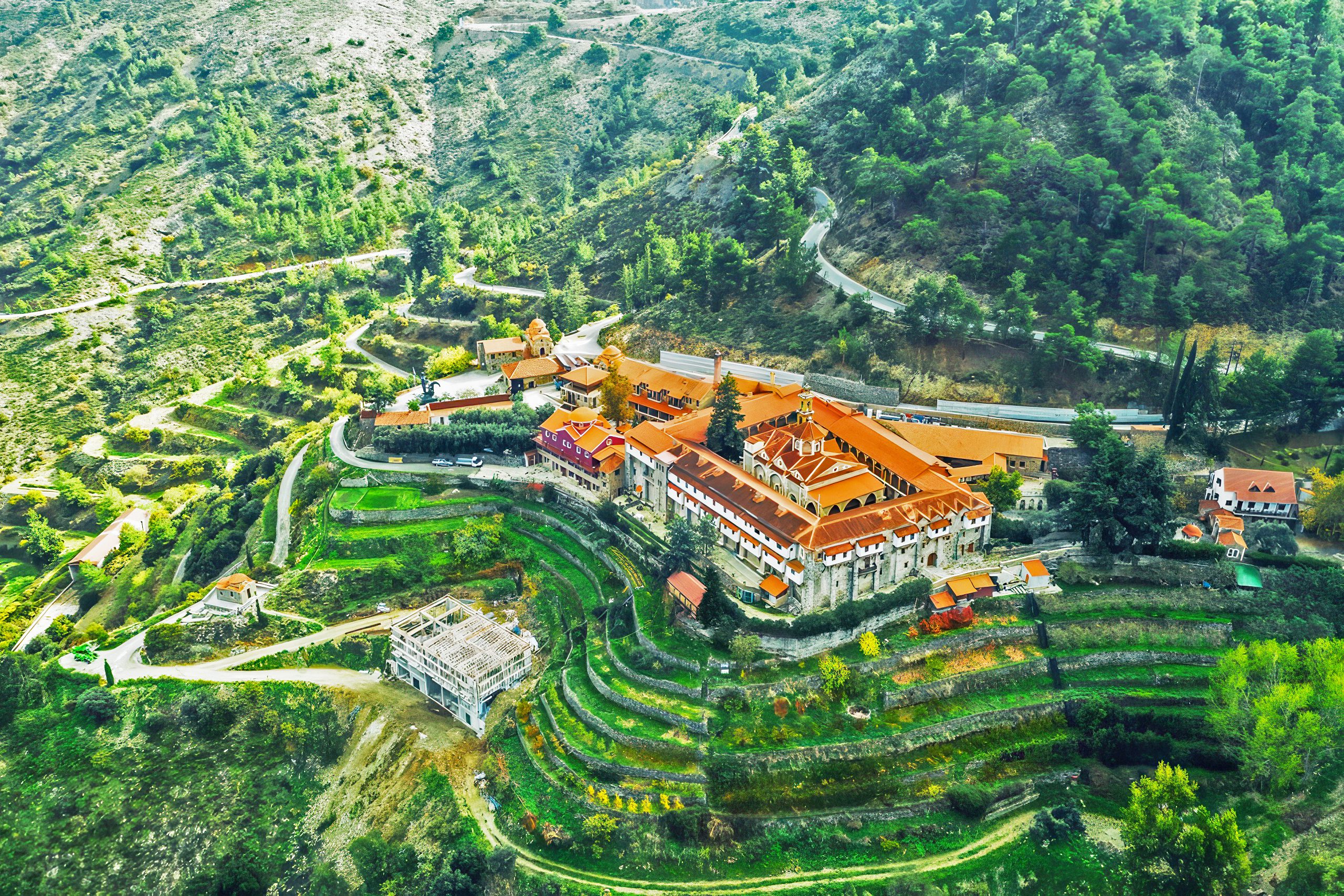
Machairas Monastery, officially known as the Monastery of Panagia Machaira, is a historic monastery located about 40 kilometers from Nicosia in the mountainous interior of Cyprus. Built near Mount Kionia at an elevation of approximately 870 meters, the monastery is surrounded by dense pine forests and overlooks the Pediaios River, the island’s longest waterway. Its fortress-like position on a steep hillside makes it one of the most recognizable monastic sites in Cyprus.
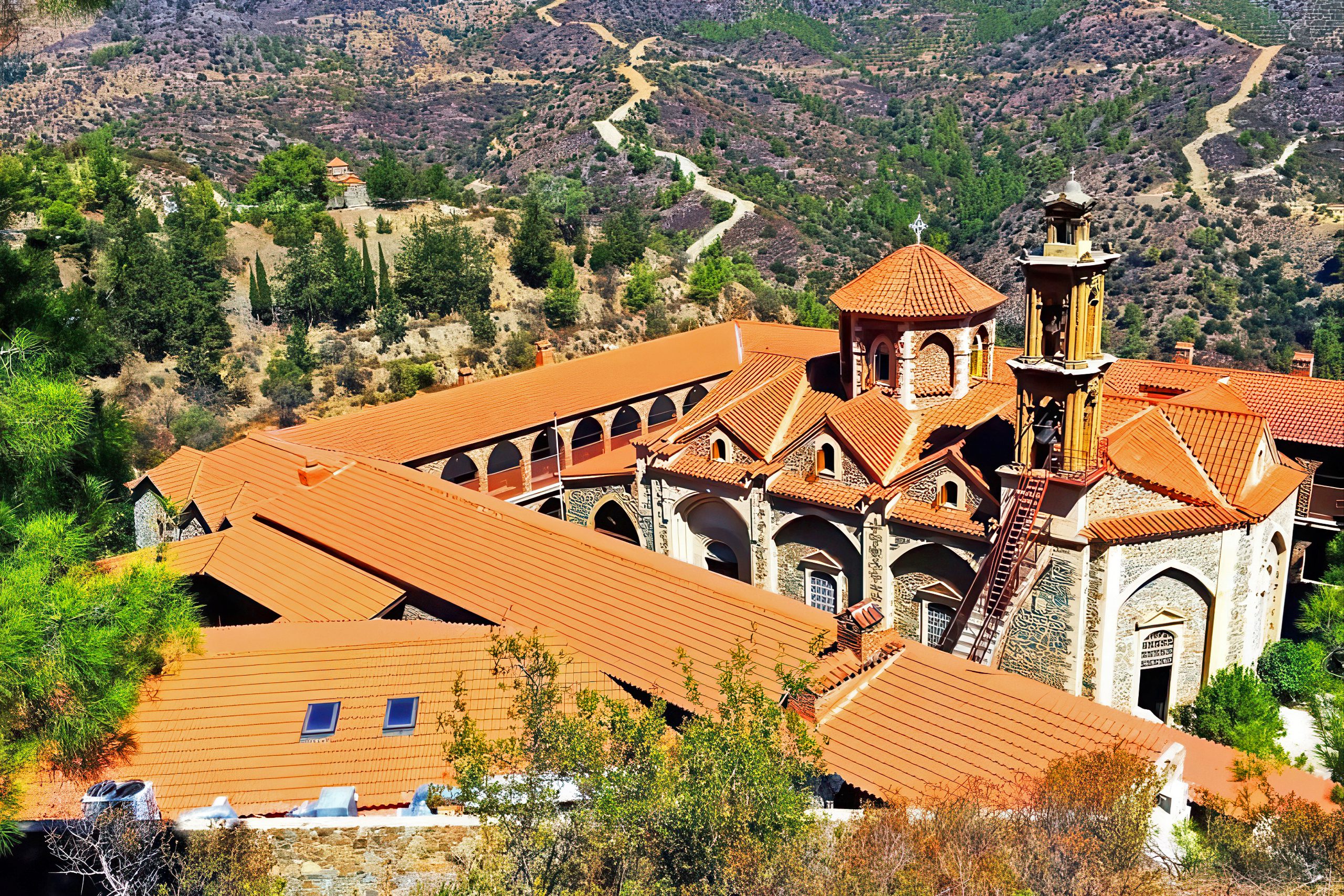
Machairas Monastery is considered one of the island’s three most historically significant monasteries alongside Kykkos Monastery and Agios Neophytos Monastery. The monastery historically held stavropegic status, which granted it administrative independence from the Archbishopric of Cyprus.
The Discovery of a Sacred Icon
According to local tradition, the monastery’s famous icon was associated with the Byzantine period and linked to the Church of Blachernae in Constantinople. During the eighth-century period of iconoclasm, when many religious images were removed or destroyed across the Byzantine Empire, the icon was reportedly transported to Cyprus and hidden in a cave for preservation.
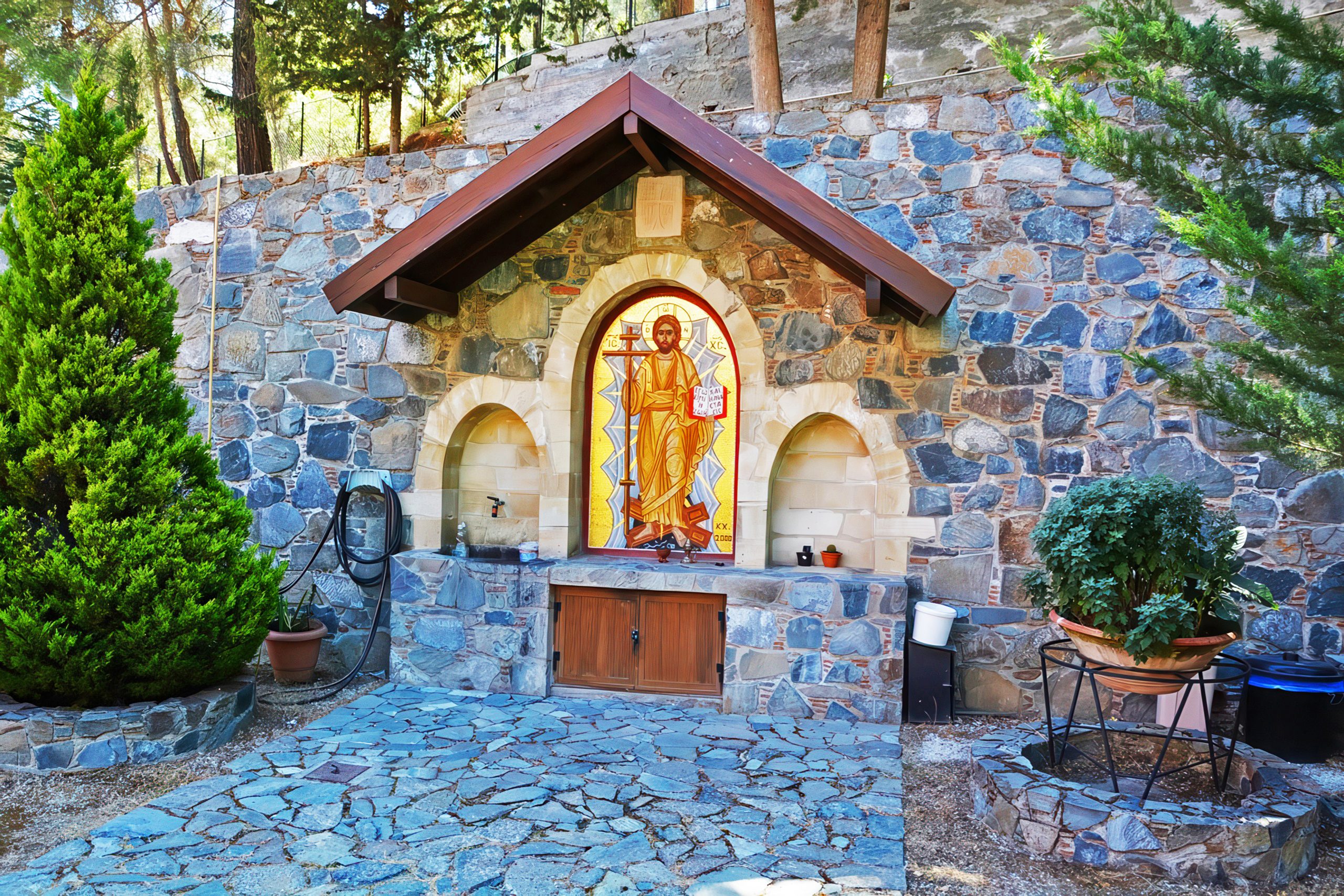
Around 1145, two hermits named Ignatios and Neophytos are said to have discovered the cave concealed behind thick vegetation. Tradition states that they used a knife to clear access to the site. The Greek word for knife, machairi, later influenced both the icon’s name, Machairiotissa, and the monastery’s name. Machairas Monastery was formally established in 1148 on the eastern foothills of the Troodos Mountains.
Following the death of Neophytos, Ignatios and the monk Prokopios traveled to Constantinople in 1172 where they secured financial assistance from Byzantine emperor Manuel I Komnenos. The monastery also received ownership rights over the surrounding mountain area and official stavropegic status. In the early 13th century, the monk Neilos expanded the monastery complex and became its first abbot. Additional Byzantine rulers, including Isaac II Angelos and Alexios III Angelos, later contributed land, funds, and labor resources to support the monastery’s development.
Destruction and Resilience Through History
The monastery experienced multiple destructive events throughout its history. A major fire in 1530 caused extensive damage, leading to significant rebuilding efforts. Another devastating fire occurred in 1892, destroying large sections of the complex. In response, Archimandrite Chariton traveled to the Russian Empire to collect financial support for reconstruction and reportedly raised 6,483 rubles. Most of the current structures date to the rebuilding campaigns of the early 20th century.
After the Latin conquest of Cyprus and the removal of Orthodox bishops in 1222, the monastery lost much of its property and influence. Conditions remained difficult for centuries, though the monastery gradually recovered during the 18th century under the leadership of the monk Parthenios. During the Greek War of Independence in the early 19th century, Ottoman authorities confiscated and sold parts of the monastery’s property following the executions of prominent Cypriots on July 9, 1821. Archbishop Kyprianos, who had connections to Machairas Monastery, was among those executed during this period.
Architecture and Historical Collections
Machairas Monastery features a rectangular layout topped with red-tiled timber roofing. The main entrance faces east while a secondary entrance faces west. Residential buildings and monks’ cells surround the central church, which reflects Byzantine architectural influences.
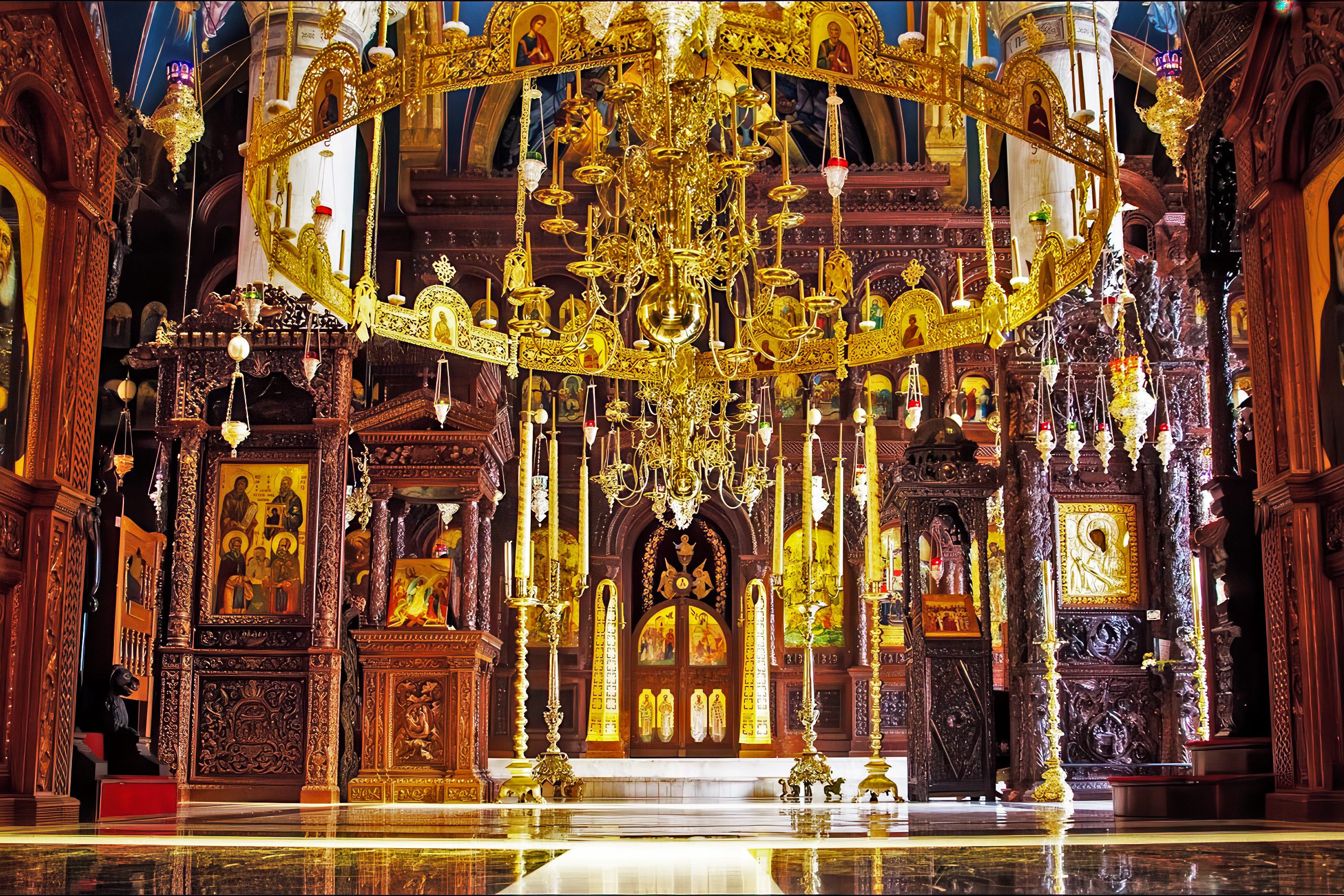
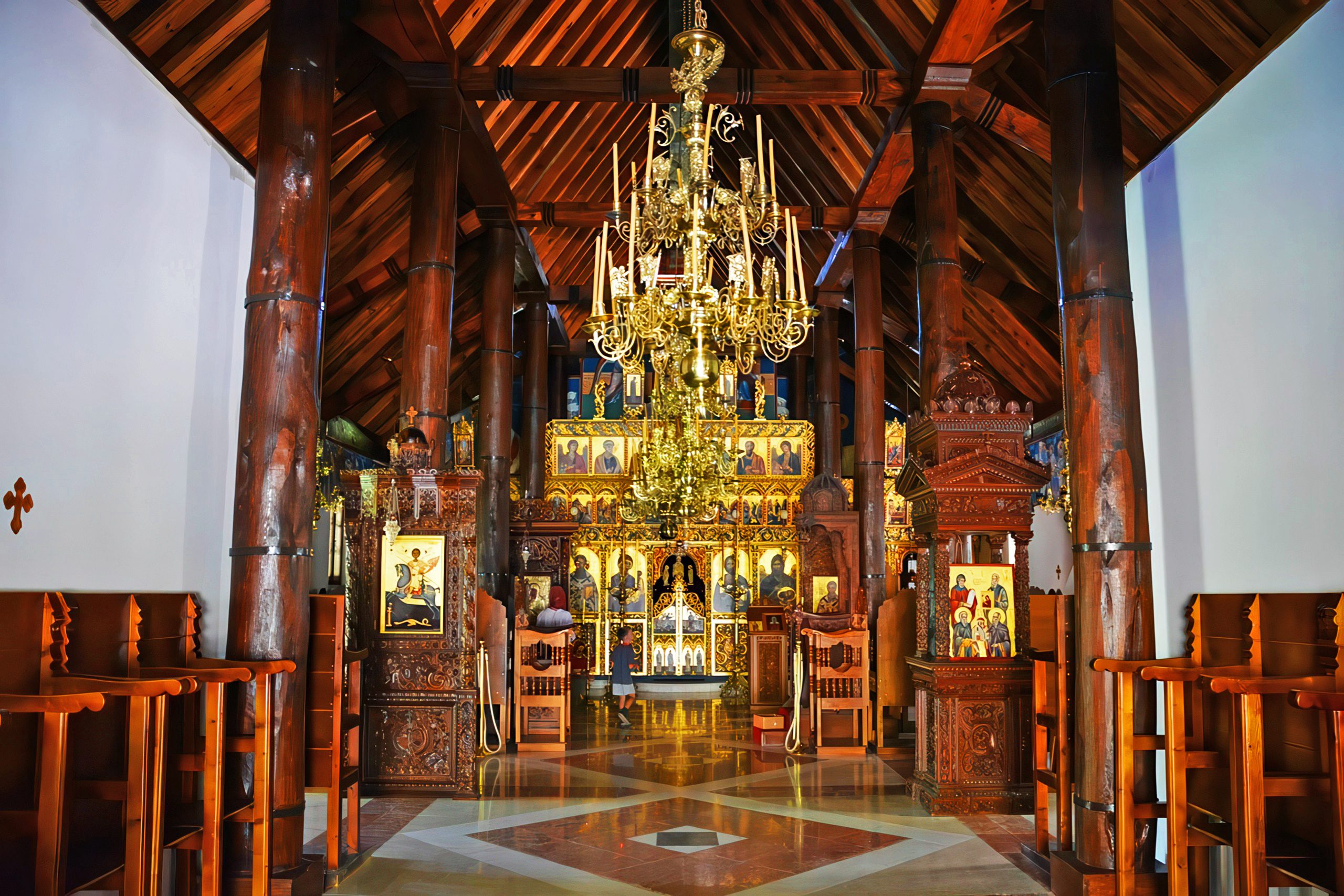
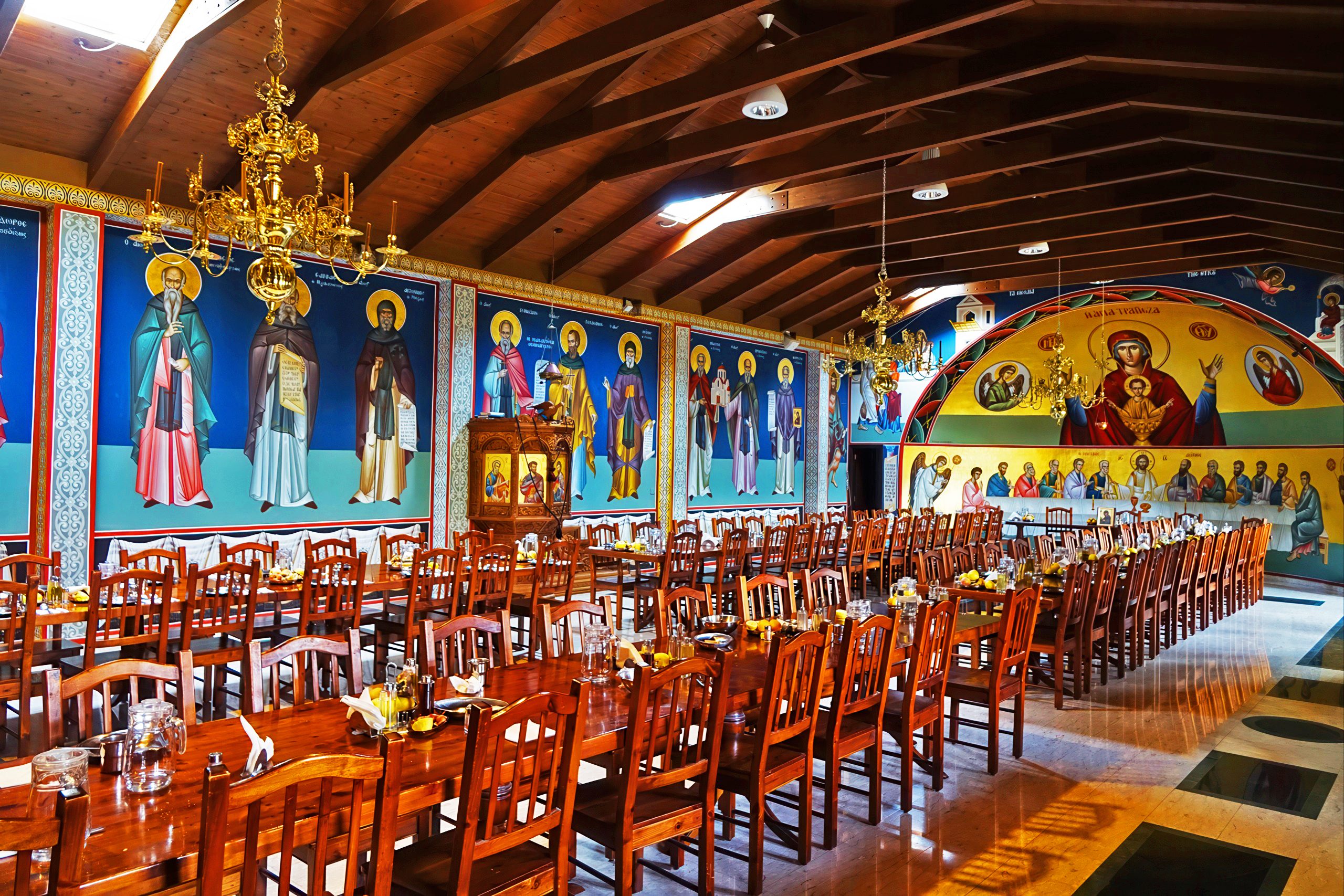
Inside it, visitors can see decorative icons, chandeliers, stone flooring, and wall frescoes representative of Orthodox artistic traditions. A historically important icon associated with the monastery occupies a central place within the church interior.
The renovated basement areas preserve earlier monastic facilities including original cells, storage rooms, and stables. The monastery also maintains collections of manuscripts, books, icons, and historical artifacts. Its library contains thousands of volumes as well as Greek and Ottoman archival documents that provide valuable information about the cultural and administrative history of Cyprus.
An annual celebration connected to the Presentation of Mary on November 21 continues to attract visitors from across Cyprus. Today, approximately 25 to 30 monks reside at the monastery and maintain the complex through agriculture, preservation work, and visitor support.
Connection to Cyprus’s Independence Struggle
Machairas Monastery also holds an important place in modern Cypriot history because of its association with the independence movement against British colonial rule during the 1950s.
In March 1957, Grigoris Afxentiou, the second-in-command of the EOKA organization, took refuge near the monastery. On March 3, 1957, British forces surrounded his hideout after receiving information about his location. Afxentiou instructed his companions to surrender while he remained behind.
Historical accounts state that British troops demanded his surrender, to which he reportedly replied with the phrase “molon labe” (“come and take them”), traditionally associated with the Spartan king Leonidas. After a lengthy standoff, British forces used fuel to set fire to the hideout.
Items reportedly recovered near Afxentiou included weapons, grenades, and a copy of Christ Recrucified by Nikos Kazantzakis. Today, the monastery includes a small museum dedicated to Afxentiou, while a large bronze memorial statue stands below the complex overlooking the surrounding mountains.
Why Machairas Remains Important Today
Machairas Monastery represents nearly nine centuries of Cypriot history shaped by Byzantine, Ottoman, colonial, and modern political periods. Its continued operation reflects the long-term role monasteries played in education, manuscript preservation, land management, and local administration throughout Cyprus.
During Ottoman rule, the monastery also contributed to the preservation of Greek language and cultural traditions through informal educational activities. The library and archival collections remain valuable resources for historians, researchers, and scholars studying Cyprus’s religious, social, and political development.
Its connection to the Cypriot independence movement adds modern historical importance beyond its medieval origins. Annual commemorations related to Grigoris Afxentiou continue to attract visitors interested in Cyprus’s anti-colonial history and national memory. The monastery’s icon collections, architecture, mountain setting, and historical archives also make it an important destination for cultural tourism and heritage studies.
Visiting This Mountain Sanctuary
Machairas Monastery is located roughly 40 kilometers from Nicosia and can be reached by car through mountain roads passing villages such as Lazanias. The drive from the capital takes approximately one hour. The surrounding Machairas forest region includes hiking routes, scenic viewpoints, and picnic areas that attract outdoor visitors throughout the year. Parking is available near the monastery entrance free of charge.
The monastery welcomes visitors daily, although opening hours may vary depending on seasonal schedules and religious events. Modest dress is generally required for entry into the church areas, with covered shoulders and knees recommended for visitors. Photography inside the church is restricted to help preserve artwork and interior decorations.
The site includes wheelchair-accessible parking and restroom facilities. Group visits are permitted but typically require advance coordination with monastery staff. Informational material about the monastery’s history is available at the entrance, primarily in Greek. A short distance from the main complex, visitors can also explore the Afxentiou museum and memorial site, which displays historical artifacts connected to the EOKA movement and offers panoramic views across the Troodos Mountains and the Mesaoria plain.
Historical and Cultural Significance
Machairas Monastery remains one of Cyprus’s most historically important monastic landmarks due to its association with Byzantine heritage, medieval monasticism, manuscript preservation, and modern political history. Over centuries, the site experienced fires, invasions, political transitions, and reconstruction efforts while continuing to function as an active monastery.
Today, the combination of mountain scenery, Byzantine architecture, archival collections, and historical associations makes Machairas Monastery an important destination for visitors interested in Cypriot history, architecture, cultural heritage, and the broader historical development of the eastern Mediterranean region.