Kouklia is a village in the Paphos District built over the site of the ancient city of Palaepaphos, mythical birthplace of Aphrodite, which became the centre for her worship in the ancient world. This modest village 16 kilometers east of modern Paphos holds the remains of one of the longest continuously operating religious sanctuaries in human history.
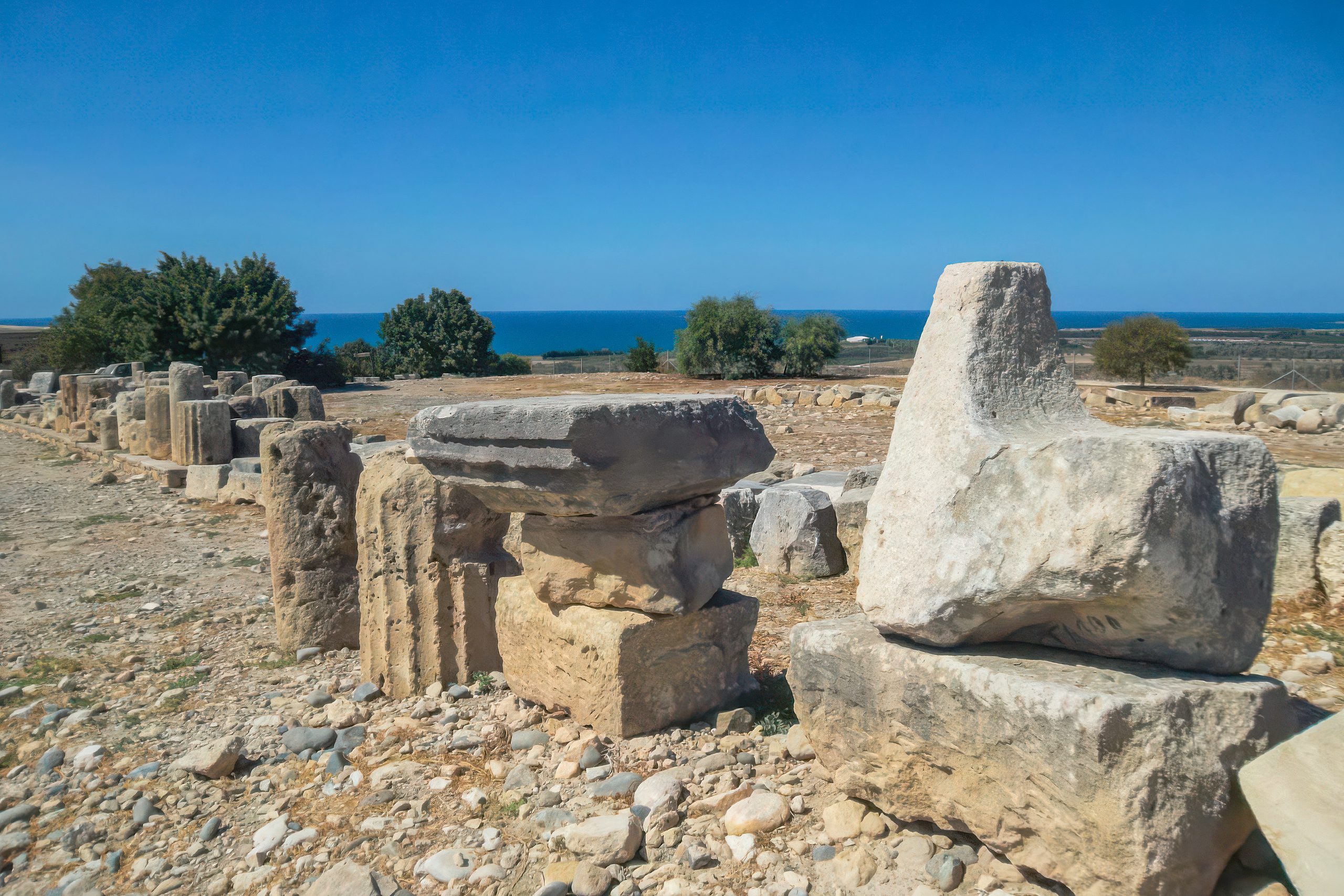
From around 1200 BC, Palaepaphos was a major religious centre famous all over Cyprus and throughout the Mediterranean. The city served as both a political capital and a sacred site, where the ancient goddess of fertility transformed over centuries into the Greek deity known as Aphrodite. The Sanctuary of Aphrodite is the most famous of the Ancient Greek Goddess’ sanctuaries, and its ancient remains date back to the 12th century BC, whilst it remained a place of worship until the 3rd to 4th centuries AD.
The sanctuary occupied a commanding position on a limestone plateau overlooking what was once a harbor and lagoon. According to Professor Maria Iacovou from the University of Cyprus, the sanctuary would have been located very close to the original port authority of ancient Paphos. The strategic location connected the religious site directly to sea routes, which brought pilgrims from across the Mediterranean world.
Historical Background
The Cypriots worshipped a goddess of fertility from as early as the Chalcolithic period, 3900 to 2500 BC. They depicted her as a woman with the obvious characteristics of maternity and modelled figurines of her in stone or clay, of which the larger ones became objects of adoration and their smaller counterparts were worn on the body. Others were placed in graves to protect the dead. Clay Astarte-type figurines found on the site suggest a connection with an indigenous Cypriot fertility cult dating back to Neolithic times.
The cult that eventually became associated with Aphrodite appears to have combined indigenous Cypriot beliefs with influences from Phoenician traditions and later Greek religion. Some scholars believe the worship was introduced to Cyprus from Syria, then spread from Paphos to Kythera in Greece. Archaeology has established that Cypriots venerated a fertility goddess before the arrival of the Greeks, and developed a cult that combined Aegean and eastern mainland aspects.
Homer knew of this sanctuary and mentioned it in the Odyssey around the 8th century BC, referring to Aphrodite as the “Cyprian” goddess. By the 6th century BC, she was called the “Paphian.” The sanctuary’s fame had already spread throughout the Greek world before classical Athens reached its peak.
Foundation Legends and Royal Priests
There are two versions of how Palaipafos was founded. One story tells that Agapenor, the King of Tegea, founded the city-kingdom on his way back from the Trojan War. A second legend tells that Kinyras, the local legendary king, was the founder and first High Priest of The Sanctuary of Aphrodite. The second version connects more directly to the priesthood system that controlled the sanctuary for centuries.
The Cinyradae, descendants of Cinyras, served as the hereditary chief priests of the sanctuary. These priests wielded enormous power and authority. Inscriptions suggest they were controlled by a senate and an assembly of the people, but their religious position gave them political influence throughout Cyprus. The kings of Palaepaphos held the dual title of “King of Paphos and Priest of Anassa,” which meant the political ruler also served as the high priest of the goddess. This combination allowed them to exert extraordinary control over the island’s affairs.
Nikokles, the last king of Palaepaphos, founded the new city and port of Nea Paphos around 320 BC and established it as the new capital. After this transition, the old city was renamed Palaepaphos and assumed the character of a sacred city focused primarily on religious functions rather than political administration.
Remarkable Archaeological Discoveries
The excavations at Palaepaphos have revealed much about the city beyond the sanctuary. The landscape of the city of Palaepaphos became significantly clearer in 2025 when excavation revealed parts of the monumental acropolis walls with towers from the 4th to 5th centuries BC. The city was centered on the Hadjiabdoullah plateau, approximately 1 kilometer east of the sanctuary.
Archaeologists discovered a large storage and industrial complex from the Cypro-Classical period at this site in 2016. This complex extended over 5 meters along the plateau’s northern edge and consisted of stepped terraces built down the slope. The structure was subdivided into production and storage units by long cross-walls and parallel retaining walls. Agricultural products including olives, grapes, and wheat confirmed its use as a handling and storage facility. This complex likely functioned as the center of the royal dynasty that ruled the city-state of Paphos until the end of the 4th century BC.
The Laona hill just north of the Hadjiabdoulla complex has been identified as a monumental tumulus measuring 100 by 60 meters and over 10 meters high, and is extremely rare in ancient Cyprus. It is dated to the 3rd century BC. The construction of the tumulus required 9,888 cubic meters of marl and red soil. This massive burial mound was built with thick horizontal layers of marl alternating with layers of red soil. The marl had to be quarried from its geological source and transported by cart to the construction site. This monumental effort indicates the importance of the individuals buried within.
Excavations in 1950-55 uncovered what became known as the Siege Mound outside the city walls at Marchellos. The mound contained heavy stone balls, numerous weapons including spearheads and arrows, and many architectural fragments with inscriptions in the Cypriot syllabic alphabet. Herodotus mentioned a mound built by the Persians during their siege of the city in the Ionian Revolt of 498-497 BC. The sculptural fragments dated from the end of the Archaic period in the 7th to 6th century BC. The most important find was a statue known as the Priest-King. Archaeologists also discovered two female heads with Egyptian hairstyles and 12 statues of young men called kouroi.
The unique worship of a conical stone
A covered temple was never built for the goddess at Palaepaphos but instead, the holy altar stood in the open air, encircled by walls and fitted with brightly coloured doors, according to Homer. She was not worshipped as a statue, but rather in the form of conical stone. The ancients report it as something strange, a white pyramid of which the material is not known. This symbolic stone existed at Paphos from ancient times and, as the adoration of standing stones is a feature of eastern religions, the nearby Petra tou Romiou may be responsible for the creation of the myth that she was born there.
This conical stone was found near the holy altar and is now on display at the Kouklia Museum. However, the stone is black whereas the ancients described it as white, although it may have become tarnished over the centuries. Blood may not be shed upon the altar, but offering is made only with prayers and pure fire.
The representation of the goddess is not in human form, but it is a circular mass that is broader at the base and rises like a turning post to a small circumference at the top. The sanctuary is depicted on many Roman coins during the reign of Vespasian as well as on earlier and later ones.
The Site in Modern Times
Because of its ancient religious significance and architecture, Kouklia was inscribed on the UNESCO World Heritage List along with Kato Paphos in 1980. Archaeological work continues at the site. A Swiss-German expedition has conducted excavations since 1996. The University of Cyprus has led major projects since 2006, revealing new information about the city’s layout and history.
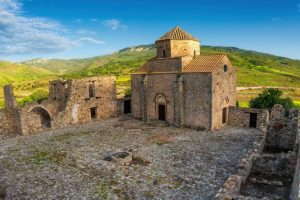
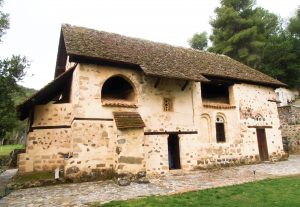
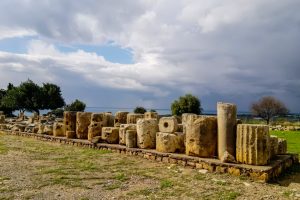
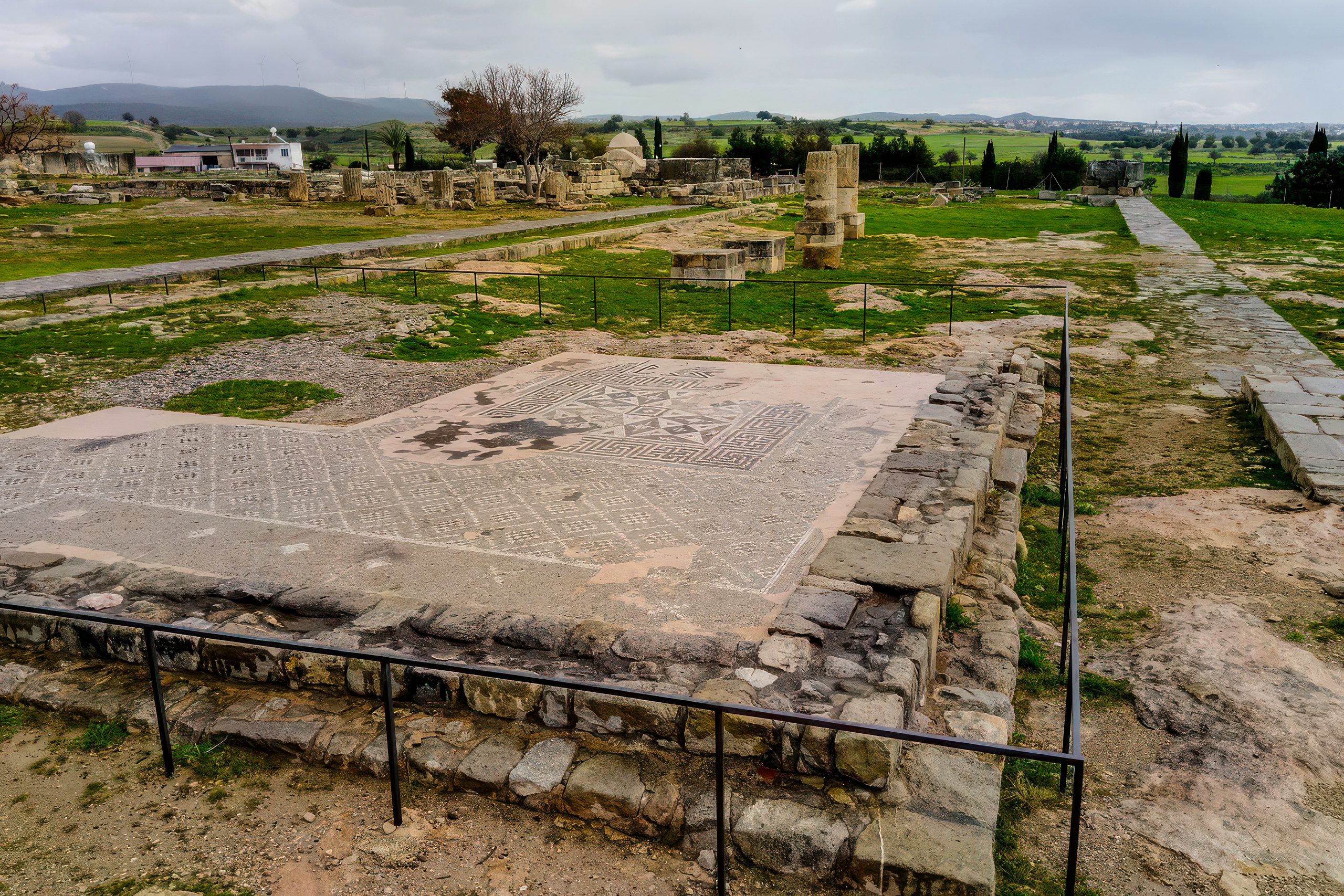
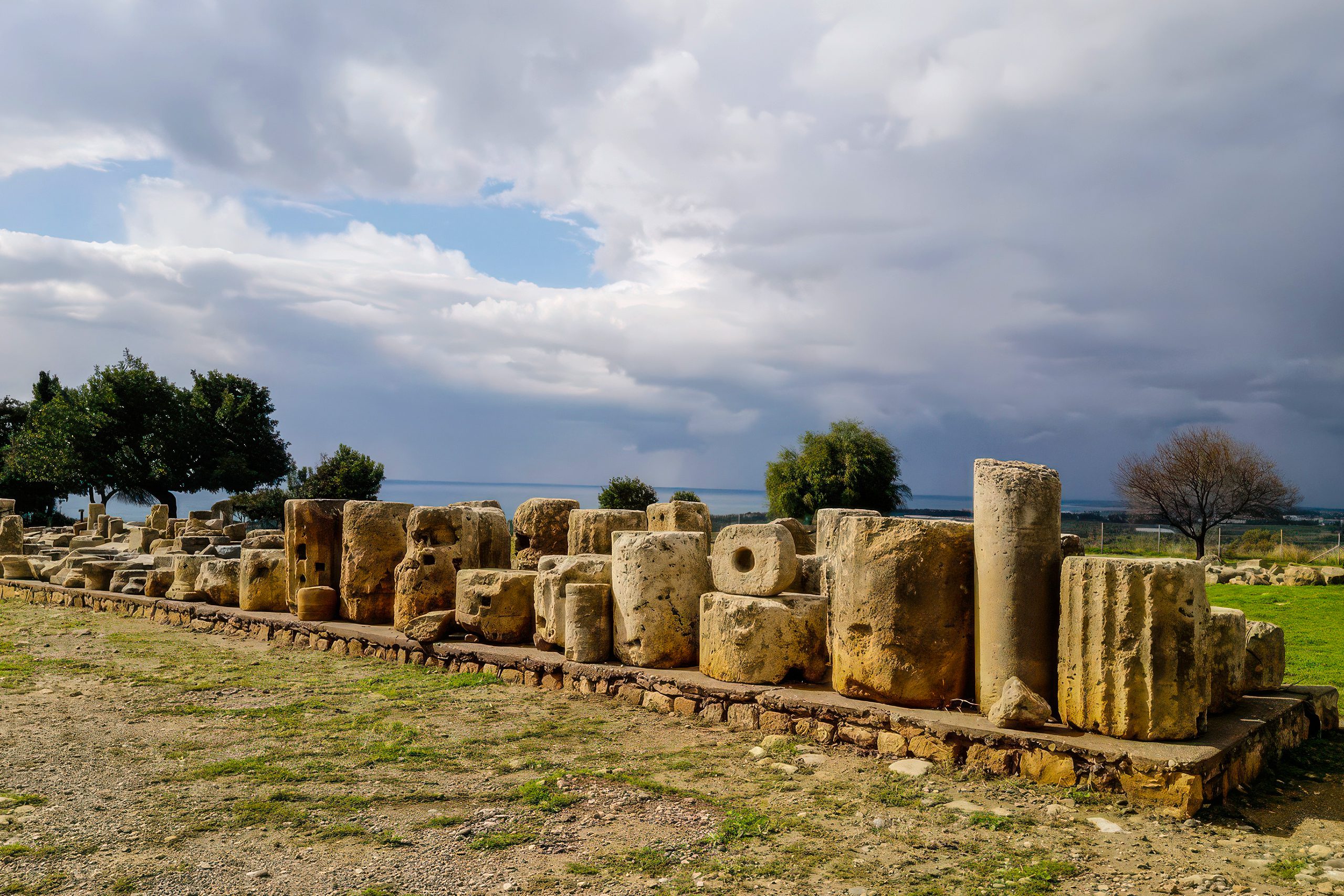
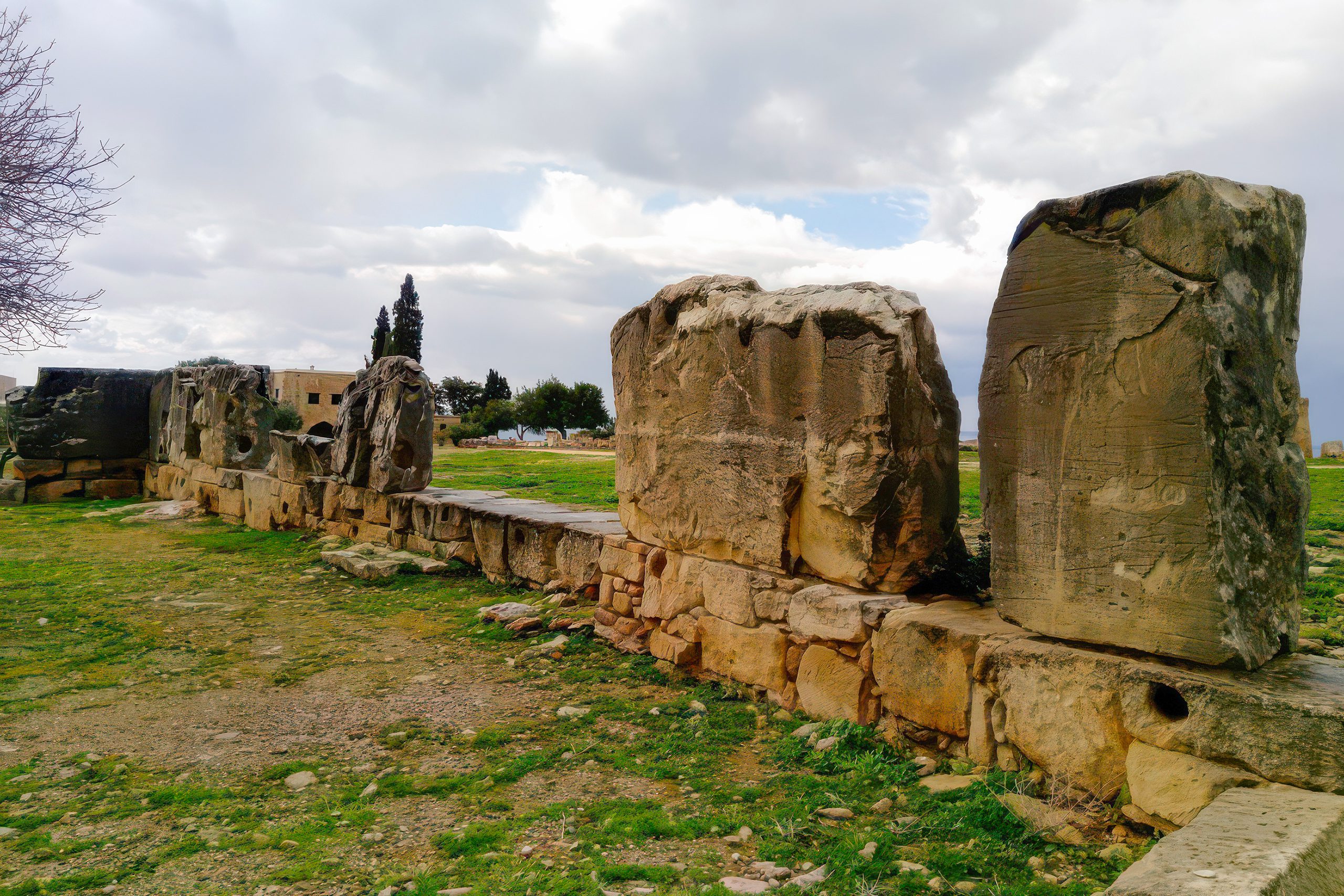
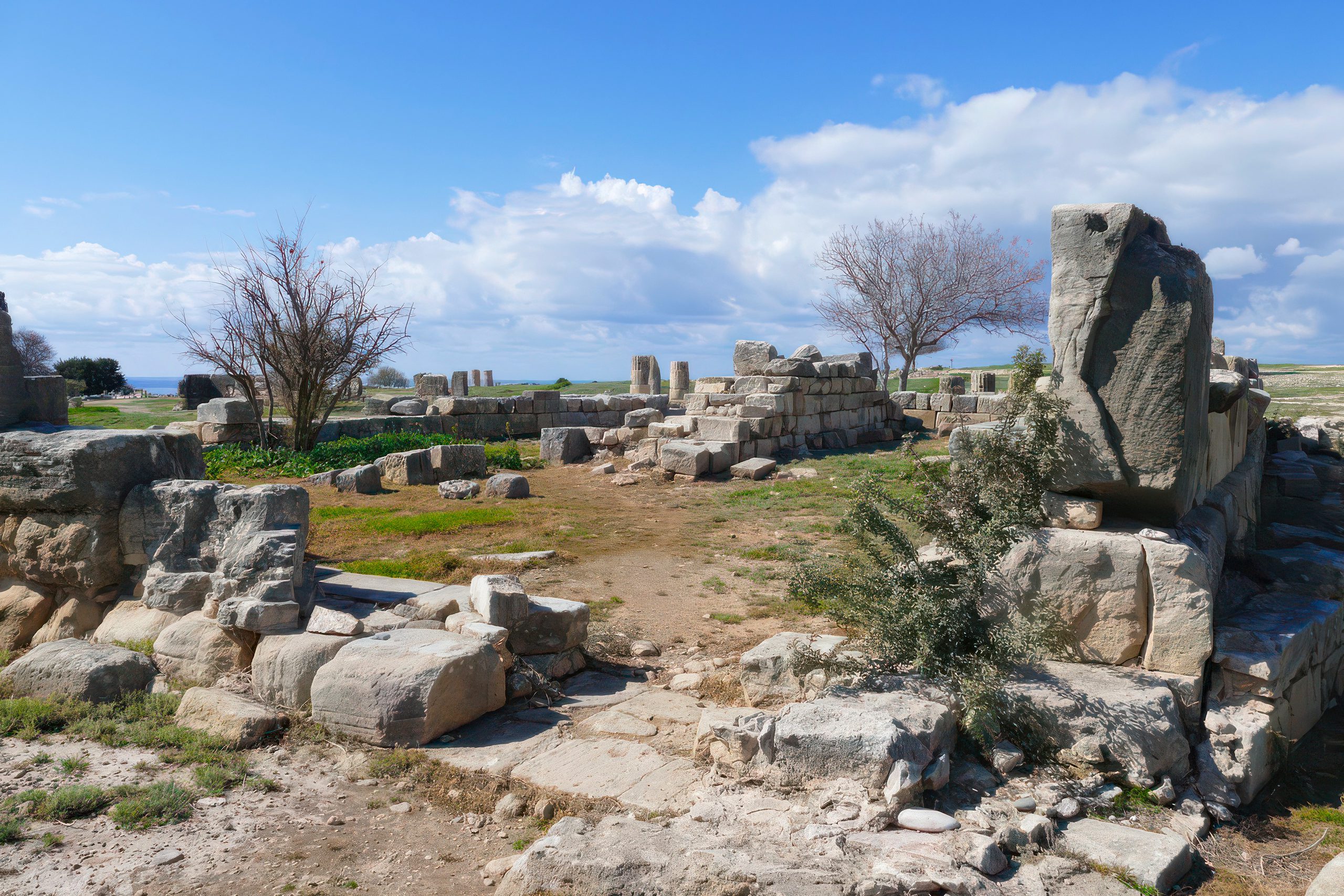
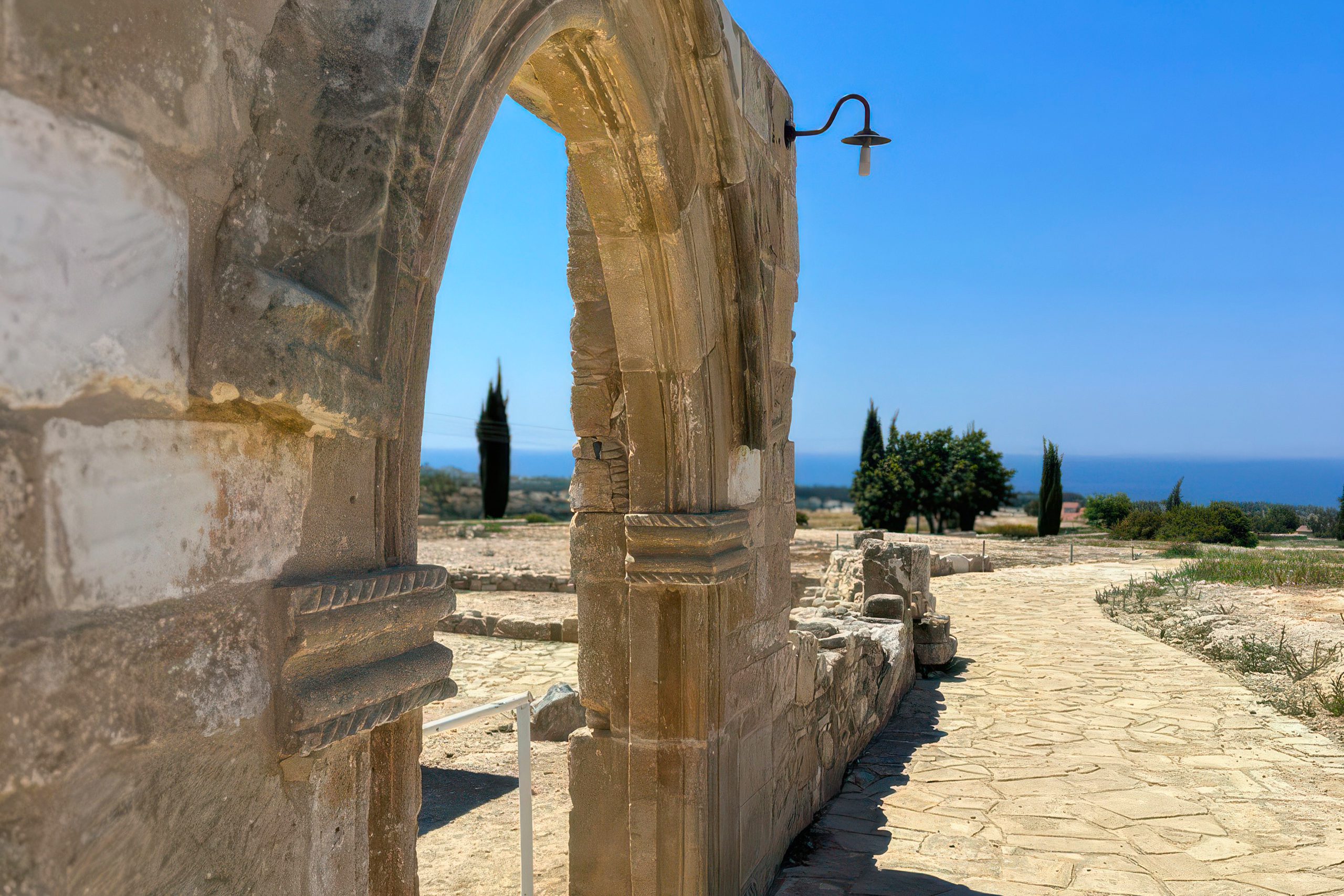
Visitors can explore the sanctuary ruins, which include the megalithic foundations from the Late Bronze Age, the Roman tripartite building, and remains of various support structures. The nearby Church of Panagia Katholiki dates from the 12th or 13th century AD and follows a cruciform design. Its surviving wall paintings reflect the traditional popular art of the 15th century and show how Christian worship replaced the ancient pagan cult.
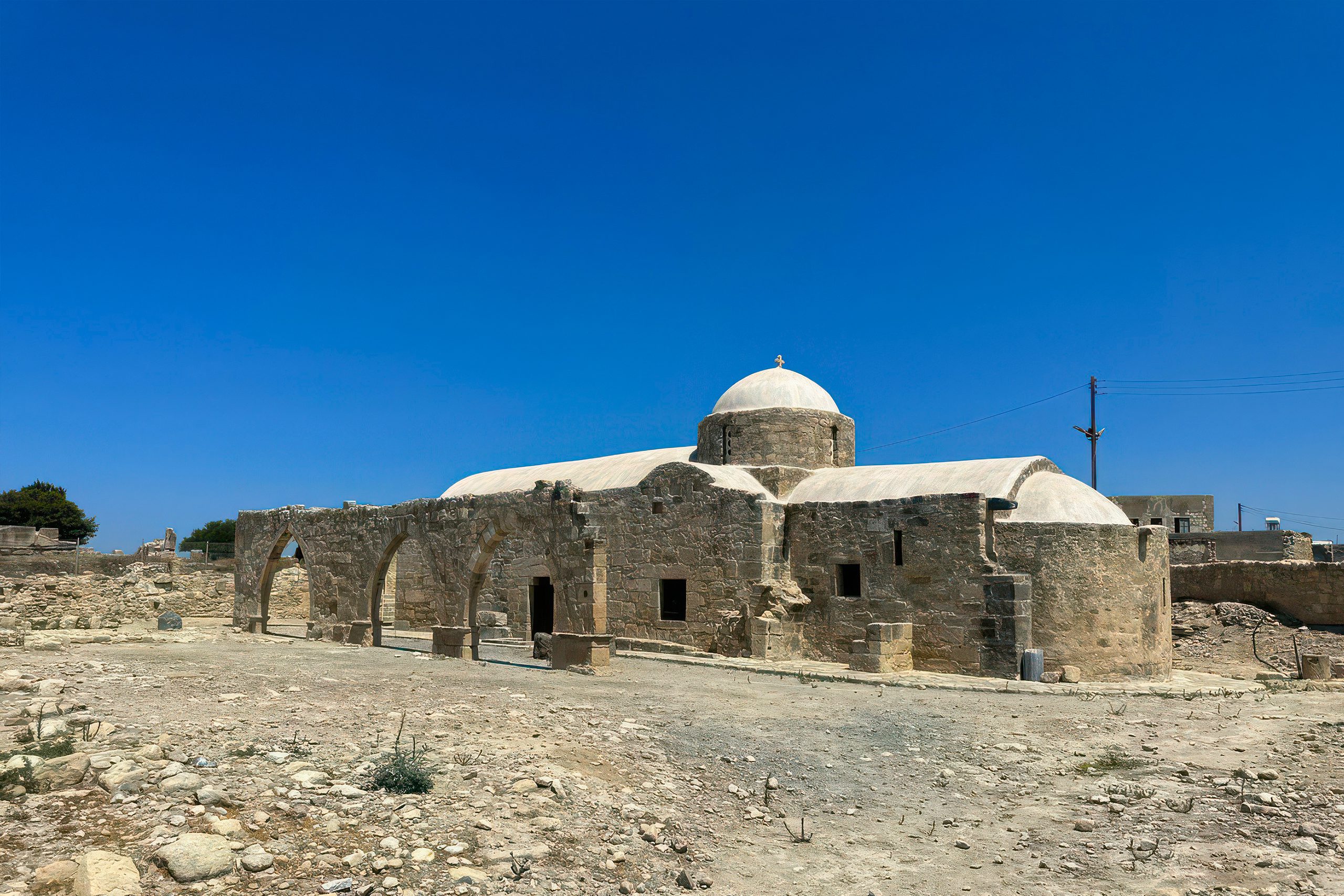
The archaeological site is open daily from 8:30 AM to 5:00 PM during the winter season and until 7:30 PM during summer. The entrance fee of 4.50 euros includes access to both the sanctuary ruins and the museum. An audiovisual presentation in Greek and English provides historical background to the site. The village of Kouklia lies about 16 kilometers east of Paphos and can be reached by car via the A6 or B6 highways.
Pilgrimage festivals and sacred ceremonies
During spring festivals for Aphrodite and Adonis, separate processions of garlanded men and women walked along the Sacred Way from Nea Paphos to the shrine of Aphrodite at Palea Paphos, where there were games and contests of music and poetry. Thousands of pilgrims from all over the world were drawn to Aphrodite’s celebrations, which included a four-day long festival Aphrodisia.
The spring festival honored both Aphrodite and her lover Adonis, with separate processions for men and women who wore garlands and traveled from the newer coastal city to the ancient sanctuary. The festivals included athletic competitions, musical performances, poetry contests, and religious ceremonies. The Cinyradae, or descendants of Cinyras, of Phoenician origin but Greek by name, were the chief priests.
Their power and authority were very great, but has been inferred from certain inscriptions that they were controlled by a senate and an assembly of the people. There was also an oracle present. The sanctuary maintained its religious importance through changing political regimes, from the Bronze Age kingdoms through Persian, Ptolemaic, and Roman rule.
Why Palaepaphos Matters
Palaepaphos represents one of the most enduring religious traditions in Mediterranean history. The sanctuary functioned continuously for over 1,600 years, longer than most ancient religious centers. The transformation from a local fertility goddess to the pan-Mediterranean deity Aphrodite demonstrates how religious beliefs evolved and spread across cultures. The physical remains show how indigenous Cypriot, Phoenician, Greek, and Roman traditions merged into a single cult that attracted pilgrims from across the ancient world.
The site connects Cyprus to fundamental Greek mythology and demonstrates the island’s central role in shaping classical culture. While other sanctuaries to Aphrodite existed throughout the Greek world, Palaepaphos claimed the honor of being her birthplace and primary cult center. The archaeological evidence confirms that this was not merely legend but a reality that shaped political power, religious practice, and cultural identity for over a millennium. For visitors interested in ancient religion, archaeology, or mythology, Palaepaphos offers a direct connection to beliefs that influenced western civilization for thousands of years.