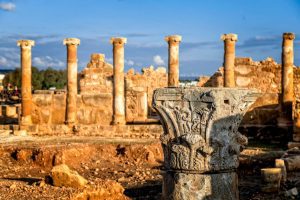
Paphos Archaeological Park, known in antiquity as Nea Paphos, represents one of the most significant archaeological landscapes in the eastern Mediterranean. Established in the late fourth century BCE during the Hellenistic period, the city was deliberately founded as a political and administrative center under the Ptolemaic rulers who controlled Cyprus after the campaigns of Alexander the Great. Its coastal position provided both strategic and economic advantages, linking the island to major maritime routes that connected the Greek world, Egypt, and the Near East.
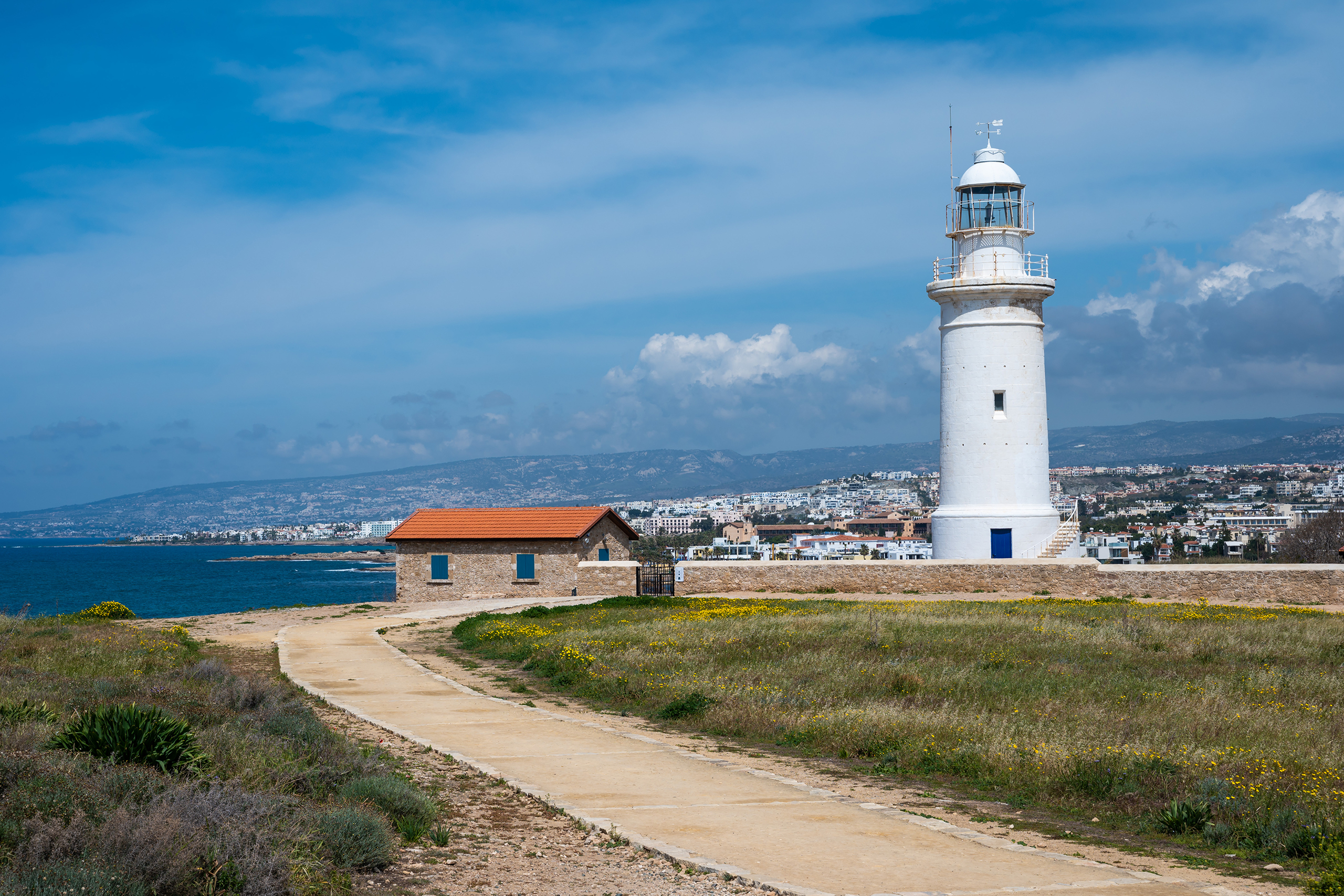
When the Romans annexed Cyprus in 58 BCE, Nea Paphos retained its prominence and became the island’s capital, a role that further strengthened its political, commercial, and cultural influence. The city’s development under successive Hellenistic and Roman administrations illustrates its adaptability and importance within broader imperial systems, making it a key example of urban life in antiquity.
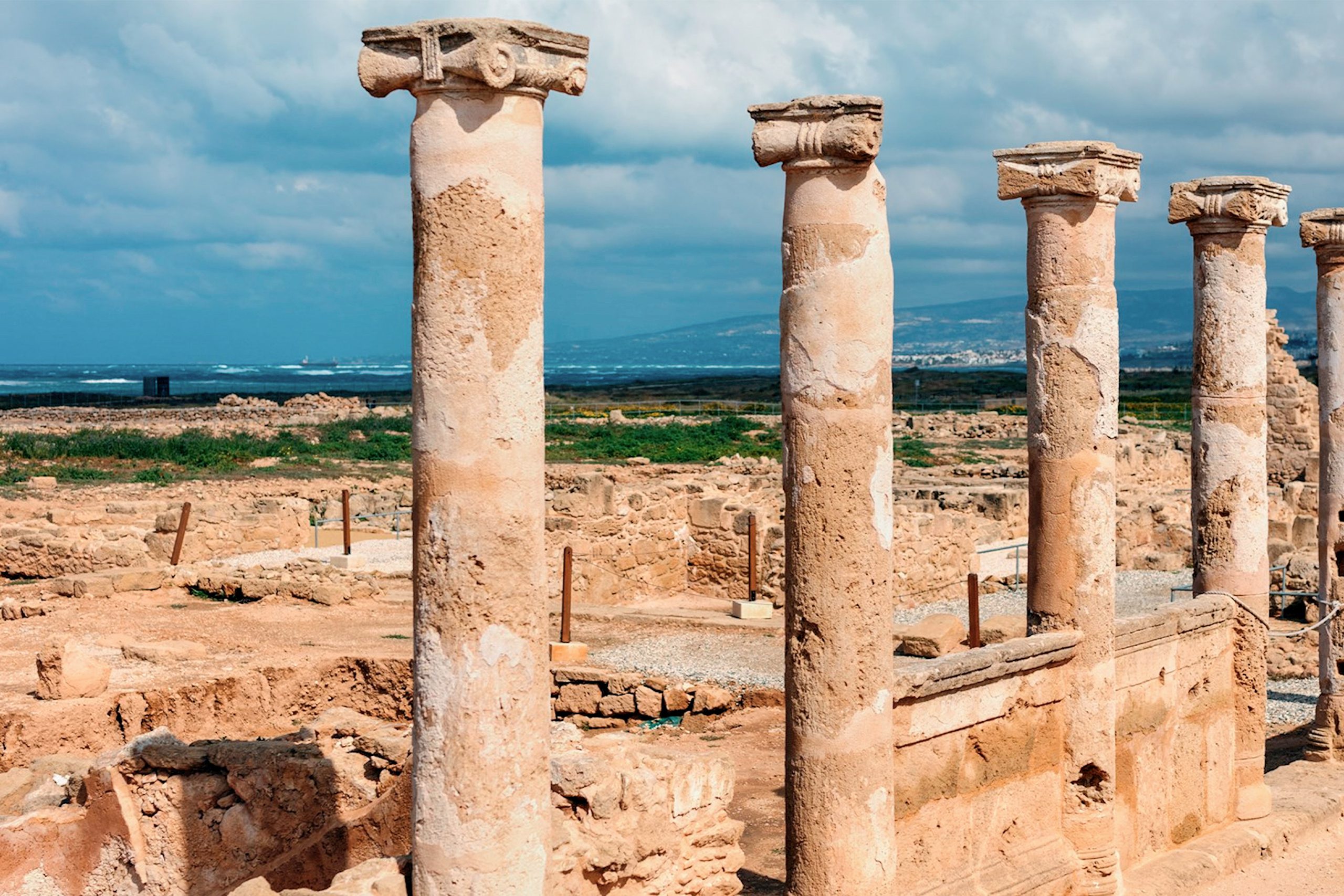
The archaeological remains reveal a carefully organized urban center designed to support governance, religion, trade, and social life. Streets, residential areas, and public structures were arranged according to principles common in Hellenistic and Roman urban planning, emphasizing accessibility and civic order.
Public spaces such as administrative buildings, marketplaces, and entertainment venues were positioned to encourage interaction and collective identity. This structured environment reflects a society that valued civic organization and shared public life. The city was not only a settlement but a symbol of authority and cultural integration, where architectural design served both practical and ideological purposes.
Architectural Structures and Public Infrastructure
The architectural remains within the park demonstrate the technical and cultural sophistication of Nea Paphos. Among the most notable structures is the Roman Odeon, a small theater used for musical performances, speeches, and civic events. Its design, with semicircular seating and a stage area, mirrors similar buildings across the Roman world, showing how cultural practices were shared across imperial territories. Nearby, remains of the agora, or marketplace, indicate the importance of trade and daily economic exchange. The agora functioned as both a commercial and social center, bringing together residents and visitors in a space that facilitated communication and interaction.
Residential architecture further illustrates the wealth and status of certain inhabitants. Large villas with central courtyards, colonnaded spaces, and reception rooms suggest the presence of an elite class that adopted Roman domestic styles. These homes were designed not only for private living but also for public display, where owners could demonstrate their cultural knowledge and social standing. The inclusion of advanced engineering systems such as drainage networks and heated bath complexes reflects a high level of technical skill. Public baths, equipped with heating mechanisms and multiple chambers, served as centers of hygiene, leisure, and social gathering. Together, these structures show that Nea Paphos was a city where infrastructure supported comfort, social life, and civic identity.
Exceptional Mosaics and Artistic Achievement
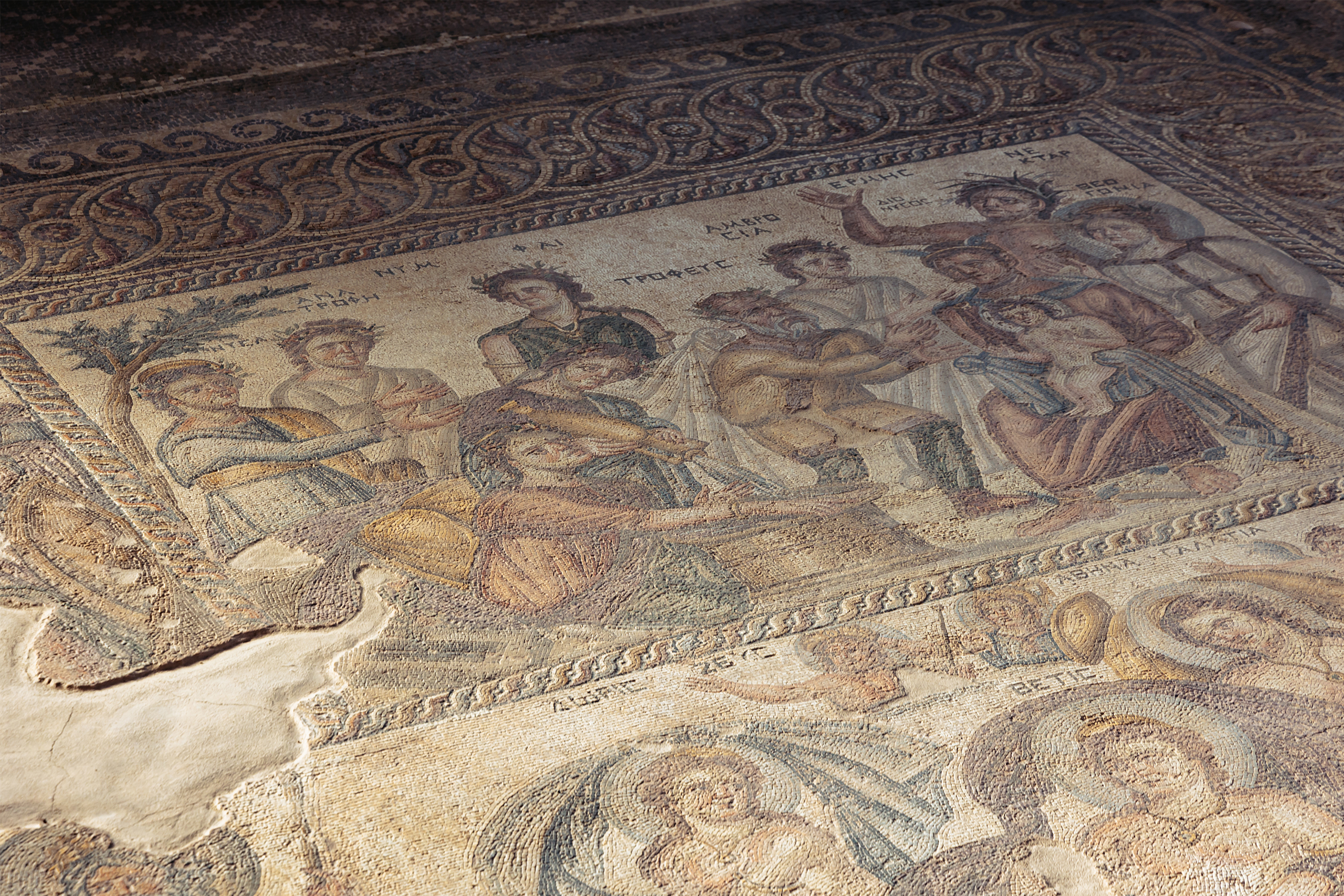
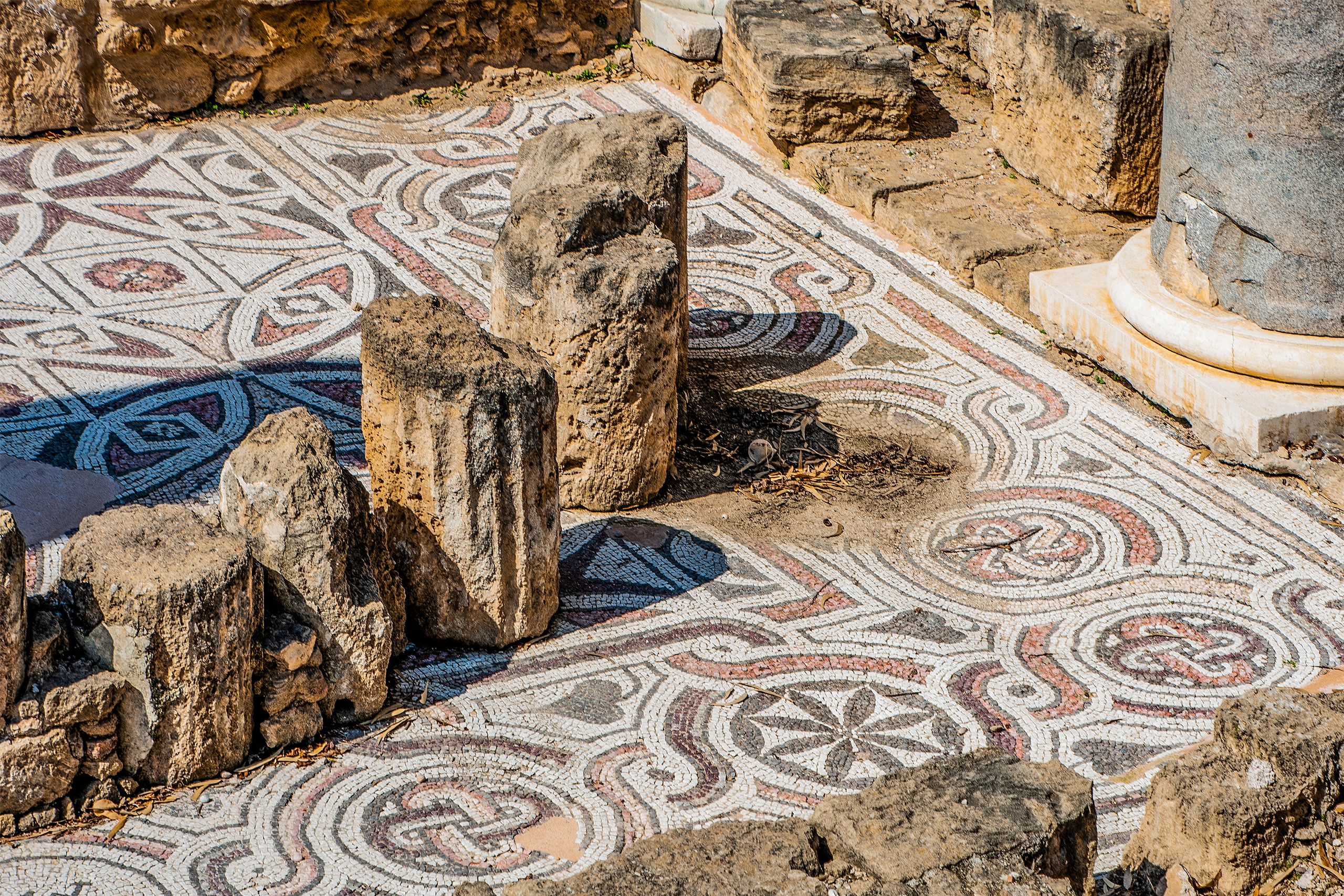
The mosaics of Nea Paphos are among the most celebrated features of the archaeological park and form a central reason for its global recognition. These mosaics, primarily dating to the Roman period, decorated the floors of elite residences and display a remarkable level of artistic skill and narrative complexity. Created from thousands of small tesserae made of stone and glass, they depict mythological scenes, daily activities, and symbolic imagery. The precision of detail and the use of color demonstrate a mastery of technique that rivals the finest examples found elsewhere in the Roman Empire.
The House of Dionysos contains mosaics illustrating episodes from Greek mythology, including scenes of gods, heroes, and legendary events. These images were not mere decoration but reflected the education and cultural identity of the homeowners, who used classical mythology as a visual language of refinement and knowledge. The House of Theseus features a mosaic portraying the hero Theseus battling the Minotaur, a dynamic scene that conveys movement and dramatic tension. Similarly, the House of Aion presents an elaborate composition centered on the figure of Aion, surrounded by zodiac symbols, blending mythology with cosmological symbolism. These works reveal how art served as a medium for storytelling, belief, and intellectual expression within domestic spaces.
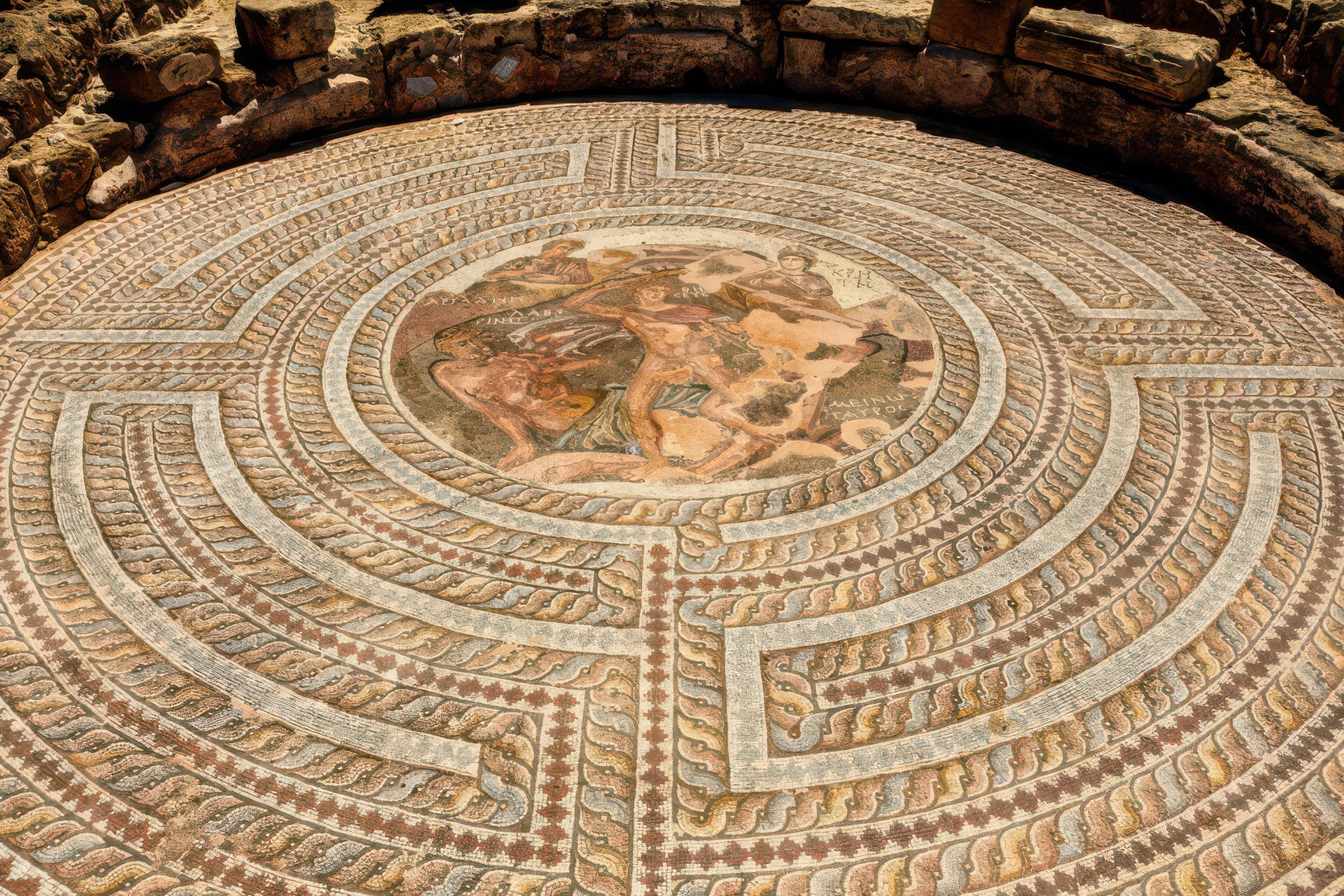
The mosaics also demonstrate the interconnected nature of the ancient Mediterranean. Artistic techniques and stylistic elements show influences from multiple regions, suggesting that craftsmen and patrons were engaged in cultural exchange. Despite these external influences, the mosaics developed a local character through subject selection and adaptation. Their preservation allows modern viewers to understand not only artistic practice but also the values and ideas that shaped elite life in Roman Cyprus.
Religious Life and Sacred Landscape
Religion played a fundamental role in the identity of Nea Paphos, and the archaeological evidence highlights its integration into urban life. The wider Paphos region was associated with the cult of Aphrodite, one of the most important deities in ancient Cyprus. While the primary sanctuary of Aphrodite was located outside the city at Palaipaphos, Nea Paphos contained additional shrines and sacred areas that reflect continued religious devotion. Temples and altars were situated near public spaces, indicating that religious activity was part of daily civic experience rather than confined to isolated sanctuaries.
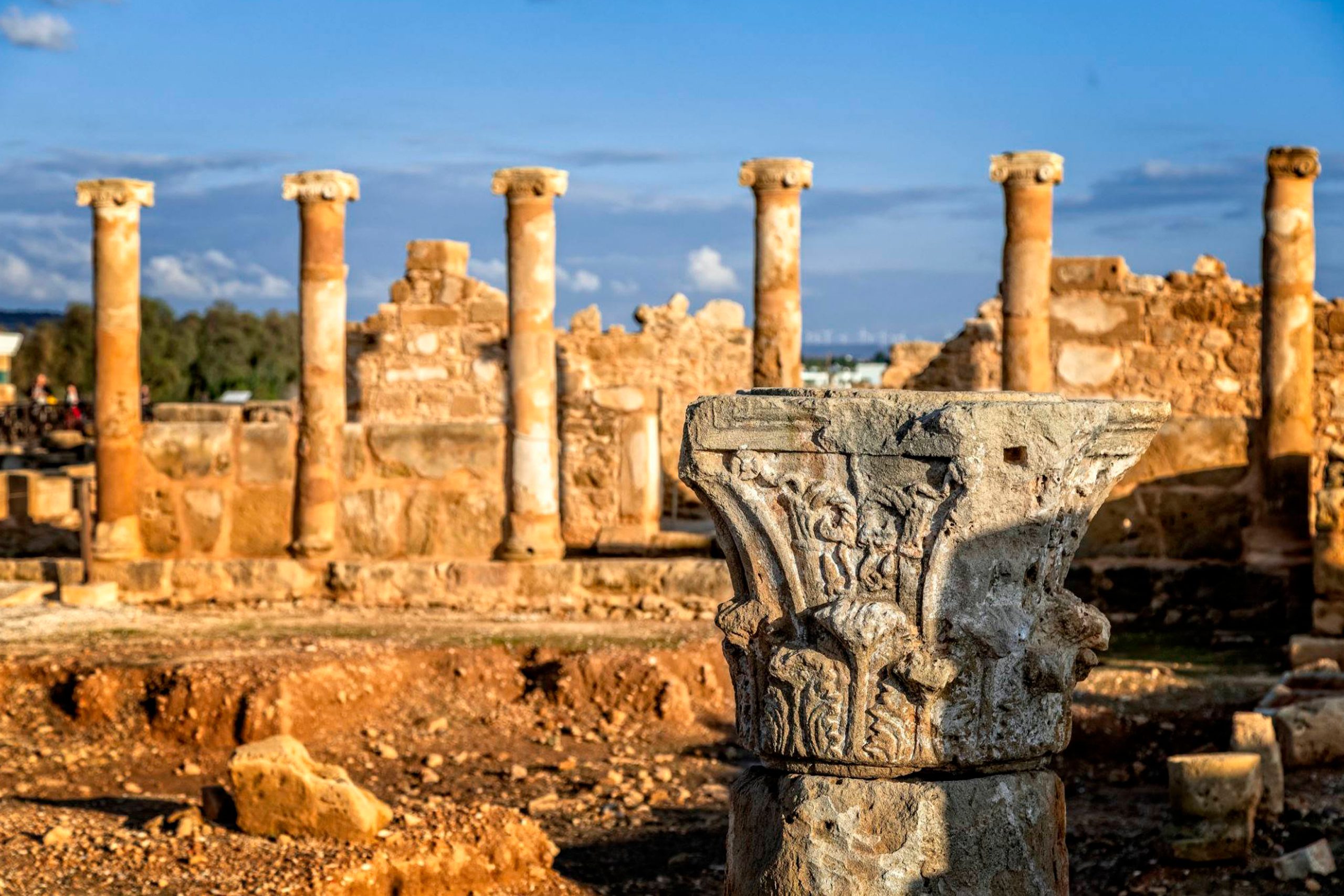
Religious imagery also appeared in domestic and public art, reinforcing the presence of spiritual belief in everyday settings. The coexistence of Greek and Roman deities illustrates the blending of cultural traditions as political control shifted from Hellenistic to Roman authority. Religious practice therefore functioned as both a personal and communal activity, shaping moral values, social cohesion, and cultural continuity. The sacred landscape of Nea Paphos reflects the broader Mediterranean pattern where religion, politics, and identity were closely connected.
Social Life and Cultural Interaction
The urban environment of Nea Paphos supported a diverse and active society. Public buildings such as theaters, baths, and marketplaces served as venues for interaction across different social groups. The presence of luxury residences alongside more modest structures suggests a stratified society in which wealth influenced lifestyle and access to resources. Nevertheless, shared public spaces created opportunities for interaction, trade, and cultural exchange.

As a port city connected to major trade networks, Paphos attracted merchants, officials, and travelers from different regions. This movement of people contributed to a cosmopolitan atmosphere where ideas, goods, and artistic styles circulated freely. Cultural interaction is visible in material remains such as imported pottery and artistic motifs that reflect influences beyond Cyprus. The city’s social fabric was therefore shaped by both local traditions and external connections, reinforcing its role as a meeting point of cultures.
Archaeological Research and Preservation
Modern understanding of Nea Paphos is the result of extensive archaeological work that began in the twentieth century and continues today. Excavations have revealed residential quarters, public buildings, and decorative art that had been buried for centuries. Archaeologists employ careful methods to document findings and preserve fragile remains, particularly mosaics that require protection from environmental damage. Conservation efforts include stabilizing structures, constructing protective shelters, and creating visitor pathways that minimize impact.
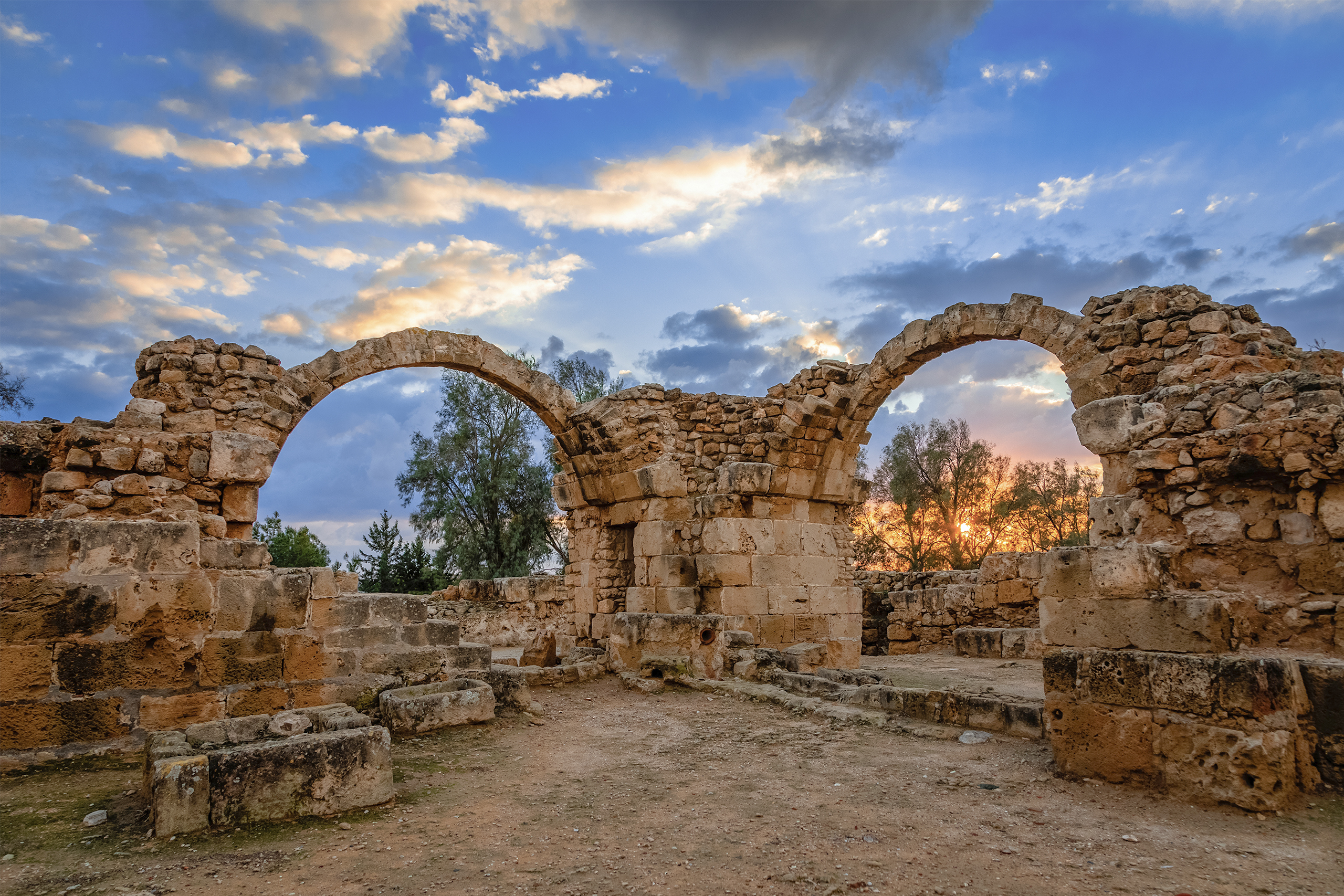
Ongoing research continues to expand knowledge of the site’s development and daily life. Each discovery contributes to a clearer picture of urban organization, artistic practice, and social structure. The park functions not only as a heritage site but as a research environment where new evidence refines historical understanding. This balance between preservation and study ensures that Nea Paphos remains both accessible and protected.
World Heritage Significance and Cultural Value
The international importance of Paphos Archaeological Park was recognized through its inscription as a UNESCO World Heritage Site. The designation acknowledges the exceptional quality of its mosaics and architectural remains, which together illustrate the city’s role as a major center of Hellenistic and Roman culture. UNESCO status also highlights the site’s value as part of humanity’s shared heritage, emphasizing the need for global cooperation in its protection.
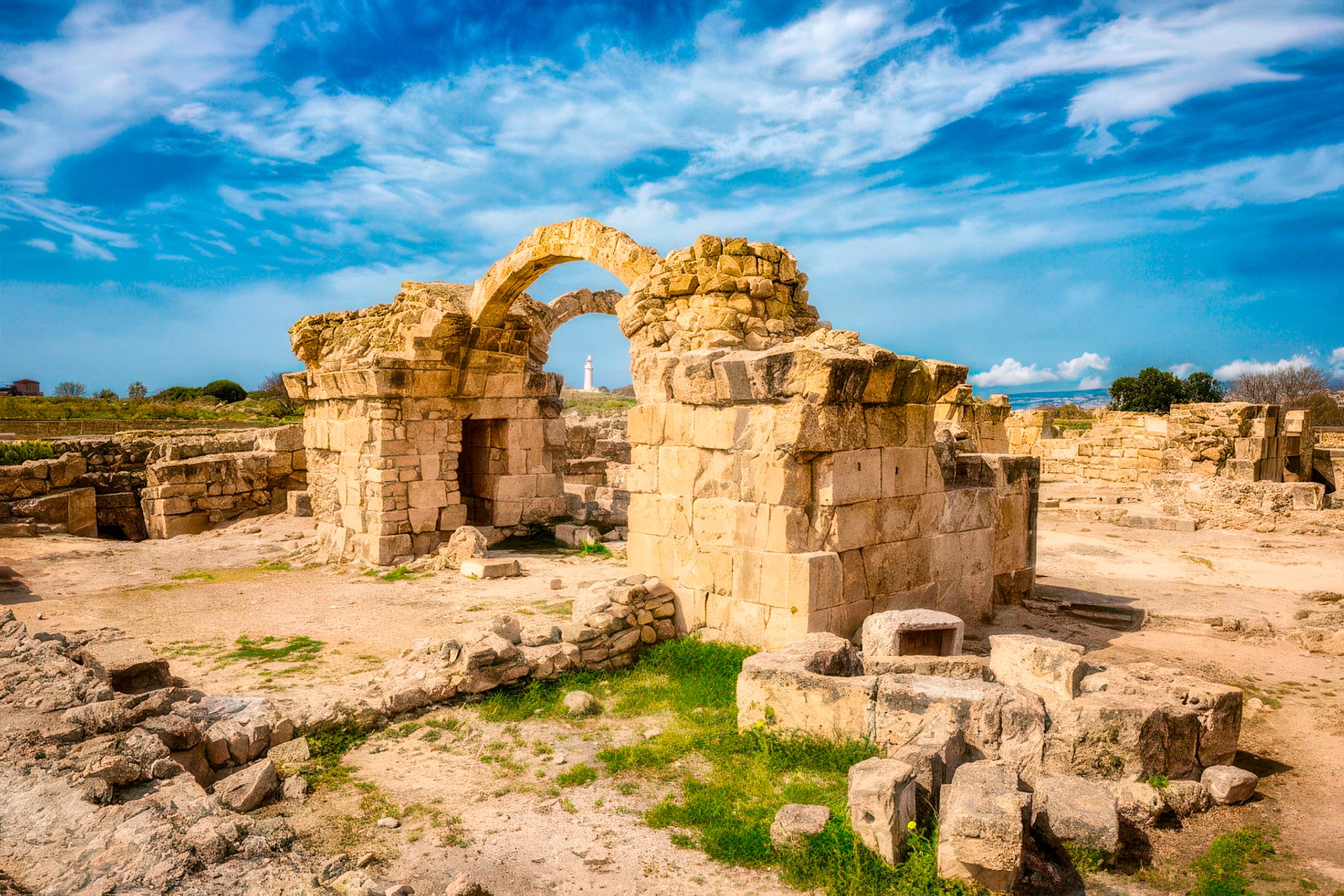
Today, the park serves as a cultural and educational resource, allowing visitors to engage directly with the physical evidence of ancient civilization. Its remains demonstrate how art, architecture, religion, and daily life were interconnected in the ancient world. Nea Paphos stands as a lasting example of cultural continuity, showing how a city shaped by multiple influences could develop a distinctive identity that continues to inform historical knowledge and cultural appreciation.