Far out beyond the rocky shores of Cyprus, something immense and powerful moves through the open sea. It is rarely seen, yet deeply present in the ecological story of the island.
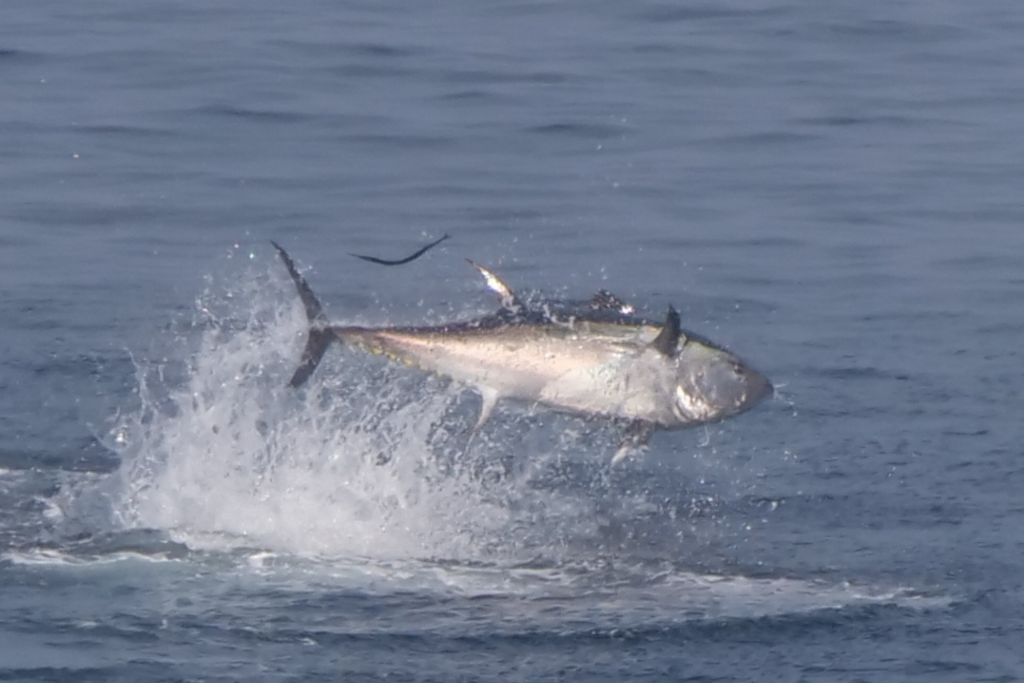
The Atlantic bluefin tuna is one of the ocean’s true giants – a fast, intelligent hunter that turns Cyprus’s offshore waters into a seasonal highway of life and motion.
Meeting the Bluefin Tuna
The Atlantic bluefin tuna – Atlantic bluefin tuna – is one of the largest bony fish in the world. It belongs to the tuna and mackerel family, a group of oceanic predators built for speed and endurance.
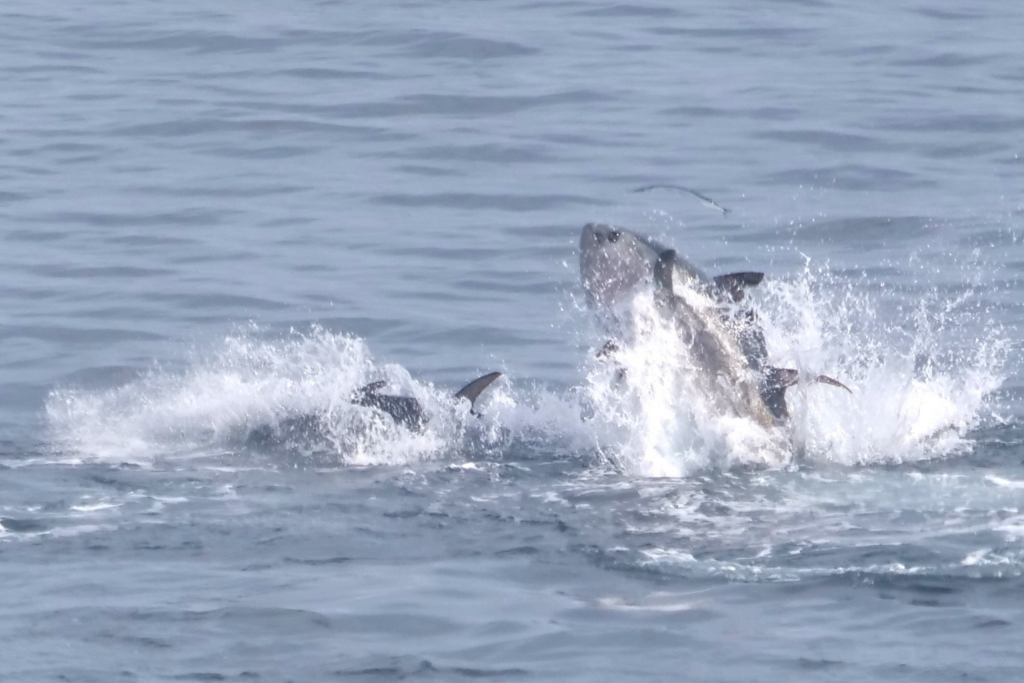
Unlike coastal fish that stay near reefs or the seabed, bluefin tuna are pelagic wanderers. They live in the open ocean, constantly moving across entire seas and even between oceans, following currents, temperature gradients, and the invisible rhythm of prey. In the waters around Cyprus, they appear like seasonal visitors rather than permanent residents.
A Life Written in Migration
Bluefin tuna have been part of the Mediterranean story for millions of years. Fossil relatives show that their lineage evolved into highly efficient long-distance swimmers, capable of crossing thousands of kilometres.
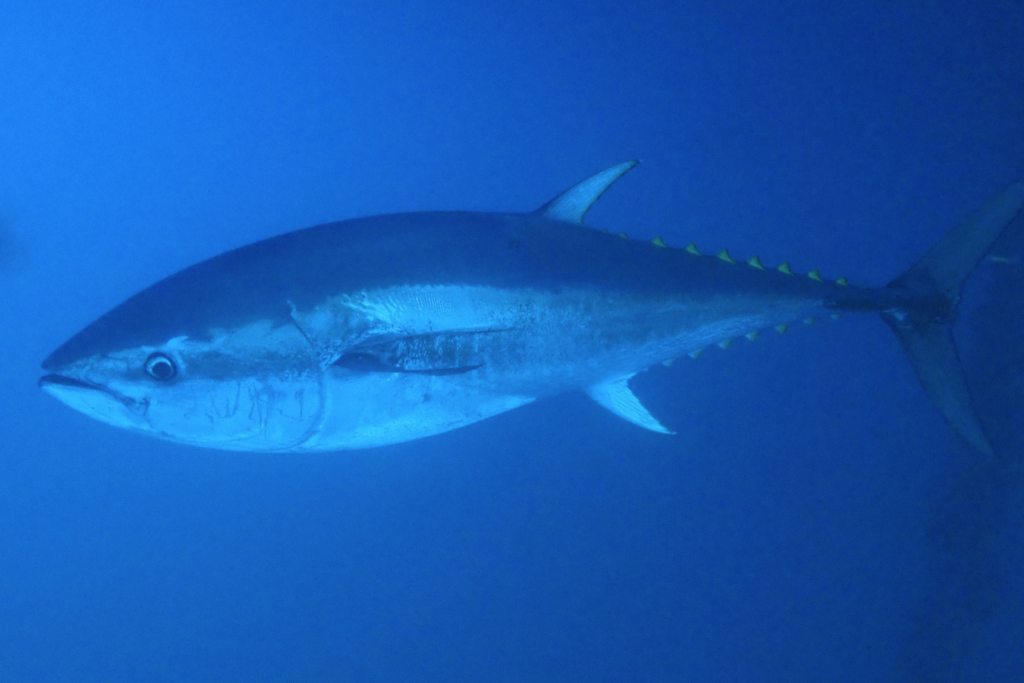
In the broader Mediterranean – including the waters south and east of Cyprus – bluefin tuna follow a predictable ancient cycle:
- Feeding in rich northern waters of the Atlantic
- Entering the Mediterranean to spawn
- Returning to the Atlantic after reproduction
Cyprus sits at the eastern edge of this vast marine corridor. While not a primary spawning ground, its surrounding waters are part of the broader migratory “neighbourhood” of the species.
Historically, tuna were so important in the Mediterranean that entire coastal cultures developed around them – from Sicily’s tonnara trap fisheries to Levantine seasonal coastal fishing traditions. Cyprus also participated modestly in this tuna heritage, though never at the industrial scale seen elsewhere.
Built for Speed, Power, and Endurance
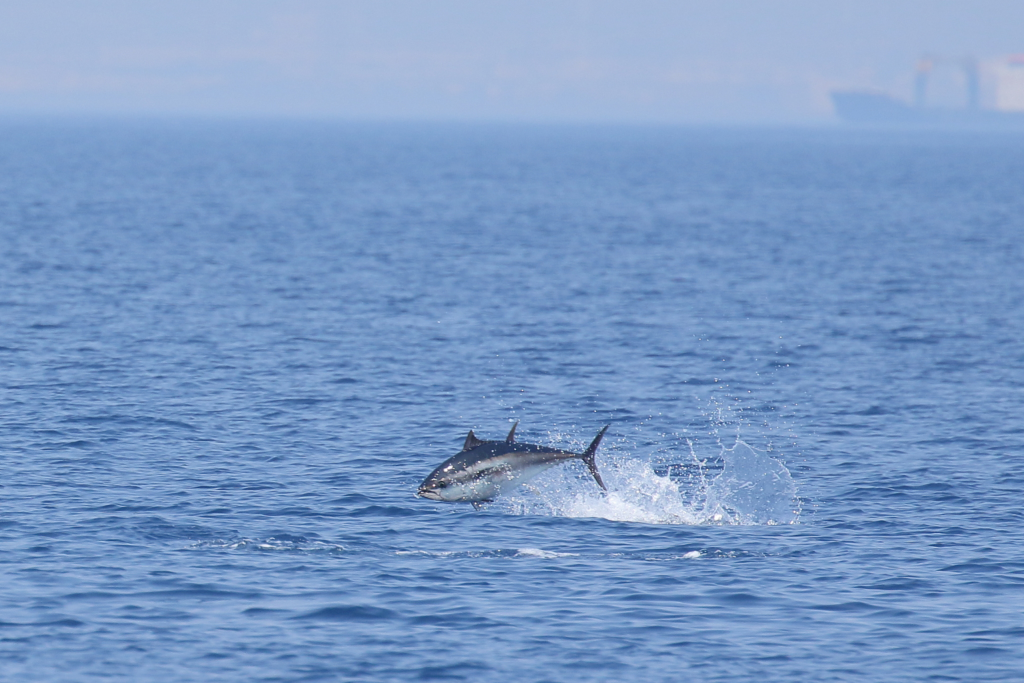
The bluefin tuna is a masterpiece of marine engineering.
It can reach:
- Over 2–3 metres in length
- More than 200–300 kg in weight (sometimes far more)
- Swimming speeds exceeding 70 km/h in short bursts
Its body is torpedo-shaped, almost machine-like in its perfection. Dark metallic blue on top, shimmering silver underneath, it disappears and reappears in water like a moving illusion.
Inside, it is equally extraordinary:
- Warm-blooded for a fish (able to heat its muscles above surrounding water temperature)
- Highly oxygen-efficient gills
- A muscle system designed for continuous long-distance swimming
This combination allows it to hunt in cold deep waters and warm surface layers alike – a true ocean general.
The Sea’s Hidden Surprises
- A bluefin tuna can migrate across entire oceans, yet still return to the same spawning regions.
- Its eyes and brain are warmed internally – a rare trait among fish.
- In ancient times, Mediterranean people believed tuna followed “invisible celestial paths” through the sea.
- Despite its size, it is incredibly agile and can change direction almost instantly while chasing prey.
- Juveniles in the Mediterranean sometimes travel in mixed schools with other tuna species, forming temporary “super-groups” of hunters.
Ecology and Role in the Food Web
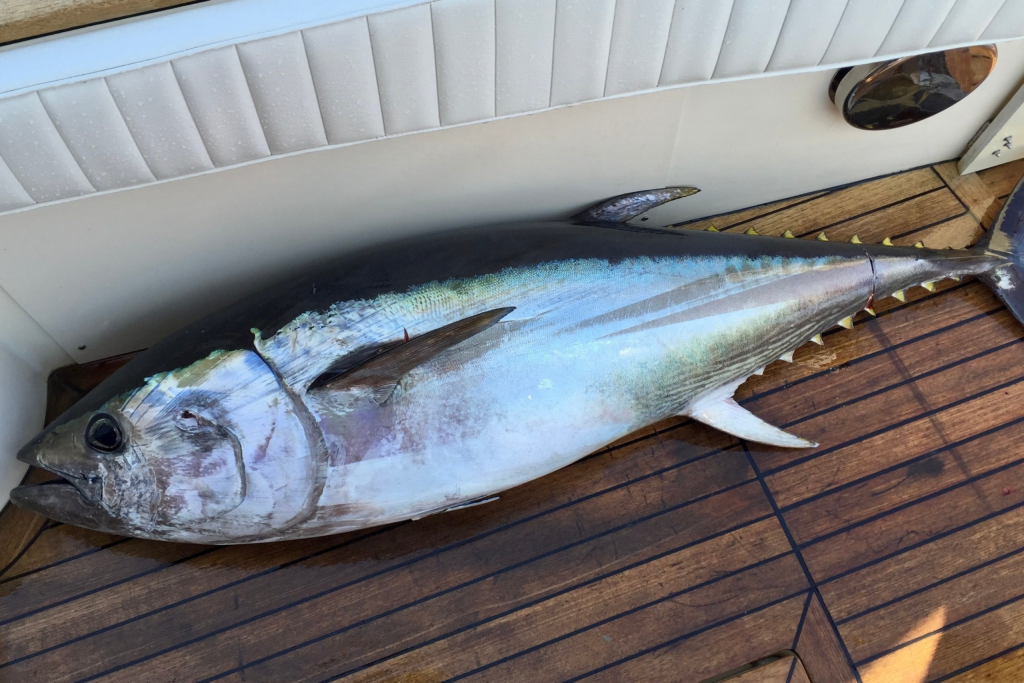
Bluefin tuna sit near the top of the marine food web. Their diet includes sardines, anchovies, mackerel, and squid – species that themselves form vast seasonal shoals in the Mediterranean.
This makes tuna a key regulator of pelagic ecosystems. When tuna numbers are healthy, smaller fish populations remain balanced, preventing over-dominance of any single species.
In the Eastern Mediterranean, including waters near Cyprus, their presence is tightly linked to:
- Seasonal plankton blooms
- Temperature shifts
- Migration pulses of small schooling fish
They are not constant residents, but ecological “visitors that shape the system while passing through.”
In recent decades, aquaculture experiments and farming attempts in the broader Mediterranean – including interest in Cypriot waters – have explored whether bluefin tuna could be sustainably raised. However, their biology makes them extremely difficult to farm due to:
- Long maturation time
- High oxygen and space requirements
- Constant swimming behaviour
A Sea Under Pressure
Today, bluefin tuna are both a conservation success story and a cautionary tale. Overfishing in the late 20th century caused severe population declines across the Mediterranean.
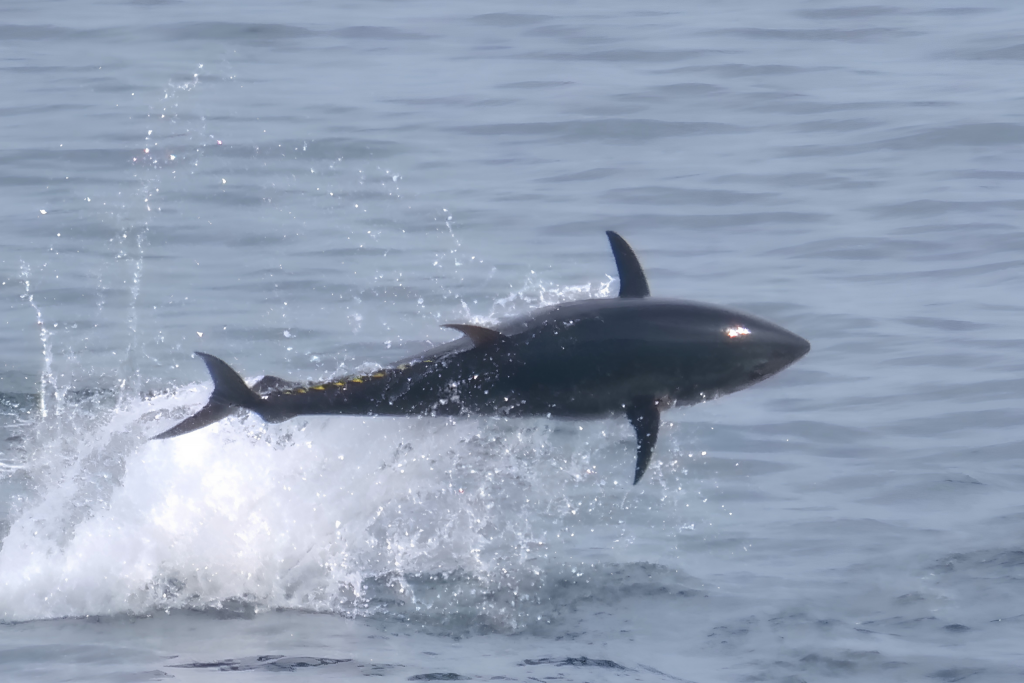
In response, international quotas and monitoring systems were introduced, and some stocks have shown signs of recovery.
For Cyprus, the story is subtle but important:
- The island lies on a migration corridor
- Local waters are part of a shared international ecosystem
- Changes in sea temperature and prey distribution may alter tuna routes
Climate change is also reshaping the Mediterranean, potentially shifting when and how tuna pass through Cypriot waters each year.
Sport Fishing in Cyprus: The Offshore Pursuit
Among the most dramatic human encounters with bluefin tuna is sport fishing, also known as game fishing.
Around Cyprus, offshore anglers occasionally pursue large pelagic species using trolling techniques in deep waters. While bluefin tuna is not the most commonly targeted species compared to other tuna relatives or pelagic predators, it is considered one of the most prestigious catches in the entire Mediterranean.
Sport fishing for tuna in Cypriot waters is shaped by several key realities:
- Deep offshore environment: trips often take place far beyond coastal visibility, where the sea turns deep blue and the coastline disappears
- Highly seasonal encounters: success depends entirely on migration timing and prey movements
- Strong regulation: any interaction with bluefin tuna is controlled under strict conservation frameworks, and in many cases catches are recorded, limited, or subject to release rules depending on licensing conditions
- Extreme physical challenge: even experienced anglers describe a hooked tuna as a prolonged battle of endurance rather than a simple catch
What makes sport fishing for tuna so compelling is not only the size of the fish, but the sense of encountering something ancient and wild. A single strike can turn a calm sea into an hour-long contest between human patience and ocean power.
For many participants, the experience is less about the catch itself and more about the moment of connection with one of the Mediterranean’s greatest migrants.
Where the Giants Pass Unseen
Unlike coastal fish, bluefin tuna are not something one easily “visits.” They belong to the open sea – beyond snorkelling reefs and shallow bays.
However, they can sometimes be experienced indirectly:
- Offshore fishing and research trips
- Seasonal market appearances
- Scientific monitoring projects
- Rare pelagic encounters far from land
The true experience is one of imagination: standing on the coast of Cyprus and knowing that, somewhere beyond the horizon, these vast fish are moving through invisible routes that have existed for millennia.
The Passing Giants of the Mediterranean
The Atlantic bluefin tuna remains one of the great travelling spirits of the sea – powerful, ancient, and always in motion. In the waters around Cyprus, it is a seasonal reminder that the island is part of a much larger living system stretching across oceans.
To understand the bluefin is to understand the Mediterranean itself: connected, changing, and full of hidden journeys that continue whether we see them or not.
Tunas possess a highly specialized lunate (crescent-shaped) caudal fin that provides exceptional propulsive efficiency. Supported by a rigid caudal peduncle, this strong fin minimizes drag while maximizing thrust. It allows these apex predators to maintain rapid cruising speeds and achieve remarkable bursts of acceleration when pursuing prey.