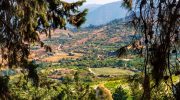
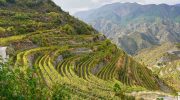
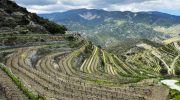
The route from Omodos to Vouni represents one of Cyprus’s most scenic drives through the Krasochoria, or wine villages, of the Troodos Mountain foothills. This stretch of approximately 15 kilometers connects charming settlements at altitudes between 700 and 900 meters above sea level, where traditional architecture meets centuries-old viticulture.

The drive passes through Lofou, Koilani, and other villages that form the backbone of Cyprus’s wine production, offering panoramic viewpoints across vineyards, valleys, and distant coastlines. The route belongs to Wine Route 4, known as Krasochoria Lemesou, home to the greatest concentration of wineries on the island.
Omodos and Its Cobbled Square
Omodos sits at the foothills of Troodos Mountain at approximately 800 meters altitude and serves as one of the most popular destinations on the wine route. The village dates back to the Frankish period when it was called Homodos, derived from the Greek word odos meaning street. The cobbled central square remains the village’s focal point, surrounded by traditional stone-built houses with narrow balconies and wooden doors.
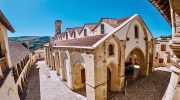
The Monastery of Timios Stavros, or Holy Cross, dominates the square with its impressive woodcarvings and pristine icons. This monastery ranks among Cyprus’s oldest and most historic, with the current structure dating to different periods of renovation and expansion.
Within the monastery complex, visitors find a museum dedicated to the National Liberation Struggle and a center preserving narrow-knit lacing, a traditional craft once practiced widely in mountain villages.
Omodos hosts at least 10 wineries within the village and immediate surroundings. Notable names include Olympus Winery, Zenon Winery, Ktima Gerolemo, Linos Wines, and Marion Winery.
The village also features a medieval wine press, one of the oldest surviving examples in Cyprus and testimony to 700 years of continuous winemaking at some locations. The village produces the traditional spirit zivania, handmade lacing, and arkatena bread, maintaining crafts that define mountain village identity.
The Drive to Lofou Village
The road from Omodos to Lofou climbs gently through terraced vineyards and almond groves. At 780 meters altitude, Lofou sits atop a hill, maintaining the name it has carried since Byzantine times. The name derives from the Greek word lofos meaning hill, accurately describing the village’s elevated position.
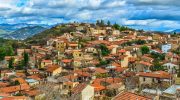
UNESCO lists Lofou as an architecturally important village, recognition of its traditional stone-built houses with terracotta roofs, winding cobbled streets, and authentic preservation. The village layout follows the natural contours of the hillside in an amphitheater shape, creating numerous viewpoints across the surrounding landscape.
From various spots around Lofou, visitors see vineyards stretching toward Kourris Dam, Limassol city in the distance, Akrotiri salt lake, and neighboring villages to the west including Kivides.
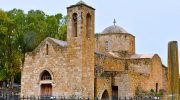
The Church of Panagia Chrysolofitissa dates to the 19th century and displays magnificent frescoes painted between 1910 and 1919 by artist Othon Giavopoulos. The wooden templum and master throne were carved by Eftichios Leptourgos from Larnaca, representing fine examples of ecclesiastical craftsmanship.
The church features two stone-built belfries constructed in 1910, one hosting a large bell with a distinctive deep sound.
Lofou maintains several museums documenting village life. The agricultural museum occupies the old school building, a neoclassical structure housing traditional farming implements and household items.
An old oil press demonstrates olive oil production methods used for generations. The traditional fountain of Elitji, built in 1842, can be reached via a one-kilometer downhill walking trail that showcases local flora including tall shrubs, oaks, and aromatic herbs.
The village celebrates the grape harvest at the end of September with a Grape Festival featuring folkloric entertainment, wine tasting, and traditional delicacies made from grape juice including soutzouko and palouze.
An August festival runs for four days and attracts around 5,000 visitors annually, recognized as a Europe for Festivals designation in 2015 and 2016.
Viewpoints Between the Villages
The route between Omodos and Lofou offers several informal stopping points where drivers can pull over safely to photograph the landscape. Terraced vineyards create geometric patterns across hillsides, particularly striking when vines show their spring green growth or autumn golden tones.
Traditional stone walls separate plots, remnants of centuries of careful land management.

One particularly scenic stretch overlooks the Kourris Valley, where the reservoir creates a blue expanse against brown hillsides. On clear days, the Mediterranean coastline appears as a blue line on the horizon.
The view encompasses the transition from cultivated foothills through wild mountain slopes to the coastal plain below.
Morning light provides the best conditions for photography, with the sun illuminating vineyard rows and village architecture while casting long shadows that emphasize topography.
Late afternoon creates warm golden tones across stone buildings and produces dramatic backlit conditions when shooting toward the coast.
Continuing to Vouni Village
The route continues through Koilani before reaching Vouni, perched at 800 meters on sun-kissed Troodos slopes. Vouni features the same stone-built houses, traditional wooden doors, and narrow balconies that characterize all the wine villages, but its setting offers particularly expansive views.
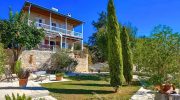
The village streets wind through the settlement, revealing new vistas at each turn.
Vouni maintains active viticulture with vineyards surrounding the village on all sides. The high altitude and specific microclimate produce grapes with distinct characteristics.
Xynisteri grapes grown here develop green apple and peach notes, while red varieties benefit from cool nights that preserve acidity and enhance aroma development.
Several stopping points around Vouni provide panoramic views. The village sits high enough that perspectives extend across multiple valleys and ridges.
Looking westward, the landscape unfolds in layers of receding ridges, each appearing progressively lighter blue with distance. To the south, views reach toward the coast and occasionally, in exceptionally clear conditions, toward the Akrotiri Peninsula.
Experiencing the Villages Today
Each village along the route maintains traditional tavernas serving Cypriot cuisine. These family-run establishments offer meze, the collection of small dishes that defines Cypriot dining.

Typical items include grilled halloumi, village sausages, koupepia, kleftiko, and various dips served with fresh bread. Local wines and zivania accompany most meals.
Accommodations range from restored traditional houses operating as guesthouses to small hotels. Many buildings maintain original architecture including stone walls and wooden beams while adding modern amenities.
Staying overnight allows experience of village life after day visitors depart and provides access to sunset and sunrise light conditions.
Wine tasting at village wineries offers insights into production methods and grape varieties. Winemakers typically welcome visitors, explain their approach, and pour samples of their range.
Some wineries operate restaurants where wine pairings accompany meals. Purchases support small producers maintaining traditional viticulture in areas that might otherwise face abandonment.
The villages host various cultural events throughout the year beyond the harvest festivals. Religious celebrations bring communities together for processions and special services. Music performances feature traditional instruments and folk songs.
These events provide glimpses of living culture rather than performances staged for tourists.
The Value of Wine Village Preservation
The Omodos to Vouni route demonstrates how traditional agriculture can sustain rural communities in a modern economy. Wine production provides economic foundation while tourism generates additional income that justifies infrastructure maintenance and cultural preservation.

The combination creates viable mountain villages that might otherwise empty completely.
The architecture represents irreplaceable heritage. These stone houses, churches, monasteries, and wine presses embody centuries of building traditions adapted to local materials, climate, and needs.
Once lost to demolition or decay, such buildings cannot be authentically reconstructed. Their preservation maintains physical connections to past generations and demonstrates traditional construction methods.
The cultural landscape of terraced vineyards, stone walls, and scattered villages creates scenic beauty that attracts visitors and provides residents with quality of life.
This landscape results from human labor shaping natural terrain over centuries. Maintaining it requires continued agricultural use, as abandoned terraces quickly erode and lose their distinctive character.