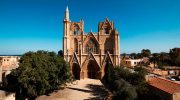
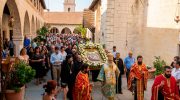
Icon processions, known as litanies in Greek, are among the most visible and long-standing ceremonial traditions in Cyprus villages. These events involve carrying symbolic religious images through village streets during annual festivals and designated communal celebrations. The practice temporarily transforms public spaces into structured ceremonial routes where participants move together in organized formation.
These processions occur throughout the year, particularly during major seasonal festivals and village celebrations. They remain closely tied to Cyprus’s historical village culture, where collective rituals, shared events, and seasonal gatherings play an important role in maintaining community identity.
Historical Origins of Processional Traditions
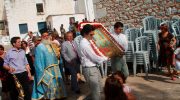
The practice of carrying religious images in public processions developed during the Byzantine period, when ceremonial rituals became an established part of public and community life in the eastern Mediterranean. Over time, these practices were integrated into local customs across Cyprus and adapted to village-based social structures.
Religious images used in these processions are traditionally regarded within their cultural context as symbolic representations connected to historical figures and narratives. Within the broader tradition, these objects are treated with reverence through formal gestures such as bowing or kissing the image, reflecting long-established ritual behavior in Orthodox-influenced regions.

Processions also served practical and social functions. In historical contexts, they allowed entire communities to participate in structured public ceremonies, especially when indoor spaces were limited. They also extended communal rituals into outdoor environments, linking built spaces with surrounding village streets.
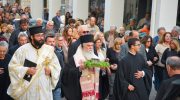
Cyprus maintained these Byzantine-era practices through various historical periods, including times of foreign administration and political change. In many rural areas, processions became an important way of preserving cultural identity and community continuity.
Different Types of Processions Throughout the Year
Different types of processional events take place across Cyprus depending on the seasonal calendar and local traditions.
One of the most widely recognized forms occurs during the spring period, when symbolic ceremonial objects are carried through villages in structured evening and night-time events. These processions are often accompanied by candlelight, music, and communal participation, creating a reflective and solemn atmosphere.
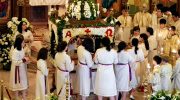
Village festival processions are also common during annual community celebrations. In these cases, symbolic images associated with local traditions are carried through village streets as part of larger public gatherings. These events typically include music, food stalls, and extended family participation alongside formal ceremonial movement.
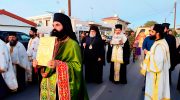
Another well-known form of procession takes place in early January in coastal and inland regions. In coastal towns, these events may involve water-related symbolic rituals, while inland communities adapt the tradition to local wells or fountains. These ceremonies reflect seasonal cycles and long-standing associations between water, renewal, and community life.
The Role of Icons in Community Life
Religious images used in processions play a significant role in village identity and cultural continuity. Each village typically maintains a central symbolic image associated with its main church or community tradition. These objects often become focal points for local storytelling and historical memory.
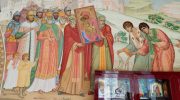
Over time, narratives develop around the origin and history of these images, including accounts of preservation, relocation, or survival during periods of conflict or environmental hardship. These stories contribute to their cultural importance within local communities.
Some of the most well-known examples are associated with major monastic sites, where religious images attract visitors from across Cyprus and abroad. These sites have become part of the island’s cultural heritage network, combining historical architecture, art, and long-standing tradition.
The continued presence of these objects in village life reflects their role as cultural symbols that connect present-day communities with earlier historical periods.
Modern Practices and Participation
Today, icon processions continue to follow traditional formats while adapting to modern conditions. In some areas with smaller populations, neighboring villages may coordinate to ensure sufficient participation in annual events. This reflects broader demographic changes affecting rural communities.
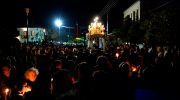
Photography and video documentation are common in contemporary settings, although many villages encourage respectful behavior during formal moments of ceremony. Participants are generally expected to maintain silence during structured parts of the event, particularly when moving through designated ritual routes.
Dress codes vary depending on the location and occasion, but modest attire is commonly expected during formal segments of the procession. In more traditional villages, specific local customs may still influence participant behavior.
Participation is generally open to residents and visitors who choose to observe or join respectfully. Visitors are usually encouraged to follow processions from appropriate distances and to avoid interfering with the movement of ceremonial elements.
Why These Traditions Endure
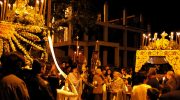
Icon processions remain an important part of village life because they reinforce social cohesion through shared public activity. The collective movement of participants through village streets creates a strong sense of unity and shared identity.
These events also serve as annual gathering points for families and former residents who return to their home villages. In many cases, they provide one of the few regular opportunities for dispersed communities to reconnect in a structured setting.
Processions help mark the passage of time within the village calendar. Their annual repetition creates a rhythm that organizes community life and reinforces continuity between generations.
They also serve an educational function, introducing younger generations to traditional practices through direct participation rather than formal instruction. This experiential learning helps maintain cultural knowledge over time.
The Future of Icon Processions
Like many rural traditions, icon processions face challenges related to urban migration and changing lifestyles. Smaller villages with aging populations may find it increasingly difficult to organize large-scale annual events without external support.

At the same time, these traditions continue to attract interest from expatriate communities who return to participate in major annual gatherings. Cultural tourism also contributes to renewed attention, encouraging some villages to maintain and organize their traditional events.
Digital media has introduced new forms of visibility, allowing processions to be documented and shared more widely. While this increases awareness, it also requires careful balance to ensure that documentation does not disrupt the structured and communal nature of the events.
The continued survival of these traditions depends on adapting to modern conditions while preserving their core role as community-based cultural practices. When maintained as local expressions of identity rather than external performances, they continue to function as meaningful elements of Cyprus village life.