Traditional women’s roles in Cyprus rural life centered on agricultural work, textile production, food processing, household management, and child-rearing within extended family structures. Women participated heavily in field labor, with the rural female workforce comprising 51 percent of agricultural workers in the mid-20th century before shifting to urban occupations.
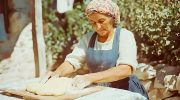
Textile manufacturing represented a crucial economic activity, with British period censuses documenting thousands of Cypriot women earning income from weaving for local markets and export traders. The village of Lefkara became internationally famous for its intricate white embroidery called lefkaritiko, which brought more wealth to the village between 1900 and 1930 than reached most other Cypriot communities.
Women’s social lives occurred primarily within gender-separated spaces including courtyards, village fountains where they drew water and washed clothes, and communal textile work sessions that created female networks parallel to men’s coffee shop culture.
Agricultural Labor and Field Work
Women provided essential labor for Cyprus agriculture across all farming activities. They participated in planting, weeding, harvesting, threshing, and processing crops alongside male family members. During olive harvest season from October through January, women and children gathered fallen olives while men climbed trees to shake branches. The grape harvest in September brought entire families to vineyards, with women carrying heavy baskets and sorting fruit by quality. Women handled most vegetable cultivation in kitchen gardens adjacent to homes, producing food for family consumption.

The physical demands of agricultural work required women to balance field labor with household responsibilities. They woke before dawn to prepare breakfast, worked in fields until midday heat forced breaks, returned home to prepare the main meal, then resumed field work in late afternoon. This grueling schedule persisted throughout growing seasons when crops required constant attention. Elderly grandmothers supervised children during peak work periods, allowing younger women to contribute maximum labor.
The 1974 Turkish invasion displaced thousands of farmers from north Cyprus, where four-fifths of citrus and cereal production had occurred. The resulting agricultural unemployment affected women disproportionately as mechanization reduced demand for manual labor their physical limitations had previously filled. The transition from family farms to wage labor fundamentally altered women’s economic participation, moving them from unpaid family workers to formal employment or complete exclusion from workforce statistics.
Textile Production as Economic Cornerstone
Weaving represented one of women’s most important economic activities, combining unpaid domestic labor with income generation. British census records documented thousands earning money from textile manufacturing, though actual numbers likely exceeded official counts as home-based work often went unrecorded. Women wove fabrics for their own families’ clothing and household textiles, but many also produced commercially for local markets and distant traders who coordinated extensive production networks.
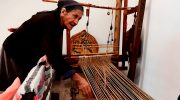
The raw materials reflected Cyprus’s agricultural diversity. Cotton cultivation began in the 16th century and became a major export crop, with Solia village particularly famous for its cotton textiles. Morphou specialized in linen production, while silk manufacturing, introduced during the Byzantine period, allowed even peasant families to wear silk clothing uncommon in Mediterranean agricultural societies. The silk from Paphos had golden tones, while Famagusta and Karpasia produced white silk. These regional variations created distinctive local textile traditions.
Processing raw materials and preparing yarn for looms constituted exclusively female work, except for silk production where male silk-workers called metaxades traveled between villages setting up equipment to process cocoons. Women spun wool from family sheep flocks using drop spindles, producing thread over months of labor. They operated hand looms in courtyards where natural light aided detailed work, weaving fabrics through complex patterns that required years of skill development.
The Lefkara Embroidery Tradition
Lefkaritiko or lefkaritika, the distinctive white embroidery with geometric designs, has been produced for centuries by women in Lefkara village in Cyprus. The technique shows Venetian lace work influence introduced during Venetian rule from 1489 to 1571. During the 15th and 16th centuries when Cyprus functioned as a significant textile production and trading center, Lefkara embroidered textiles found export markets throughout Europe.
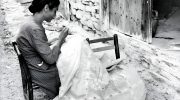
Between 1900 and 1930, international sales brought unprecedented wealth to Lefkara, transforming both the economic and social structure of the village beyond anywhere else in Cyprus. The embroidery work provided substantial income for women who could work at home while managing household duties. Wealthy families from urban areas and abroad commissioned elaborate pieces as dowry items, wall decorations, and table linens. The commercial success created female economic power unusual in traditional Mediterranean societies where women’s work generated minimal cash income.
The tradition faced decline in recent decades. By the early 21st century, only about 50 women in Lefkara continued making and selling embroidery, with pessimistic forecasts predicting the craft would disappear within 20 years as elderly practitioners died without younger replacements. Government-organized village courses attempted to teach traditional handicrafts, but middle-aged Cypriots showed interest mainly from nostalgia for grandparents rather than desire to continue practices. The association of crafts with poor village life discouraged young women from learning skills their grandmothers practiced from economic necessity.
Food Processing and Preservation
Women handled all food preservation necessary for family survival through winter months when fresh produce was unavailable. They dried fruits and vegetables on flat rooftops accessible from courtyards, creating supplies that lasted until spring harvests. Olives were processed into preserved table olives and pressed for oil used in cooking, lighting lamps, and religious practices. Women oversaw the complex brining and curing processes that transformed bitter raw olives into edible products.
Grape processing during September harvest involved women crushing fruit to extract juice for wine production and preparing grape-based delicacies. Palouzes, a sweet pudding made from grape must and flour, required constant stirring over heat to achieve proper consistency. Soutzoukos involved repeatedly dipping walnut strings into thickened grape must, a labor-intensive process demanding patience and skill. These preserved sweets provided concentrated nutrition during months when fresh fruit was unavailable.

Dairy processing represented another crucial female responsibility. Women made cheese from sheep and goat milk, producing halloumi through techniques passed through generations. The daily cheese-making during peak lactation from January through May required constant attention to temperature, timing, and hygiene. Women also produced yogurt, butter, and anari whey cheese, maximizing use of limited dairy supplies while creating products that could be stored or sold for cash income.
Social Networks and Information Exchange
Women’s social interactions occurred within gender-separated spaces that created parallel networks to men’s coffee shop culture. The village fountain or vrisi served as primary gathering points where women drew daily water, washed clothes, and exchanged information. These communal tasks transformed utilitarian activities into social occasions where news circulated, marriages were arranged, and mutual support systems developed.

Textile work sessions brought women together for spinning, weaving, and embroidery while conversing about family matters, village events, and shared concerns. These gatherings functioned as informal councils where collective wisdom addressed problems and disputes were mediated through female networks. The sessions also transmitted cultural knowledge including songs, stories, folk remedies, and childcare practices from older to younger generations.
Women attended church services more regularly than men, creating religious networks centered on Orthodox observances and saint feast days. The church provided acceptable public space for female gathering without male supervision, though under clerical authority. Women organized communal meals for religious festivals, prepared churches for celebrations, and maintained family relationships with priests through regular confession and spiritual counsel.
Contemporary Changes and Challenges
The transformation from agricultural to urban wage economy fundamentally altered women’s economic roles. Rural women’s workforce participation declined from 51 percent to 44.4 percent by the early 1990s as overall shift away from agriculture accelerated. Women’s urban workforce share rose from 22 percent to 41 percent, reflecting movement to clerical, teaching, and service occupations. Despite educational advances, occupational segregation persisted with only one woman in fifteen holding administrative or managerial positions in 1985.
Traditional attitudes about women’s honor and sexual modesty remained prevalent through the early 1990s, particularly in rural areas. Studies in farming communities found women still expected to avoid social contact with men that could be construed sexually, with virginity considered a marriage precondition by many villagers. These conservative values coexisted with increasing female economic independence that gradually undermined patriarchal authority.

The expectation that women maintain domestic responsibilities while working outside homes created double burdens. Cypriot women achieved workforce participation rates of 44 percent by recent years while remaining responsible for household duties, childcare, and elder care. The hiring of migrant workers for domestic tasks became common among middle-class urban families, though rural women generally lacked resources to purchase such services. The tension between traditional expectations and modern economic realities continues reshaping Cyprus society, with younger generations increasingly rejecting gender roles their grandmothers accepted as inevitable.