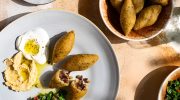
Cyprus street food traces its roots to ancient Mediterranean trading ports where vendors sold quick, affordable meals to sailors, merchants, and laborers. Today the tradition continues across busy city streets, village festivals, church forecourts, and coastal promenades. Unlike the homogenized fast food chains that dominate many countries, Cypriot street food remains deeply local, with recipes passed through generations and preparations visible to customers.

The ingredients reflect the island’s agricultural abundance, from fresh pork and lamb to local herbs, olive oil, and seasonal vegetables. Street eating in Cyprus differs fundamentally from a quick meal, it represents a social activity where queues become conversations and vendors know their regular customers by name and usual order.
Souvlaki and Cypriot Pita Define Street Eating
Souvlaki ranks as the most beloved street food across Cyprus, with small grilled meat cubes threaded onto skewers and served in large flat Cypriot pita bread. The Cypriot version differs from its Greek counterpart in several key ways. The pita is notably thinner, flatter, and has a pocket for stuffing rather than being folded around the filling. The meat pieces are larger and more robust. Accompaniments lean toward fresh salad with cucumber, tomato, onion, and parsley, plus pickled vegetables and tahini sauce with a squeeze of lemon rather than the heavy tzatziki dressings common in Athens.
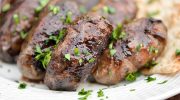
Pork remains the most traditional choice but chicken is equally popular. Adding sheftalia alongside the main meat elevates the pita significantly. Sheftalia are minced pork rissoles wrapped in caul fat, giving them rich flavor and crispy exterior when grilled. The first dedicated souvlaki shop in Cyprus appeared in Livadia in 1951, though street grilling existed centuries before formal establishments.
Koupes Carry Middle Eastern Heritage
Koupes represent Cyprus’s most distinctive street snack, reflecting the island’s position as meeting point between Mediterranean and Middle Eastern cultures. These torpedo shaped croquettes consist of an outer shell made from bulgur wheat and flour, stuffed with spiced minced meat, onions, and parsley. The filling carries Middle Eastern spicing influences including allspice and cinnamon that distinguish Cypriot koupes from generic meat croquettes. Vendors deep fry them until golden and crispy, serving them hot with lemon wedges that cut through the richness.
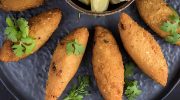
Outside Orthodox churches on Sunday mornings, street vendors sell trays of freshly fried koupes to worshippers leaving services, creating a ritual that combines religious observance with traditional snacking. Festivals and village fairs always feature koupes vendors, making them essential components of celebration food culture.#
Loukoumades Sweeten Every Festival
Loukoumades or lokmades in Cypriot dialect are small deep fried dough balls soaked in honey syrup and finished with cinnamon or crushed walnuts. The Cypriot version differs from the Greek original through one distinctive addition: mashed potato mixed into the dough before frying. This creates a denser, chewier interior that soaks honey syrup more effectively.
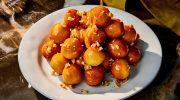
The dough balls emerge from hot oil golden brown, crispy on the outside and soft within, immediately dunked in warm honey. Dedicated loukoumades vendors, often roadside shacks with minimal infrastructure, attract queues that stretch along pavements during festivals and religious celebrations.
The Kataklysmos festival in Larnaca and village saints’ day celebrations always feature multiple loukoumades stands competing for customers through the quality of their honey and the freshness of their oil. Seeking out a traditional zacharoplasteio sweet shop or dedicated festival vendor provides far superior results than tourist focused restaurants attempting the same recipe.
Festival Sweets and Pastry Traditions
Pitta Satzis represents a uniquely Cypriot pastry made from simple flour, olive oil, and water dough shaped into circles or squares and cooked on a curved metal utensil called a satzi. The cooked pastry is filled with honey, cinnamon, and icing sugar, creating a warm portable sweet eaten at village festivals and markets. Bourekia me Anari fill thin pastry wraps with fresh anari cheese, the soft ricotta like byproduct of halloumi production, sweetened with cinnamon, rose water, or orange blossom water, then dusted with icing sugar after baking.

These small pastries appear at festivals, bakeries, and kafeneio display cases throughout the island. Baklava with layers of phyllo dough, chopped nuts, and honey syrup appears at both Greek and Turkish Cypriot street stalls, demonstrating shared culinary heritage despite political division. Loukoumi, the Cypriot version of Turkish delight flavored with rose water or citrus, sells in small shops and market stalls throughout the island.
Seafood Vendors Work the Coastal Towns
Coastal cities including Limassol and Paphos host seafood vendors serving grilled octopus, calamari, and fresh fish alongside the standard meat based street food. The octopus hangs on lines to dry before grilling, a practice visible at harbors and tavernas that functions as informal advertising for the day’s catch. Fish markets in Limassol’s old harbor area sell fresh fish directly from boats in the morning, with some vendors offering simple grilled preparations.
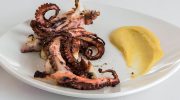
Marinated anchovies and grilled sardines appear as street food particularly during coastal festivals. The Larnaca harbor area attracts street food vendors during the annual Kataklysmos celebrations, with the week long festival creating one of Cyprus’s most vibrant temporary street food scenes.
Where to Find the Best Street Food Today
The best Cypriot street food requires moving away from main tourist thoroughfares toward local neighborhoods and village centers. Old town areas in Limassol, Nicosia, and Larnaca preserve the most authentic vendors. Village festivals throughout the summer months concentrate the highest quality traditional preparations in temporary markets. Church forecourts on Sunday mornings attract koupes and pita vendors serving post service crowds.

Markets in smaller towns near Paphos and the Troodos foothills offer less commercialized experiences. Prices remain modest compared to restaurant alternatives, with full souvlaki pitas typically costing two to four euros and loukoumades portions selling for around two euros. The food culture encourages eating standing at counters or perched on small stools outside vendor windows rather than formal seated service, maintaining the informal social character that defines authentic Cypriot street eating.