Stavros tou Agiasmati, near Platanistasa in the eastern Troodos, is one of Cyprus’s most complete late-medieval painted churches, with frescoes dated to 1494 covering the interior and parts of the exterior. Its steep timber roof and sheltered mountain setting protected the paintings, so the church still reads as a coherent visual program rather than scattered fragments. This article explains how the Holy Cross dedication shaped the imagery, why the painter Philippos Goul matters, and what makes Agiasmati’s Last Judgment and village-facing messages unusually powerful.

A Painted Church Near Platanistasa
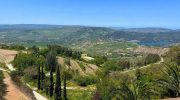
Stavros tou Agiasmati stands a few kilometres outside the village of Platanistasa, surrounded by forested slopes and mountain air that feels deliberately removed from the coast. Its location was not accidental. In medieval Cyprus, mountain churches offered protection, isolation, and continuity at times when the lowlands were exposed to political change and external threat.
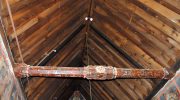
The building itself follows the distinctive Troodos tradition of timber-roofed churches. A steep wooden roof with deep eaves wraps around the stone core, shielding the walls from rain and snow. This practical solution turned out to be a gift to history. It protected the paintings not only inside the church, but also on its exterior walls, allowing them to survive with exceptional clarity.
Why This Church Matters
What makes Stavros tou Agiasmati remarkable is not a single image or scene, but completeness. Very few churches in Cyprus preserve such an uninterrupted decorative program from this period. Painted in 1494, the frescoes cover every surface, including beams and arches, creating a visual world that surrounds the visitor entirely.
Because of this integrity, the church is part of the UNESCO-listed Painted Churches of the Troodos region. Yet its value is not only international. It reflects a local religious culture where rural communities invested deeply in visual storytelling, using art to teach, warn, comfort, and inspire.
A Story Told in Layers of Paint
Inside the church, the paintings follow a clear theological logic. Scenes from the life of Christ unfold across the upper walls, guiding the viewer through moments of birth, sacrifice, death, and resurrection. Below them stand rows of saints, prophets, and martyrs, figures meant to feel close and intercessory rather than distant or abstract.
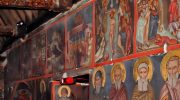
Because the church is dedicated to the Holy Cross, special attention is given to its story. A detailed sequence illustrates the discovery of the True Cross by Saint Helena, linking this remote mountain site to the core narrative of Christian history. The message is simple but powerful. Even here, far from imperial centres, believers understood themselves as part of a much larger sacred story.
The Painter Behind the Vision
Unlike many medieval churches, Stavros tou Agiasmati allows us to name its artist. The frescoes were created by Philippos Goul, one of the few known painters of late medieval Cyprus. His work reflects a world in transition, where Byzantine traditions blended with Western influences arriving through Venetian rule.
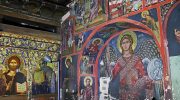
Goul’s figures are expressive without being theatrical. Faces show grief, authority, mercy, and judgment in ways that feel human rather than symbolic. His use of colour is confident and warm, with deep blues, earthy reds, and luminous highlights that would have come alive under candlelight. The result is a visual language that speaks to both devotion and observation.
Messages Written for Everyone
Some of the most powerful statements made by Stavros tou Agiasmati appear not inside the sanctuary, but on its exterior walls, where images were visible even when the church itself was closed. These paintings addressed the wider community directly, offering moral guidance that extended beyond formal worship and into everyday life.
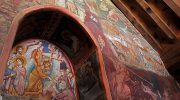
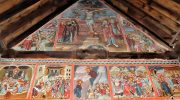
Dominating the western wall is the Last Judgment, arranged as a carefully structured vision of order and consequence. The righteous are gathered into light and harmony, while the condemned are drawn into scenes of disorder and fire. Among them appears the figure of the rich man punished for his indifference to suffering, a reminder that moral responsibility extended well beyond ritual observance. For rural communities familiar with hardship and inequality, these images were not abstract theology. They were immediate, recognisable, and difficult to ignore.
In this way, the paintings functioned as sermons in colour. They required no literacy and no explanation. Their meanings were meant to be absorbed quickly, remembered easily, and carried into daily behaviour.
A Place Still in Use
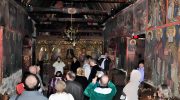
Despite its age and international recognition, Stavros tou Agiasmati has never become a static monument. It remains a living place of worship, particularly during the feast of the Holy Cross in September, when villagers and pilgrims gather for services that continue traditions centuries old.
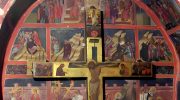
This continuity shapes how the church is experienced today. It does not feel curated or staged. Visitors often notice the quiet before they notice individual images, sensing that the space is still held in respect. You are not simply observing preserved art. You are entering a place shaped by repeated presence, shared belief, and long habit.
Visiting Stavros tou Agiasmati Today
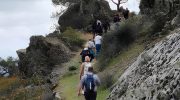
Reaching the church involves a short drive from Platanistasa and, at times, coordination with a local key holder, especially outside the main tourist season. Rather than feeling inconvenient, this small effort reinforces the sense of arrival. The journey slows expectations and prepares the visitor for a more attentive encounter.
Inside, the pace naturally changes. There is no need to move quickly from scene to scene. The paintings reward patience, revealing details gradually as light shifts across the walls. Gestures between figures become clearer. Expressions soften or sharpen. Small narrative moments emerge from within larger compositions, inviting return visits rather than quick consumption.
Why It Leaves a Lasting Impression
Stavros tou Agiasmati does not overwhelm through scale or grandeur. Its strength lies in coherence. Architecture, painting, landscape, and belief work together without excess or distraction. Nothing feels added for effect, and nothing feels incomplete.
In a country rich with churches and monasteries, this one stands apart because it preserves intention as much as imagery. It shows how art once functioned as a living language of faith, rooted in community, shaped by daily life, and sustained through continuity rather than spectacle.
To visit Stavros tou Agiasmati is to encounter a quieter version of Cyprus’s history. One written not in monumental stone or imperial ambition, but in paint, wood, and mountain silence, preserved through care, use, and time itself.