Explore Cyprus with Our Interactive Map

Explore our top stories and discover ideas worth your time.

Ethnographic Costume Museum (Lefkara)

Ethnographic Costume Museum (Lefkara)

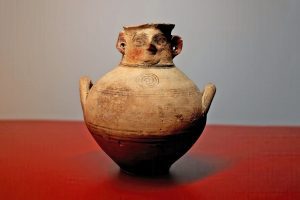
The Museum of Traditional Embroidery and Silversmith-work in Lefkara preserves Cyprus's most celebrated handicrafts within the walls of a 19th-century mansion. Located in the village of Pano Lefkara, approximately 45 kilometres from both Larnaca and Limassol, this museum documents the artisan traditions that sustained the community and brought international recognition to a small mountain settlement. Historical Background The museum occupies the House of Patsalos, named after the wealthy family that once owned this substantial white limestone residence. The house itself represents the prosperity that embroidery and silversmithing brought to Lefkara during its economic peak. The Patsalos family began accumulating wealth in the mid-19th century under Michalis Patsalos, who established the family's various business interests. Beyond producing Lefkara lace and metalwork, the family engaged in pottery production and ran both public and private educational institutions, including a music school. In 1983, the Department of Antiquities acquired the property through a donation from businessman Stelios Ioannou. Following extensive restoration work, the museum officially opened to the public in August 1988. The building comprises several rooms constructed during different periods spanning the 19th to early 20th centuries, creating a physical timeline of architectural evolution in prosperous Lefkara households. Inside the Museum Rooms The ground floor recreates traditional village life through a rural-style dining room and storeroom. Large earthenware jars stand alongside agricultural implements…

Read more
Calabrian Pine in Cyprus

Calabrian Pine in Cyprus

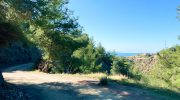
Imagine stepping onto sun-drenched slopes where tall evergreens sway in the breeze, their long needles catching golden light and filling the air with a fresh, resinous scent. This is the world of Pinus brutia, Cyprus’s most iconic pine and the backbone of the island’s woodlands. Together with its mountain cousin, it reveals a story of ancient resilience that still thrives across the Mediterranean landscape today. A Pine Built for the Island Pinus brutia, commonly known as the Calabrian pine, is a hardy evergreen conifer perfectly suited to the warm, dry conditions of the eastern Mediterranean. In the broad pine family (Pinaceae), it stands out for its fire-adapted seeds and drought tolerance. On Cyprus it reigns supreme, forming the vast majority of the island’s forests from sea level right up to the cooler heights where its relative, the black pine (Pinus nigra ssp. pallasiana), takes over. The Aleppo pine (Pinus halepensis) also appears, sometimes as a planted companion or in transitional zones. Echoes of Ancient Forests In 1881, French forester P.G. Madon climbed Mount Troodos and described a Cyprus once cloaked in “vast forests… pines of different species in dense profusion” mingling with cedar, oak and cypress down to the plains. For millennia these trees supplied timber for Phoenician mines, Ptolemaic fleets, Lusignan palaces and Venetian ships. Yet centuries of temporary…

Read more
Machairas Monastery

Machairas Monastery

Machairas Monastery, officially known as the Monastery of Panagia Machaira, is a historic monastery located about 40 kilometers from Nicosia in the mountainous interior of Cyprus. Built near Mount Kionia at an elevation of approximately 870 meters, the monastery is surrounded by dense pine forests and overlooks the Pediaios River, the island’s longest waterway. Its fortress-like position on a steep hillside makes it one of the most recognizable monastic sites in Cyprus. Machairas Monastery is considered one of the island’s three most historically significant monasteries alongside Kykkos Monastery and Agios Neophytos Monastery. The monastery historically held stavropegic status, which granted it administrative independence from the Archbishopric of Cyprus. The Discovery of a Sacred Icon According to local tradition, the monastery’s famous icon was associated with the Byzantine period and linked to the Church of Blachernae in Constantinople. During the eighth-century period of iconoclasm, when many religious images were removed or destroyed across the Byzantine Empire, the icon was reportedly transported to Cyprus and hidden in a cave for preservation. Around 1145, two hermits named Ignatios and Neophytos are said to have discovered the cave concealed behind thick vegetation. Tradition states that they used a knife to clear access to the site. The Greek word for knife, machairi, later influenced both the icon’s name, Machairiotissa, and the monastery’s name. Machairas Monastery…

Read more