Explore Cyprus with Our Interactive Map

Explore our top stories and discover ideas worth your time.

Pelendri Church

Pelendri Church

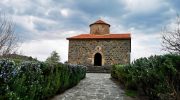
The Church of Timios Stavros in Pelendri is a layered Troodos interior built and repainted between the 12th and 16th centuries, preserving multiple fresco phases within a single working church. Dated inscriptions, shifting styles, and later aisle additions make the building a readable archive of rural devotion, local patronage, and Lusignan-era overlap rather than a single “perfect” moment. This article explains how the structure expanded, how the fresco programs differ by period, and why the church remains one of Cyprus’s clearest examples of belief accumulating without erasing what came before. A Church Shaped by Reuse Pelendri lies high in the Pitsilia region, surrounded by steep slopes and dense forest, far from the coastal cities that usually dominate Cyprus's medieval history. Timios Stavros stands just outside the village core, a placement that suggests it functioned originally as a cemetery church rather than a parish centrepiece. Its position tells an important story. This was not a monument built for display or prestige. It was a working religious space, shaped by generations who returned to it repeatedly for worship, burial, and memory. Over time, necessity and devotion changed their form, resulting in the layered structure that survives today. From Modest Chapel to Complex Basilica The earliest version of the church dates to the mid-12th century, when it existed as a single-aisled domed structure…

Read more

Bottletrees In Cyprus

Bottletrees In Cyprus

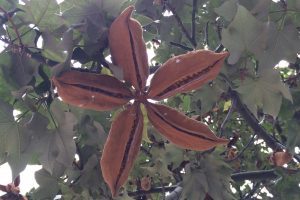
Imagine strolling through a sunlit park in Limassol or Nicosia when suddenly a tree bursts into vivid scarlet flowers, turning the branches into a living flame against the blue sky. These are the Brachychiton trees — Australian visitors that add a splash of dramatic color to our island's gardens and streets, whispering tales of distant lands. Bottle-Shaped Beauties Brachychiton trees are part of the vast Malvaceae family, the same group that gives us cotton, hibiscus, and cacao – plants known for their showy flowers and useful fibers. In Cyprus, they are tall, sturdy trees often grown for their striking looks and shade, fitting right into our warm, dry climate like old friends from afar. From Australian Bush to Cypriot Shores These trees first took root in the wild bushlands of Australia millions of years ago, evolving alongside kangaroos and koalas in a continent shaped by ancient isolation. They arrived in Cyprus during the British colonial era around the early 20th century, planted as hardy ornamentals to beautify towns and provide quick-growing shade, much like the eucalypts that came before them. Today, they stand as quiet reminders of how human wanderings have blended the world's green treasures. Swollen Trunks and Scarlet Spectacles What makes Brachychiton stand out is their bottle-shaped trunks, swollen at the base like natural water tanks to store…

Read more
Pissouri Beach

Pissouri Beach

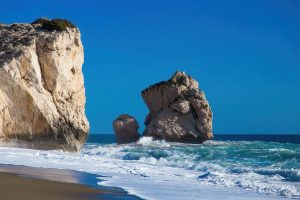
Pissouri Beach stretches 1.5 kilometers along the southern coast of Cyprus between Limassol and Paphos, roughly 30 kilometers from each city. The beach occupies Pissouri Bay, a natural cove protected by the white limestone cliffs of Cape Aspro on both sides. The beach features fine golden sand mixed with multicolored small pebbles, creating a distinctive shoreline texture not found at purely sandy beaches. The waters here earned Blue Flag certification, marking compliance with strict European standards for cleanliness, safety, and environmental management. Pissouri divides into two distinct zones: the old village perched on a hillside three kilometers inland and Pissouri Bay, the beach resort area that developed primarily for tourism. From Pine Resin to Tourist Haven The name Pissouri most likely derives from extensive pine resin extraction in the area, as the Greek word for tar is pissa, and resin production began during the Byzantine Empire and continued through the Middle Ages and Frankish era in Cyprus. Alternative theories link the name to the Cypriot dialect word for very dark nights, connected to legends about 300 Alamani saints who arrived at this coast during a pitch-dark night in the 7th century. The ancient geographer Strabo mentioned a city called Boosoura in this region, though exact connections remain unclear. Medieval records describe Pissouri as royal property where almonds, carobs, olives, fruit,…

Read more