Explore Cyprus with Our Interactive Map

Explore our top stories and discover ideas worth your time.

Cyprus Museum Nicosia

Cyprus Museum Nicosia

The Cyprus Museum stands on Museum Street in central Nicosia as the oldest and largest archaeological museum in Cyprus. Founded in 1882 during British occupation, the museum houses the most extensive collection of Cypriot antiquities in the world. The institution displays only artifacts discovered on the island, creating a focused narrative of Cyprus's archaeological heritage from the Neolithic period through the Roman era.  The museum building itself carries historical importance, with construction commencing in 1908 and completing in 1924 when Cyprus remained a British colony. Extensions added in 1961 created additional galleries, storerooms, and offices that surround a central square area housing auxiliary offices, a library, and laboratories for preserving and studying items. Fourteen display halls follow chronological and thematic succession, though the collection has far outgrown existing capacity with only a small fraction on display at any time. How a petition saved Cyprus's heritage The museum was founded following a petition delivered to British authorities by a delegation headed by religious leaders of both Christian and Muslim populations. The catalyst for this action was several illicit excavations and the smuggling of antiquities off the island during the early British period.  Cypriots recognized that their archaeological heritage was disappearing to foreign museums and private collections, prompting joint action across religious communities. The British administration agreed to establish a central repository…

Read more
Kition Cyclopean Walls

Kition Cyclopean Walls

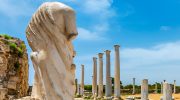
A sacred complex in Kition constructed with massive stone blocks, housing temples dedicated to Astarte and Melqart, serving the Phoenician community. The Cyclopean Walls and Temples of Kition represent a cornerstone of Cyprus's ancient heritage, where monumental architecture and religious devotion intertwined to form a vibrant sacred precinct in the heart of the island's earliest urban center. Located in modern Larnaca, ancient Kition was one of Cyprus's ten city-kingdoms, thriving as a hub of trade, culture, and spirituality from the Late Bronze Age onward. This complex, characterized by its imposing walls built from enormous limestone blocks, enclosed a series of temples primarily dedicated to the Phoenician deities Astarte, goddess of fertility and war, and Melqart, a protector figure akin to Heracles. Serving the Phoenician settlers who dominated the city from the 9th century BC, the site facilitated rituals, offerings, and communal gatherings that reinforced social bonds and economic ties across the Mediterranean. As a testament to Cyprus's role in bridging Eastern and Western civilizations, Kition's sacred spaces evolved over centuries, blending indigenous Cypriot traditions with influences from Mycenaean Greece, Phoenicia, and beyond, offering modern visitors a window into the island's multifaceted past. A Sacred Complex in Ancient Kition The Cyclopean Walls and Temples of Kition formed the defensive and spiritual core of the ancient city, sprawling across several hectares in…

Read more
Cyprus Youth Leadership Networks

Cyprus Youth Leadership Networks

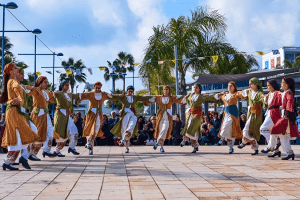
In Cyprus, civic life is often learned long before formal politics, through scouts, youth clubs, cultural groups, and community projects where responsibility has real consequences. These organisations teach leadership through practice, from organising festivals and rehearsals to running clean-ups and coordinating volunteers, so accountability becomes a habit rather than an idea. This article explains the main youth pathways into civic participation, how they build trust across communities, and why these structures remain one of Cyprus’s most resilient sources of social cohesion. Civic learning outside the classroom Much of Cyprus's youth engagement happens through non-formal education. Unlike school curricula, these settings emphasise participation over instruction. Young people learn by organising events, managing groups, resolving disagreements, and working toward shared goals that have visible outcomes in their communities. Scout groups, youth clubs, and cultural associations function as practical training grounds. Leadership is learned by doing, whether that means coordinating a village festival, leading a patrol on a hike, or managing volunteers during a clean-up campaign. These experiences teach decision-making, accountability, and cooperation in ways that formal education rarely replicates. Scouting as a long-standing leadership pathway Scouting has existed in Cyprus for more than a century and remains one of the most structured systems for youth leadership development. Its model is built around gradual responsibility, where young members progress from participation to coordination…

Read more