Explore Cyprus with Our Interactive Map

Explore our top stories and discover ideas worth your time.

Machairas Monastery

Machairas Monastery

Machairas Monastery, officially known as the Monastery of Panagia Machaira, is a historic monastery located about 40 kilometers from Nicosia in the mountainous interior of Cyprus. Built near Mount Kionia at an elevation of approximately 870 meters, the monastery is surrounded by dense pine forests and overlooks the Pediaios River, the island’s longest waterway. Its fortress-like position on a steep hillside makes it one of the most recognizable monastic sites in Cyprus. Machairas Monastery is considered one of the island’s three most historically significant monasteries alongside Kykkos Monastery and Agios Neophytos Monastery. The monastery historically held stavropegic status, which granted it administrative independence from the Archbishopric of Cyprus. The Discovery of a Sacred Icon According to local tradition, the monastery’s famous icon was associated with the Byzantine period and linked to the Church of Blachernae in Constantinople. During the eighth-century period of iconoclasm, when many religious images were removed or destroyed across the Byzantine Empire, the icon was reportedly transported to Cyprus and hidden in a cave for preservation. Around 1145, two hermits named Ignatios and Neophytos are said to have discovered the cave concealed behind thick vegetation. Tradition states that they used a knife to clear access to the site. The Greek word for knife, machairi, later influenced both the icon’s name, Machairiotissa, and the monastery’s name. Machairas Monastery…

Read more
Cyprus Hero Digenis Akritas

Cyprus Hero Digenis Akritas

Digenis Akritas stands as the most famous epic hero to emerge from the Byzantine Empire, celebrated in folk ballads and a lengthy epic poem that originated in the 10th century and developed further in the 12th century. The name Digenis means "two-blood" or "of two peoples," referring to his mixed Byzantine Greek and Arab heritage.  Akritas translates to "borderer" or "frontier guard," identifying his role defending Byzantine territory. The protagonist became the archetype of the ideal medieval Greek hero, frequently appearing in traditional folk songs particularly popular in Crete, Cyprus, and Asia Minor. For Cypriots specifically, Digenis Akritas represents more than legend, symbolizing bravery, strength, and the eternal fight for freedom against foreign invaders. The Epic Story and Family Origins The epic details the life of the hero Basil, whose epithet Digenis Akritas refers to his unique parentage. The first half of the epic, written in an epic tone, describes how his parents met. His mother, a Byzantine noblewoman named Eirene from the aristocratic Doukas family, was abducted during an Arab raid by his father, an Arab emir named Mousour. After capturing Eirene, the emir fell in love with her and she with him. To marry her, Mousour converted to Christianity, reconciling the two peoples through marriage and representing the triumph of Christianity over Islam. The reconciliation between Byzantine and…

Read more
Vouni Palace in Cyprus

Vouni Palace in Cyprus

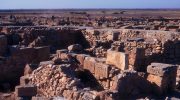
Perched on a rocky hilltop 250 meters above the Mediterranean Sea, the ruins of Vouni Palace stand as a remarkable architectural anomaly in ancient Cyprus. This site represents the only known example of Persian palace design not just on the island but throughout the entire eastern Mediterranean, built during one of history's most intense power struggles between two great civilizations. Historical Background Around 500 BC, Cyprus found itself caught in the crossfire of the great wars between the Persian Empire and the Greek city-states. The island's ten kingdoms split into opposing camps, with some supporting the Persians and others backing the Greeks. This division led to bitter conflicts across Cyprus, on both land and sea. The ancient city of Soli, located near modern Lefke on the northwest coast, firmly supported the Greek cause. This position threatened Marion, a nearby pro-Persian kingdom situated close to present-day Polis. King Doxandros of Marion, a ruler loyal to the Persian Empire, decided to take action against his pro-Greek neighbor. In 500 BC, Doxandros established a military settlement on a strategic hill overlooking Soli. The location was perfect for surveillance. From this elevated position, Persian forces could monitor all sea traffic along the coast and observe every activity in the city below. What began as a simple military outpost would transform into one of ancient…

Read more