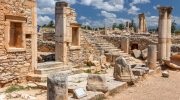
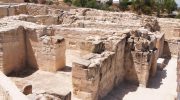
The Basilica of Kampanopetra is an extensive archaeological complex located within the ancient city of Salamis, near modern Famagusta in Cyprus. Dating to the late 5th or early 6th century CE, it represents one of the largest early Byzantine architectural remains on the island. The site formed part of Constantia, the name given to Salamis after major earthquakes in the 4th century CE led to a large scale reconstruction of the city.
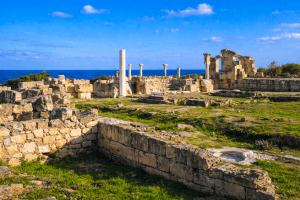
The complex is arranged in a long, structured sequence of spaces extending along an east west axis. It includes a large courtyard, entrance halls, a monumental three aisled central hall, and an additional eastern courtyard. In total, the structure extends over 150 meters in length, reflecting the scale and ambition of major public architecture in Late Antiquity. Its proportions indicate that it was designed to accommodate large gatherings and to serve an important civic and institutional function within the reorganized city.
The name Kampanopetra has been interpreted in different ways, with some linking it to later monastic activity in the area and others associating it with local topographical or architectural features. Regardless of its exact origin, the name reflects the continued use of the site in later centuries after its original function had ceased.
Historical Background
Salamis was among the most prominent urban centers of ancient Cyprus. Founded according to tradition in the early first millennium BCE, it developed into a major port and trading hub in the eastern Mediterranean. During the Roman period, the city reached a peak of prosperity, supported by commerce, administration, and its strategic coastal position.

In the 4th century CE, a series of powerful earthquakes caused widespread destruction across the region. The city was subsequently rebuilt under imperial direction and renamed Constantia. This rebuilding effort reshaped the urban landscape and marked a new phase in the city’s development, with large civic and institutional buildings constructed to reflect its continued importance.
Over the following centuries, the island became part of the administrative and cultural network of the Eastern Roman world. Archaeological and historical sources indicate that Salamis Constantia remained an important coastal center, connected to maritime routes linking the eastern Mediterranean. The presence of large scale religious and public structures from this period reflects both economic resources and administrative organization.
Architectural Layout and Design
The Kampanopetra Basilica demonstrates advanced architectural planning typical of major Late Antique construction projects. The complex begins with a broad western courtyard that functioned as an open gathering space. This area likely served as a transitional zone between the city and the main structure, allowing visitors and travelers to assemble before entering the central complex.
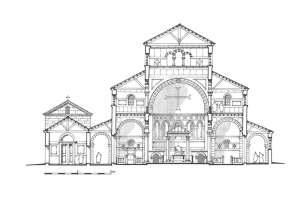
Beyond this courtyard lies a sequence of enclosed spaces leading toward the main hall. The central basilica is divided into a wide nave flanked by side aisles, separated by rows of columns that supported the roof structure. This arrangement created a spacious interior designed for large assemblies and formal functions.
At the eastern end, the structure terminates in three semicircular apses. This architectural form reflects design traditions that spread widely across the eastern Mediterranean during Late Antiquity. The central apse is larger than the side apses and was enhanced in a later phase with a raised seating arrangement for structured gatherings, indicating an organized internal hierarchy within the space.
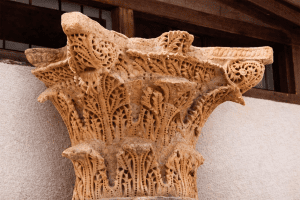
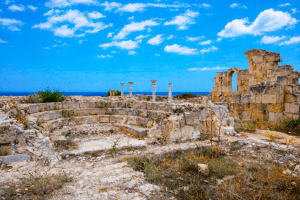
The scale of the complex, along with the use of imported materials and finely worked stone elements, suggests significant investment and access to skilled labor. The architectural remains visible today include column bases, wall foundations, and sections of flooring that help reconstruct the original layout of the building.
Excavations and Archaeological Findings
Systematic excavations conducted in the mid 20th century uncovered the full extent of the Kampanopetra complex. Archaeologists identified multiple construction phases, showing that the building was modified and expanded over time. Evidence from flooring techniques and structural additions indicates at least two major stages of development.
Among the most notable discoveries are sections of decorative flooring, including mosaic and marble inlay work. These surfaces display geometric patterns and stylized motifs typical of Late Antique design. The surviving fragments provide insight into aesthetic preferences and technical skills of the period.
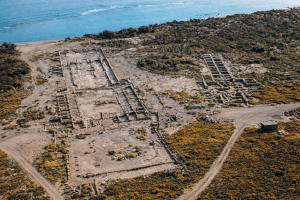
Adjacent to the main structure, excavations revealed additional installations, including water related facilities. The presence of such features within or near the complex has been interpreted as evidence of functional support spaces that may have served practical needs for those using the site. Archaeologists have also uncovered domestic and industrial remains from later periods, including pottery, lamps, and oven structures, indicating continued reuse of the area after the original complex fell out of active use.
These findings show that Kampanopetra was not abandoned immediately but instead transitioned through different phases of occupation, reflecting broader changes in the region over time.
Later Use and Transformation
After the decline of the original basilica, the site remained partially occupied. Material evidence suggests that small scale activity continued in the surrounding area, including limited reuse of existing structures. Over time, the monumental complex gradually fell into ruin, with stone materials being reused in nearby settlements.
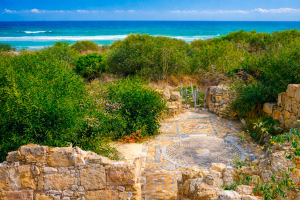
During the medieval period, parts of the site were adapted for more modest use. Archaeological remains indicate that sections of the structure may have been repurposed for storage, shelter, or small community functions. This pattern of reuse is common across large ancient ruins in Cyprus, where later populations integrated earlier structures into their daily environment.
Despite its decline, the scale of the remaining architecture ensured that Kampanopetra continued to dominate the landscape visually, even in a ruined state.
Archaeological Site Today
The Basilica of Kampanopetra is located within the wider archaeological zone of Salamis, one of the most extensive ancient sites in Cyprus. Visitors can access the area through established entry points and follow walking routes that connect major monuments across the site, including theaters, baths, and civic buildings.
The terrain is open and coastal, with large exposed areas and limited natural shade. The basilica ruins lie slightly apart from the main concentration of monuments, requiring additional walking but offering a more isolated and uninterrupted view of the remains. The setting also allows a clear understanding of the site’s relationship to the ancient coastline and harbor area.
Informational signage is placed throughout the archaeological zone, helping visitors interpret the different phases of construction and the overall urban layout of ancient Salamis Constantia. The site is typically explored in combination with other nearby ruins, forming a broader understanding of the city’s historical development.
Historical Significance
Kampanopetra Basilica represents a major example of large scale urban architecture from Late Antiquity in Cyprus. Its size and complexity reflect the importance of Salamis Constantia as a regional center within the Eastern Mediterranean world. The investment required to construct such a structure indicates strong administrative organization and access to significant resources.
The site also illustrates how cities evolved during periods of transition, particularly following natural disasters and shifting political conditions. The reconstruction of Salamis into Constantia marked a new phase in its urban identity, with large public buildings symbolizing continuity and renewal.
Today, the remains of Kampanopetra provide valuable evidence for understanding urban planning, architectural development, and the transformation of coastal cities in Late Antique Cyprus.