Explore Cyprus with Our Interactive Map

Explore our top stories and discover ideas worth your time.

Cyprus Buses Connecting Cities

Cyprus Buses Connecting Cities

The bus network in Cyprus operates under a divided structure with four main companies managing different districts. Cyprus Public Transport handles Nicosia and Larnaca districts, EMEL serves Limassol, OSYPA operates in Paphos, and OSEA covers the Famagusta District, including Ayia Napa and Protaras. This fragmentation dates to government restructuring in 2010 that replaced smaller private operators with district-based companies. A separate intercity bus company connects all major cities under one operation. This unified approach to long-distance travel makes planning intercity journeys simpler than navigating local urban routes across different operators. All intercity routes use modern, air-conditioned coaches equipped with WiFi and USB charging ports. The system receives government oversight through the Department of Road Transport, which awards concession contracts to operators. Each company maintains its own website, mobile apps, and fare structures, though standardization efforts have brought more consistency in recent years. Intercity Routes and Their Schedules Popular intercity routes run between Cyprus's main cities multiple times daily. The Nicosia to Limassol route operates frequently with departures roughly every hour during peak times. Nicosia to Larnaca sees similar frequency, with buses running from 6:00 a.m. until late evening. These core routes accommodate the heaviest commuter demand. nano-banana The Limassol to Paphos corridor offers extensive service with 14 departures daily starting at 8:00 a.m. and running until 7:30 p.m. This reflects…

Read more
Mesaoria Alluvial Plains Cyprus

Mesaoria Alluvial Plains Cyprus

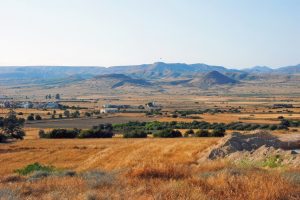
Between the Troodos Mountains in the south and the Kyrenia Range in the north lies a broad plain that has been the agricultural heart of Cyprus for thousands of years. The Mesaoria wasn't always dry land. About one million years ago, this central area was still underwater, an ancient bay that slowly filled with sediments washed down from the surrounding mountains. Today, those sediments form the fertile soils that feed the island, delivered by rivers that flow only in winter and disappear completely by summer. fergusmurraysculpture-com The Mesaoria is a flat plain that extends across central Cyprus from Morphou Bay in the west to Famagusta Bay in the east. The name comes from Greek and means "between the mountains," which perfectly describes its position sandwiched between the Troodos and Kyrenia ranges. The plain measures 96 kilometers long and varies between 16 to 32 kilometers wide, covering roughly 1,000 square kilometers of land. The average elevation across the Mesaoria sits around 100 meters above sea level, though some areas near Nicosia rise to 325 meters. Unlike the mountainous regions that surround it, the Mesaoria is mostly flat with gentle slopes. This flatness makes it ideal for agriculture but also creates drainage problems when the seasonal rivers flood. Historical Background About 25 million years ago during the Lower Miocene era, the Troodos…

Read more
Two Festivals, One Island

Two Festivals, One Island

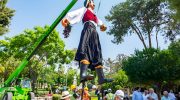
Cyprus expresses its culture best when it gathers people together in public spaces, after sunset, with music in the air and tradition close at hand. Two annual festivals capture this instinct especially clearly: the Limassol Wine Festival and the Ayia Napa International Festival. Though different in tone and setting, they reveal how Cyprus balances heritage and openness, local pride and global exchange. Experiencing them side by side offers a clear insight into how celebration functions as a cultural language on the island. kiprinform-com Two Ways of Telling the Same Story At first glance, these festivals appear to represent different worlds. Limassol's event revolves around wine, harvest traditions, and large-scale public gatherings, while Ayia Napa's focuses on music, performance, and international cultural exchange. Yet both serve the same purpose: they turn shared space into shared identity. kanikahotels-com Limassol’s festival unfolds in a broad seaside garden, encouraging movement, conversation, and repetition. Ayia Napa’s festival concentrates activity in a historic square, drawing attention inward toward performance and spectacle. One spreads outward, the other gathers inward, but both rely on the same idea that culture becomes meaningful when it is experienced collectively. Why These Festivals Were Created in the First Place Neither festival began as a decorative addition to the calendar. Each emerged from a practical and cultural need. The first Limassol Wine Festival…

Read more