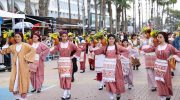
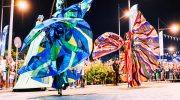
Cyprus expresses its culture best when it gathers people together in public spaces, after sunset, with music in the air and tradition close at hand. Two annual festivals capture this instinct especially clearly: the Limassol Wine Festival and the Ayia Napa International Festival. Though different in tone and setting, they reveal how Cyprus balances heritage and openness, local pride and global exchange. Experiencing them side by side offers a clear insight into how celebration functions as a cultural language on the island.

- Two Ways of Telling the Same Story
- Why These Festivals Were Created in the First Place
- Limassol: Where Wine Becomes a Social Ritual
- Ayia Napa: A Historic Square as a Living Cultural Stage
- Rural Memory Within an International Festival
- Why These Festivals Stay With You
- What These Festivals Reveal About Cyprus
- Attending Today: Letting the Experience Unfold
- Closing Reflection
Two Ways of Telling the Same Story
At first glance, these festivals appear to represent different worlds. Limassol’s event revolves around wine, harvest traditions, and large-scale public gatherings, while Ayia Napa’s focuses on music, performance, and international cultural exchange. Yet both serve the same purpose: they turn shared space into shared identity.

Limassol’s festival unfolds in a broad seaside garden, encouraging movement, conversation, and repetition. Ayia Napa’s festival concentrates activity in a historic square, drawing attention inward toward performance and spectacle. One spreads outward, the other gathers inward, but both rely on the same idea that culture becomes meaningful when it is experienced collectively.
Why These Festivals Were Created in the First Place
Neither festival began as a decorative addition to the calendar. Each emerged from a practical and cultural need.
The first Limassol Wine Festival was held on October 7, 1961, roughly a year after independence was declared in 1960. The festival was established to support local viticulture and promote consumption during a production boom, and the festival was conceived as a way to support local viticulture while reinforcing a shared sense of celebration. What began as an economic response quickly evolved into a civic ritual, eventually taken over fully by the municipality and established as one of the country’s most enduring annual events.

The Ayia Napa International Festival began in 1985, during a period when the town was redefining itself. As tourism expanded, there was a clear desire to anchor Ayia Napa’s identity in culture rather than seasonality alone. The festival was designed to highlight Cypriot folklore while welcoming international artists, positioning the town as a place of cultural encounter rather than a single-purpose resort.
In both cases, longevity came from relevance. These festivals survived because they responded to real needs, not trends.
Limassol: Where Wine Becomes a Social Ritual
What defines the Limassol Wine Festival is not wine itself, but the way wine is used to structure social life. The Municipal Gardens provide a setting that feels deliberately open and inclusive, with tasting areas, performance stages, and food stalls arranged to encourage wandering rather than fixed attention.
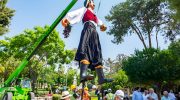
One of the festival’s most recognisable symbols is the Vraka Man, a statue representing a traditional winegrower dressed in local attire. Its presence is quietly instructive. The festival is not celebrating luxury or exclusivity, but the human labour and communal joy behind winemaking. Wine here is not presented as a product alone, but as cultural continuity.

The program reflects this philosophy. Folk music and dance coexist with broader performances, and the audience is visibly multi-generational. Families, older residents, and younger visitors share the same space, each engaging with the festival in their own way. This balance is precisely what keeps the event from feeling staged or nostalgic.
Ayia Napa: A Historic Square as a Living Cultural Stage
Ayia Napa’s festival gains much of its meaning from where it takes place. The monastery area and Seferis Square do more than host performances; they frame them. Stone walls, courtyards, and open sightlines shape how sound carries and how audiences gather, creating an atmosphere where history remains present even as contemporary music fills the space.
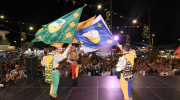
Rather than overwhelming the setting, performances adapt to it. Cypriot folk dances, orchestral concerts, and visiting ensembles each occupy the square differently, allowing the architecture to remain part of the experience rather than a backdrop. The result is a sense of continuity rather than contrast, where cultural expression feels layered instead of replaced.

The festival’s international character reinforces this effect. Performers from different countries are presented alongside local traditions without being merged into a single narrative. Differences remain visible, audible, and intentional. This approach turns the event into a conversation rather than a showcase, inviting audiences to move between traditions rather than consume them as spectacle.
Rural Memory Within an International Festival
A crucial grounding element of the Ayia Napa International Festival is the Farmhouse, or Agrotospito. Its presence ensures that the festival’s outward-looking spirit does not drift away from local memory. Traditional tools, household items, and demonstrations introduce a slower rhythm, reminding visitors that Cypriot culture developed through daily labour as much as through performance.

This balance matters. Without it, the festival could feel detached from place. With it, international participation becomes exchange rather than display, anchored in a context that remains unmistakably Cypriot.
Why These Festivals Stay With You
What makes these festivals memorable is not a single performance or tasting, but the way small details accumulate into meaning.
In Limassol, the wine festival’s origins in post-independence surplus quietly shape its character, grounding celebration in shared history rather than abstraction. The Vraka Man becomes more than a symbol; it becomes a reminder that enjoyment here is inseparable from work and cooperation.
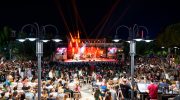
In Ayia Napa, the willingness to place different cultural traditions side by side without forcing uniformity creates a sense of openness that feels genuine rather than curated. The festival does not attempt to smooth differences away. It allows them to coexist.
Both events also extend Cypriot cultural life into the evening, shifting attention away from daytime tourism and toward shared nighttime experience. This transition transforms public space into social space, reinforcing connection rather than consumption.
What These Festivals Reveal About Cyprus
Seen together, the Limassol Wine Festival and the Ayia Napa International Festival reveal how Cyprus maintains balance. Tradition is preserved not by isolation, but by participation. Openness does not erase local identity, because it is framed by place, history, and rhythm.
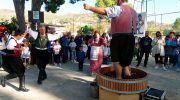
In Limassol, culture moves through gardens, conversations, and repeated encounters. In Ayia Napa, it gathers around a stage shaped by centuries of presence. One is expansive, the other concentrated, yet both operate on the same principle: culture remains alive when people are invited into it, not positioned outside it.
Attending Today: Letting the Experience Unfold
Attending these festivals is less about planning than about pacing.
Limassol rewards wandering. The atmosphere builds gradually as daylight fades, performances overlap, and movement replaces fixed attention. Allowing time to drift between spaces reveals the festival’s social logic.
Ayia Napa rewards stillness. The square encourages focus, drawing audiences into a shared rhythm shaped by performance and place. Sitting, listening, and watching become part of the experience rather than pauses between events.
In both cases, arriving early and staying unhurried allows the festivals to reveal themselves fully.
Closing Reflection
To understand Cyprus, it helps to watch how it celebrates. In Limassol, celebration circulates through gardens, glasses, and conversation. In Ayia Napa, it gathers around a stage framed by history. These are not competing stories, but complementary ones. Together, they show an island that does not separate tradition from enjoyment or heritage from exchange.
Culture here is not something displayed and left behind. It is something you enter, move through, and carry with you, long after the music fades and the evening air grows quiet.