Explore Cyprus with Our Interactive Map

Explore our top stories and discover ideas worth your time.

Cyprus Food Festivals

Cyprus Food Festivals

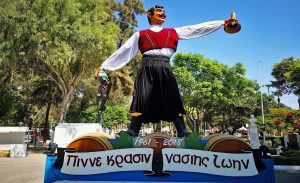
Culinary festivals in Cyprus are not staged food shows or seasonal attractions created for visitors. They are extensions of village life, shaped by agriculture, memory, and the belief that food is meant to be shared. Across the island, festivals dedicated to wine, halloumi, olives, and everyday cooking traditions offer a way to understand Cyprus through participation rather than observation. Food as a Social Language In Cyprus, food festivals usually revolve around a single local product or a small group of related dishes. These events are organised by municipalities, village councils, or community groups, not private promoters. Their purpose is communal before it is celebratory. fastforward-com Recipes, techniques, and rituals that rarely appear in written form are performed publicly, often by people who learned them informally from parents and grandparents. Preparing food together, offering it freely, and eating collectively reinforces the Cypriot idea of hospitality, where sharing food is inseparable from social belonging. Festivals Guided by the Agricultural Calendar The timing of culinary festivals follows the land rather than marketing schedules. Cyprus’s climate supports vineyards, olive groves, dairy farming, and small-scale agriculture, and festivals emerge naturally around moments of harvest and seasonal transition. Spring festivals often highlight fresh produce and early agricultural yields. Summer events reflect abundance and outdoor life, while autumn brings the most significant celebrations, particularly those dedicated to…

Read more

Mesaoria Alluvial Plains Cyprus

Mesaoria Alluvial Plains Cyprus

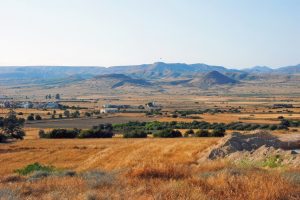
Between the Troodos Mountains in the south and the Kyrenia Range in the north lies a broad plain that has been the agricultural heart of Cyprus for thousands of years. The Mesaoria wasn't always dry land. About one million years ago, this central area was still underwater, an ancient bay that slowly filled with sediments washed down from the surrounding mountains. Today, those sediments form the fertile soils that feed the island, delivered by rivers that flow only in winter and disappear completely by summer. fergusmurraysculpture-com The Mesaoria is a flat plain that extends across central Cyprus from Morphou Bay in the west to Famagusta Bay in the east. The name comes from Greek and means "between the mountains," which perfectly describes its position sandwiched between the Troodos and Kyrenia ranges. The plain measures 96 kilometers long and varies between 16 to 32 kilometers wide, covering roughly 1,000 square kilometers of land. The average elevation across the Mesaoria sits around 100 meters above sea level, though some areas near Nicosia rise to 325 meters. Unlike the mountainous regions that surround it, the Mesaoria is mostly flat with gentle slopes. This flatness makes it ideal for agriculture but also creates drainage problems when the seasonal rivers flood. Historical Background About 25 million years ago during the Lower Miocene era, the Troodos…

Read more
Night Culture in Cyprus – Dining and Events

Night Culture in Cyprus – Dining and Events

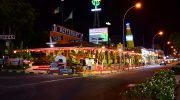
Cyprus transforms dramatically when the sun sets over the Mediterranean. The island's night culture combines traditional tavernas, modern beach clubs, live music venues, and cultural events that operate well past midnight. Government regulations require all nightlife establishments to close by 3:00 AM, with restaurants and bars shutting at 1:00 AM. A noise curfew from 10:00 PM protects residential areas, ensuring entertainment zones remain distinct from living quarters. This structure creates concentrated nightlife hubs in coastal cities and tourist areas where locals and visitors gather for evening entertainment. Historical Context Traditional Cypriot evening culture centered on family gatherings and village celebrations for centuries. The taverna, a cornerstone of social life, provided spaces where communities shared meals, stories, and music. After Cyprus gained independence in 1960, urbanization and tourism development gradually transformed these customs into more diverse offerings. The 1970s and 1980s saw coastal areas develop tourism infrastructure, particularly in Ayia Napa, Limassol, and Paphos. International visitors brought demand for nightclubs, cocktail bars, and entertainment that extended beyond traditional dinner hours. By the 1990s, Ayia Napa had emerged as a major party destination, attracting European clubbers with its concentration of venues and world-class DJs. The 2000s brought sophistication to Cyprus nightlife. Limassol developed upscale marina restaurants and rooftop bars that catered to a more affluent demographic. Paphos Harbor became a refined alternative…

Read more