Cyprus has been a destination for religious pilgrims for over 1,700 years. The island holds a unique place in Christian history as one of the first regions to embrace Christianity and the first territory in the world to have a Christian ruler. Dozens of monasteries, churches, and holy sites dot the landscape from the coastal cities to the mountain peaks.
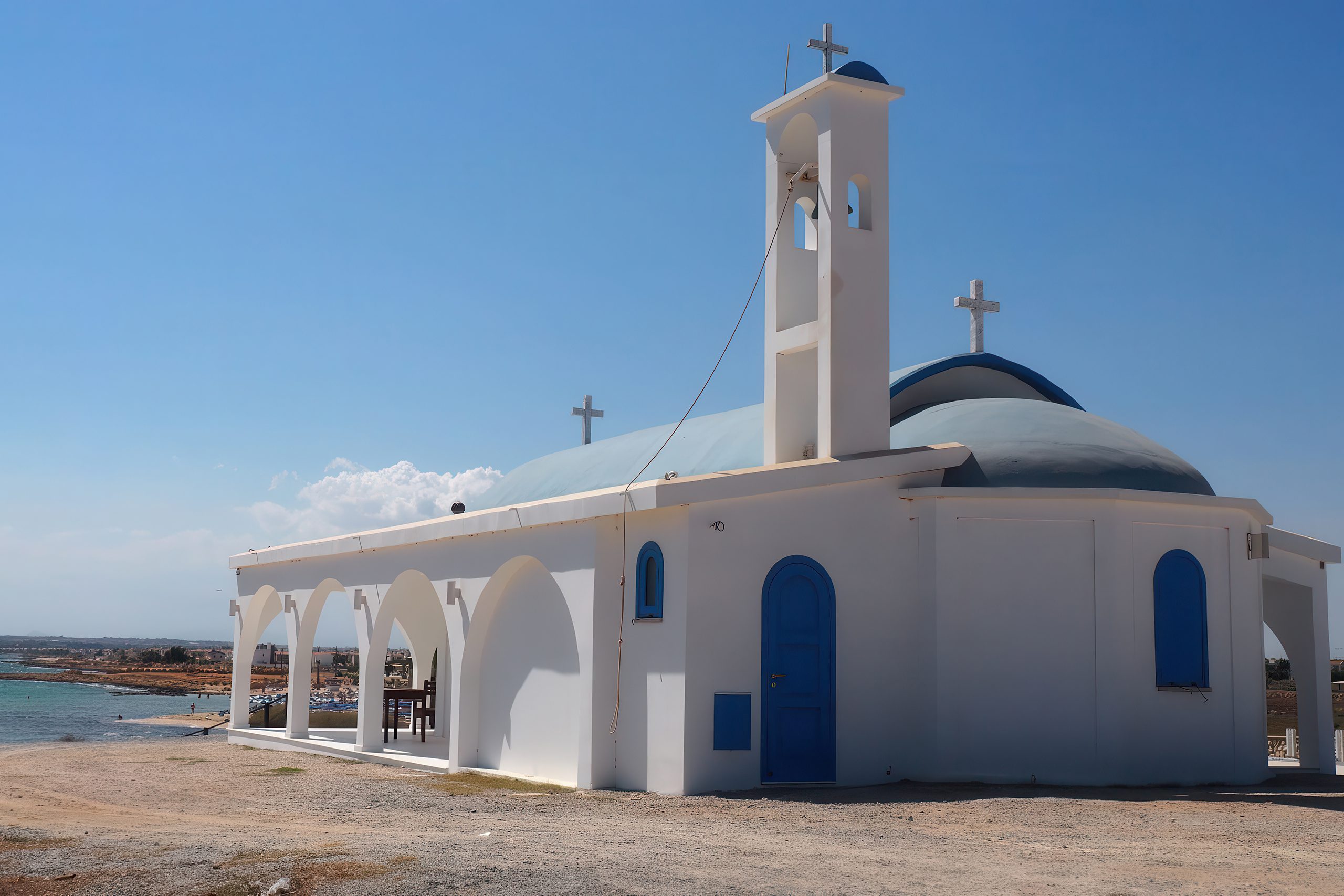
These locations preserve relics, icons, and traditions that connect believers to the earliest days of the faith. Pilgrims from around the Orthodox world, as well as from Catholic and other Christian communities, journey to Cyprus to experience these sacred places.
Religious tourism in Cyprus combines spiritual devotion with remarkable natural beauty. Pilgrimage sites exist in diverse settings, from ancient coastal cities to remote mountain monasteries accessible only by winding roads. Visitors encounter Byzantine frescoes, miracle-working icons, holy relics, and architecture spanning centuries.
The experience offers both worship and cultural education, as these sites preserve artistic and historical treasures alongside their religious significance. Whether visiting for personal faith, scholarly interest, or simple curiosity, travelers find that Cyprus’s holy sites reveal much about the development of Eastern Christianity.
Historical Background
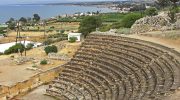
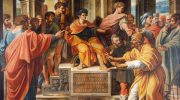
The tradition of Christian pilgrimage to Cyprus began with the island’s conversion in the first century. Around 45 AD, the apostles Paul and Barnabas arrived at Salamis on the eastern coast. They preached throughout the island, eventually converting Sergius Paulus, the Roman proconsul in Paphos. This made Cyprus the first place in the world governed by a Christian official. Barnabas, a native of Salamis, later returned to his homeland and worked to establish the church before his martyrdom around 61 AD.
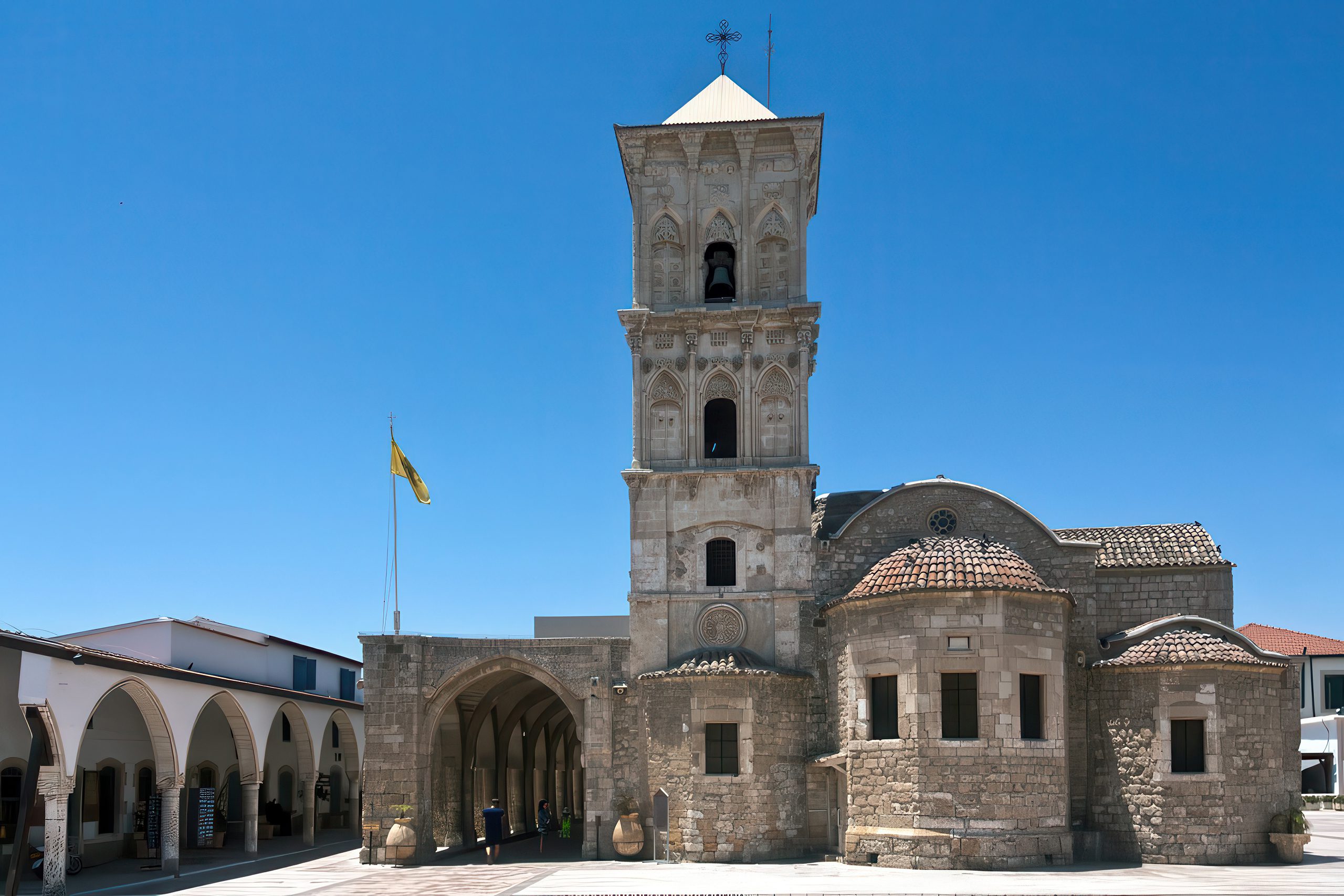
These foundational events established Cyprus as a center of early Christianity. The Church of Saint Lazarus in Larnaca was built in the ninth century over what tradition identifies as the tomb of Lazarus, the man whom Jesus raised from the dead. According to church tradition, Lazarus fled to Cyprus after his resurrection and served as the first Bishop of Citium (ancient Larnaca). The current church preserves Byzantine architecture and contains what believers hold to be his relics. The site attracts Orthodox pilgrims who venerate Lazarus as an important witness to Christ’s power over death.
In Paphos, pilgrims visit Saint Paul’s Pillar at the Panagia Chrysopolitissa archaeological site. Tradition holds that Paul was tied to this column and received 39 lashes for preaching Christianity before he converted Sergius Paulus. The massive Chrysopolitissa Basilica, one of the largest churches in Cyprus with originally seven aisles, was built here in the fourth century. Though Arab raids eventually destroyed much of the basilica, its ruins and mosaics still impress visitors. Nearby stands the Agia Kyriaki Church, built during Venetian rule and still used for worship by Orthodox, Catholic, and Anglican congregations. The entire area is a UNESCO World Heritage Site.
Monasteries in the Mountains
The Troodos Mountains contain some of Cyprus’s most important monastic communities. The Kykkos Monastery stands at an elevation of 1,318 meters on the northwest face of Mount Olympus. Founded in the late eleventh century by Byzantine Emperor Alexios I Komnenos, it houses one of the most revered icons in the Orthodox world. The monastery possesses an icon of the Virgin Mary that tradition attributes to Saint Luke the Evangelist. According to the story, Luke painted this icon during the Virgin’s lifetime, and she blessed it with her own hands.
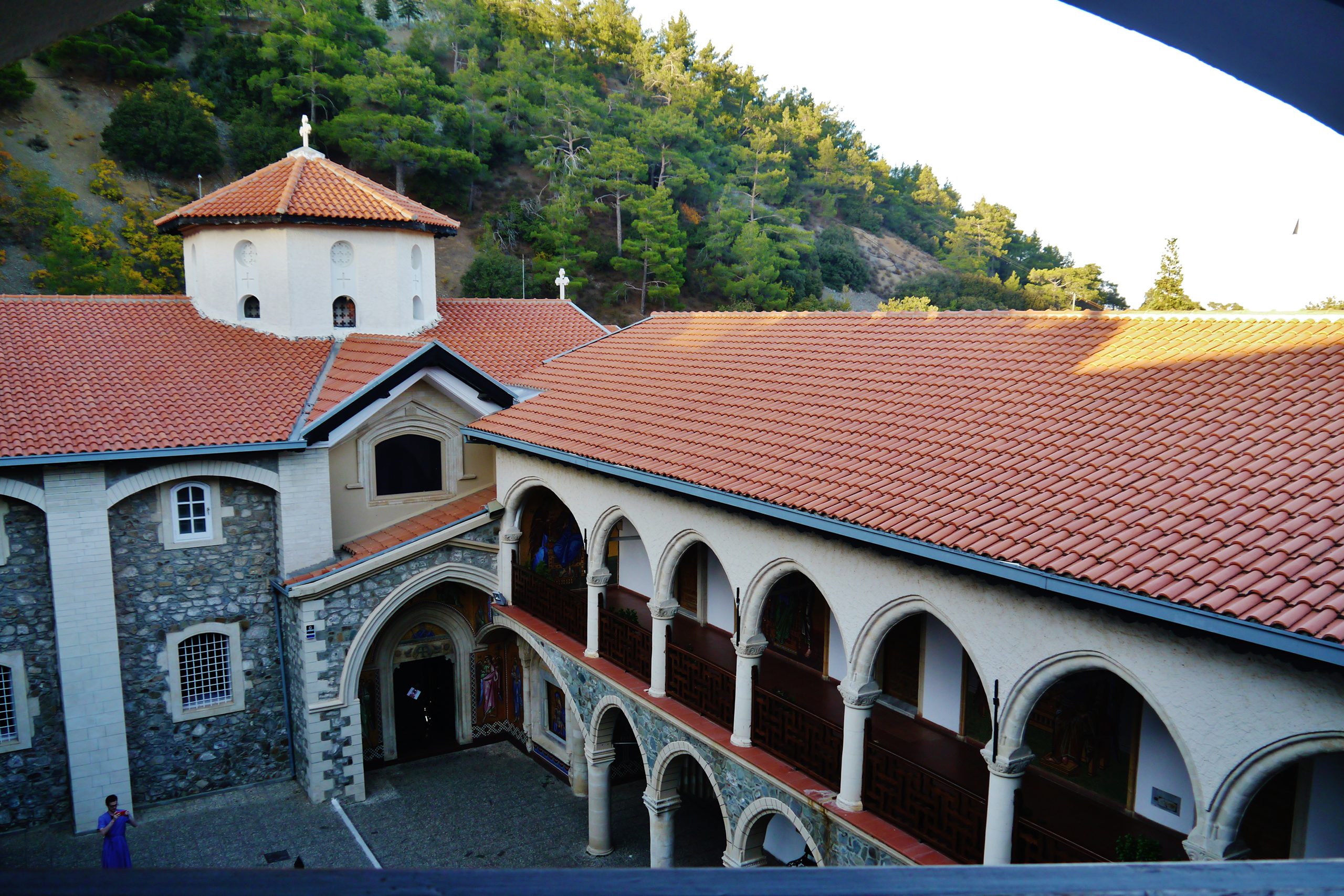
The icon came to Cyprus around 1100 AD after a remarkable series of events. A hermit named Isaiah lived in a cave on Mount Kykkos. When the Byzantine governor Manuel Boutoumites became lost while hunting and rudely treated the hermit, he later fell ill with a severe illness. Realizing this was divine punishment, he sought forgiveness and Isaiah told him that God wanted the icon of the Virgin Mary brought from Constantinople to Cyprus. Boutoumites traveled to the capital but initially failed to convince Emperor Alexios Komnenos to part with the icon.
Then the emperor’s daughter fell ill with the same sickness that had struck Boutoumites. The hermit Isaiah healed her after being summoned to Constantinople. The grateful emperor agreed to send the icon to Cyprus, though tradition says he tried to substitute a copy. The Virgin Mary appeared to him in a dream and insisted that the original icon go to Cyprus while the copy remain in Constantinople. The emperor complied, and the icon was installed in a new monastery built with imperial funds. Kykkos has burned down several times through the centuries, but the icon has survived every disaster. The icon’s face is covered with silver and jewels and is never revealed, adding to its mystique and reverence.
The Mountain of the Cross
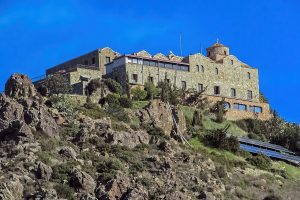
Stavrovouni Monastery perches on a rocky peak 689 meters above sea level in the Larnaca District. Its name means “Mountain of the Cross” in Greek, reflecting the monastery’s most precious possession. Saint Helena, mother of Emperor Constantine the Great, founded this monastery in the fourth century during her return from the Holy Land where she discovered the True Cross. According to tradition, her ship encountered a storm and was forced to land on the southern coast of Cyprus. An angel appeared and instructed her to build churches on the island as she had done in Palestine.
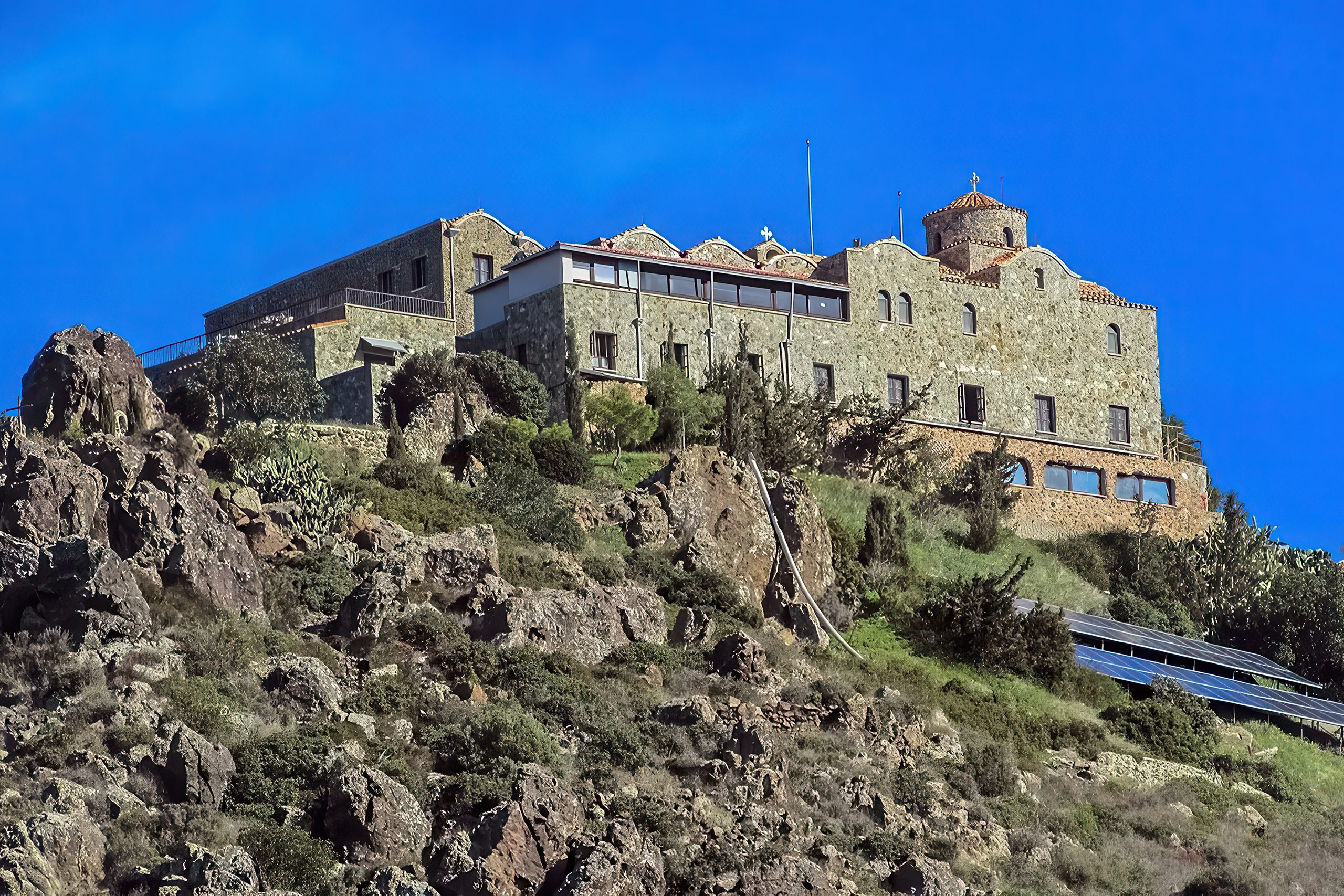
Helena climbed to the summit of what was then called Mount Olympus (now Stavrovouni) and found a pagan temple, possibly dedicated to Zeus or Aphrodite. She had the temple destroyed and built a Christian church in its place. She left a piece of the True Cross as a relic for the new monastery, along with one of the crosses used to crucify the Good Thief, a nail from Christ’s crucifixion, and according to some accounts, part of the rope that bound Jesus to the cross. Early pilgrims reported seeing the True Cross fragment suspended in the air without any support, a miraculous sight that drew thousands of visitors through the medieval period.
Notable Facts About Cypriot Pilgrimage Sites
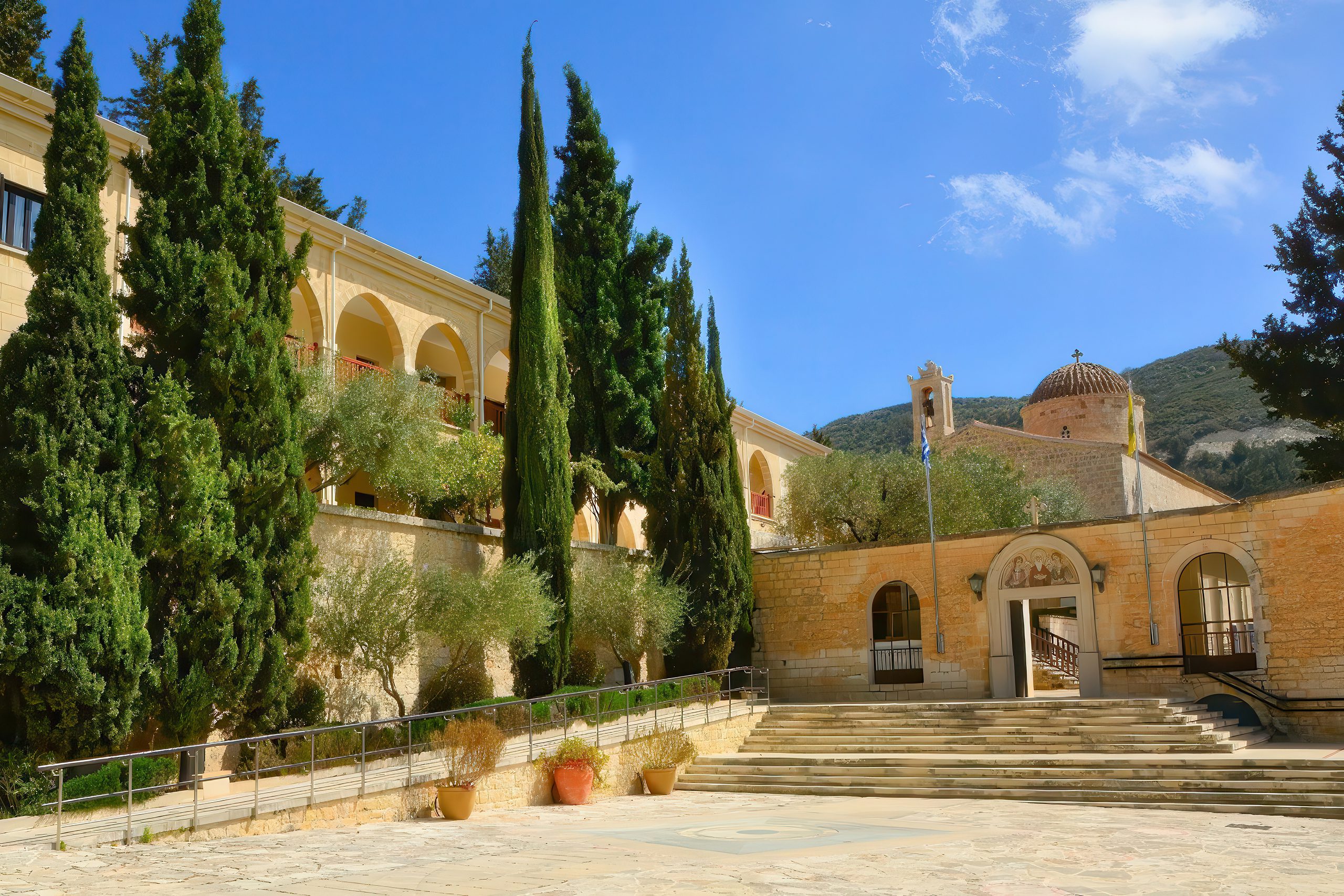
The Monastery of Saint Neophytos near Paphos offers a unique pilgrimage experience. Founded in the twelfth century, this monastery was built around a cave where the hermit Neophytos carved out a chapel, cells, and burial place from the rock itself. The cave chapel contains well-preserved frescoes from the twelfth and fifteenth centuries. The monastery still houses the relics of Saint Neophytos, and his writings provide valuable historical information about Cyprus during the Crusader period. The combination of natural cave and human-carved spaces creates an unusual atmosphere of isolation and devotion.
The Church of Saints Cyprian and Justina in the village of Meniko preserves relics of these third-century martyrs in a silver reliquary. According to tradition, Cyprian was a magician who converted to Christianity through the prayers of Justina, a Christian virgin. Both were martyred for their faith. Orthodox believers consider them powerful intercessors against evil spiritual forces, and many pilgrims visit to seek their protection. The church also houses an icon of Saint Matrona of Moscow, connecting Cypriot spirituality to the wider Orthodox world.
The painted churches in the Troodos region form a UNESCO World Heritage Site. Ten Byzantine churches contain exceptional frescoes and murals spanning the eleventh through sixteenth centuries. These churches were deliberately built in remote mountain villages to protect them during the Arab raids of the seventh through tenth centuries. The Church of Panagia tou Araka in Lagoudera, the Church of Agios Nikolaos tis Stegis in Kakopetria, and the Church of Panagia Podithou in Galata rank among the finest examples of Byzantine painting. Pilgrims and art historians alike appreciate the theological depth and artistic skill displayed in these frescoes.
Why These Sites Still Matter Today
Religious pilgrimage sites preserve continuity with the earliest Christian communities. When pilgrims visit Saint Paul’s Pillar or the Church of Saint Lazarus, they connect physically with places mentioned in scripture and early Christian writings. This tangible connection to the past provides a different experience than simply reading about these events. Touching the same stones, walking the same paths, and praying in the same locations where Christians worshiped 1,500 years ago creates a sense of participation in an unbroken tradition.
The sites also serve as repositories of art and culture that might otherwise have been lost. The frescoes in mountain churches survived because of their remote locations. Monasteries preserved manuscripts and icons through periods of war and occupation. The wealth accumulated by places like Kykkos Monastery funded artistic commissions that employed generations of painters and craftsmen. These sites function as living museums where religious practice and cultural heritage merge seamlessly.
For believers, pilgrimage offers opportunities for prayer, reflection, and spiritual renewal that differ from regular church attendance. The effort required to travel, the beauty of the settings, and the presence of revered relics or icons create conditions conducive to deeper religious experience. Many pilgrims report feelings of peace, clarity, or divine presence at these locations. Whether one attributes such experiences to divine intervention or to the psychological effects of beautiful surroundings and focused intention, the sites clearly provide meaningful experiences to millions of visitors over the centuries.