Explore Cyprus with Our Interactive Map

Explore our top stories and discover ideas worth your time.

Sanctuary of Apollo Hylates at a Glance

Sanctuary of Apollo Hylates at a Glance

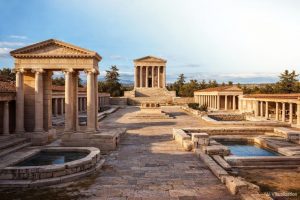
The Sanctuary of Apollo Hylates was one of the most important religious centres in ancient Cyprus, set within the wooded landscape near Kourion. Dedicated to Apollo in his role as protector of forests and nature, it combined Greek religious traditions with older local beliefs and attracted pilgrims for centuries. The sanctuary reveals how religion, nature, and daily life were closely connected in the ancient world. Cyprusalive-com A Sacred Place in the Forest The Sanctuary of Apollo Hylates lies west of ancient Kourion, surrounded by gentle hills and woodland. Unlike urban temples built into city centres, this sanctuary was deliberately placed in nature, reflecting the character of the god worshipped there. Limassoltourism-com Apollo Hylates was not the sun god or musician known from classical myths, but a guardian of forests, wild landscapes, and natural balance. The setting itself was part of the sacred experience, where worshippers felt close to both the god and the land. Roots Older Than the Greeks The origins of the sanctuary reach back to the Late Bronze Age. Before Greek settlers arrived, local communities already worshipped a nature deity connected to trees and the wilderness. When Greek culture spread to Cyprus, this local god was identified with Apollo. Rather than replacing older beliefs, Greek religion absorbed them. The result was Apollo Hylates, a uniquely Cypriot form of…

Read more
Wild Oregano treasure hunt

Wild Oregano treasure hunt

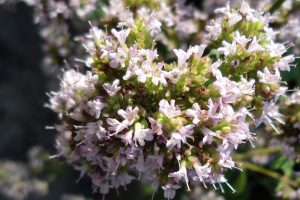
Imagine wandering the sun-drenched paths of Cyprus's Troodos Mountains, where a humble herb releases a spicy, earthy aroma that whispers of age-old remedies and hearty island feasts. This is oregano, a wild treasure that's flavored Cypriot life for centuries, inviting us to uncover its simple joys and hidden strengths. www.inaturalist.org A Spicy Star in the Mint Family Oregano is a fragrant herb from the vast Lamiaceae family, a group that includes over 7,000 species worldwide, like mints, sages, and basils – all sharing square stems and leaves packed with essential oils that give them their punchy scents and flavors. In Cyprus, it grows as a tough little bush in rocky spots, a classic example of Mediterranean wild plants that thrive in harsh, sunny environments. A Gift from Mountain Spirits The name "oregano" springs from ancient Greek words – "oros" for mountain and "ganos" for joy – beautifully capturing how this resilient plant thrives on sunny hillsides and brings simple delight to those who stumble upon it. In Cyprus, its tale reaches back to the island's earliest settlers around 10,000 years ago, who likely gathered it for nourishment and healing, much like their kin across the Mediterranean waves. Locally known as ρίγανη (rigani), it echoes this joyful legacy, cherished by ancient inhabitants for its seasoning and soothing powers long before tales…

Read more
Sonic Evolution Cyprus Tradition Meets Fusion

Sonic Evolution Cyprus Tradition Meets Fusion

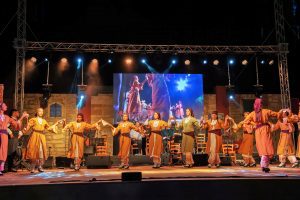
Music in Cyprus has never existed in isolation. It has always moved with people, landscapes, rituals, and political change. From shepherds playing flutes in mountain pastures to electrified bands performing in divided city streets, Cypriot music reflects the island’s role as a cultural meeting point in the Eastern Mediterranean. Today, that long tradition is not fading. It is transforming. Contemporary Cypriot musicians are reshaping ancient sounds into new forms, proving that heritage survives not by standing still, but by adapting. An Island Shaped by Crossing Sounds Cyprus sits at the intersection of Greek, Byzantine, Ottoman, and Western European worlds, and its music carries traces of each. Rather than following Western major and minor scales, traditional Cypriot music is built on modal systems influenced by Byzantine echoes and Ottoman makam. These modes allow for subtle microtonal shifts that give the music its emotional depth and distinctive colour. For centuries, these sounds were not concert material. They were woven into daily life: agricultural cycles, religious festivals, weddings, and communal gatherings. Music functioned as memory, communication, and identity, not entertainment alone. Voices Without Sheet Music At the heart of Cypriot folk tradition lies the concept of fones, literally meaning “voices.” These are not fixed songs, but melodic frameworks passed orally from generation to generation. Singers adapt poetic verses to these melodic shapes, allowing…

Read more