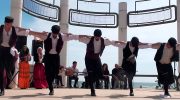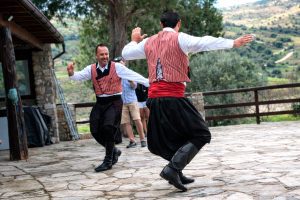
Long before dating, private meetings, or casual conversation between young men and women were socially acceptable, Cyprus had another system. It happened in village squares (Omodos Village Square), at weddings, and during festivals. It used rhythm instead of language and movement instead of promises. Through paired dances such as the Sousta and Antikristos, Cypriot communities created a public, structured way for courtship to unfold, allowing interest, character, and respect to be displayed openly while remaining within strict social boundaries.
These dances were never casual entertainment. They were carefully coded social encounters, understood by everyone watching.
Face to Face, but Never Too Close
At the heart of Cypriot courtship dancing is a simple idea: two people facing one another. The Antikristos, whose name literally means “opposite” or “face to face,” places dancers across from each other rather than in a circle or line. This positioning mattered. It allowed eye contact, acknowledgement, and interaction, but always at a controlled distance.
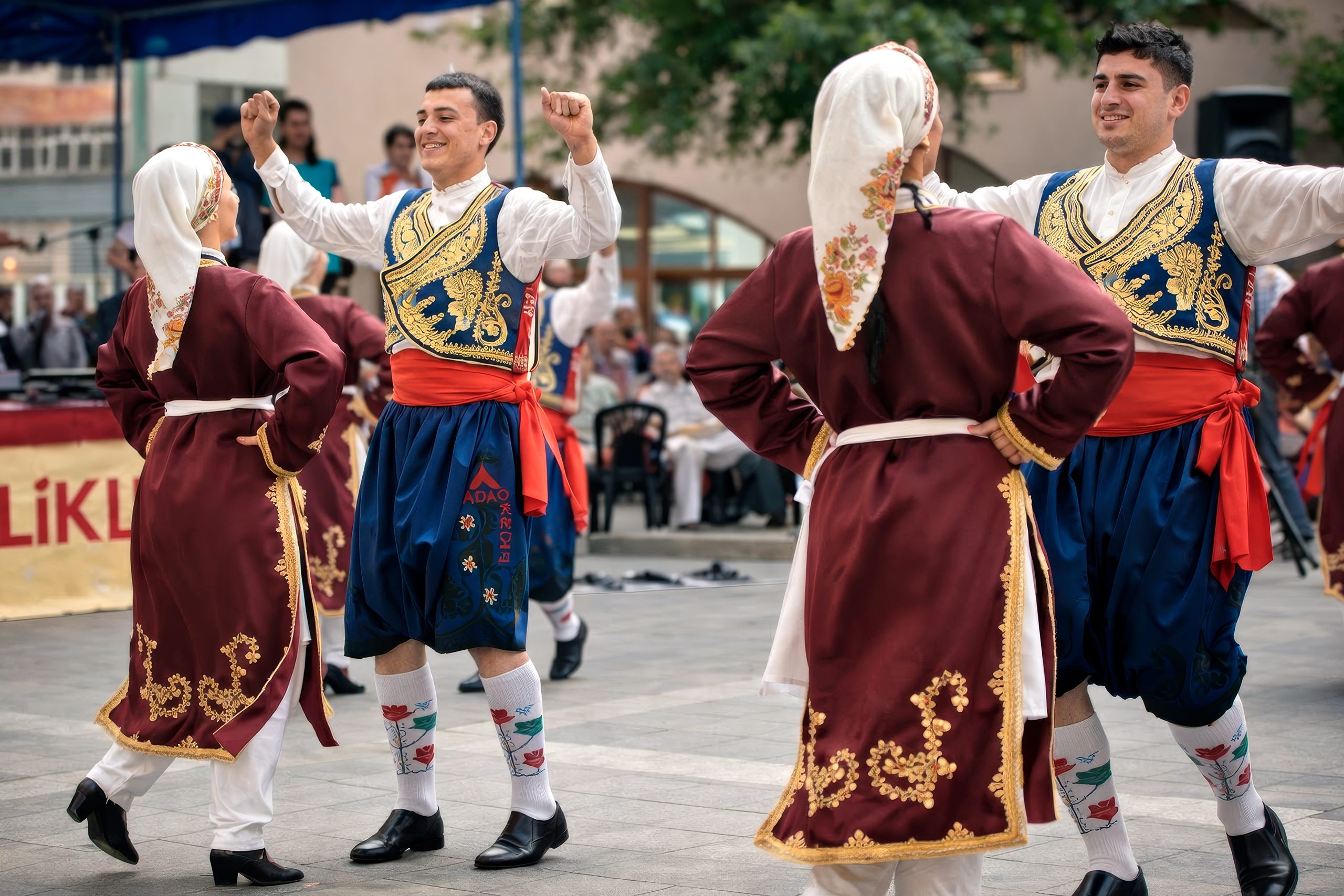
In traditional village life, direct interaction between unmarried men and women was limited. The dance floor became one of the few socially accepted spaces where such interaction could occur in public, under the gaze of the community. Nothing was hidden. Everything was observed.
The Sousta follows a similar logic but adds energy. Its springing, hopping steps introduce vitality and momentum, turning the encounter into a lively exchange rather than a static display.
Why These Dances Existed at All
Courtship dances were not optional customs. They served a function.
In small, closely knit communities, reputation mattered. A young man’s strength, confidence, and self-control were judged not only by his work but by how he moved. A young woman’s grace, composure, and rhythm reflected qualities valued within family life. The dance allowed these traits to be expressed publicly without words or physical contact.
Inviting someone to dance was a serious gesture. It was understood by families, neighbours, and elders as a sign of interest. Acceptance or refusal carried meaning. The entire exchange unfolded within a framework that protected modesty while still allowing connection.
Movement as Social Language
Every element of the dance carried symbolic weight.
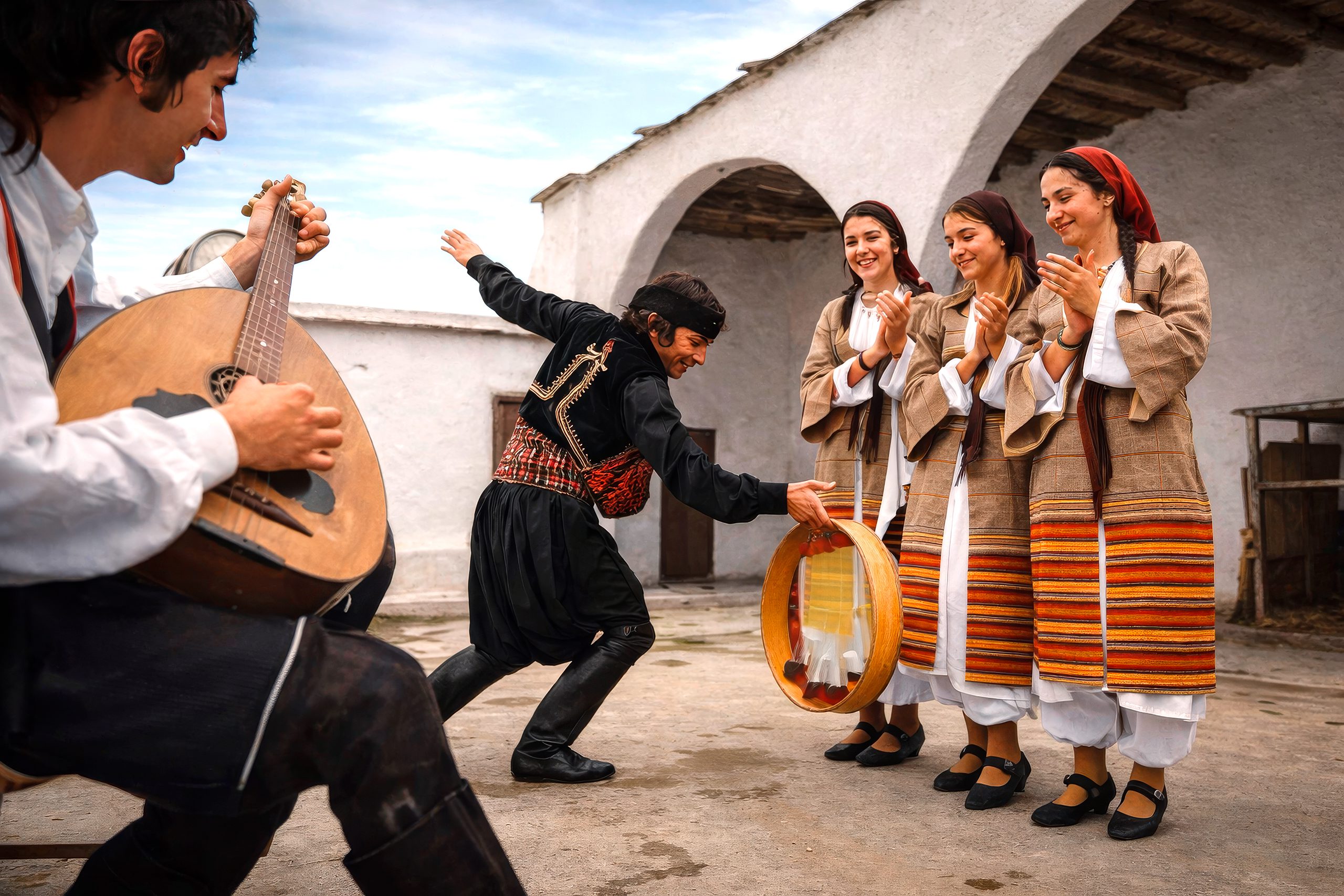
The male dancer typically moved around his partner rather than directly toward her. This was not accidental. Circling suggested protection and restraint rather than pursuit, signalling awareness of boundaries as much as physical ability. High jumps, deep squats, and rapid turns displayed stamina and confidence, but only when executed with control. Excessive force or reckless movement disrupted the balance and reflected poorly on the dancer’s character.
The female role, while more contained, was never passive. Precision in footwork, balance in posture, and the ability to respond fluidly to rhythm demonstrated discipline and self-possession. In some regional variations, a scarf accompanied the movements, rising and falling in measured gestures. Its motion emphasised coordination and care, reinforcing values associated with domestic skill and social grace rather than submission.
Together, the dancers engaged in a visible dialogue. One initiated, the other answered. Energy met steadiness. Expression met restraint. The meaning was clear to those watching, even when no words were spoken.
A Dance That Unfolds, Not One That Rushes
Unlike folk dances built around repetition, the Antikristos traditionally progresses through distinct phases. It begins deliberately, establishing rhythm, distance, and mutual awareness. As the music develops, the steps grow more intricate. Footwork tightens, turns sharpen, and the interaction deepens.
This gradual build was essential. It mirrored the courtship process itself, where familiarity developed slowly, and intention revealed itself through consistency rather than impulse. The peak of the dance, often marked by the male dancer’s most demanding movements, was not an abrupt climax but a culmination of controlled effort. The closing moments returned the energy to a shared, celebratory rhythm, easing the tension rather than breaking it.
The Sousta expresses a similar arc in a more compact form. Its continuous springing motion demands constant attention from both dancers, sustaining intensity without allowing it to become chaotic. Engagement is maintained not through escalation, but through balance.
Music as the Invisible Partner
These dances cannot be separated from their music. The rhythms that accompany them are deliberately complex, often uneven, preventing mechanical repetition. Dancers must listen closely, adjusting their movements to subtle changes in tempo and emphasis.
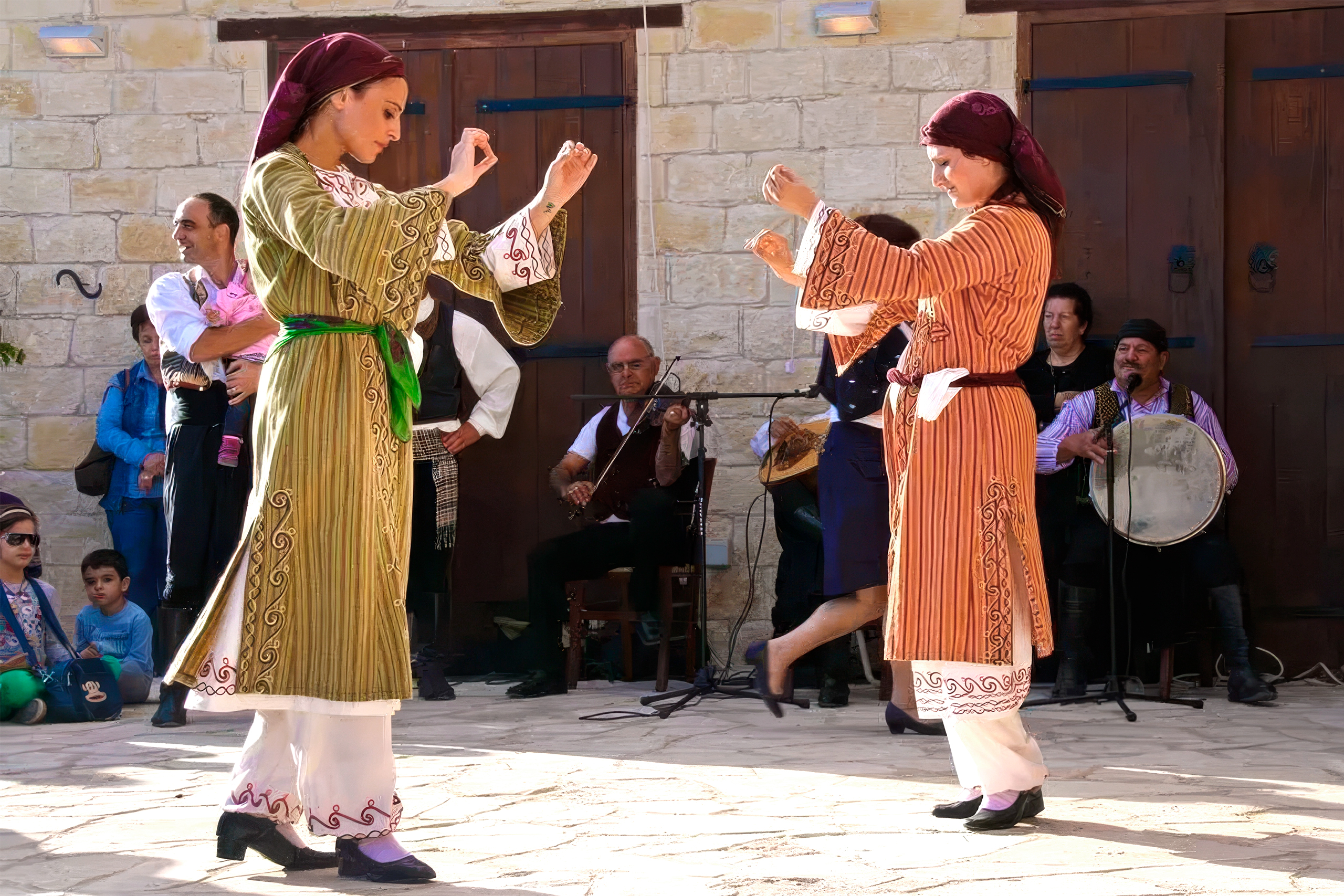
Traditionally led by violin and lute, the music provides both structure and freedom. Musicians respond to the dancers just as dancers respond to the music. In some village settings, improvised verses are exchanged between players and participants, playful or teasing, extending the dialogue beyond movement alone.
Sound, rhythm, and motion become inseparable. The dance is not something performed to music, but something formed with it.
From Social Ritual to Cultural Memory
In earlier generations, these dances marked a clear stage of life. Participation signalled readiness to be seen, evaluated, and acknowledged within the adult community. Over time, as Cyprus urbanised and social boundaries relaxed, the practical role of courtship dancing faded.
Yet the dances themselves did not disappear. Today, the Sousta and Antikristos appear at weddings, village festivals, and cultural celebrations. Children learn them in schools. Folklore groups preserve them on stage. While their function has changed, their structure remains intact.
Importantly, these traditions were never confined to a single community. Greek Cypriot, Turkish Cypriot, Armenian, and Maronite villages all maintained paired dance forms shaped by similar social logic. Variations emerged in steps and music, but the underlying purpose remained shared.
Why the Choreography Still Speaks
Even without its original role in courtship, this choreography continues to resonate because it reflects a deeper social intelligence. It shows how connection can exist within limits, how expression can flourish without excess, and how meaning can be communicated without speech.
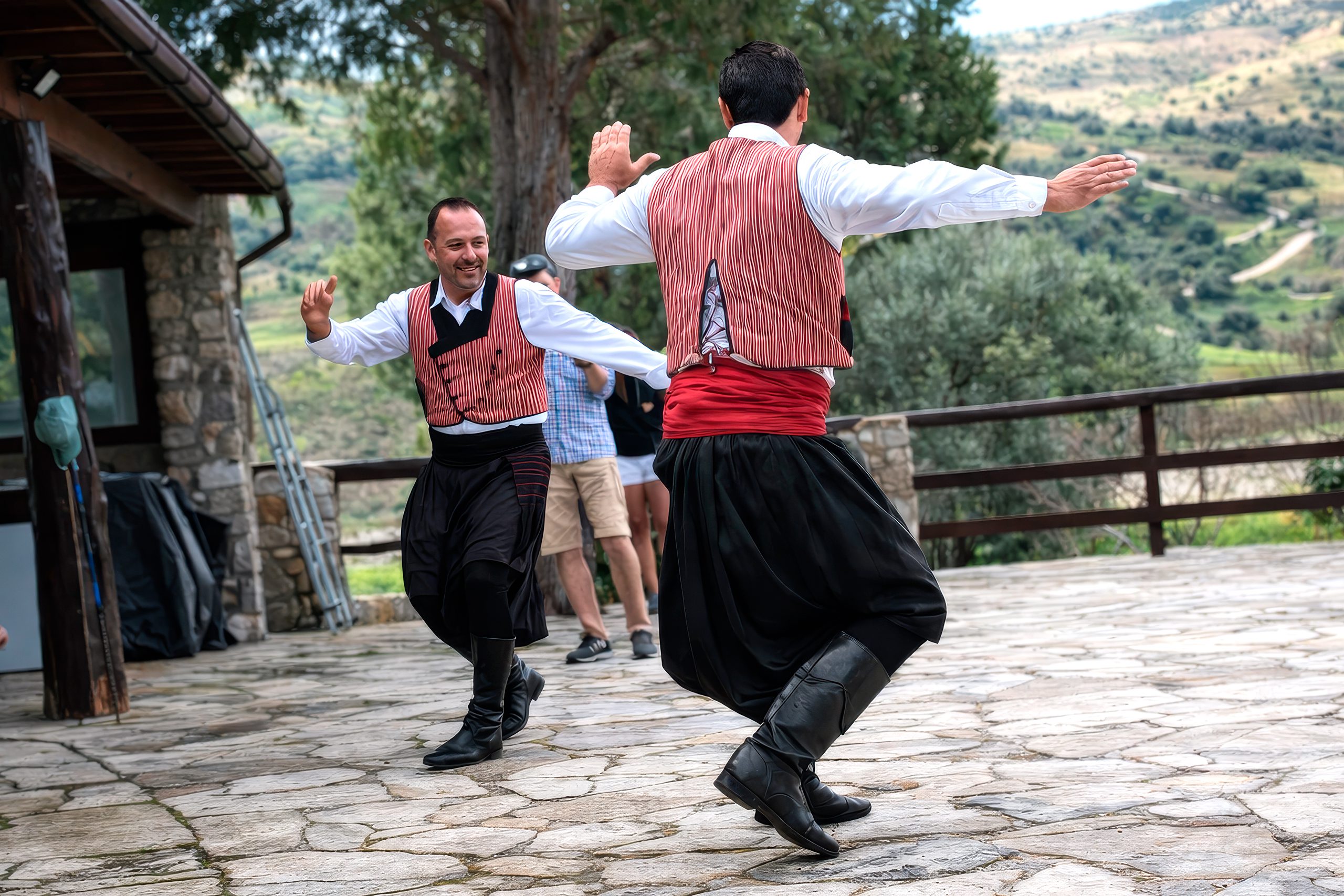
These dances remind us that attraction and respect were once negotiated not privately, but collectively. That identity was performed, not declared. And that culture survives not by freezing traditions in time, but by allowing them to move while keeping their balance.
In Cyprus, the choreography of courtship did not vanish. It simply learned a slower, steadier step into the present.