Cypriot folk music is not built around concerts or recordings. It is built around people standing face to face, marking time together, and using sound to guide moments that matter. At the centre of this tradition are two instruments, the viola and the laouto, whose partnership has shaped weddings, village festivals, and communal gatherings for centuries. More than musical tools, they function as social anchors, carrying memory, rhythm, and identity across generations.
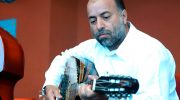
Understanding these instruments means understanding how music in Cyprus has always been lived, not simply performed.
- A Musical Language Shaped by Place
- The Laouto: Rhythm as Structure
- The Violi: Voice, Emotion, and Ornament
- Why These Two Instruments Belong Together
- Music as Labour and Responsibility
- Gender, Visibility, and Evolving Roles
- Weddings as Musical Frameworks
- Dance, Rhythm, and Social Meaning
- Words That Emerge From Sound
- Continuity Under Modern Pressure
- Why the Sound Endures
A Musical Language Shaped by Place
Cyprus sits at a cultural crossroads, and its traditional music reflects this position clearly. The island absorbed Byzantine chant, Eastern Mediterranean modal systems, and later Western European instruments, but it never allowed one influence to erase the others. Instead, Cypriot musicians adapted what arrived to serve local needs.

Music here was never designed for silent listening. It existed to accompany movement, ritual, and spoken word. That practical purpose shaped both the instruments themselves and the way they were played. Precision mattered less than presence. What counted was whether the sound could carry across a village square, guide dancers, and support voices raised in song or improvisation.
The Laouto: Rhythm as Structure
The laouto is the backbone of Cypriot folk music. Long-necked and steel-strung, it belongs to the lute family but evolved into something distinct on the island. Its role is not melodic display. It provides rhythm, weight, and continuity.
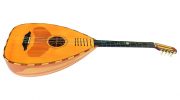
The construction of the laouto reflects this role. Its deep body projects sound outward, while paired steel strings produce a bright, percussive tone that cuts through open spaces. The instrument is designed to be heard clearly outdoors, whether in a village courtyard or a wedding yard filled with movement and conversation.

In Cyprus, the laouto is traditionally played with a feather plectrum rather than a rigid pick. This detail matters. The flexibility of the feather softens the attack and allows for rapid rhythmic patterns without harshness. The result is a sound that drives dancers forward without overwhelming them.
The laouto does not demand attention. It holds the music together while allowing everything else to happen.
The Violi: Voice, Emotion, and Ornament
If the laouto provides structure, the violi provides expression. Introduced to Cyprus during the Venetian period, the violin was quickly absorbed into local musical language rather than imposed upon it.

Cypriot violin technique differs noticeably from Western classical practice. Players often hold the instrument against the chest rather than under the chin, a posture suited to long performances that can stretch across hours or days. Bowing is rhythmic and direct, with frequent use of double stops that create a sense of melody layered over a drone.
What truly defines the violi, however, is ornamentation. Slides, bends, and microtonal inflexions allow the instrument to speak within the island’s modal systems. These embellishments are not decorative. They communicate mood, place, and identity. A skilled violist can make the instrument sound playful, mournful, or commanding without changing tempo.
In many ways, the violi replaces the human voice when words are not enough.
Why These Two Instruments Belong Together
The partnership between the laouto and the violi is not a coincidence formed by convenience. It is the result of long social use, shaped by the needs of communities that relied on sound to organise shared life. One instrument stabilises time, while the other moves freely within it, creating a balance that feels intuitive rather than planned.
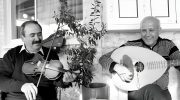
In village contexts, this pairing is often referred to simply as “the fiddlers,” even though it includes a lute. The name reflects how inseparable the instruments are in practice. When played together, they create a complete musical environment where cues are given without words and transitions happen without instruction.
This relationship allows music to function as a form of social architecture. Dancers know when to begin and when to stop. Singers recognise openings. Ritual moments unfold smoothly because the instruments carry collective understanding.
Music as Labour and Responsibility
For much of the twentieth century, traditional musicians in Cyprus were not professional performers in the modern sense. They were farmers, shepherds, craftsmen, and labourers who played when the social calendar required it. Weddings, religious festivals, and village celebrations were not optional events, and music was essential to their success.
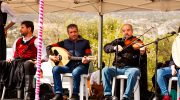
This reality shaped the music itself. Pieces were long because ceremonies were long. Repetition existed to sustain energy rather than showcase invention. A musician’s skill was measured by endurance, sensitivity to the crowd, and the ability to maintain momentum over hours of movement and participation.
Because learning took place through observation and immersion rather than formal instruction, regional styles developed naturally. Each area retained its own rhythmic preferences, melodic tendencies, and performance habits, passed from one generation to the next through presence rather than notation.
Gender, Visibility, and Evolving Roles
Public musical performance in Cyprus was traditionally dominated by men. Social expectations limited women’s participation largely to private settings, where singing accompanied domestic work and family gatherings. Public visibility carried social risk unless a woman occupied a rare, socially protected position.

Over time, these boundaries shifted. Today, women are active as performers, teachers, and organisers within the folk tradition. Their growing visibility has not altered the music’s foundations, but it has widened the circle of those entrusted with its continuation. Tradition, in this sense, has not weakened. It has adapted without losing coherence.
Weddings as Musical Frameworks
Traditional Cypriot weddings reveal the full function of folk instruments more clearly than any stage performance. These events unfold across several days and rely on music to mark emotional and ceremonial transitions.
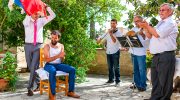
Musicians accompany preparation rituals, including the shaving of the groom and the dressing of the bride, using specific melodies that signal anticipation, blessing, and communal presence. When the couple is bound with a red scarf, the music does more than accompany the moment. It confirms it, embedding the act within shared cultural recognition.
Later, during the money dance, rhythm takes on economic meaning. Guests dance while pinning banknotes to the couple, transforming music into a structured act of collective support. The musicians, too, are acknowledged, reinforcing their role as facilitators of continuity rather than entertainers standing apart.
Dance, Rhythm, and Social Meaning
Cypriot dance traditions depend heavily on complex rhythmic patterns, particularly the 9/8 meter. Dances such as karsilamas and sousta emphasise face-to-face interaction, balance, and controlled movement rather than spectacle.
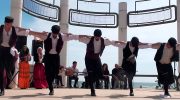
The laouto maintains a steady pulse, anchoring dancers to the ground, while the violi shapes melodic arcs that guide shifts in intensity. In dances like tatsia, where performers balance glasses while spinning, the relationship between dancer and musician becomes especially visible. Precision here is not theatrical. It is mutual trust expressed through timing.
Words That Emerge From Sound
Another defining feature of Cypriot folk music is its support of improvised poetry. Melodic frameworks known as fones allow singers to perform tsiattista, competitive rhyming exchanges that comment on love, politics, humour, and everyday life.

These performances require both linguistic agility and musical sensitivity. Different regions developed distinct fones, creating sonic accents recognisable across the island. The tradition’s endurance lies in its flexibility. Words change, themes shift, but the musical structures remain stable.
Continuity Under Modern Pressure
Colonial influence and urbanisation introduced Western musical standards and formal education, creating tension between village traditions and institutionalised music culture. Rather than erasing folk practice, this divide pushed it into new forms.

In recent decades, musicians have returned to traditional instruments with renewed interest, blending them with contemporary arrangements and experimental projects. These efforts do not attempt to freeze the past. They treat tradition as a living language capable of responding to present realities.
Even within popular media, echoes of laouto rhythms and violi ornamentation continue to surface, reconnecting modern audiences with older musical logic.
Why the Sound Endures
The laouto and violi remain central to Cypriot life because they were never designed for display alone. They exist to support shared experience, marking transitions that matter and holding people together through sound.
As long as Cypriots gather for weddings, festivals, and communal meals, these instruments will remain necessary. They do not preserve memory by standing still. They preserve it by moving forward, played again and again in contexts that continue to need them.
In Cyprus, tradition survives not because it is protected, but because it still works.