Explore Cyprus with Our Interactive Map

Explore our top stories and discover ideas worth your time.

Agios Nikolaos tis Stegis

Agios Nikolaos tis Stegis

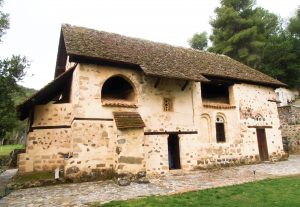
Agios Nikolaos tis Stegis, near Kakopetria in the Solea Valley, is one of Cyprus’s most important painted churches, preserving multiple phases of Byzantine frescoes inside a modest mountain building. Its steep timber roof, added for protection, helped these wall paintings survive centuries of harsh weather and shifting rule. This article explains how the church evolved, what the fresco layers show, and why the site remains a rare visual record of Byzantine life in Cyprus. Agios Nikolaos tis Stegis stands on the western bank of the Karkotis River, near the village of Kakopetria, at an elevation of roughly 700 meters. dreamstime-com This mountain setting explains one of the church’s most defining features. Unlike urban Byzantine churches, which display their domes openly, this church is wrapped beneath a steep, timber roof covered in flat tiles. The roof was added in the medieval period to protect the masonry and paintings from heavy rain and winter snow. The solution was practical, not symbolic, yet it transformed the church’s identity. The word Stegis means “of the roof,” and the shelter became so closely associated with the building that it distinguished this Saint Nicholas from countless others across the Orthodox world. What began as a climatic adaptation ultimately became a defining architectural signature unique to the Troodos region. From Monastery to Mountain Archive The church was…

Read more
Avakas Gorge Cave

Avakas Gorge Cave

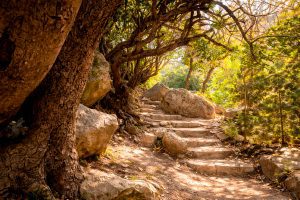
Avakas Gorge is a 3-kilometer-long limestone canyon located in the Akamas Peninsula, 16 kilometers west of Paphos. The gorge was created by the Avgas River, a seasonal stream that flows only in winter and spring. Over countless thousands of years, this modest river carved through layered limestone and created walls that reach 30 meters high in some sections. visitpafos-org The gorge is part of the Natura 2000 protected area network and attracts roughly 100,000 visitors per year according to forestry authorities. What makes it special isn't just the height of the walls but how narrow the passage becomes. In places, the gorge squeezes down to only 4 meters wide with cliffs towering on both sides and a strip of sky visible overhead. This creates dramatic light effects as sun filters down through the gap. Historical Background The rock that forms Avakas Gorge is limestone from the Mamonia Complex and was deposited in warm seas during the Mesozoic era millions of years ago. This limestone contains layers of reef formations, shell fragments, and marine sediments that hardened into stone. When Cyprus rose from the ocean and these rocks emerged on land, they became vulnerable to erosion. Limestone is soft enough that water can dissolve it chemically and carve it physically. During the Pleistocene era, roughly 2 million to 12,000 years ago,…

Read more
The Curse of Myrrha (Smyrna)

The Curse of Myrrha (Smyrna)

The story of Myrrha, also known as Smyrna in some versions, stands among the most tragic narratives in Greek mythology and is deeply connected to the mythological landscape of Cyprus. She is remembered as the daughter of King Kinyras, the legendary ruler associated with sacred kingship and the cult of Aphrodite. Her tale links Cyprus not only to themes of divine love and beauty through Adonis, but also to darker themes of transgression, punishment, and transformation. This myth became an important narrative explaining the origins of Adonis, a figure whose death and rebirth were closely tied to fertility cycles and seasonal renewal in Mediterranean religious tradition. In-Cyprus The inclusion of Myrrha in Cypriot mythological heritage reflects the island’s role as a cultural bridge between Greek storytelling and local religious identity. Her story, though tragic, serves as a foundation for the later cult of Adonis, whose association with Aphrodite made Cyprus central to his worship. Through Myrrha, themes of suffering, metamorphosis, and regeneration become embedded in the island’s mythic past, shaping its symbolic connection to life cycles and sacred transformation. The Nature of the Curse According to myth, Myrrha incurred the wrath of Aphrodite and was cursed with an unnatural desire for her father, King Kinyras. The reasons for the goddess’s anger vary across ancient sources, but often involve a perceived…

Read more