Explore Cyprus with Our Interactive Map

Explore our top stories and discover ideas worth your time.

Cyprus Pine Cedar Forests

Cyprus Pine Cedar Forests

Cyprus forests cover approximately 42% of the island's total area, with 18% classified as high forest and the remaining 20% as other wooded land. These green expanses stretch across mountain ranges, particularly the Troodos Mountains that dominate the western side of the island. Pine and cedar forests create distinctive ecosystems supporting unique endemic species found nowhere else on Earth. The island was almost entirely forested in ancient times, earning its reputation as the green island of the Mediterranean. Historical records describe Cyprus as a major timber exporter and shipbuilding center. Today, forests remain vital to Cyprus's natural heritage, water resource protection, and village economies through timber and non-wood products. Ancient Forest Legacy Shapes Modern Landscape Ancient civilizations harvested Cyprus forests extensively for shipbuilding and construction. The timber quality made Cyprus a strategic resource for Mediterranean powers. By the 19th century, overgrazing by the largest goat population of any Mediterranean island degraded mature woodlands into garigue and maquis shrubland. Deciduous oak forests disappeared as communities cleared land for crop terracing. Today, cultivation occupies 45% of the island, primarily across the Mesaoria plain and coastal zones. What remains concentrates in protected mountain areas where terrain prevented agricultural development. The forests host 1,750 native plant species, with 128 endemic varieties. Endemic species concentrate in the Troodos Mountains (87 species), Kyrenia Mountains (57 species),…

Read more
Cyprus Pine Forest Villages

Cyprus Pine Forest Villages

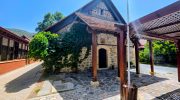
Pine forest villages in the Troodos Mountains showcase traditional Cypriot architecture where stone houses with wooden balconies cling to mountainsides at elevations between 600 and 1,200 meters. These settlements developed amid orchards, vineyards, and dense pine forests that provide cool escape from coastal summer heat. Kakopetria, Platres, and Pedoulas represent the most prominent examples, with stone-built structures featuring sloping terracotta tile roofs, wooden shutters, and cobbled streets preserved as protected cultural heritage. The architecture responds to mountain conditions including snow, rainfall, and steep terrain uncommon in lowland Cyprus. Kakopetria is cradled between the Kargotis and Garillis rivers, which converge to form the Klarios River, creating lush green environments where water mills once ground grain for village populations. These mountain retreats served dual functions as permanent agricultural communities and summer resorts where coastal residents escaped heat during the Ottoman and British colonial periods. Kakopetria's Protected Old Quarter The village is celebrated for its meticulously preserved old quarter, Palia Kakopetria, which stands as a protected national monument of Cypriot heritage architecture. Its overhanging wooden balconies, narrow stone-paved streets, and restored houses create a timeless atmosphere that feels like stepping into a bygone era. Located at 667 meters elevation in the Solea Valley, Kakopetria sits southwest of Nicosia on the northern Troodos slopes. The name translates to bad rock, derived from local legend…

Read more

Khirokitia Figurines: Stone Ancestors at Home

Khirokitia Figurines: Stone Ancestors at Home

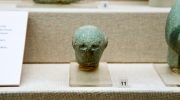
The stone figurines of Khirokitia are among Cyprus’s earliest human representations, carved over 9,000 years ago within one of the island’s first permanent farming settlements. Found in domestic and burial contexts, they were not decoration but durable objects that helped households maintain identity, lineage, and a living relationship with ancestors buried beneath the home. This article explains why the figures are intentionally abstract, why hard stone was chosen despite the labour, and what their placement reveals about memory and belonging at the dawn of settled life in Cyprus. Khirokitia Above the Maroni River The Neolithic settlement of Khirokitia lies on a steep hillside above the Maroni River in southern Cyprus. Occupied during the Aceramic Neolithic period, it represents the island’s first permanent agricultural society. Life here was organised around circular stone houses, shared courtyards, and a tightly knit social structure built on extended families. In this context, figurines were not decorative objects or isolated artworks. They were part of daily life, ritual practice, and memory. Their meaning comes not from how they look alone, but from where they were found and how they were used. Small Figures, Heavy Meaning More than two dozen anthropomorphic figurines have been recovered from Khirokitia, an unusually high number for a Neolithic site. Most are small, abstract, and deliberately simplified. Bodies are reduced to essential…

Read more