Traditional stone houses represent the architectural heritage of Cyprus villages, built from local limestone and designed to withstand the Mediterranean climate for centuries. These structures feature thick walls exceeding half a meter, stone arches, flat or low-pitched clay tile roofs, and internal courtyards that served as the center of family life.

The houses evolved from simple single-room dwellings called makrinari to more complex two-story structures with distinct functional spaces including the dikhoro living room and iliakos covered porch where social life unfolded. Construction utilized materials quarried nearby including limestone, sandstone, shell rock, granite, and volcanic diabase, creating buildings that naturally insulated inhabitants from summer heat and winter cold.
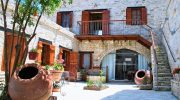
Many traditional houses now receive UNESCO cultural heritage protection and government restoration grants. The revival of these stone structures through careful renovation has created unique accommodation options that allow visitors to experience authentic village life while supporting rural communities threatened by urban migration and modernization.
The Ancient Roots of Stone Construction
Cyprus’s stone building tradition extends back 9,000 years to the Neolithic settlement of Choirokoitia, where circular houses constructed from mudbrick and stone with flat roofs housed early farming communities from 7000 to 5200 BC.
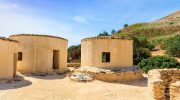
These prehistoric dwellers created sophisticated layouts with fortification walls and controlled village access, demonstrating organized social structures that prioritized collective security and planned development. The round house design reflected practical adaptations to available materials and construction techniques while providing efficient interior space.

The transition from circular to rectangular structures occurred gradually as building knowledge advanced through successive civilizations including Greeks, Romans, Byzantines, Crusaders, Venetians, and Ottomans. Each culture contributed architectural elements that Cypriots absorbed and modified to suit local conditions and available materials. Roman and Byzantine influences introduced plinth, flat bricks that supplemented stone in wall construction. Frankish and Venetian periods brought Gothic arches and decorative elements that appeared in wealthier homes and religious buildings.
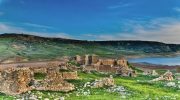
Village locations developed around natural resources with stone quarries, water sources, and agricultural land determining settlement patterns. Builders extracted limestone directly from hillsides near construction sites, minimizing transport costs while creating distinctive local variations based on stone color and texture. This hyperlocal sourcing meant each village developed unique architectural character determined by its specific geological conditions and builder traditions passed through generations.
Building Materials and Construction Methods
Local limestone formed the primary construction material, available in several varieties including white limestone, yellow-hued sandstone, porous shell rock formed from ancient marine deposits, and dark volcanic diabase. Builders selected stones based on structural requirements, with harder limestone used for load-bearing walls and softer materials for interior partitions and decorative elements. The natural stone provided excellent thermal mass, absorbing heat during the day and releasing it gradually at night to moderate temperature swings.

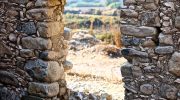
Wall construction followed traditional masonry techniques where larger stones formed the exterior faces while smaller rubble filled the cavity between. The walls reached thicknesses from 50 to 80 centimeters, creating substantial barriers against heat, cold, and sound. Builders shaped individual stones by splitting larger blocks into workable rectangular pieces, fitting them together with minimal mortar made from lime, sand, and sometimes animal hair for binding strength. The craftsmanship required years of apprenticeship to master proper stone selection, shaping, and placement.
Roofing evolved through several phases based on available materials and structural capabilities. Early roofs used reed thatch or brush supported by wooden beams of olive, oak, or imported pine. Later construction employed clay tiles on wooden frameworks, creating the characteristic low-pitched or flat roofs seen across Cyprus villages. The tiles, often curved and overlapping, allowed rainwater drainage while providing ventilation through small gaps. Wealthier families incorporated stone vaulting that eliminated the need for wood supports while creating dramatic interior spaces with arched ceilings.

The Traditional House Layout and Room Functions
The simplest traditional house consisted of a single elongated room called makrinari, typically 3 to 4 meters wide and extending 6 to 12 meters depending on family size and resources. This basic unit housed all family activities including sleeping, cooking, eating, and working. Storage occurred in built-in wall niches and on wooden shelves suspended from ceiling beams. A small fireplace provided cooking facilities and winter heating, though smoke ventilation remained problematic in these single-room structures.
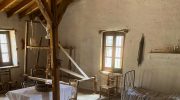
Larger families expanded their homes by adding a second parallel room separated by a stone arch or arcade, creating the dikhoro or double room arrangement. The dikhoro served as the main living space where family members gathered for meals, conversation, and household tasks. One room typically functioned as sleeping quarters while the other accommodated daytime activities. This arrangement provided minimal privacy by modern standards but represented significant advancement from single-room dwellings.

The iliakos formed the social heart of traditional houses, an open or semi-open covered porch created by extending the roof 2 to 3 meters forward supported by wooden beams or stone arches. This shaded space allowed outdoor living protected from sun and rain, crucial in Cyprus’s hot climate where interior rooms became uncomfortably warm. Families received guests in the iliakos, women performed textile work while socializing with neighbors, and children played under adult supervision. One end of the iliakos typically contained the mairko, a dedicated area for cooking and washing dishes that kept smoke and food odors away from living quarters.

The Courtyard as Community and Work Space
High stone walls surrounded traditional houses, creating enclosed courtyards called avli that served multiple essential functions. The courtyard provided security and privacy, concealing family life from passing strangers while allowing constant supervision of children and domestic animals. Entrance occurred through heavy wooden doors set in the perimeter wall, with the door often decorated with carved patterns or metal hardware displaying the family’s craftsmanship and status.
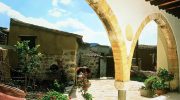
The courtyard accommodated economic activities including food processing, textile production, and small-scale manufacturing. Women dried fruits and vegetables on flat roofs accessible from the courtyard, pressed olives for oil in stone mills, and wove textiles on outdoor looms. Men repaired agricultural tools, constructed household items, and maintained the property. The outdoor workspace eliminated the need for specialized workshop structures while providing ventilation and natural light for detailed tasks.
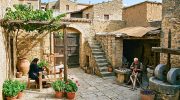
Courtyard plantings included practical species like grape vines trained over wooden frames to create shaded areas, fig trees providing fruit and shade, and aromatic herbs used in cooking and medicine. Some families maintained small vegetable gardens and chickens or goats for eggs, milk, and meat. The courtyard thus functioned as an extension of agricultural production, bringing farm activities into the domestic sphere and blurring boundaries between home and workplace that characterize preindustrial societies.
Living in Traditional Houses Today
Modern residents of traditional houses balance heritage preservation with practical living requirements. The thick stone walls provide natural temperature regulation that reduces air conditioning needs in summer and heating costs in winter, creating environmentally sustainable living conditions. The solid construction blocks external noise, creating peaceful interior environments increasingly valued as urban areas become louder and more congested. The distinctive architectural character offers aesthetic appeal and connection to history that standardized modern construction cannot replicate.

Challenges include adapting layouts designed for preindustrial lifestyles to contemporary needs. Traditional houses lack sufficient bathroom facilities, adequate electrical capacity for modern appliances, and storage space for accumulated possessions beyond what farming families possessed. Renovations must carefully integrate these systems without damaging historic fabric or disrupting architectural coherence. Regulations prohibit alterations visible from public streets, requiring owners to conceal modifications behind traditional facades.

The revival of interest in traditional houses reflects broader cultural shifts valuing sustainability, authenticity, and heritage over generic modernity. Young Cypriots increasingly appreciate architecture their grandparents abandoned for concrete apartment blocks, recognizing qualities lost in pursuit of convenience. This generational shift suggests traditional houses will continue evolving rather than becoming static museum pieces, adapting to changing needs while maintaining essential character that connects contemporary Cyprus to its village past.