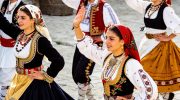
Cypriot folk dance is not something observed from a distance. It is something entered, shared, and carried by the group. Across Cyprus, workshops and demonstrations keep traditional dance alive by teaching it as a social practice rather than a staged performance. Whether held in village squares, community halls, or coastal courtyards, these gatherings connect rhythm, memory, and collective life in ways that still feel natural on the island today.
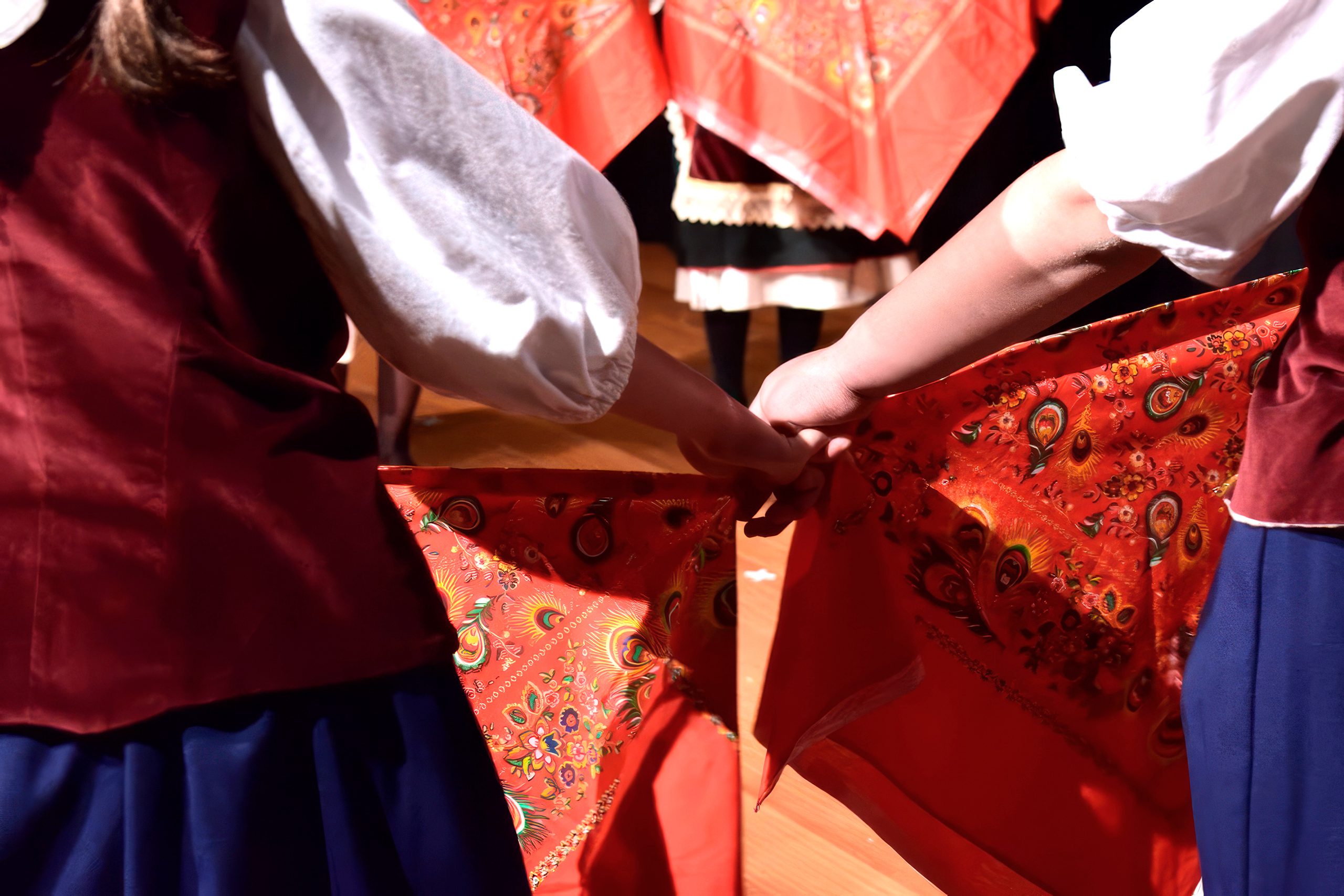
Rather than preserving dance as choreography alone, Cypriot workshops focus on movement as a form of communication. Steps are learned not just as patterns, but as expressions shaped by history, environment, and social structure. Participation matters more than polish, and understanding matters more than display.
Dance as a Social Language
Traditional dance in Cyprus developed as a shared language rather than a spectacle. Long before formal instruction existed, dances were learned through observation and repetition during weddings, harvest celebrations, and religious festivals. Movement reflected everyday rhythms and reinforced bonds within the community.
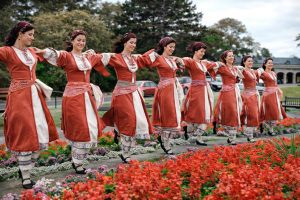
Modern workshops continue this approach. Instead of separating dancers into performers and audiences, they recreate the original logic of participation. Circles and open lines organise people spatially and socially, assigning roles, setting pace, and encouraging mutual awareness. A dance begins only when the group moves together, and its success depends on collective rhythm rather than individual expression.
Foundational Rhythms of Cypriot Dance
Most Cypriot folk dances grow from two core movement traditions that shape both style and meaning.
Syrtos
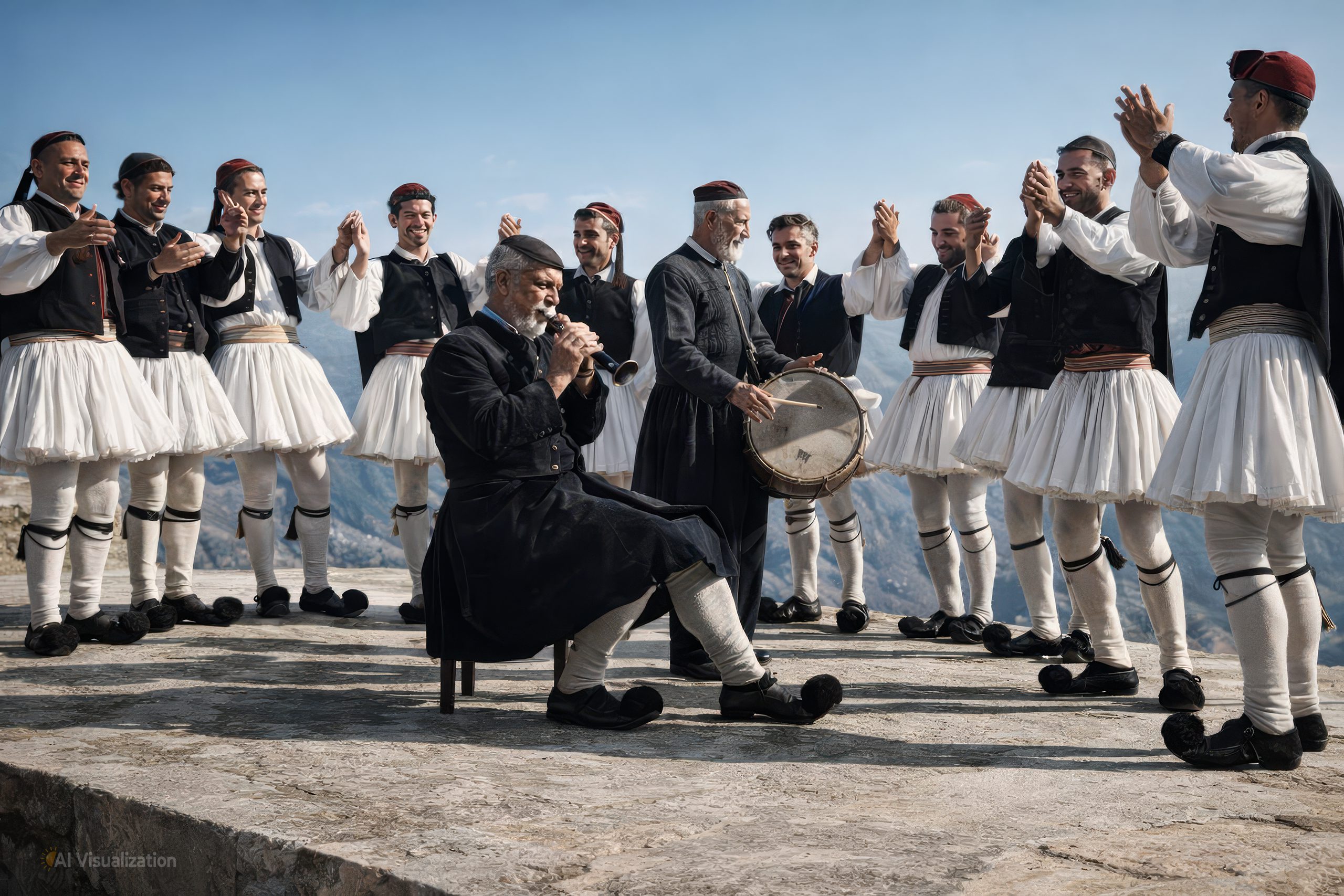
Syrtos forms the foundation of communal dance across the island. Its movements are smooth, grounded, and measured, allowing large groups to maintain a steady flow without breaking cohesion. Workshops often begin with Syrtos because it introduces the central principle of Cypriot dance: the group comes before the individual. Even when the lead dancer adds variation, the circle remains stable and supportive, reinforcing collective balance.
Sousta
Sousta provides contrast through lighter steps and springing movement. Traditionally associated with courtship and weddings, Sousta introduces energy and dialogue into the dance space. Dancers often face one another, creating interaction rather than procession. In workshops, Sousta reveals how dance once functioned as social conversation, where rhythm, restraint, and confidence mattered as much as movement itself.
Face-to-Face Dances and Social Roles
Some dances move beyond circles into paired formations. Forms such as Karsilamas and Antikristos place dancers opposite one another, allowing interaction while maintaining cultural boundaries. Historically, these dances reflected gender roles and social expectations, with men emphasising strength and precision and women focusing on balance and timing.
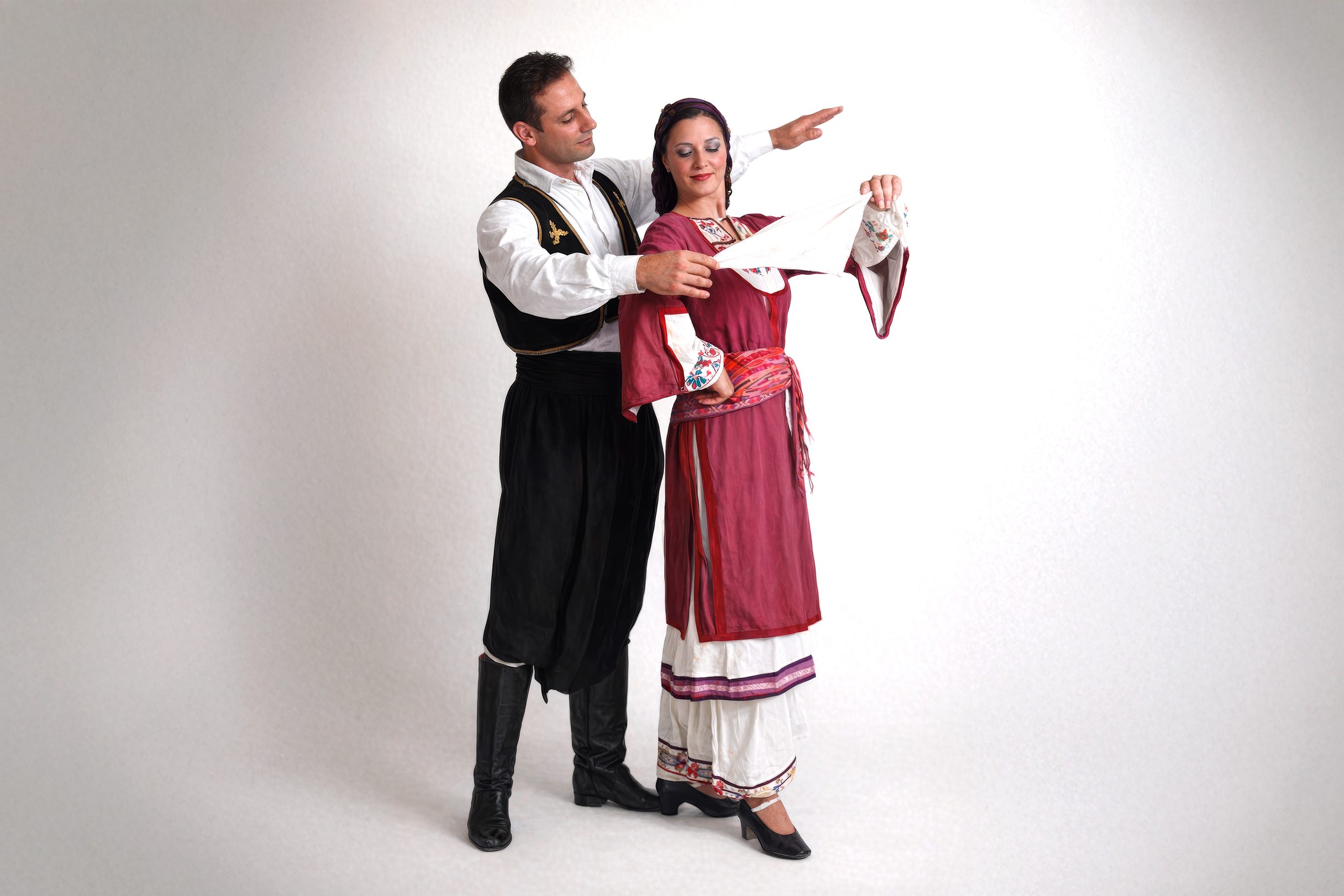
Workshops teach these distinctions carefully. Rather than presenting them as rigid rules, instructors explain their cultural context, helping participants understand how dance mirrored social order while still allowing individual presence within shared structure.
Teaching Without Simplifying Tradition
Cyprus has developed two complementary approaches to folk dance instruction, each serving a distinct purpose.
Community-based workshops, often run by cultural associations in cities such as Nicosia and Limassol, focus on preservation. These sessions explore regional variations, costume traditions, and live musical accompaniment. Learning progresses slowly, encouraging dancers to understand origin, meaning, and context rather than memorising sequences.
Visitor-oriented workshops take a more experiential approach. Frequently held in villages or agrotourism settings, they introduce a small number of foundational dances before inviting participants into shared movement. The emphasis remains on inclusion and rhythm rather than technical accuracy, allowing newcomers to feel the social essence of the dance without simplifying its character.
Music as the Guide
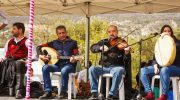
Dance in Cyprus remains inseparable from live music. Workshops place strong emphasis on listening before movement, teaching dancers to respond to musical cues rather than count steps mechanically. The violin typically leads, shaping tempo and emotional tone, while the laouto provides rhythmic grounding. In older traditions, the pithkiavli adds a pastoral sound tied closely to landscape and memory.
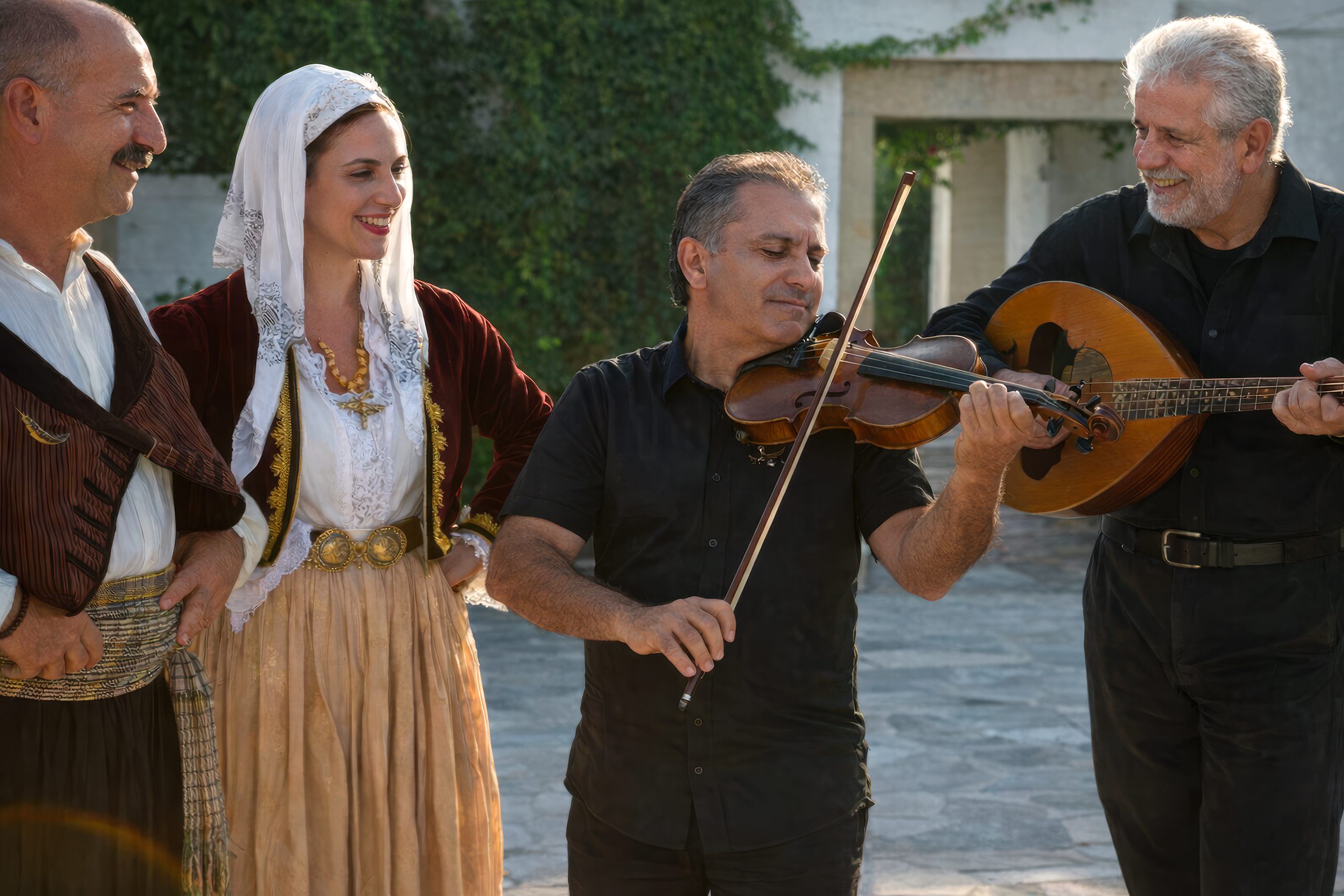
This relationship between musician and dancer reinforces the idea that movement follows sound, not instruction. The body responds when the music invites it, maintaining fluidity and shared timing.
Skill Dances Rooted in Rural Life
Some Cypriot dances preserve direct connections to agricultural life. Known as skill dances, they incorporate objects and gestures drawn from everyday labour. The sickle dance reflects harvest precision, the sieve dance emphasises balance and control, and the pitcher dance mirrors the task of carrying water from village springs.
Workshops treat these dances with care, explaining their symbolism before introducing movement. Participants learn not only how to perform them, but why they existed, reinforcing the link between dance and daily survival.
Experiencing Dance in Public Life
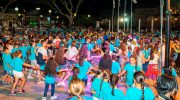
Festivals remain the most organic setting for Cypriot folk dance. Large folklore events in cities showcase regional troupes and international groups, while village festivals offer quieter, more revealing encounters. Dancing often begins informally, after food and music have brought people together, and participation grows naturally through invitation.
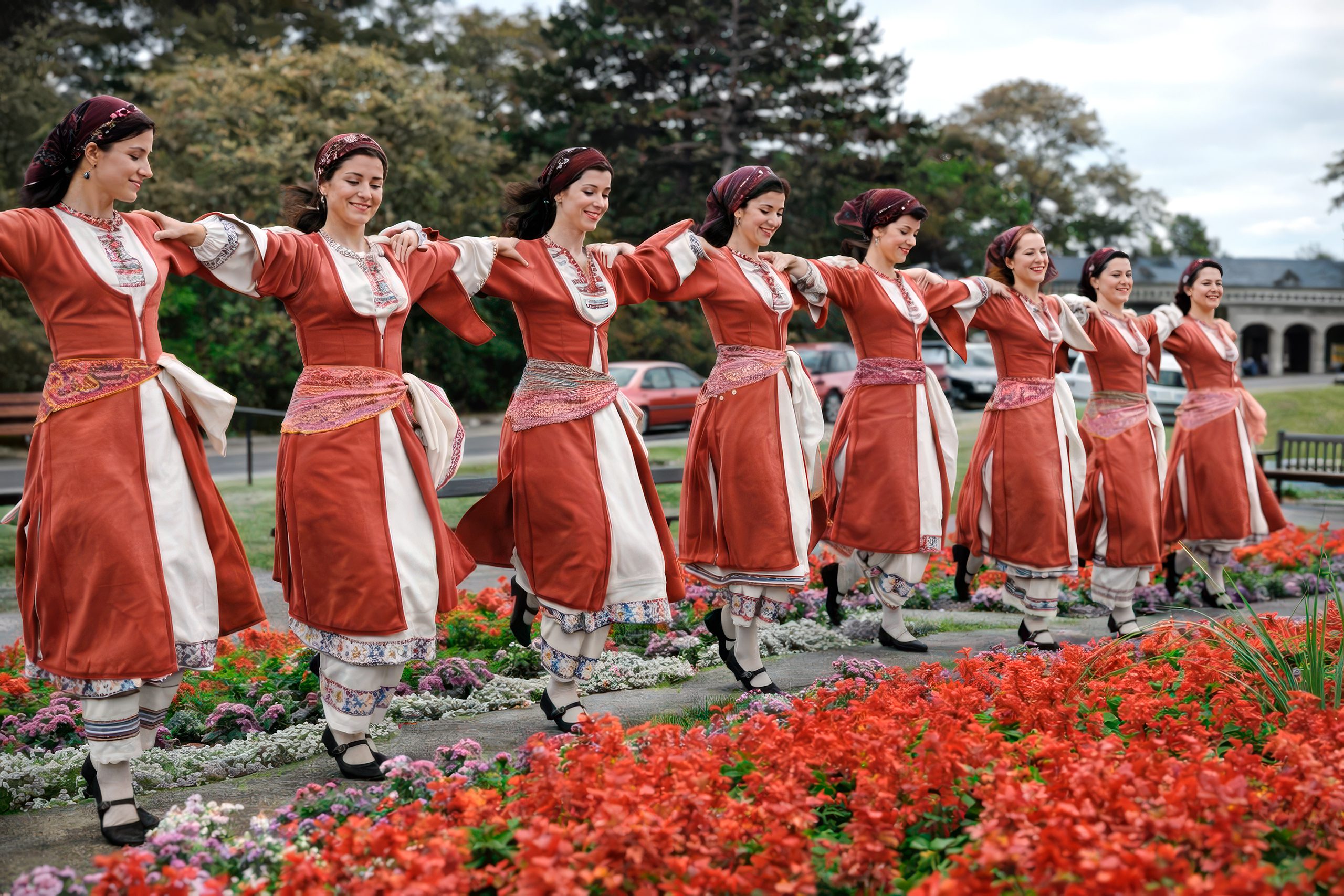
For visitors, observation usually comes first. Joining follows when the rhythm is familiar and the moment feels right, preserving the social balance that defines Cypriot dance culture.
Why Folk Dance Endures
Cypriot folk dance survives because it never fully separated from everyday life. Workshops do more than teach steps. They preserve a way of listening, moving, and belonging together. In a world increasingly shaped by isolation, these dances remain physical reminders that culture lives through shared rhythm and presence.
To step into a Cypriot dance circle is to enter a conversation that has continued for centuries. The steps may shift, but the structure, the rhythm, and the sense of belonging remain intact.