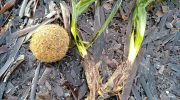
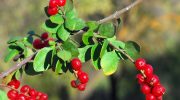
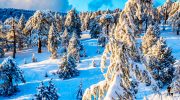
Imagine stepping onto sun-drenched slopes where tall evergreens sway in the breeze, their long needles catching golden light and filling the air with a fresh, resinous scent. This is the world of Pinus brutia, Cyprus’s most iconic pine and the backbone of the island’s woodlands. Together with its mountain cousin, it reveals a story of ancient resilience that still thrives across the Mediterranean landscape today.
- A Pine Built for the Island
- Echoes of Ancient Forests
- A Tree Built for the Sun
- Nature’s Clever Tricks
- The Winter Marchers of Cyprus Forests
- A Remarkable Traveller in the Moth World
- Roots in Ancient Cyprus and Modern Plantations
- Life in Fuzzy Formation
- Four Surprising Tidbits to Share
- Deeper Connections
- Seeing Them Safely
- Deeper Roots in the Landscape
- Pines in Today’s Cyprus
- Walking Among the Giants
- Why These Pines Matter
A Pine Built for the Island
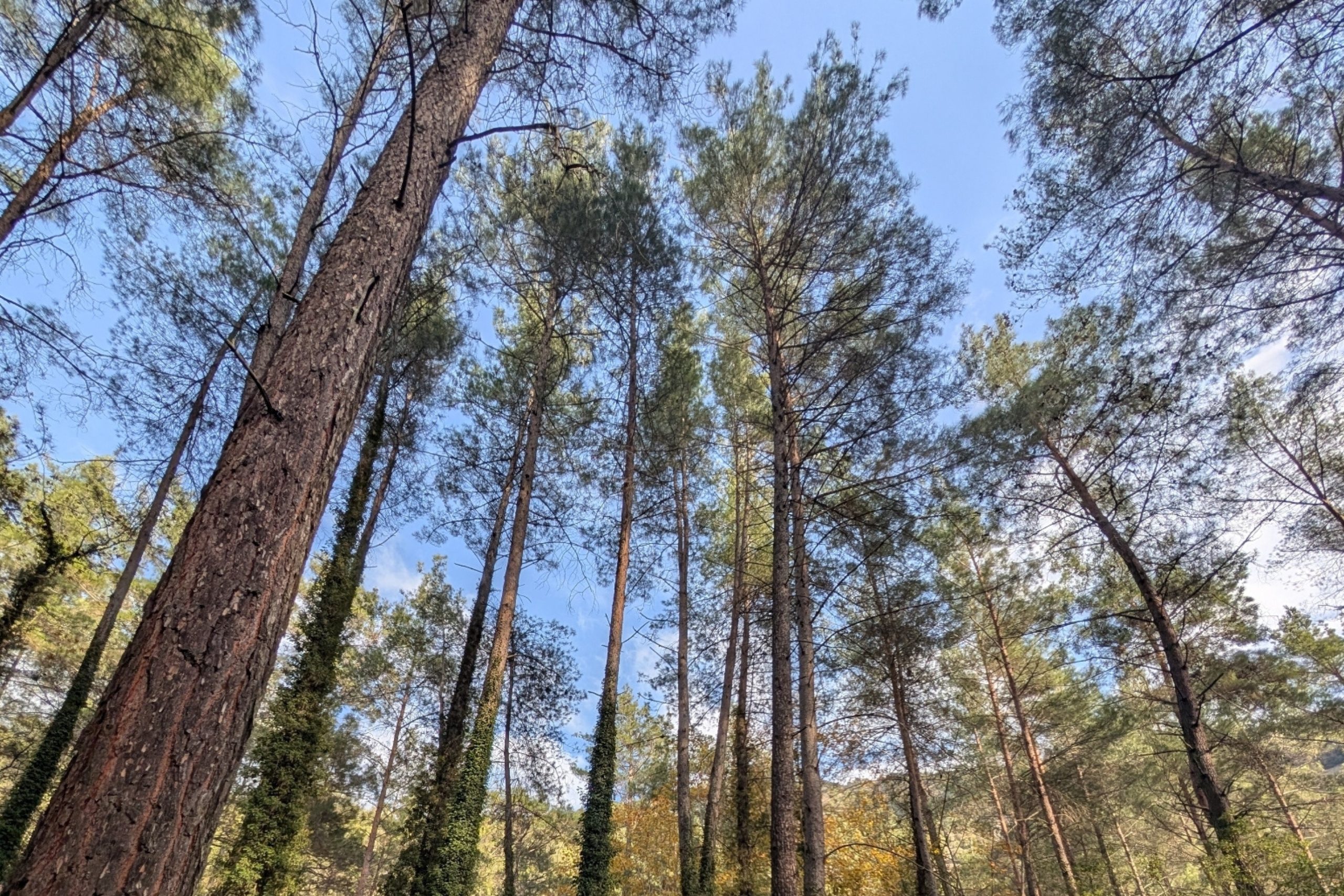
Pinus brutia, commonly known as the Calabrian pine, is a hardy evergreen conifer perfectly suited to the warm, dry conditions of the eastern Mediterranean. In the broad pine family (Pinaceae), it stands out for its fire-adapted seeds and drought tolerance. On Cyprus it reigns supreme, forming the vast majority of the island’s forests from sea level right up to the cooler heights where its relative, the black pine (Pinus nigra ssp. pallasiana), takes over. The Aleppo pine (Pinus halepensis) also appears, sometimes as a planted companion or in transitional zones.
Echoes of Ancient Forests
In 1881, French forester P.G. Madon climbed Mount Troodos and described a Cyprus once cloaked in “vast forests… pines of different species in dense profusion” mingling with cedar, oak and cypress down to the plains. For millennia these trees supplied timber for Phoenician mines, Ptolemaic fleets, Lusignan palaces and Venetian ships. Yet centuries of temporary cultivation, shepherd-set fires and the appetite of 250,000 goats stripped the hills bare. Madon noted, however, that Pinus brutia (then often called P. maritima) fought back vigorously: its seedlings quickly reclaimed entire slopes where old stone walls still mark abandoned fields. Its early seed production at just 15 years gave it an edge where slower trees faltered.
A Tree Built for the Sun
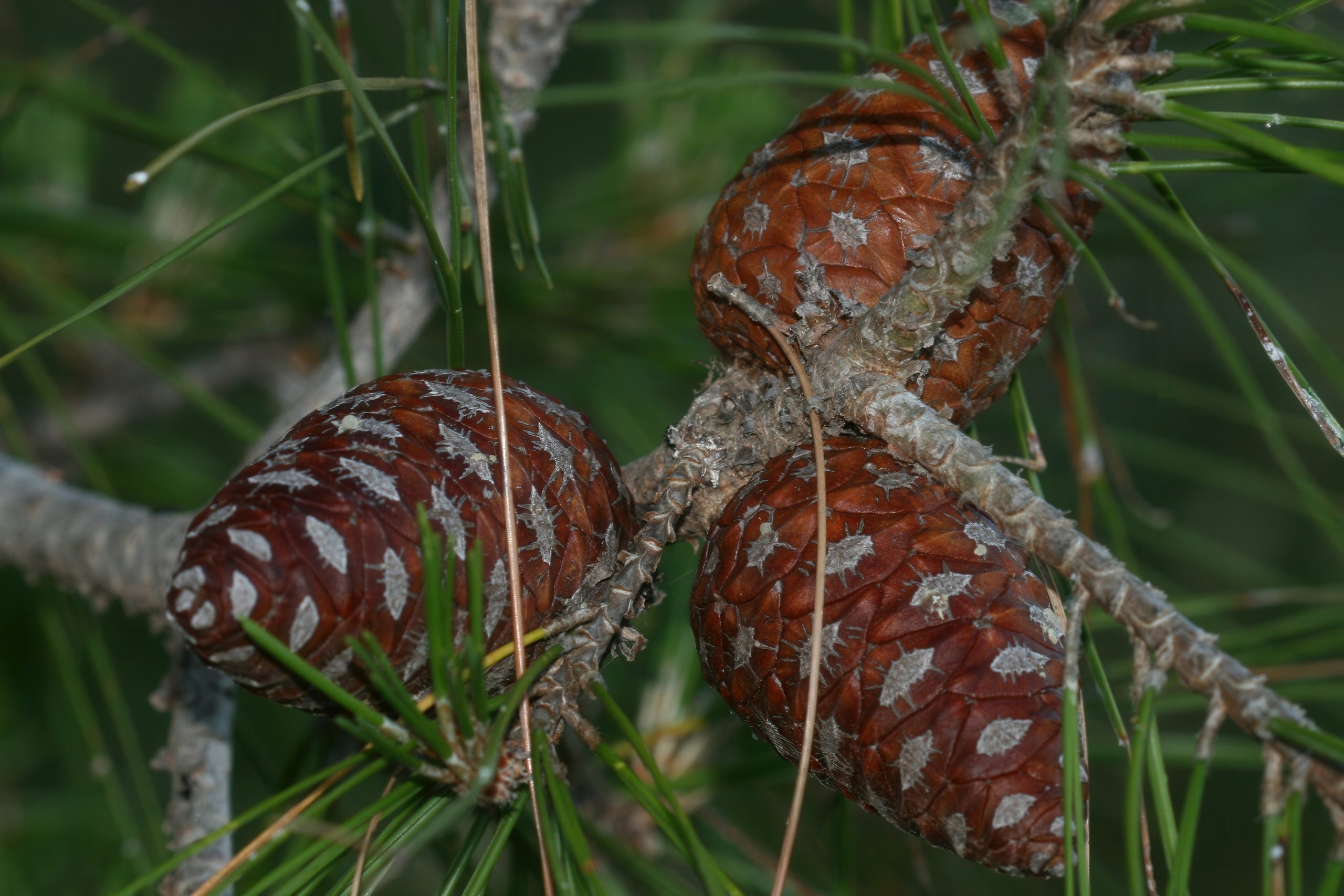
A mature Pinus brutia rises 20–35 metres tall with a straight trunk and open, rounded crown that lets dappled sunlight reach the forest floor. Its bark starts smooth and reddish-orange, maturing to flaky grey-brown plates. The needles grow in pairs, slender and 10–18 cm long, with finely serrated edges that feel distinctly rough to the touch — hence the local Cypriot name trachý peúko or τραχύ πεύκο (“rough pine”). The woody cones are stout, 5–11 cm long, ripening from green to warm orange-brown and often clustering in groups of three or four.
Nature’s Clever Tricks
Some cones stay tightly sealed until wildfire heat cracks them open, showering burnt ground with fresh seeds — an ingenious rebirth strategy Madon observed on scorched slopes. In Cyprus the tree hosts tiny aphids whose honeydew produces the island’s prized “pine honey,” a sweet delicacy with roots in antiquity.
The Winter Marchers of Cyprus Forests
Unfortunately, not all the insects are beneficial to pines and people. On crisp winter mornings in the pine-clad hills of Cyprus, you might glimpse a living ribbon of black-and-orange fluff winding its way down a tree trunk or across the sun-warmed soil. These are the pine processionary caterpillars, tiny but unforgettable travellers that turn ordinary forest walks into miniature adventures. Far from being mere garden pests, they are a vivid reminder of the intricate dance between insects and the island’s beloved brutia pines.
A Remarkable Traveller in the Moth World
Belonging to the family Notodontidae (the prominent moths) within the vast order Lepidoptera, the pine processionary known scientifically as Thaumetopoea wilkinsoni is a specialist of conifers. In Cyprus it thrives wherever Calabrian pine grows, from coastal plantations to the lower slopes of the Troodos and Pentadaktylos ranges. Unlike solitary caterpillars, these live in tight-knit colonies, a trait that gives the whole genus its dramatic “processionary” reputation.
Roots in Ancient Cyprus and Modern Plantations
Ancient Greek physicians like Dioscorides knew them as pityokampē — “pine larva” — and noted their irritating hairs more than 2,000 years ago. Yet their real impact on Cyprus began in the late 19th century when British foresters planted vast stands of Calabrian pine on degraded lands to restore the island’s green cover. Young plantations proved irresistible banquet halls. As William Ciesla documented in 2004, outbreaks exploded in these even-aged monocultures, especially on warm, south-facing slopes below 200 metres — exactly the sites where today’s community forests and roadside plantings still stand.
Life in Fuzzy Formation
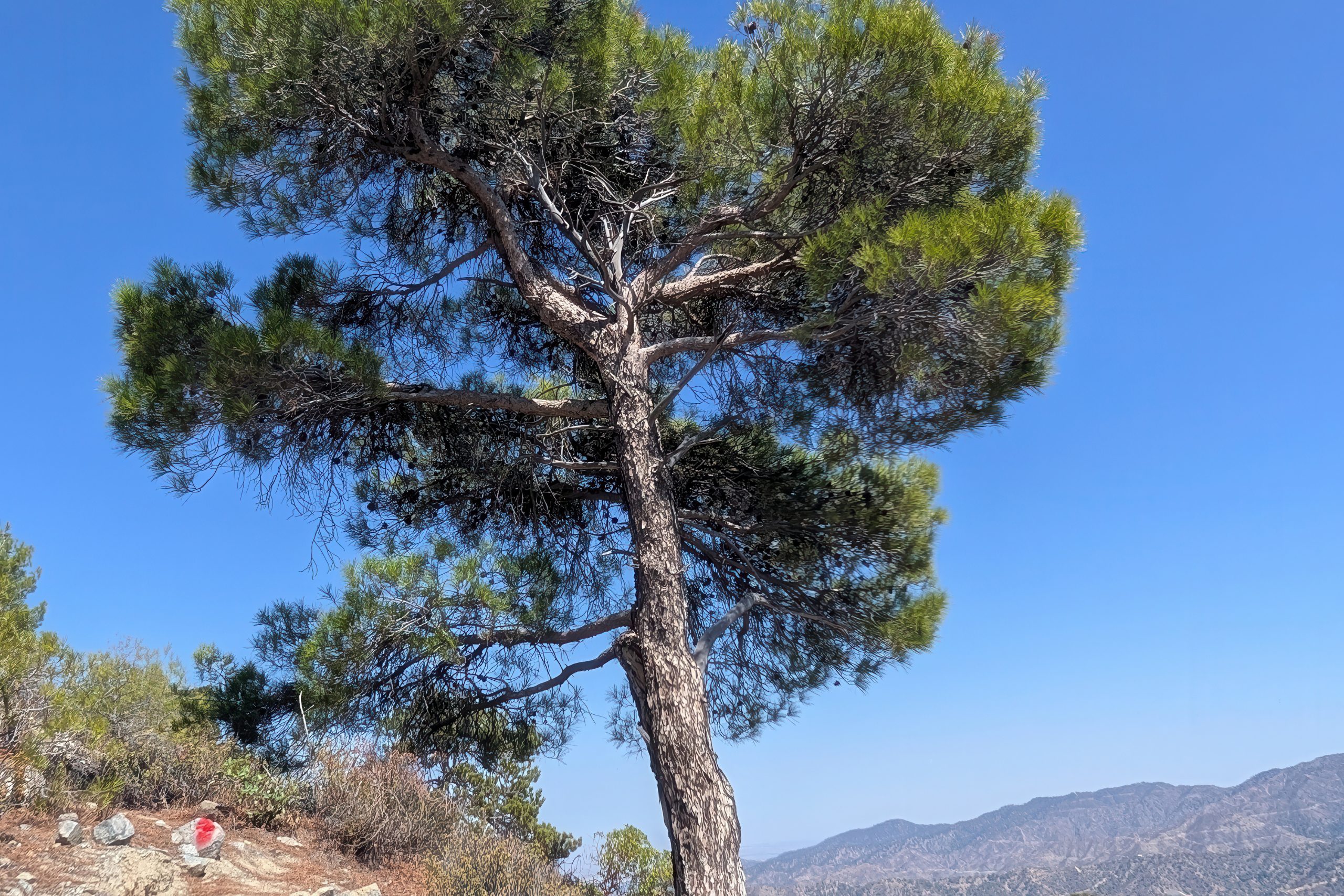
The caterpillars are unmistakable: up to 4 cm long, densely covered in long white hairs with striking orange-red spots along their backs. They spend autumn and winter high in the canopy inside silken “tents” that act as solar-powered greenhouses, warming the colony several degrees above the chilly air. On mild sunny nights they venture out to feast on needles; by late February or March the whole group lines up head-to-tail and marches single-file down the trunk to bury themselves in the soil and pupate. Their urticating hairs — microscopic barbed spears — detach easily and can float on the breeze, causing itchy rashes, eye irritation, or worse for pets and allergically sensitive people.
Four Surprising Tidbits to Share
- They can remain as pupae in the ground for up to nine years, waiting for the perfect weather — nature’s insurance policy against bad seasons.
- A single colony can strip a young pine of nearly all its needles in a week, yet the tree usually survives though it grows more slowly and becomes easier prey for bark beetles.
- Their favourite egg-laying spots are open, sunny edges exactly where we love to picnic or build village forests.
- In Cyprus they mainly target Pinus brutia (and lightly P. nigra), but occasionally nibble the endemic cedar Cedrus brevifolia.
Deeper Connections
The caterpillars are not villains in the wider ecosystem; they are food for cuckoos, hoopoes, and parasitic wasps, and their droppings enrich the forest floor. Yet in today’s densely planted pine monocultures they highlight a lesson the British foresters learned the hard way: simple landscapes breed complex problems.
Seeing Them Safely
You can experience the march yourself on any sunny day from late January to April along the nature trails of Akamas, Machairas, or the lower Troodos. Keep children and dogs on leads, admire from a respectful distance (never touch!), and enjoy the spectacle without disturbing the column. Local forestry departments sometimes mark infested trees perfect for safe, guided viewing.
Deeper Roots in the Landscape
Botanically, Pinus brutia hybridises readily with the Aleppo pine where ranges overlap, creating tough offspring ideal for Cyprus’s varied soils. Its light yet strong wood (density around 565 kg/m³) has long been valued for construction, charcoal and resin. Ecologically it supports fungi, insects and the rare Cyprus Crossbill, which pries open stubborn cones to spread seeds. The species is listed as Least Concern by the IUCN, reflecting its wide distribution and successful regeneration, though young saplings still need protection from goats and fires.
Pines in Today’s Cyprus
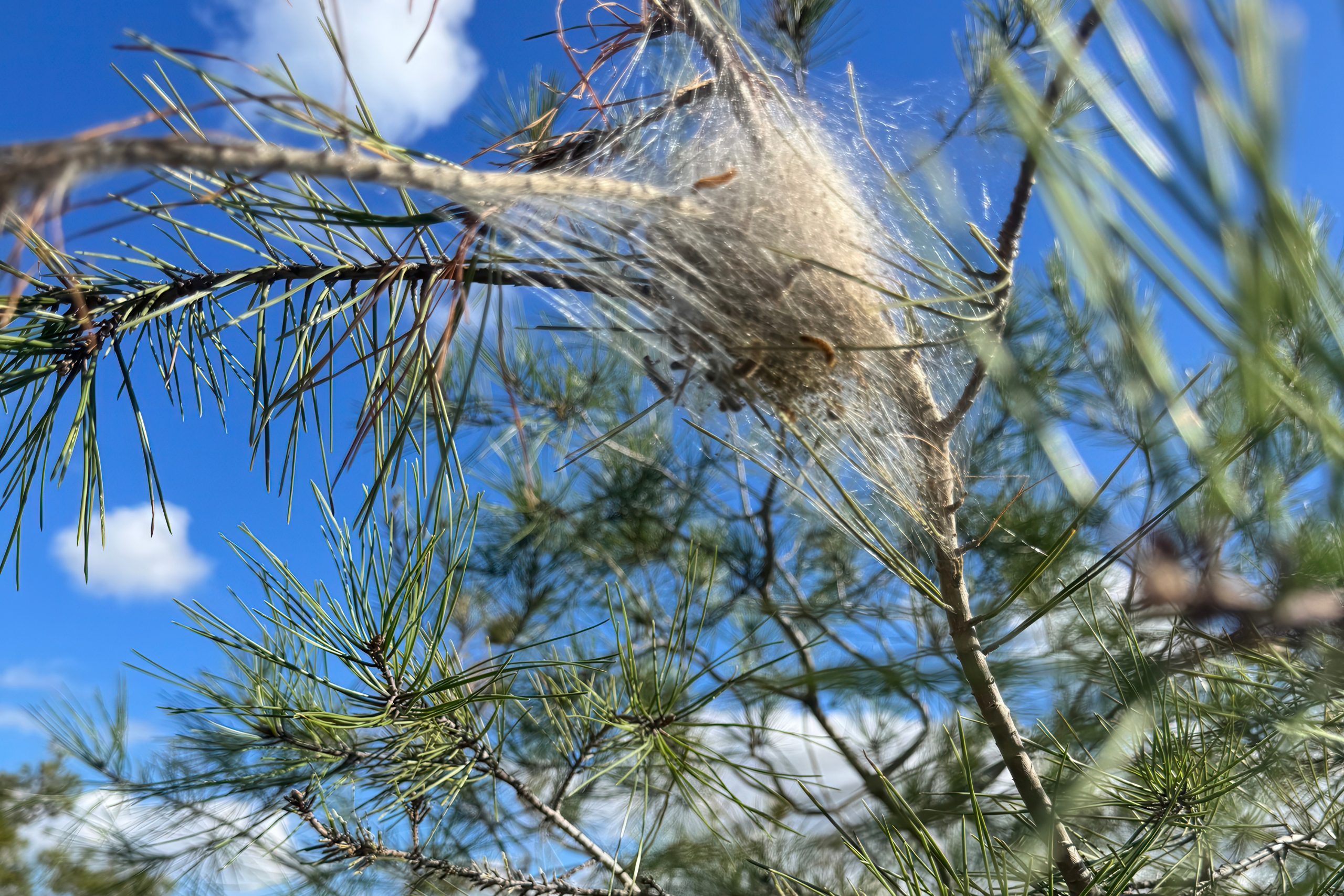
Today these forests cover 175,000 hectares — roughly 90 % of the island’s woodland — and act as green lungs, preventing soil erosion, cooling the air and providing timber, recreation and wildlife habitat. Recent studies (2024) highlight robust natural regeneration even without wildfire in central Cyprus, proving the pine’s ongoing vitality. In a warming climate its drought tolerance makes it a key ally against desertification. Cypriots plant it proudly, stroll beneath it on family outings and harvest its honey — living proof that the ancient forest spirit Madon championed is flourishing.
Walking Among the Giants
You can wander among these majestic trees almost anywhere, but the most breathtaking spots are the Kyrenia (Pentadaktylos) Mountains and the lower-to-mid slopes of Troodos, where Pinus brutia meets the darker, high-altitude black pine in beautiful transition zones. Follow shaded forest trails in spring when fresh needles glow bright green, or in autumn when cones crunch underfoot. The air smells warmly of resin, sunlight filters through in golden shafts, and for a moment you feel part of a story thousands of years old.
Why These Pines Matter
Pinus brutia and its fellow Cypriot pines — the black pine of the high peaks and the scattered Aleppo pine — are far more than trees. They are the resilient heartbeat of the island. From Madon’s 1881 plea to the thriving woodlands we enjoy in 2026, they remind us that with care and respect, nature can heal even the deepest scars. Next time you stand in their shade, listen closely: those whispering needles carry echoes of ancient forests and a promise that Cyprus’s green legacy will endure for generations to come.