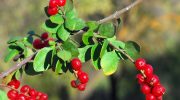
Wander almost any rocky hillside or sunlit maquis in Cyprus during a warm spring day, and you may spot a graceful small tree loaded with clusters of snowy-white flowers that seem to glow against the green. Later in the season those flowers give way to plump, golden-orange fruits that look like miniature apples or medlars hanging like little lanterns among the leaves. This is the azarole hawthorn, a quiet treasure of the island’s wild places that has sweetened Cypriot tables and stories for thousands of years.
A Rose-Family Gem of the Mediterranean
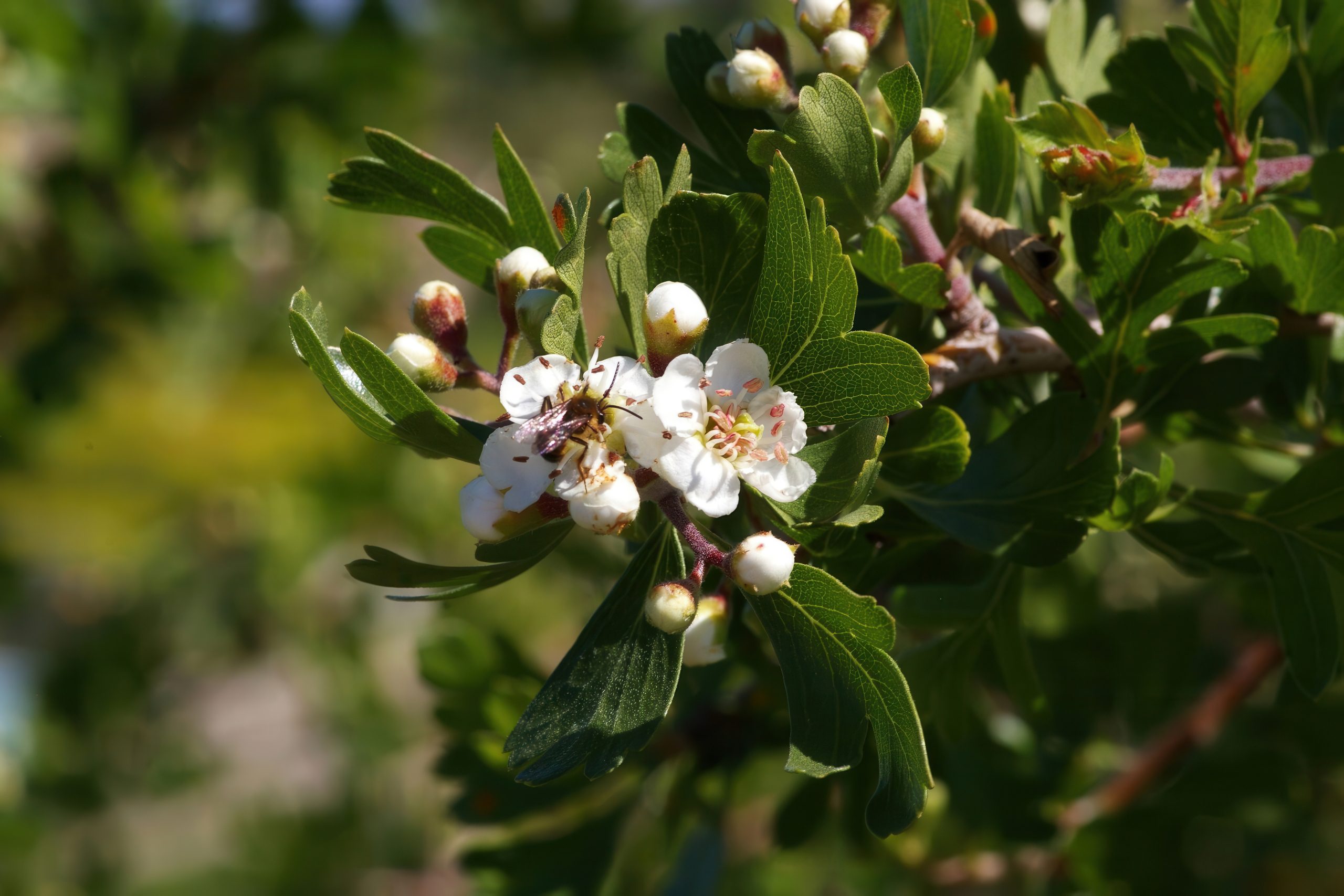
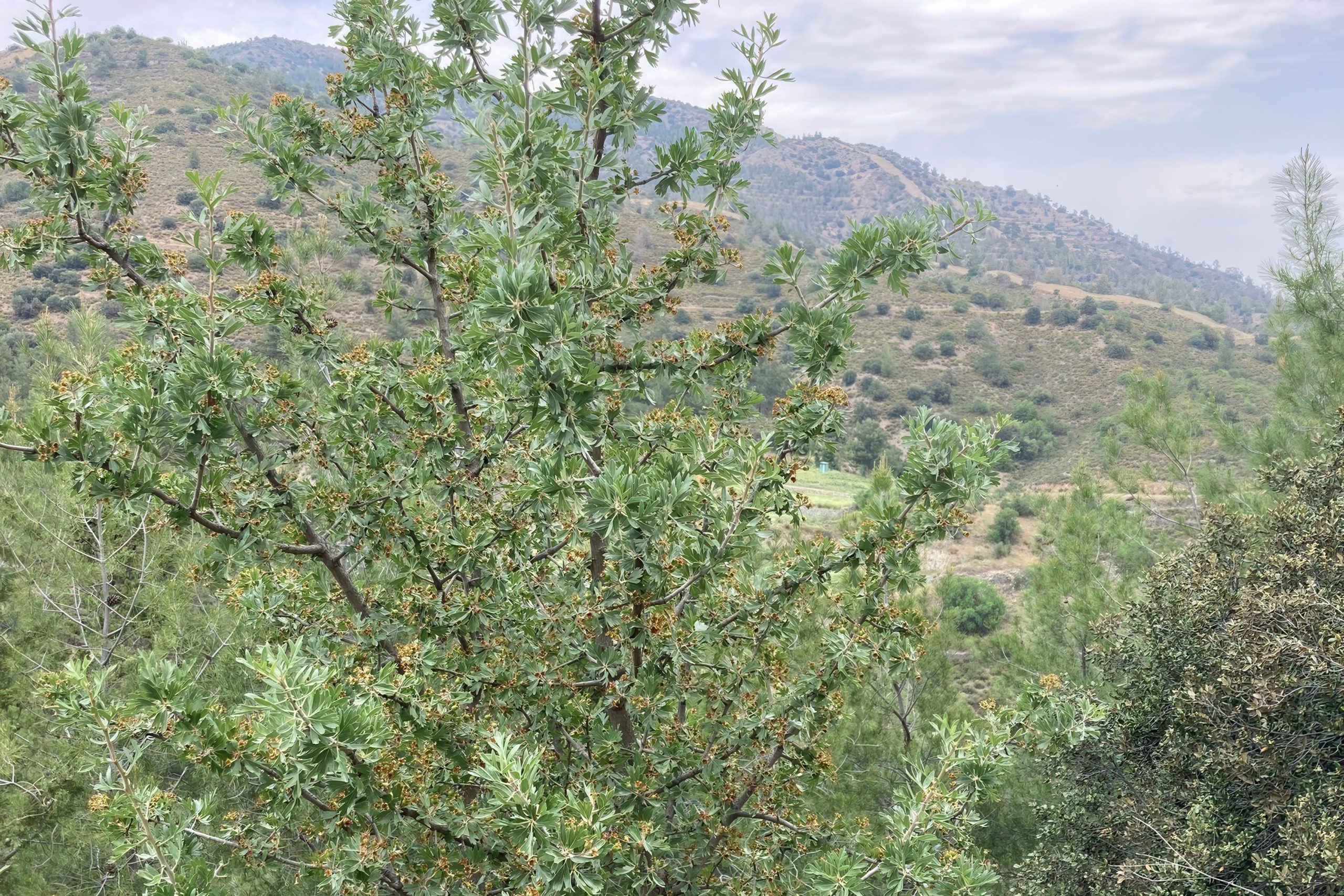
Crataegus azarolus, commonly known as the azarole, Mediterranean hawthorn or Mediterranean medlar, belongs to the vast Rosaceae family the same clan as apples, roses and cherries. In Cyprus it grows as a deciduous shrub or small tree, usually reaching 3–8 metres tall, perfectly at home in the mosaic of maquis and open woodland that covers so much of the island.
Roots Deep in Ancient Soil and Texts
The azarole has been part of Cyprus’s landscape since long before recorded history. When Dr F. Unger and Dr Th. Kotschy explored the island in 1862, they recorded it (often under the older name Crataegus aronia) as a common shrub whose tasty fruits were gathered and eaten by locals. Even earlier, the great ancient physician Dioscorides described a “second kind of mespilus” (medlar) growing in the Mediterranean that matches the azarole perfectly – its fruits recommended for soothing the stomach and bowels. The very name “azarole” comes from the Arabic az-zuʿrūra, the same word still used across the eastern Mediterranean for this generous little tree.
Graceful Form and Golden Harvest
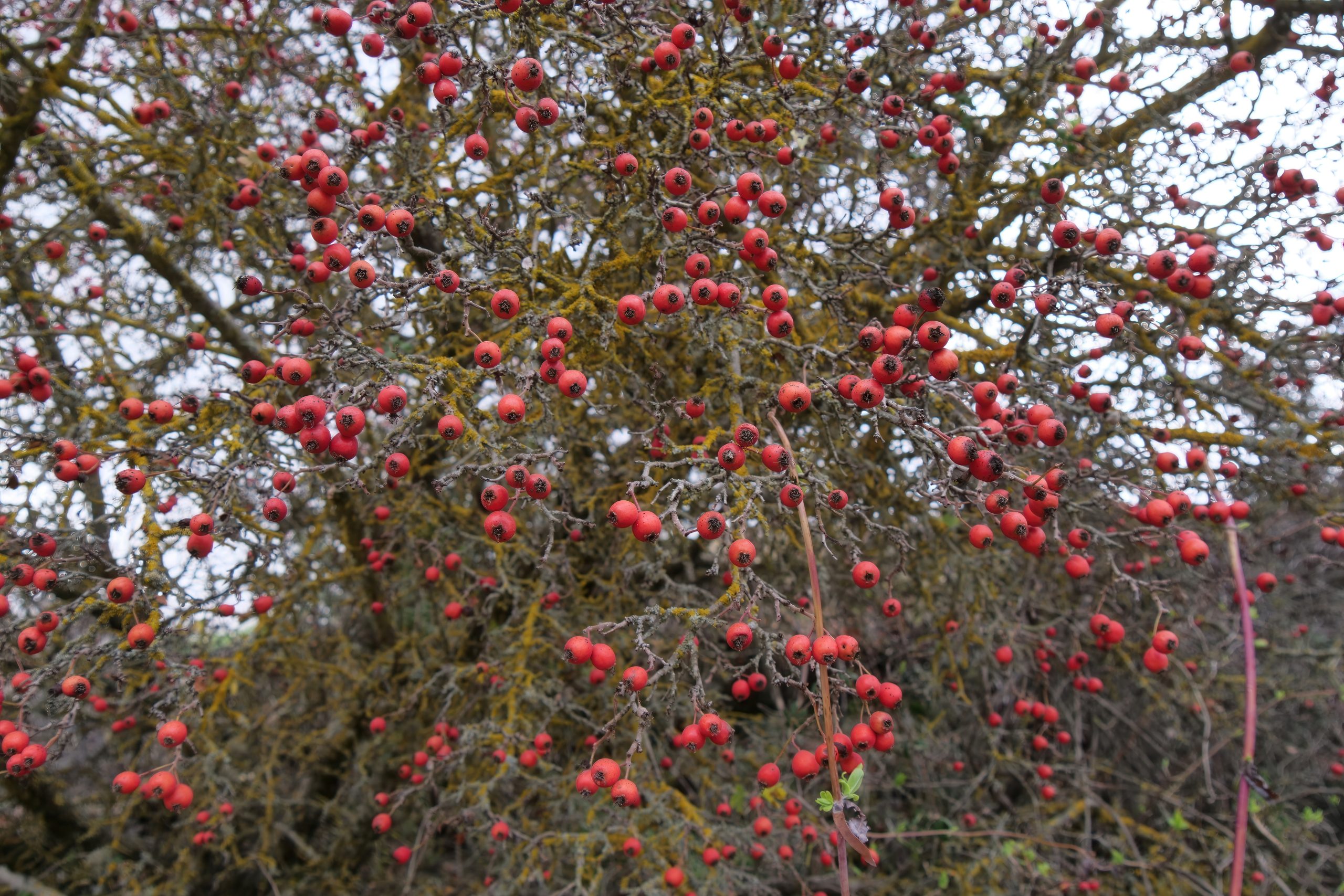
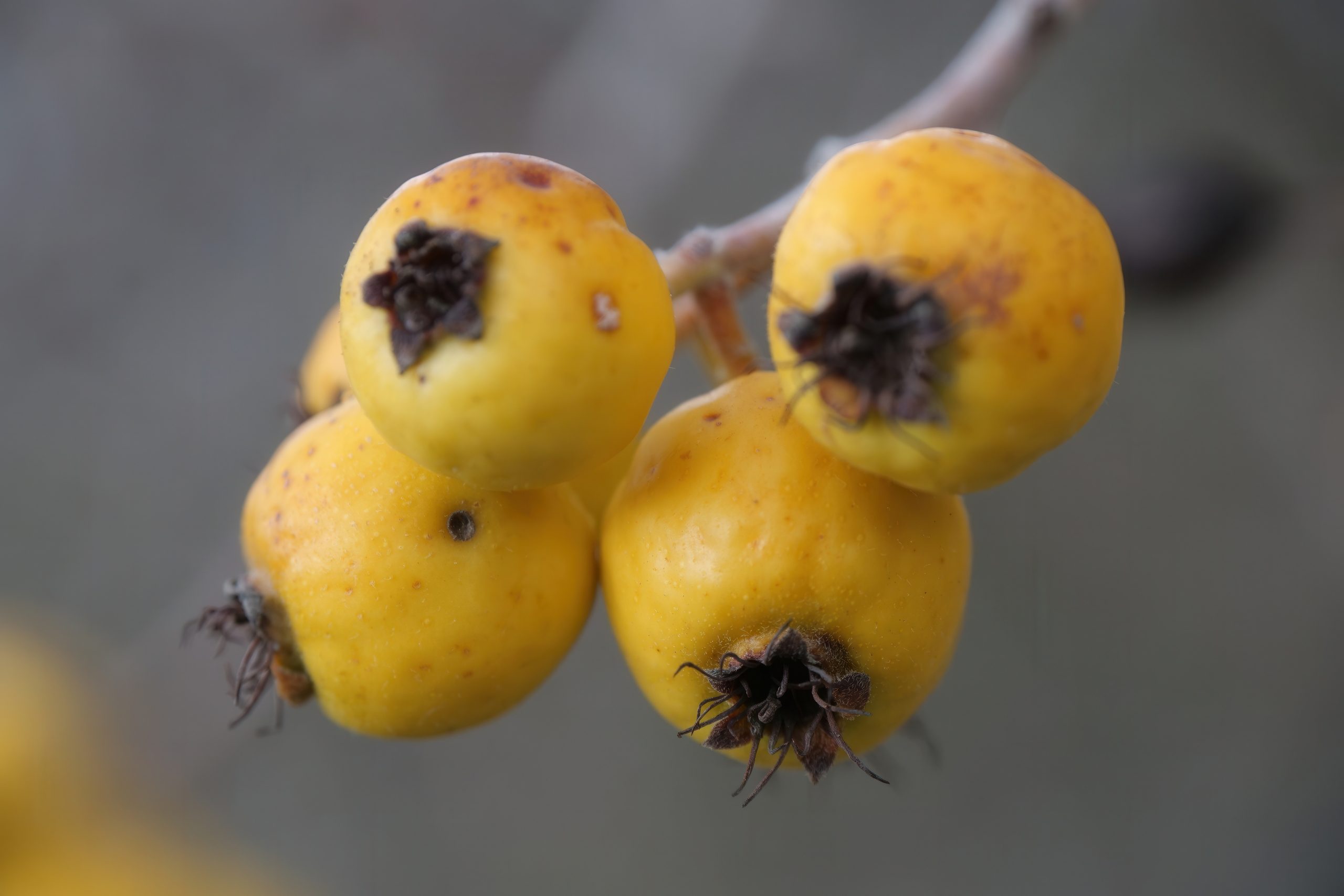
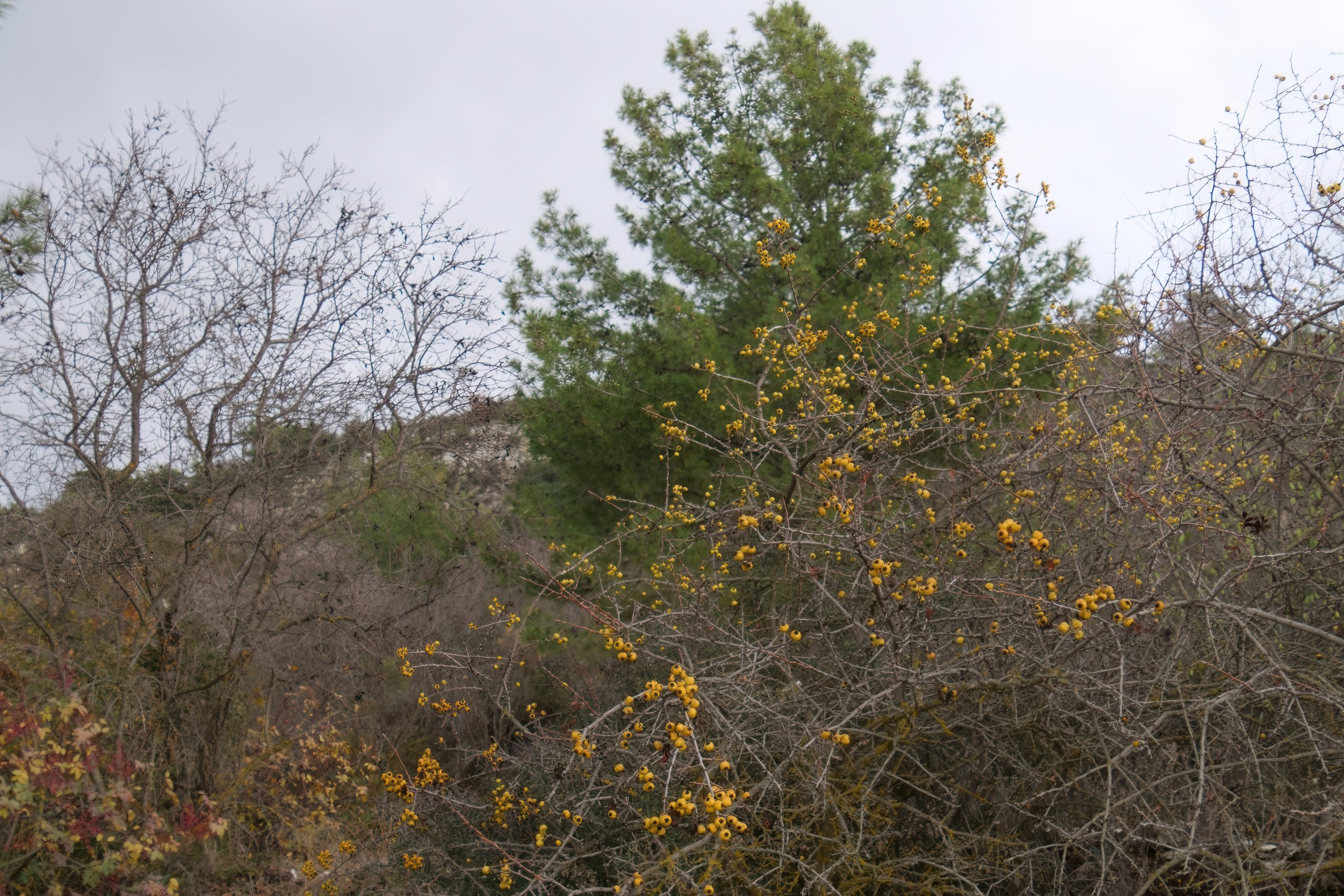
The azarole is instantly recognisable by its crooked, thorny branches and deeply lobed, shiny green leaves that turn warm shades of yellow and orange in autumn. In March and April it bursts into clouds of fragrant white flowers, each with five petals and a heart of pink-tinged stamens that draw clouds of bees. By late summer the fruits ripen – round or slightly pear-shaped, usually bright orange or yellow, sometimes flushed with red, and surprisingly sweet once fully ripe or lightly bletted. Birds adore them, and so do people.
Fun Facts to Share Around the Table
- In Cyprus it is lovingly called Μοσφιλιά (Mosphiliá) or Μοσσιλιά – names that echo the ancient Greek “mespilus”, because the fruits look and taste like a tiny wild medlar.
- The fruits are a traditional Cypriot delicacy; cooked into thick, ruby-gold jam known as “mosphilia” that generations of families still make every autumn.
- Because the tree fixes nitrogen poorly but enriches the soil with leaf litter, it helps other plants thrive in the dry maquis.
- It is listed as Least Concern on the IUCN Red List – thankfully still common across the island from sea level up to about 1,100 metres.
Deeper Connections in Nature and Tradition
Botanically, the azarole is a master of Mediterranean life: drought-tolerant, wind-resistant, and happy on poor, rocky soils. In Cyprus it grows alongside pistachio, wild olive, myrtle and the golden brooms we met earlier, forming the backbone of the evergreen and semi-evergreen maquis that once covered far more of the island.
Early foresters noted its role in stabilising slopes and providing food and shelter for wildlife. Its fruits were not only eaten fresh or preserved but also used in traditional remedies for gentle heart and digestive support echoing Dioscorides’ advice from two thousand years ago.
Living Link to Today’s Cyprus
Today the azarole remains one of the most visible and cherished wild trees in Cyprus. You will find it in almost every district, from the Akamas Peninsula to the lower Troodos slopes and the dry hills around Larnaca. Its fruits are still collected by families for homemade jams and syrups, keeping old village recipes alive. In a time when many wild edibles are fading, the mosphiliá stands as a delicious reminder of Cyprus’s rich botanical heritage and the simple pleasures of foraging in the maquis.
Experiencing the Azarole for Yourself
The best time to meet the azarole is spring (March–April) for the flower show or late summer to autumn for the fruits. Easy places include the nature trails around Pegeia and Akamas, the lower paths of Paphos Forest, or any rocky lane between Limassol and the Troodos foothills. Look for the rounded crown and lobed leaves; in fruiting season the golden orbs are unmistakable. Wear good walking shoes, bring a basket if you plan to gather a few ripe fruits (always ask permission on private land), and enjoy the sweet, slightly tart flavour straight from the tree or turned into jam at home. Local botanical walks often stop at fine specimens.
Why the Azarole Matters
In our busy modern world the azarole invites us to slow down, taste the seasons, and remember that Cyprus’s wild places are full of gifts. From the pages of Dioscorides and the notebooks of Unger and Kotschy to today’s family kitchens, this modest tree has quietly fed, healed and delighted people for millennia. Its golden fruits and snowy blossoms are living threads connecting us to the island’s ancient soul and to the resilient beauty that still thrives on every sun-drenched hillside. Next time you see a mosphiliá heavy with fruit, pause, pick one (where allowed), and savour a flavour that has sweetened Cyprus life for centuries.