Carob Tree At Cyprus Hillsides

4 minutes read See on map

High on the sun-baked slopes where the Mediterranean breeze carries the scent of wild herbs, a sturdy evergreen stands like an old friend its broad crown offering shade and its long, chocolate-brown pods dangling like nature’s own candy bars. Meet the carob tree, a quiet giant of the Cypriot landscape that has sweetened island life for thousands of years.
www.inaturalist.org

A Hardy Member of the Legume Family

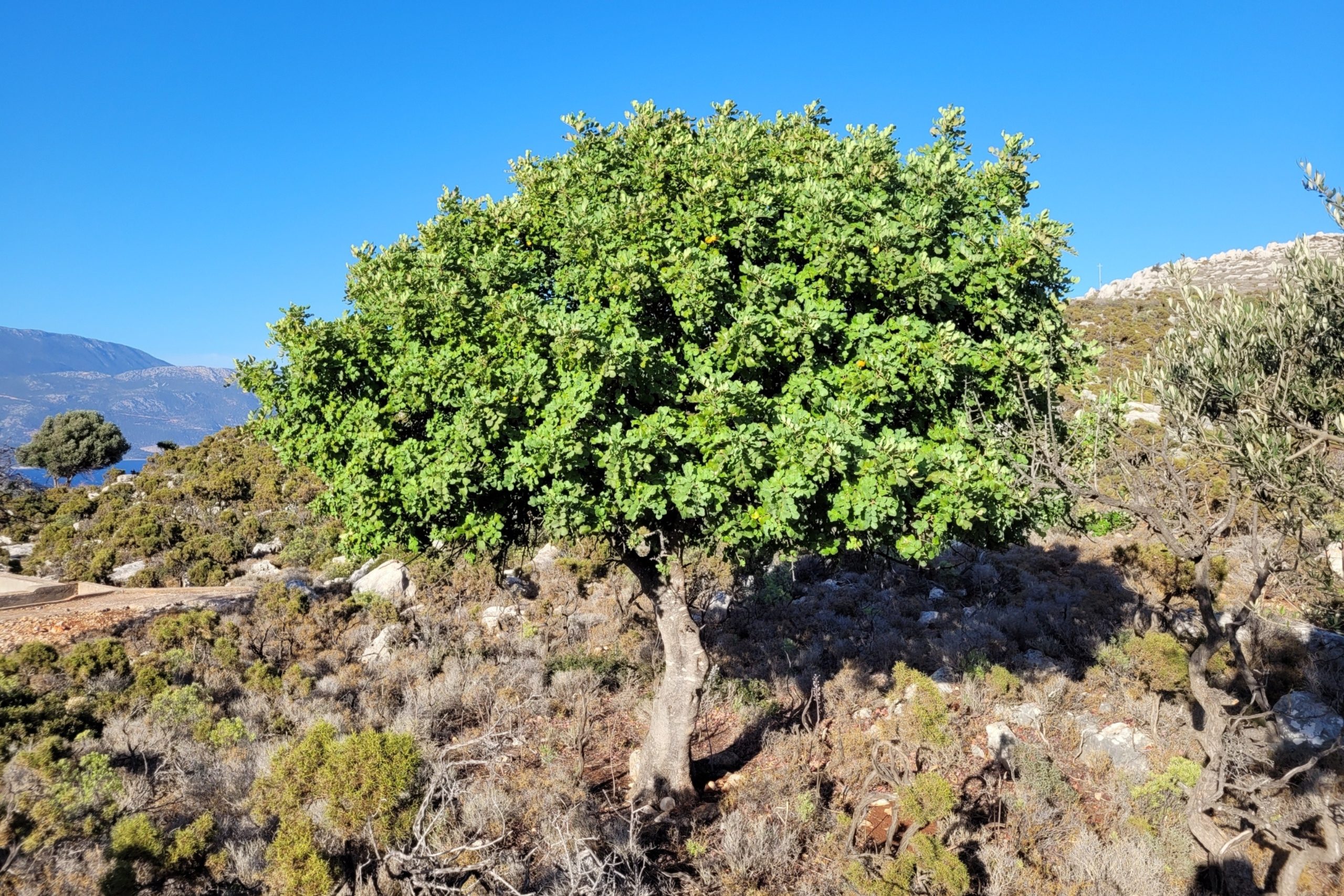
Known scientifically as Ceratonia siliqua, this evergreen tree belongs to the Fabaceae family (the pea and bean clan) within the broader order Fabales. In Cyprus it is a classic component of the maquis and garigue shrublands, thriving alongside olives, pistachios and pines. Reaching up to 15 metres with a rounded crown and rough, dark bark, it is perfectly adapted to the island’s dry summers and mild winters.

Ancient Companion of Cyprus Forests

Long before vineyards or pine plantations covered the hills, carob trees formed part of the island’s original woodland cloak. Early naturalists described vast Mediterranean forests where carob mingled with myrtle, arbutus and pistachio on slopes that later became maquis after centuries of grazing and clearing. In the 19th century, British foresters noted its presence in degraded shrublands, while local tradition has always celebrated the tree’s resilience — plant an olive for your children, the saying goes, but plant a carob for your grandchildren, for its deep roots and long life ensure future harvests.
www.inaturalist.org

Distinctive Features That Set It Apart

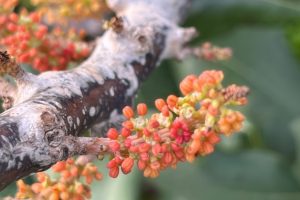
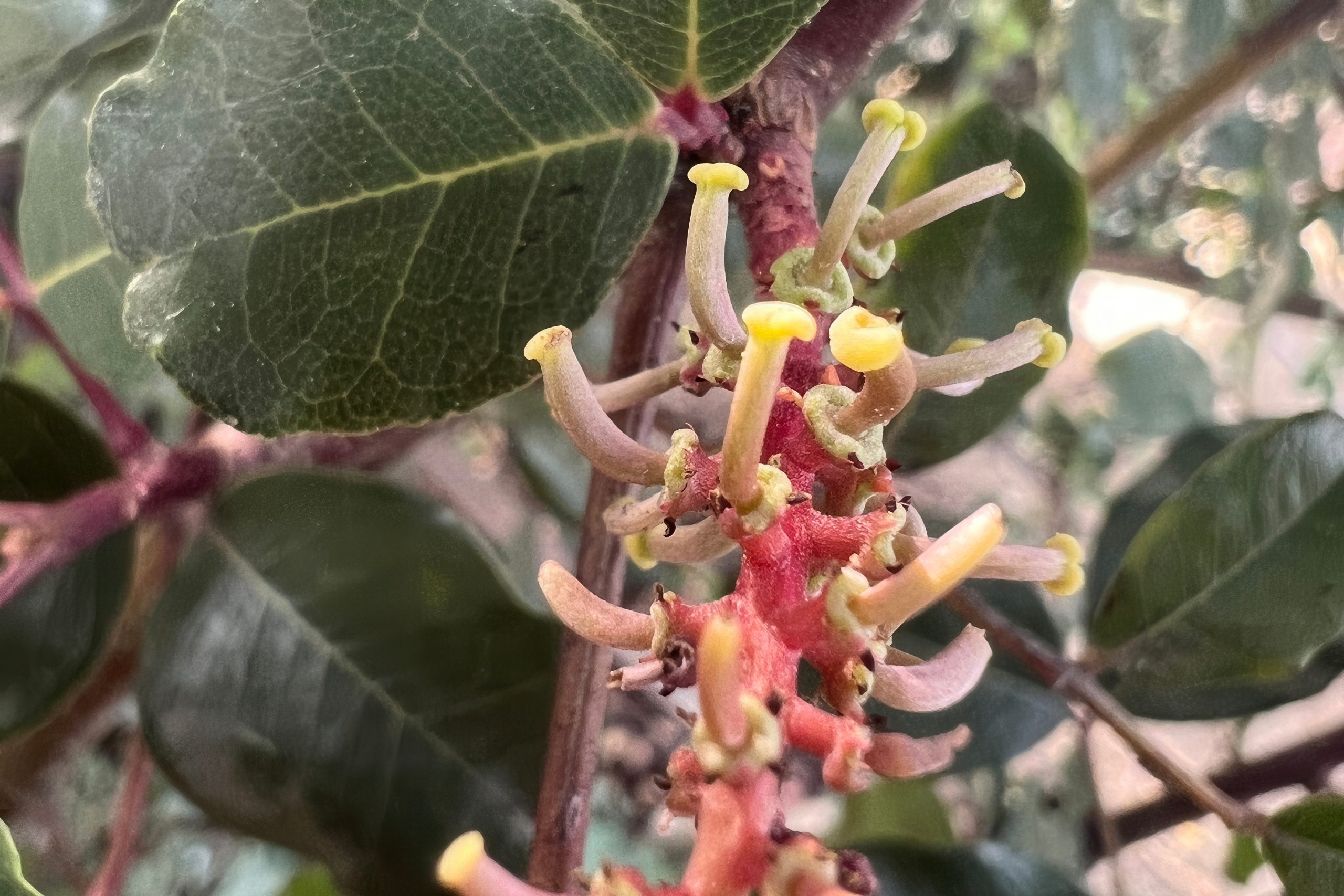
The carob’s pinnate leaves are glossy dark green above and paler below, staying on the tree year-round. Flowers appear in late summer on old wood or even the trunk (a trait called cauliflory), forming clusters of tiny, petal-less blooms — males with a curious scent that some find off-putting, females producing the fruit. The pods, up to 30 cm long and curved like horns, ripen to a rich brown, filled with sweet, sugary pulp and hard, shiny seeds. These “horns” give the tree its Greek name τερατσιά (teratsiá), from the ancient word κεράτιον (keration) meaning “little horn.”

Five Delightful Tidbits

  • The carob seed was once the standard for weighing gold and gems its remarkable uniformity gave us the word “carat.”
  • Cyprus produces a famous carob syrup called haroupomelo, made by soaking and boiling the pods a thick, sweet treat enjoyed for centuries and still bottled locally.
  • Male flowers smell strangely like human semen because of natural amines — nature’s quirky way of attracting certain pollinators!
  • One mature tree can produce up to 200 kg of pods a year, providing food for people, livestock and even modern food industry thickeners (locust-bean gum).
  • The pods taste like mild chocolate but contain no caffeine or theobromine, making them a perfect treat for dogs and chocolate-sensitive humans.
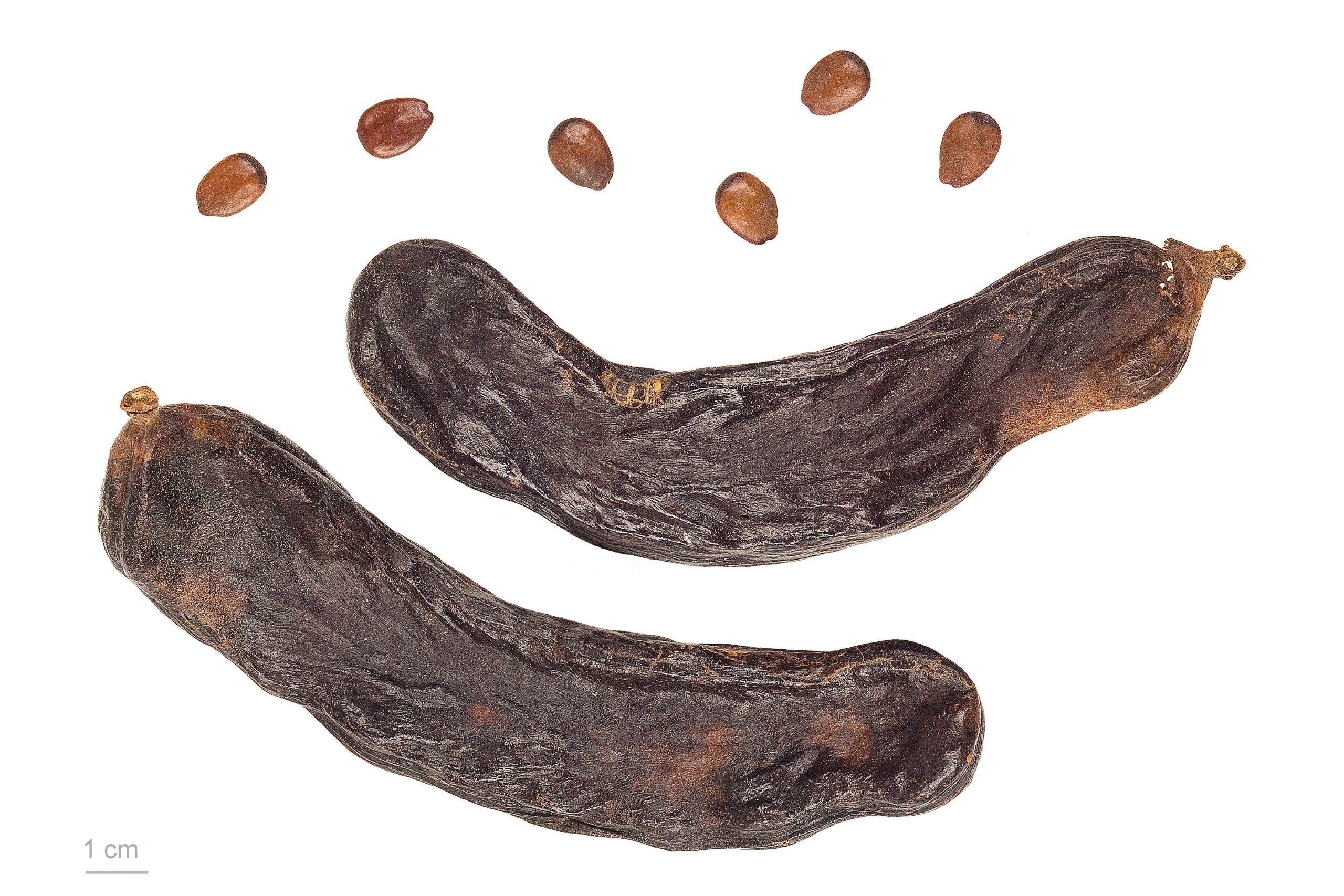
www.wikimedia.org

Deeper Botanical and Cultural Layers

As a legume, the carob enriches the soil with nitrogen through symbiotic bacteria, helping neighbouring plants in poor, rocky ground. Its pods are packed with sugars (up to 50% when ripe), fibre, minerals and antioxidants. In Cypriot tradition the tree symbolises endurance: its wood makes excellent charcoal, its bark was used for tanning leather, and its pods fed families during hard times. Today it remains protected under Cyprus forest law — you need a permit to cut one down.

Still Sweetening Cypriot Life

In modern Cyprus the carob is both heritage and opportunity. You find it in maquis near the coast, in village orchards, and even lining some roads. Local producers turn pods into syrup, flour for healthy baking, and snacks like pasteli (a chewy carob-honey bar). It supports biodiversity, offers shade for walkers, and reminds us that drought-tolerant natives can be more valuable than imported exotics.
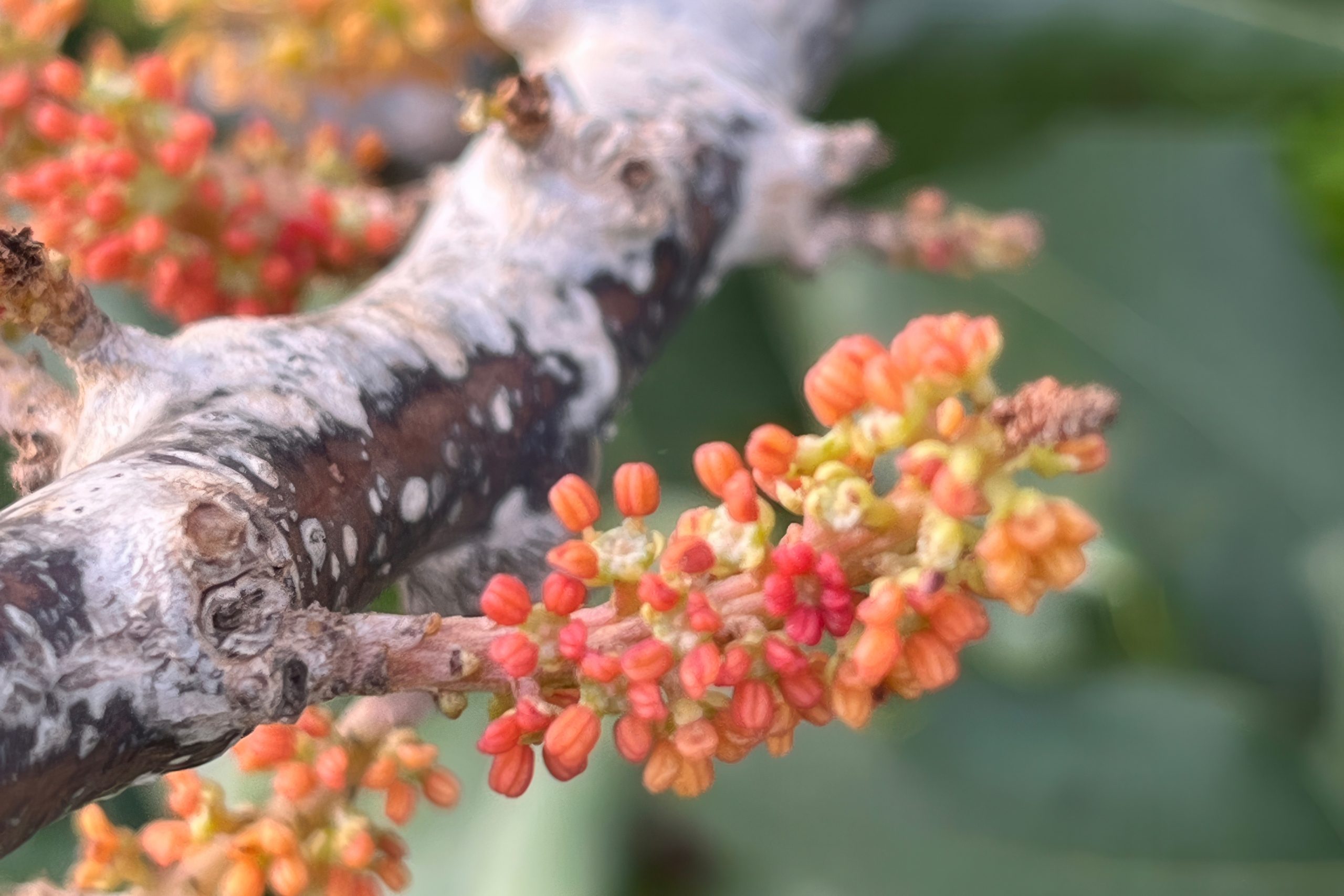
www.inaturalist.org

Finding and Tasting the Carob

Head to the Akamas Peninsula, the lower Troodos foothills or coastal paths around Paphos and Limassol in late summer and autumn. Look for the heavy, dark pods hanging low many are on public land or near nature trails. Visit a village kafeneio for a glass of chilled haroupomelo, or join a guided walk with local forestry officers who can show you ancient specimens. Touch the pods (they’re safe!), inhale the sweet scent, and perhaps take home a bottle of syrup as a taste of Cyprus.
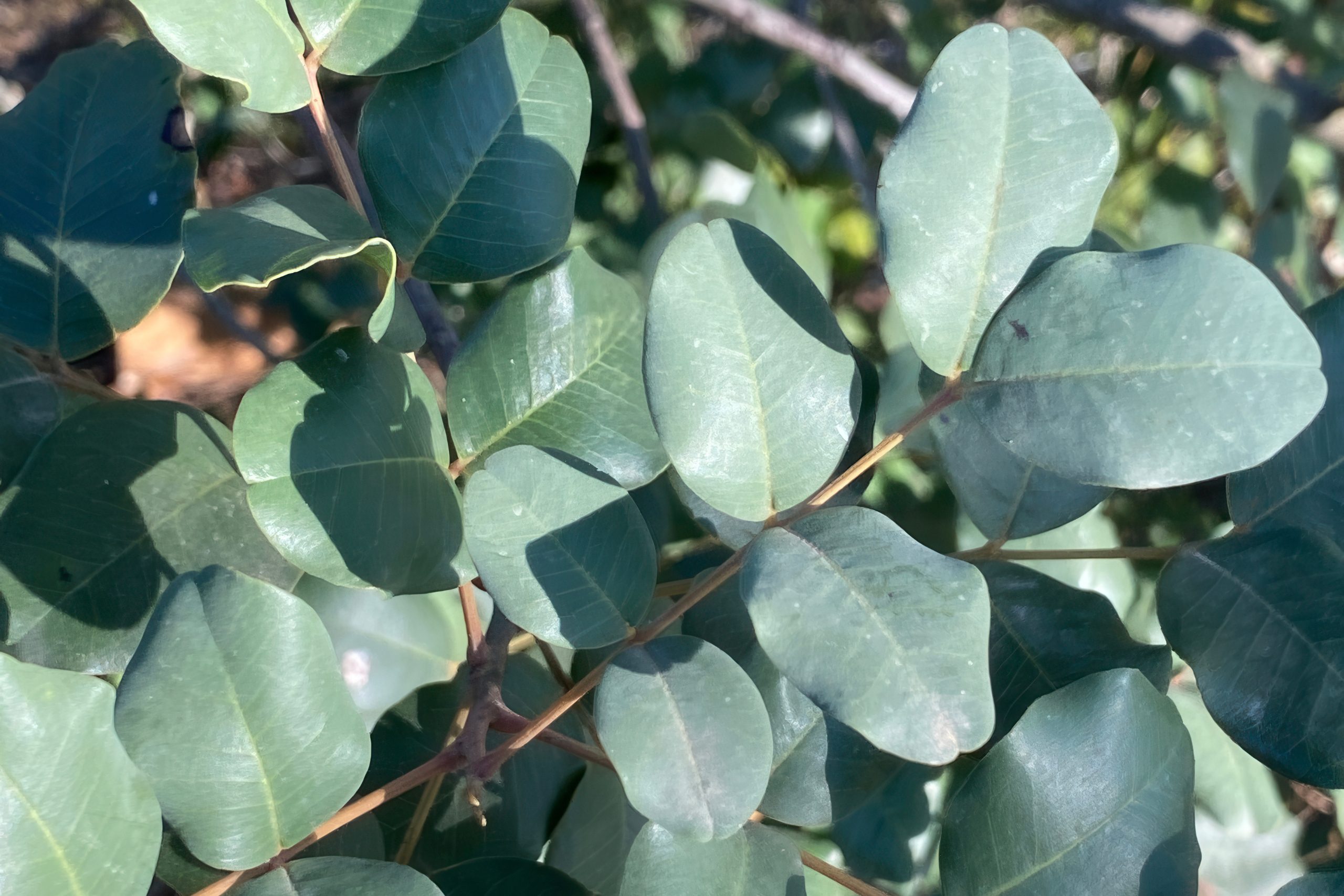
www.inaturalist.org

In a world racing toward quick fixes, the carob tree stands patient and generous, its roots deep in Cypriot soil and its pods full of stories. It connects us to the island’s ancient forests, to generations of islanders who relied on its sweetness, and to a future where resilient natives still have pride of place. Next time you crunch a carob pod or sip its syrup, remember you’re tasting a living piece of Mediterranean history, right here on our beautiful island home.

Discover more about the fascinating edges of Cyprus

Endangered Plants of Cyprus

Endangered Plants of Cyprus

Cyprus hosts approximately 2,000 plant species, with 146 being endemic to the island. This means they exist nowhere else on Earth. The flora of Cyprus developed over millions of years through a combination of geographic isolation, diverse geology, and varying climate zones. Roland Tsantekidis Today, around 258 plant taxa are classified as threatened according to international conservation standards. These include species listed as Critically Endangered, Endangered, or Vulnerable by the International Union for Conservation of Nature. Historical Background The island's plant diversity reflects its position at the crossroads of three continents. Cyprus sits in the eastern Mediterranean where Europe, Asia, and Africa meet. This location allowed species from different regions to colonize the island over time. The Troodos Mountains, formed from ancient oceanic crust pushed above sea level, created unique habitats on igneous and serpentine rocks. These challenging soils fostered the evolution of specialized plants found only in Cyprus. Human activity has shaped the landscape since 8200 BC. Traditional agriculture created semi-natural habitats where wild plants thrived alongside cultivated crops. However, modern development pressures have accelerated habitat loss, particularly in coastal areas where tourism infrastructure expands rapidly. Notable Endangered Species The Cyprus Cedar (Cedrus brevifolia) grows exclusively in five small locations within the Troodos Mountains at elevations of 1,200 to 1,900 meters. This tree is classified as Vulnerable, with only…

Read more
Rare Plants and Animals of Cyprus High-Elevation Zones

Rare Plants and Animals of Cyprus High-Elevation Zones

Cyprus hosts an extraordinary concentration of endemic species in its high-elevation zones, particularly within the Troodos Mountains. At altitudes between 1,000 and 1,952 meters, unique geological conditions combine with Mediterranean climate variations to create habitats found nowhere else on Earth. The island supports 143 endemic plant species, with 47 of these confined exclusively to the Troodos range above 1,000 meters. These mountains function as a natural laboratory where volcanic soils, steep valleys, and climate extremes have shaped remarkable biodiversity over millions of years. kiprinform-com The Troodos Mountain Environment Mount Olympus, also called Khionistra, rises to 1,952 meters and represents the highest point in Cyprus. The Troodos range occupies roughly half the island's total area, its core composed of igneous rocks formed from elevated ocean shell and lithospheric mantle. This volcanic substrate creates serpentine soils with mineral compositions drastically different from the island's lowlands. commons-wikimedia-org Deep valleys carved by streams such as Pedios, Yelias, Serakhias, Ezousa, Diarizos, and Xeropotamos provide north and northwest-facing slopes where humidity accumulates and temperatures moderate. dreamstime-com Between the thermophilous lower slopes and the semi-alpine summit zone, elevation creates distinct vegetation bands. Black pine forests dominate from 1,300 to 1,950 meters, replacing Calabrian pine at the transition point. The highest slopes support foetid juniper in what approaches an alpine environment. Annual precipitation ranges from 300 millimeters on…

Read more
Whispers from the Wild Stalks

Whispers from the Wild Stalks

Imagine wandering through the sun-drenched fields of Cyprus, where a plant towers like a sentinel from ancient myths, its yellow blooms catching the breeze. This article invites you on a gentle journey to discover the giant fennel, a resilient Cypriot native that bridges legends of fire-thieves and hidden fungal treasures, leaving you pondering the quiet wonders hidden in everyday landscapes. www.inaturalist.org A Gentle Giant's Greeting The giant fennel, known scientifically as Ferula communis, is a member of the vast carrot family, Apiaceae, which includes familiar herbs like parsley and dill. It's a perennial plant that dies back each summer only to burst forth anew, standing tall in open meadows and reminding us of nature's enduring cycles in the Mediterranean world. Echoes from Mythical Times In the mists of ancient history, giant fennel played starring roles in Greek legends that echoed across the sea to Cyprus. Prometheus, the daring Titan, famously hid stolen fire from the gods inside its hollow stem to gift humanity warmth and light. Followers of Dionysus, the god of wine and revelry, wielded staffs made from its stalks wrapped in ivy and topped with pine cones as symbols of joy and fertility during ecstatic festivals. www.inaturalist.org On Cyprus itself, historical accounts from 19th-century explorers describe locals crafting stools and decorative items from its sturdy wood, a practice…

Read more