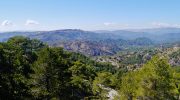
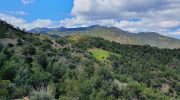
Cyprus sits in the Eastern Mediterranean, home to some of the most diverse ecosystems in the region. The island features dramatic contrasts, from the Troodos Mountains reaching 1,952 meters at Mount Olympus to extensive coastal zones with unique marine habitats.
These environments support rare species found nowhere else on Earth, while 29% of terrestrial and marine areas currently fall under protected status. The island’s location between three continents has created a biodiversity hotspot where European, Asian, and African influences converge.
Historical Foundation of Conservation Efforts
Cyprus joined the European Union in 2004 and faced the challenge of adjusting conservation strategies to meet EU obligations. Before this milestone, the island had limited formal protection mechanisms. The first LIFE Nature project financed in Cyprus aimed to move the country forward in protecting Sites of Community Interest.
This marked a turning point, as Cyprus began implementing structured management plans and established monitoring systems. The framework now operates under multiple international agreements, including the Bern Convention, the Barcelona Convention, and EU directives that set specific conservation targets.
Defining Features of Protected Areas
Cyprus’s protected network encompasses 63 Natura 2000 sites covering 1,760 square kilometers. The system includes Special Areas of Conservation, Sites of Community Interest, and Special Protection Areas.
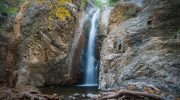
Rocky habitats show the highest proportion of good conservation status at 80%, while dune habitats exhibit 60% in bad conservation status and coastal habitats show 50% in bad status.
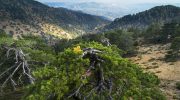
The Troodos National Forest Park stands as one of the most significant protected zones, featuring Mediterranean coniferous forests and hosting 36 ecosystem services identified in the area.
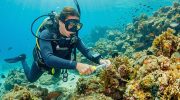
Marine protection focuses heavily on Posidonia oceanica seagrass meadows, which form a belt around the island occupying 15% of coastal waters up to the 50-meter depth, covering an estimated 125 square kilometers.
Key Conservation Facts Worth Knowing
The Department of Fisheries and Marine Research serves as the main authority dealing with the marine environment, responsible for implementing European Directives and monitoring bathing waters, nutrients, pathogens, and impacts like aquaculture and plastic pollution.
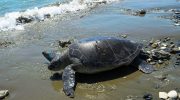
Sea turtle protection has achieved remarkable results, with 10% of loggerhead and 30% of green turtles nesting in the Mediterranean choosing Cyprus beaches. The island hosts two endemic oak species in the Troodos, with Quercus alnifolia colonizing steep slopes where other trees cannot survive.
Carbon stored in plants at Troodos totals 622,705 tonnes, with the forest sequestering 11,880.33 tonnes of CO2 equivalent annually. Cyprus mouflon populations, once threatened by poaching and habitat loss, now number around 3,000 individuals.
Deeper Conservation Mechanisms at Work
Multiple strategies protect these ecosystems. For marine environments, management measures enhance protection in Marine Protected Areas, with monitoring programs based on seaweeds and seagrass.
The Turtle Conservation Project has been implemented by the Department of Fisheries and Marine Research, with the Cyprus Wildlife Society helping since 1989. This project involves protective cages screening all nests to minimize threats from stray dogs and foxes.
Seagrass conservation takes multiple forms, from installing anchoring systems for vessels to protect Posidonia beds to mapping and signposting vernal pools. Forest protection involves strict wildfire prevention, controlled grazing, and removal of invasive species. The iLIFE-TROODOS project reached at least 666,381 Cypriots and approximately 1.38 million tourists through an awareness campaign.
Current Relevance and Modern Challenges
These ecosystems face mounting pressures. Climate change poses the most significant long-term threat, particularly for mountain species adapted to cooler conditions and coastal habitats sensitive to warming waters. Limassol municipality joined the EU Mission for 100 climate-neutral cities by 2030, planning actions to conserve and restore seagrass meadows.
Tourism development creates conflicts between economic interests and conservation needs, especially at critical nesting beaches. The Akamas peninsula hosts major sea turtle nesting sites threatened by housing and golf complex development. Illegal bird trapping remains a persistent problem despite protected status for many species. Marine ecosystems contend with fishing bycatch, anchoring damage to seagrass beds, and pollution from coastal activities.
Experiencing These Protected Spaces
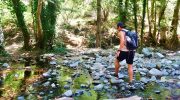
Visitors can explore these ecosystems through designated trails and observation points. The Troodos National Forest Park offers accessible paths with information kiosks and modified picnic sites catering to people with visual and kinetic impairments.
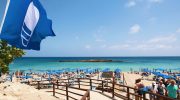
Sea turtle conservation sites at beaches like Alagadi, Lara, and areas within British military bases allow supervised nighttime visits to witness nesting or hatching events. British base beaches implement strict regulations, with fines up to 17,000 euros or three years in prison for violations like vehicle driving, parties with barbecues, or powerful lighting.
Marine reserves restrict anchoring in seagrass zones, while mountain reserves limit access during sensitive breeding seasons. The experience offers both natural beauty and education about ongoing conservation efforts.
The Broader Significance for Cyprus
These protected ecosystems represent more than environmental preservation. They define Cyprus’s natural identity and support the tourism industry that many communities depend upon. The forests prevent soil erosion, the seagrass meadows absorb carbon dioxide 15 times more effectively than equivalent rainforest areas, and the coastal habitats protect against storm damage.
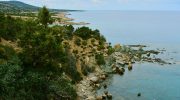
Cyprus demonstrates that even a small island can maintain significant biodiversity through committed protection efforts. The ongoing work shows that conservation requires continuous attention, adequate funding, and cooperation between government authorities, local communities, and international partners. Success stories like recovering turtle populations prove that dedicated management produces measurable results.