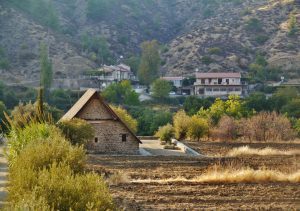
Explore Cyprus with Our Interactive Map

Explore our top stories and discover ideas worth your time.

Roman Paphos Mosaics

Roman Paphos Mosaics

The Roman mosaics of Nea Paphos, especially in the House of Dionysos and the House of Theseus, were designed to do more than decorate elite homes: they signalled status, shaped movement, and communicated authority through myth. In the island’s administrative capital, these floors turned private reception rooms and official spaces into visual statements about leisure, order, and governance. This article explains how the two houses use different mosaic programs, what the imagery was meant to achieve, and why Paphos remains one of the clearest places to read Roman power at ground level. Nea Paphos, Built for Rule Nea Paphos rose to prominence because of its political role. From the late Hellenistic period onward, the city served as the administrative capital of Cyprus, first under the Ptolemies and later under Roman rule. When Rome formally annexed the island in the first century BCE, Paphos retained its status as the seat of the proconsul, making it the centre of imperial authority on the island. This political importance shaped the city's architecture. Elite residences were not hidden private retreats. They were positioned close to public spaces, built on a grand scale, and designed to receive visitors. In this context, the floors mattered. Mosaics were among the most visible and expensive features of a Roman house, and in Paphos, they became tools for communicating…

Read more
Cyprus Youth Leadership Networks

Cyprus Youth Leadership Networks

In Cyprus, civic life is often learned long before formal politics, through scouts, youth clubs, cultural groups, and community projects where responsibility has real consequences. These organisations teach leadership through practice, from organising festivals and rehearsals to running clean-ups and coordinating volunteers, so accountability becomes a habit rather than an idea. This article explains the main youth pathways into civic participation, how they build trust across communities, and why these structures remain one of Cyprus’s most resilient sources of social cohesion. Civic learning outside the classroom Much of Cyprus's youth engagement happens through non-formal education. Unlike school curricula, these settings emphasise participation over instruction. Young people learn by organising events, managing groups, resolving disagreements, and working toward shared goals that have visible outcomes in their communities. Scout groups, youth clubs, and cultural associations function as practical training grounds. Leadership is learned by doing, whether that means coordinating a village festival, leading a patrol on a hike, or managing volunteers during a clean-up campaign. These experiences teach decision-making, accountability, and cooperation in ways that formal education rarely replicates. Scouting as a long-standing leadership pathway Scouting has existed in Cyprus for more than a century and remains one of the most structured systems for youth leadership development. Its model is built around gradual responsibility, where young members progress from participation to coordination…

Read more
Best Cities in Cyprus For Retirees

Best Cities in Cyprus For Retirees

Cyprus has become one of Europe's most attractive retirement destinations, drawing more than 100,000 foreign retirees to its shores. The Mediterranean island offers a combination of year-round sunshine, affordable living costs, excellent healthcare, and favorable tax benefits. With over 320 sunny days annually, temperatures rarely dropping below 10°C in winter, and summers averaging 30-35°C, the climate alone makes Cyprus appealing. The island's strategic location between three continents, two international airports, and widespread English usage create an environment where retirees can maintain connections with loved ones while enjoying a relaxed Mediterranean lifestyle. A Mediterranean Haven for International Retirees Cyprus began attracting international retirees in significant numbers after introducing specialized visa programs in 2007. The island's appeal extends beyond weather and beaches. British nationals make up approximately 60,000 property owners, with about 50% concentrated in the Paphos district alone. This established expat presence means English-language services, familiar products, and social networks are readily available. The island's history as a British colony until 1960 left lasting infrastructure improvements and an administrative system that many Western retirees find familiar. Today, Cyprus offers two main residency paths for non-EU retirees: the renewable temporary residence permit (Pink Slip) requiring proof of annual income of at least €9,568, or permanent residency through property investment starting at €300,000. What Makes a City Retirement-Friendly Several factors determine whether a…

Read more