The Polis-Chrysochous coast represents one of Cyprus’s most ecologically valuable marine environments. Stretching along the northwestern shore of the island around Chrysochous Bay, this protected area encompasses the waters from the Akamas Peninsula to the villages of Pomos and Pachyammos. The sea surrounding the area is considered a hot spot for its marine biodiversity on a global scale, and an important and fertile habitat or refuge for many living organisms.
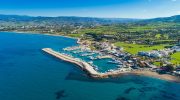
The coastal waters support extensive Posidonia oceanica seagrass meadows, vital breeding grounds for endangered sea turtles, and populations of critically threatened Mediterranean monk seals. The region gained protected status through designation as part of the Natura 2000 network, recognizing its exceptional ecological significance.
The combination of pristine beaches, rocky reefs, and underwater caves creates diverse habitats that sustain an extraordinary variety of marine life from microscopic organisms to visiting cetaceans.
- Historical Context
- Beaches Where Mountains Meet the Mediterranean
- Diverse Marine Habitats Beneath the Surface
- Wildlife from Mediterranean Monk Seals to Egyptian Fruit Bats
- Endemic and Endangered Species Worth Protecting
- A Critical Marine Refuge in Modern Times
- Experiencing the Protected Marine Environment
- Why This Marine Area Matters Beyond Cyprus
Historical Context
The Chrysochous Bay region has witnessed human interaction with the sea for thousands of years. The town was built on the foundations of ancient Marion, one of the ten ancient city kingdoms of Cyprus.
Ancient Marion flourished from the 5th century BC through Roman times, with fishing providing essential protein and trade goods for the population. Traditional fishing methods remained relatively sustainable through the Byzantine, Lusignan, and Ottoman periods. The 20th century brought dramatic changes.
Modern fishing equipment introduced after World War II led to intensified exploitation of marine resources. By the 1970s, concerns about declining fish stocks and turtle populations prompted initial conservation discussions. The establishment of the Akamas as a protected area in the 1980s and 1990s provided the first formal safeguards for coastal ecosystems. Marine protection measures expanded significantly after Cyprus joined the European Union in 2004.
The designation of portions of Chrysochous Bay as Special Areas of Conservation under the Habitats Directive provided legal protection for critical marine habitats. One of the deepest Posidonia meadows in the Mediterranean has been found in the Akamas region.
Conservation organizations established monitoring programs for sea turtles, seagrass meadows, and marine mammals. Today, collaborative management involving government agencies, environmental groups, and local fishing communities aims to balance conservation with sustainable use.
Beaches Where Mountains Meet the Mediterranean
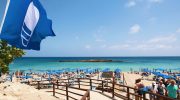
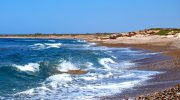
The coastline offers exceptional variety, from organized municipal beaches to secluded coves accessible only by boat or hiking trails. Polis Municipal Beach features golden sand and calm waters ideal for families, with facilities including restaurants and water sports equipment. Latchi Beach, located at the picturesque fishing harbor, provides the only disabled-friendly beach access in the region through purpose-built ramps.
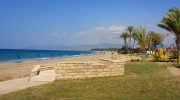
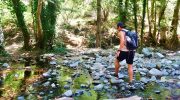
The beach connects to a coastal walkway through fragrant eucalyptus forest that leads to Polis Municipal Beach. Blue Flag status recognizes the water quality at several locations. Argaka Beach backs onto unique geological formations where calcareous sandstones and marls from the Pleistocene period meet pine forest and alluvial plains.
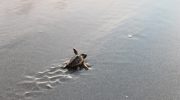
Pachyammos Beach sits on the northwestern tip, offering seclusion and a blend of sand and pebbles surrounded by natural beauty. The beaches serve as nesting sites for endangered sea turtles from May through September. Both loggerhead turtles and the rarer green turtles lay eggs on these shores, particularly at protected sites like Lara Bay within the Akamas Peninsula. Conservation programs monitor nests and protect hatchlings during their vulnerable first journey to the sea.
Diverse Marine Habitats Beneath the Surface
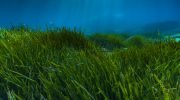
The underwater landscape of the Polis-Chrysochous coast features remarkable diversity across depth gradients. Shallow coastal waters host extensive Posidonia oceanica meadows that provide the foundation for the entire ecosystem. Posidonia oceanica is a flowering plant which grows in dense meadows or along sandy channels in the waters of the Mediterranean, found at depths of 1 to 35 meters, depending on water clarity.
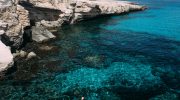
These seagrass meadows create underwater forests where ribbon-like leaves sway in the current, reaching up to 45 centimeters in length. The leaves support diverse communities of algae, invertebrates, and fish that depend on this habitat for food and shelter. Rocky reefs punctuate the seafloor, particularly near cape points and offshore islets.
Sandy bottoms between reef areas support different communities, including flatfish, rays, and burrowing invertebrates. The depth range extends from shoreline shallows to beyond 40 meters in some areas, creating distinct ecological zones. Water clarity remains exceptional due to limited coastal development and the filtering action of seagrass meadows.
Wildlife from Mediterranean Monk Seals to Egyptian Fruit Bats
The diverse habitats support 168 bird species, 20 reptile species, 16 butterfly species, and 12 mammal species. Endemic Cyprus warblers and Cyprus scops owls nest in the forests, while griffon vultures soar above cliffs. The rare Bonelli’s Eagle breeds in mountainous sections of the peninsula.
The waters around Polis-Chrysochous support breeding populations of both major Mediterranean sea turtle species. Loggerhead turtles and Mediterranean monk seals are found in the marine environment to the west and east of Polis Chrysochous.
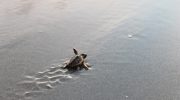
Green turtles nest on beaches from May through August, with females returning to the same beaches where they hatched decades earlier. A single female may lay up to four clutches per season, each containing approximately 120 eggs.
Loggerhead turtles follow similar patterns, though they typically produce slightly smaller clutches. Turtles that nest on the beaches of Polis Chrysochous usually find protection in the underwater meadow, while they feed and breed.
The critically endangered Mediterranean monk seal maintains a small population in coastal caves. Male monk seals can easily reach 320 kilograms, and females 300 kilograms. These elusive creatures inhabit low-water cave systems, particularly near the Anassa Hotel area east of Latchi.
Endemic and Endangered Species Worth Protecting
The Posidonia oceanica seagrass meadows represent the marine protected area’s most significant endemic habitat. Posidonia oceanica is a seagrass species that is endemic to the Mediterranean Sea, forming large underwater meadows that are an important part of the ecosystem.
This marine flowering plant grows extraordinarily slowly, with horizontal rhizomes extending only 1 to 6 centimeters per year and vertical rhizomes growing 0.1 to 4 centimeters annually. Individual meadows can persist for thousands of years, making them among the oldest living organisms on Earth. One square meter of healthy Posidonia can produce up to 14 liters of oxygen per day.
The plant reproduces through both sexual reproduction via flowers and fruits, and asexual reproduction through spreading rhizomes. The Mediterranean monk seal ranks as one of the world’s rarest marine mammals, with fewer than 700 individuals surviving globally. Cyprus harbors one of several isolated populations scattered across the Mediterranean. These seals face threats from habitat loss, fishing net entanglement, and human disturbance at breeding caves.
Among fish species, the dusky grouper and various wrasse species find important habitat in rocky reef areas. Seahorses inhabit seagrass meadows, though populations remain vulnerable to degradation. The endangered noble pen shell, a large bivalve mollusk that lives embedded in seagrass meadows, filters water and provides microhabitat for smaller organisms.
A Critical Marine Refuge in Modern Times
The Polis-Chrysochous protected marine area serves multiple conservation functions for Cyprus and the wider Mediterranean region. The extensive Posidonia meadows provide essential ecosystem services, including oxygen production, carbon sequestration, coastal protection from erosion, and water filtration.
Posidonia has a very high carbon absorption capacity, being able to soak up 15 times more carbon dioxide every year than a similarly sized area of the Amazon rainforest.
The seagrass stabilizes seafloor sediments, preventing erosion and maintaining water clarity necessary for the meadow’s own survival. Turtle nesting beaches receive protection through regulations limiting coastal development and artificial lighting that disorients hatchlings. Conservation programs monitor nest sites, relocate eggs when necessary to safer locations, and protect hatchlings during their journey to the sea.
Experiencing the Protected Marine Environment
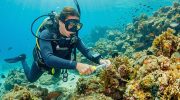
Visitors can explore the Polis-Chrysochous marine area through various activities that balance access with conservation. Snorkeling provides the most accessible way to observe underwater ecosystems, particularly over shallow seagrass meadows and rocky reefs near shore.
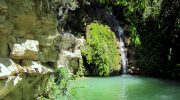
Swimming conditions remain excellent throughout the summer months from May through October, with water temperatures reaching 25 to 28 degrees Celsius. Scuba diving operations based in Latchi offer guided dives to deeper reefs and caves, though access to monk seal breeding caves remains strictly prohibited. Boat tours departing from Latchi harbor cruise along the Akamas coastline toward the Baths of Aphrodite and beyond.
These excursions provide opportunities to observe dolphins, particularly during spring and autumn when cetacean activity increases. Tour operators increasingly adopt eco-friendly practices including guidelines to avoid disturbing marine mammals and instructions on responsible anchoring.
Why This Marine Area Matters Beyond Cyprus
The Polis-Chrysochous protected marine area preserves ecosystems with significance extending far beyond local boundaries. The Posidonia meadows represent a globally important carbon sink, storing carbon accumulated over millennia in their extensive rhizome mats buried beneath the seafloor. Loss of these meadows would release stored carbon and eliminate future sequestration capacity, contributing to climate change.
The sea turtle populations breeding here belong to genetically distinct Mediterranean subpopulations. Protection of nesting beaches in Cyprus directly affects the survival prospects for entire Mediterranean turtle populations. Similarly, the monk seal colony represents one of perhaps a dozen remaining breeding populations for this critically endangered species. Its loss would edge the species closer to extinction.
For marine biodiversity conservation, the area functions as a refuge where species can maintain healthy populations despite pressures elsewhere. Sustainable fish stocks in protected waters provide larvae and adults that replenish populations in surrounng areas, benefiting commercial fisheries across a wider region.