The mosaics at Ayios Herakleidios, in the inland territory of Tamassos, show an early Christian community expressing belief through geometry rather than mythic scenes or imperial display. Laid across successive basilica phases, the floors use repetition, careful placement, and durable materials to create a sense of order during periods of instability. This article explains how the site developed around the saint’s tomb, what the patterns and Chi-Rho symbol were designed to do, and how the mosaics survive alongside a living monastery today.
An Inland Sanctuary at Tamassos
Unlike Cyprus’s major early Christian monuments along the coast, the Ayios Herakleidios complex developed inland, near copper-rich Tamassos, a former city-kingdom once dedicated to pagan gods. The location is essential to understanding the mosaics. This was not an imperial centre drawing wealth and artisans from across the Mediterranean. It was a rural heartland where Christianity spread through local networks, pilgrimage, and the authority of a revered saint.
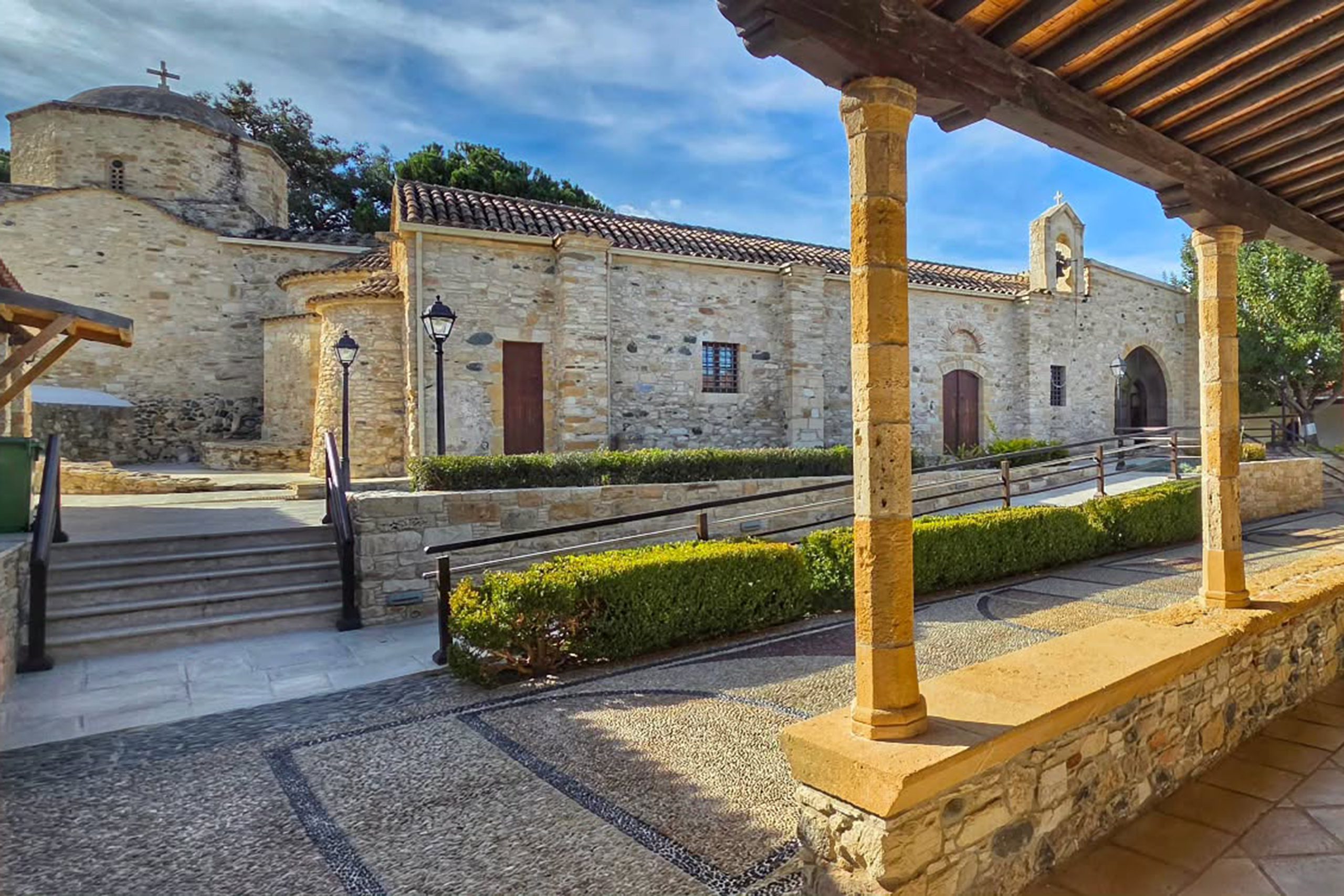
The basilicas rose beside the tomb of Saint Herakleidios, transforming an ordinary burial site into a spiritual anchor for the region. From the beginning, the focus here was not grandeur, but presence.
A Tomb That Became a Centre
The architectural history of the site unfolds in stages. The earliest Christian structure, a small 4th-century martyrion, was built directly over a Roman tomb believed to hold the saint’s remains. This act of building was symbolic as much as practical, marking the Christian reclaiming of space once shaped by older beliefs.
As devotion grew, a three-aisled basilica was added in the 5th century, followed by a second basilica in the early 8th century after earlier destruction during periods of unrest. Each phase reused the same sacred footprint, reinforcing continuity rather than starting anew. The mosaics belong primarily to this later phase, laid at a time when large-scale church decoration elsewhere in the region had largely declined.
Why These Mosaics Are So Rare
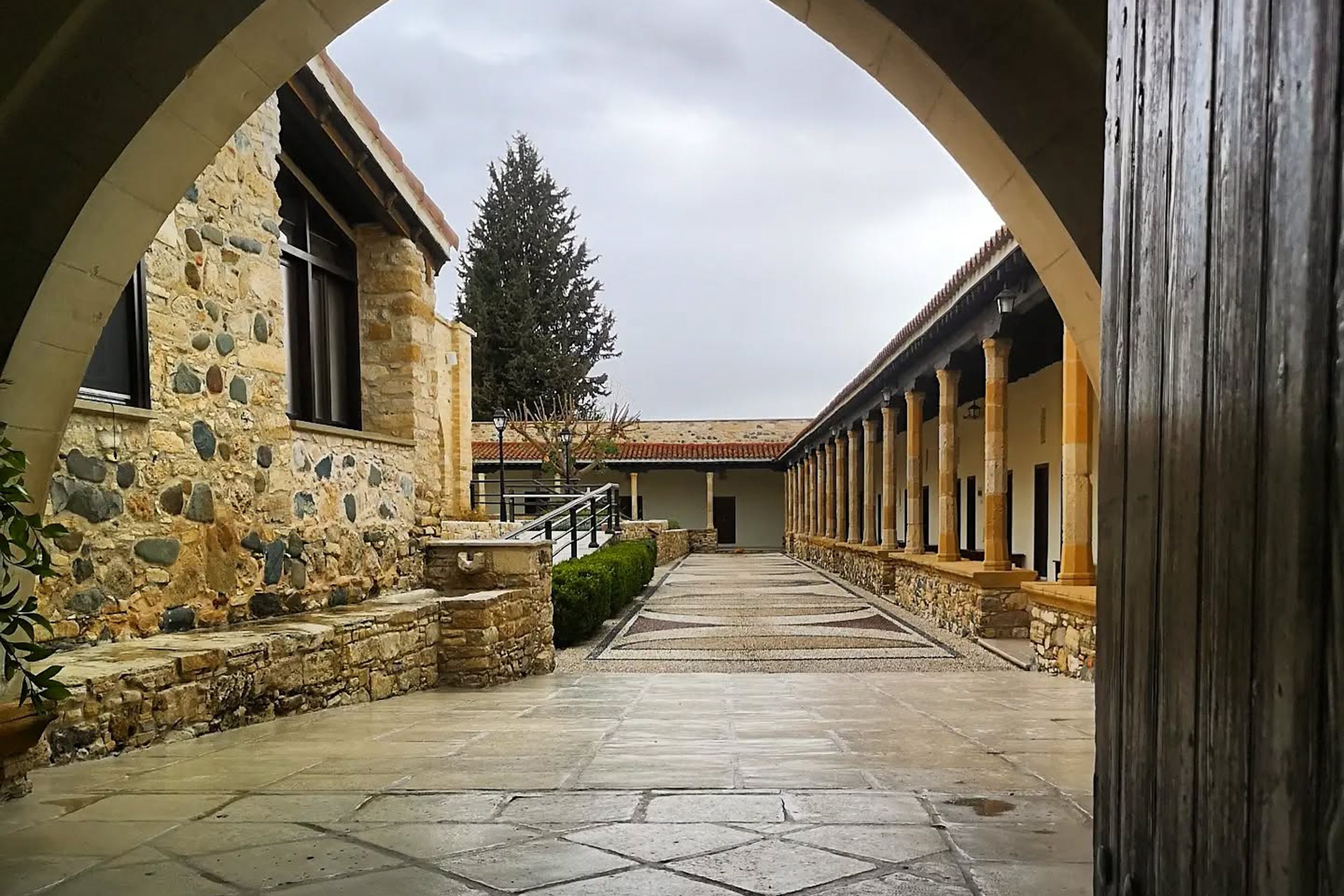
The 8th-century mosaics at Ayios Herakleidios are unusual not because they are lavish, but because they exist at all. This was an era marked by Arab raids, economic contraction, and uncertainty across Cyprus. Most major construction projects ceased. That a rural monastic community still invested in carefully executed mosaic floors speaks to the site’s local importance and the strength of its devotional network.
Rather than importing elaborate figural scenes, the community chose durability, symbolism, and clarity.
Geometry as a Language of Faith
What visitors encounter across the basilica floors is not narrative imagery, but a carefully structured visual system. Interlocking patterns, repeating chevrons, stars, and woven motifs extend across the space, guiding movement and attention without telling a literal story. These designs were intentional and deeply symbolic. In early Byzantine thought, geometry offered a way to express divine order through form, allowing worshippers to experience faith as balance and repetition rather than spectacle.
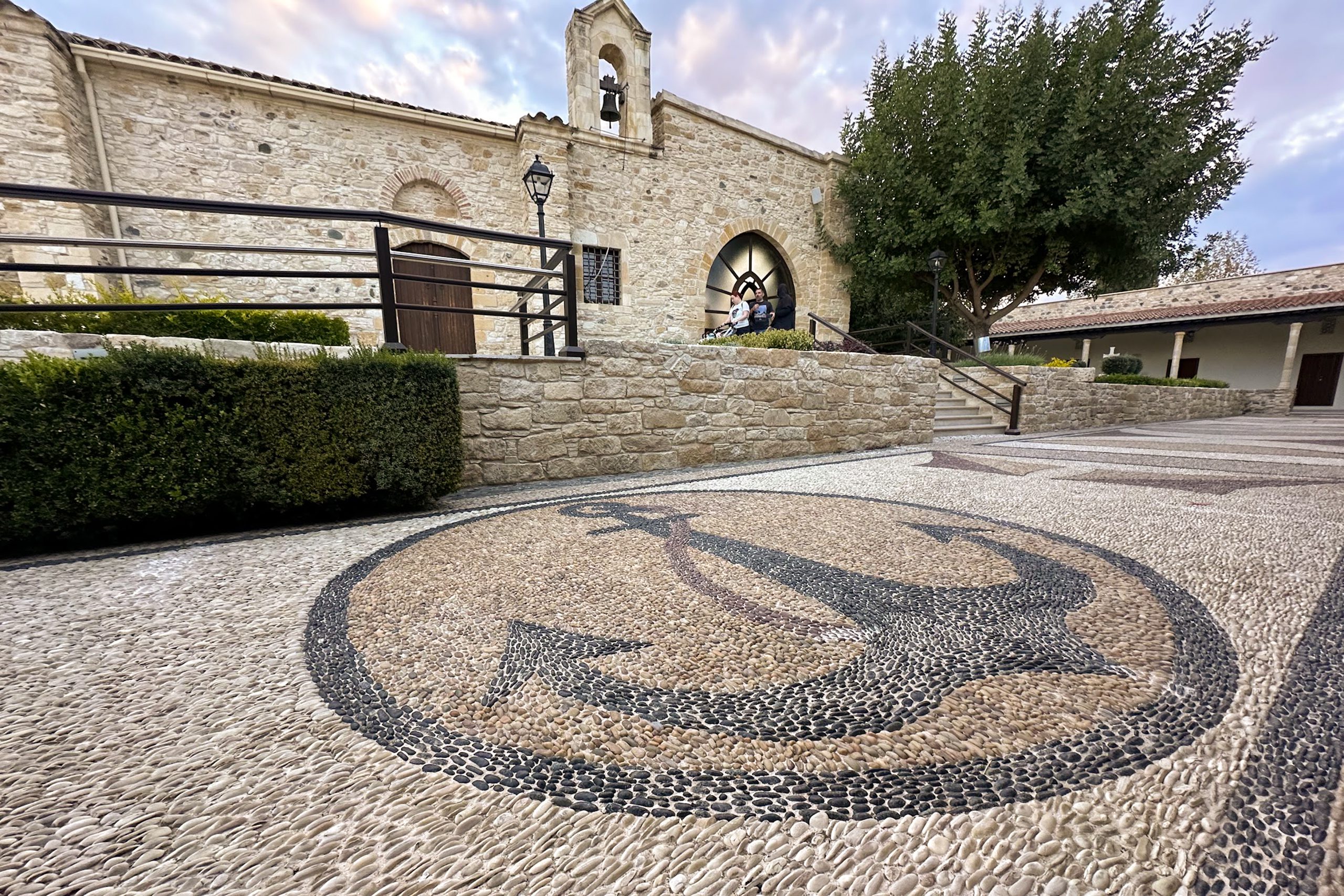
For a rural congregation, this visual language was especially powerful. It required no education in scripture or classical myth to understand. The meaning emerged through movement. As worshippers crossed the floor, the ordered patterns beneath their feet reinforced the idea of stability in a world shaped by uncertainty, invasion, and change.
Chi-Rho Placed with Precision
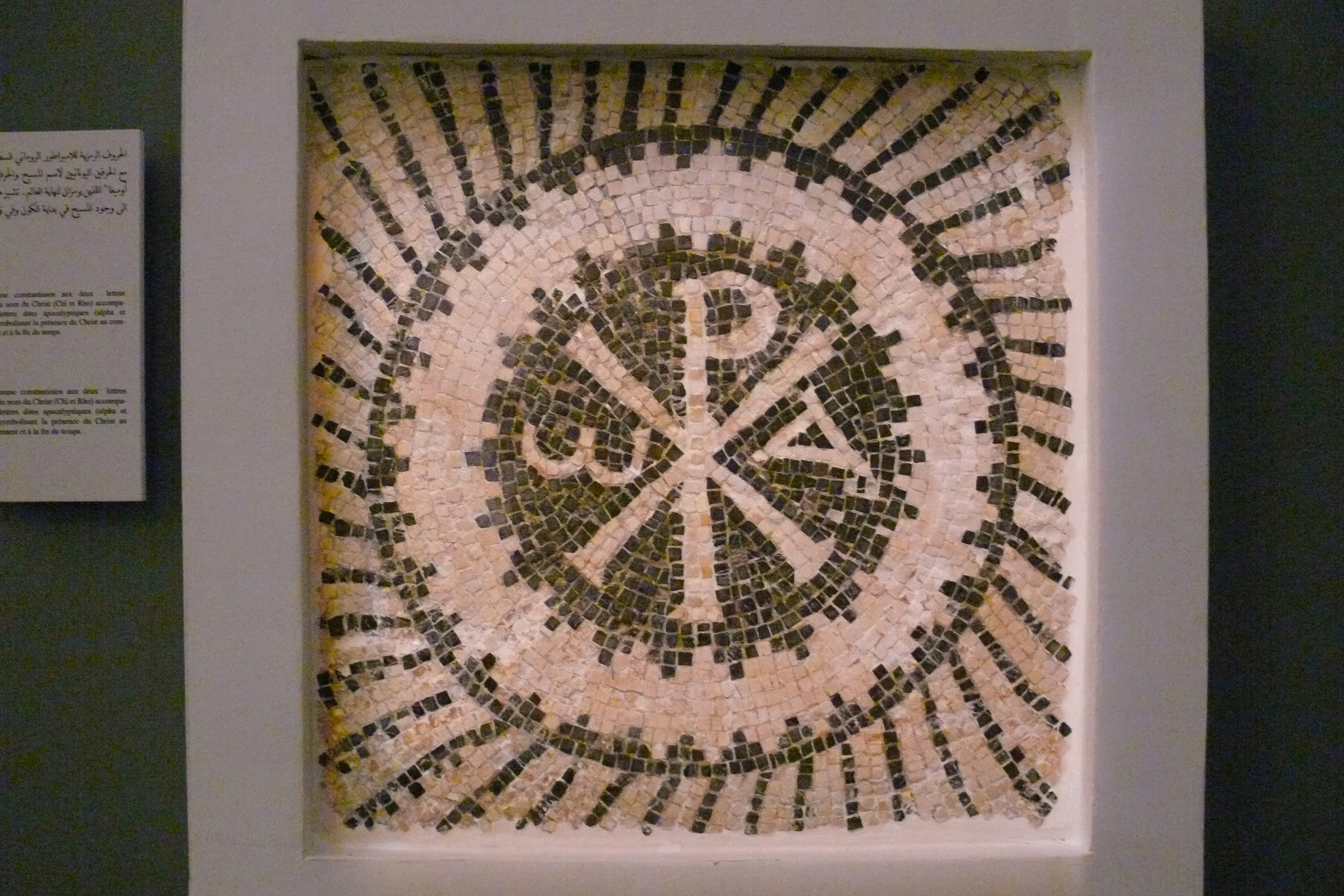
Among the most significant elements of the mosaic program is the Chi-Rho monogram embedded within the mausoleum floor. Formed from the first two letters of Christ’s name in Greek, the symbol was placed with precision rather than ornamentation. Its position near the saint’s tomb directly linked Herakleidios’s martyrdom to Christ’s triumph over death.
This placement carried layered meaning. In a landscape still scattered with remnants of pagan Tamassos, the Chi-Rho asserted a new spiritual authority rooted not in empire or mythology, but in apostolic continuity. It functioned simultaneously as confession, protection, and declaration of faith, anchoring belief into the physical space of the sanctuary.
Craftsmanship Defined by Restraint
The mosaics were constructed using small tesserae of stone and glass, many sourced locally or reused from earlier structures. Their execution reveals careful planning and skilled workmanship, yet avoids excess. Patterns are consistent rather than elaborate, precise rather than theatrical.
This restraint was deliberate. These floors were created to endure daily use, to support worship rather than command attention. Their beauty lies in repetition and balance, offering a visual rhythm that aligns with the spiritual discipline of monastic life. Nothing distracts from the act of worship. Everything supports it.
1963 Excavations Changed the Story
Modern knowledge of the site expanded significantly after excavations conducted in 1963 by the Department of Antiquities of Cyprus. Archaeological work uncovered the Roman tomb, the early martyrion, and the successive basilica phases layered beneath the present monastery. The mosaic floors, preserved by centuries of rebuilding and collapse, emerged as a record of continuity rather than interruption.
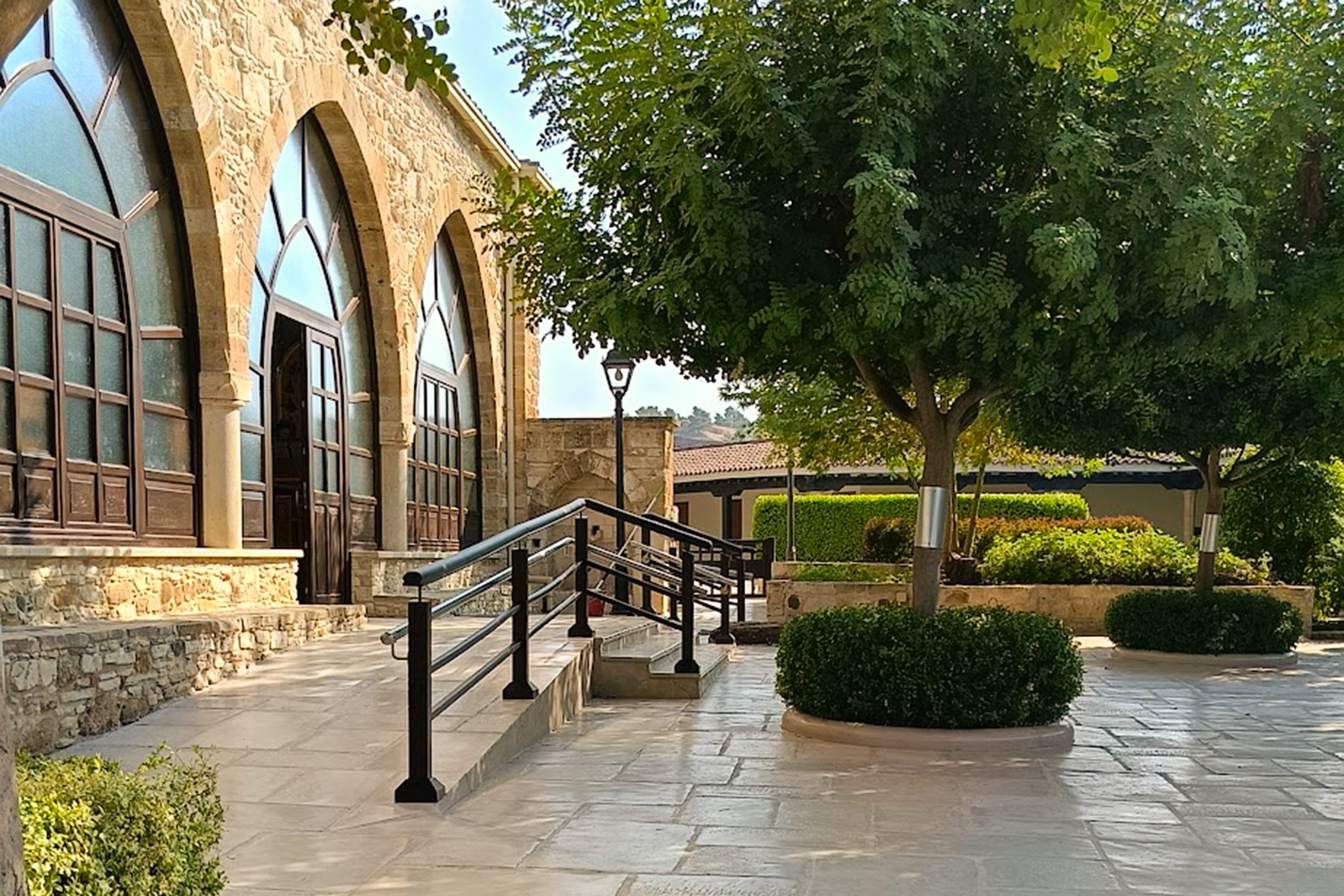
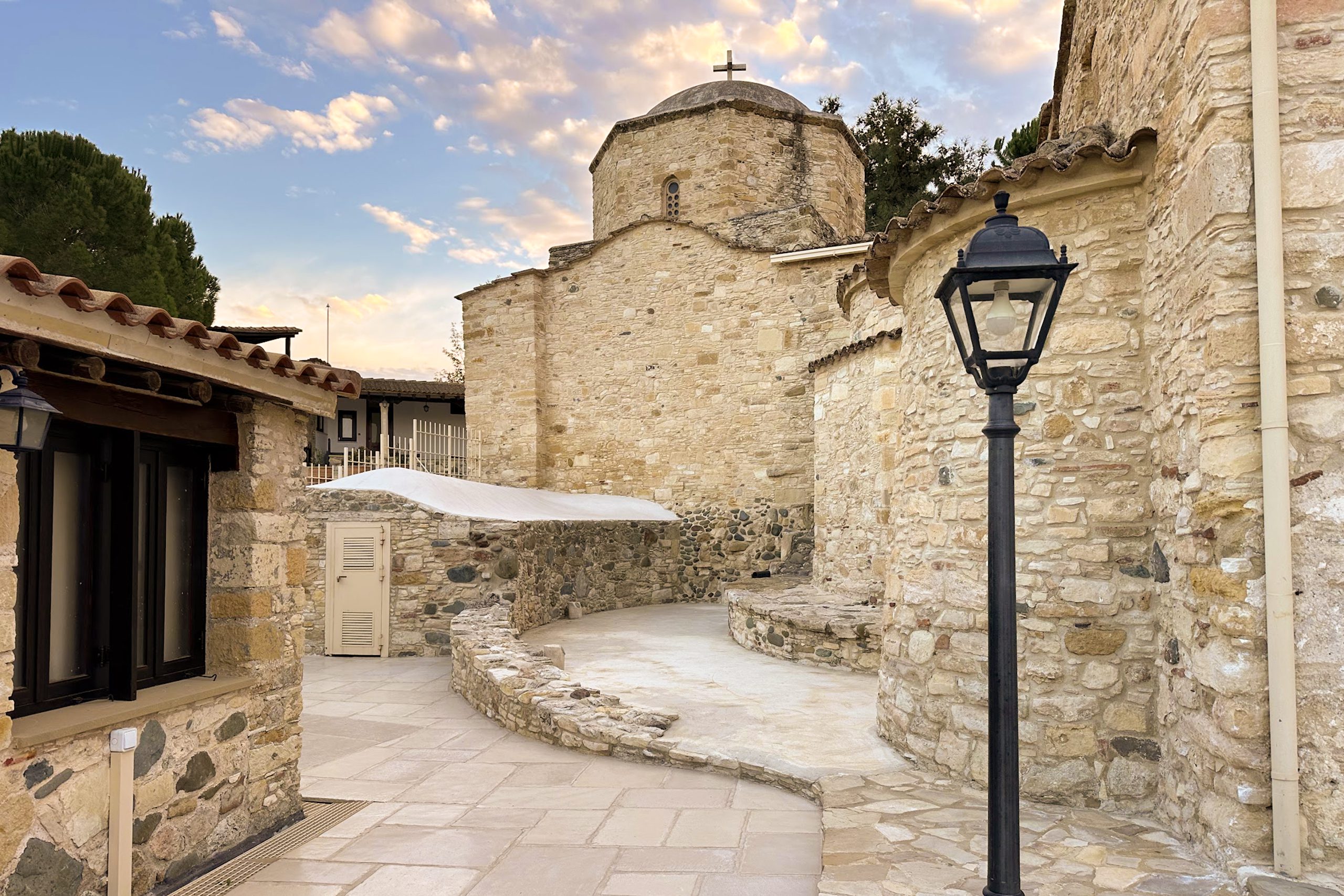
Today, parts of these mosaics remain protected beneath the active convent. Archaeological preservation exists alongside living religious practice, reflecting the same balance between past and present that has shaped the site for centuries. This is not a monument sealed in time, but a place still in use.
A Convent Above the Mosaics
The Monastery of Saint Herakleidios continues as an active female monastery, known in particular for its hagiographic workshop. Icons and religious artworks are still produced on site, extending the creative lineage that once expressed faith through mosaic floors.
This continuity matters. The impulse to translate belief into material form did not end with stone tesserae. It adapted. Where mosaic once shaped sacred space beneath the feet, painted icons now shape devotion through sight and contemplation.
What These Mosaics Preserve
The mosaics of Ayios Herakleidios preserve a quieter chapter of Cypriot Christian history. They speak not of imperial ambition or urban wealth, but of rural communities using faith as a stabilising force. Belief here was woven into daily movement, into walking, gathering, and returning, rather than staged for display.
In their restrained geometry, these floors reflect a community that valued order over ornament and continuity over spectacle. They remind us that some of the most enduring expressions of culture are created not through grandeur, but through patient repetition. Stone by stone. Pattern by pattern. Century by century.