Kourion’s mosaics record Cyprus’s shift from a classical city organised around temples and civic life to an early Christian centre rebuilt under episcopal authority after mid-fourth-century earthquakes. In villas and basilicas, floors and inscriptions became a visual language that guided movement, reinforced belief, and redefined what power looked like in public space.
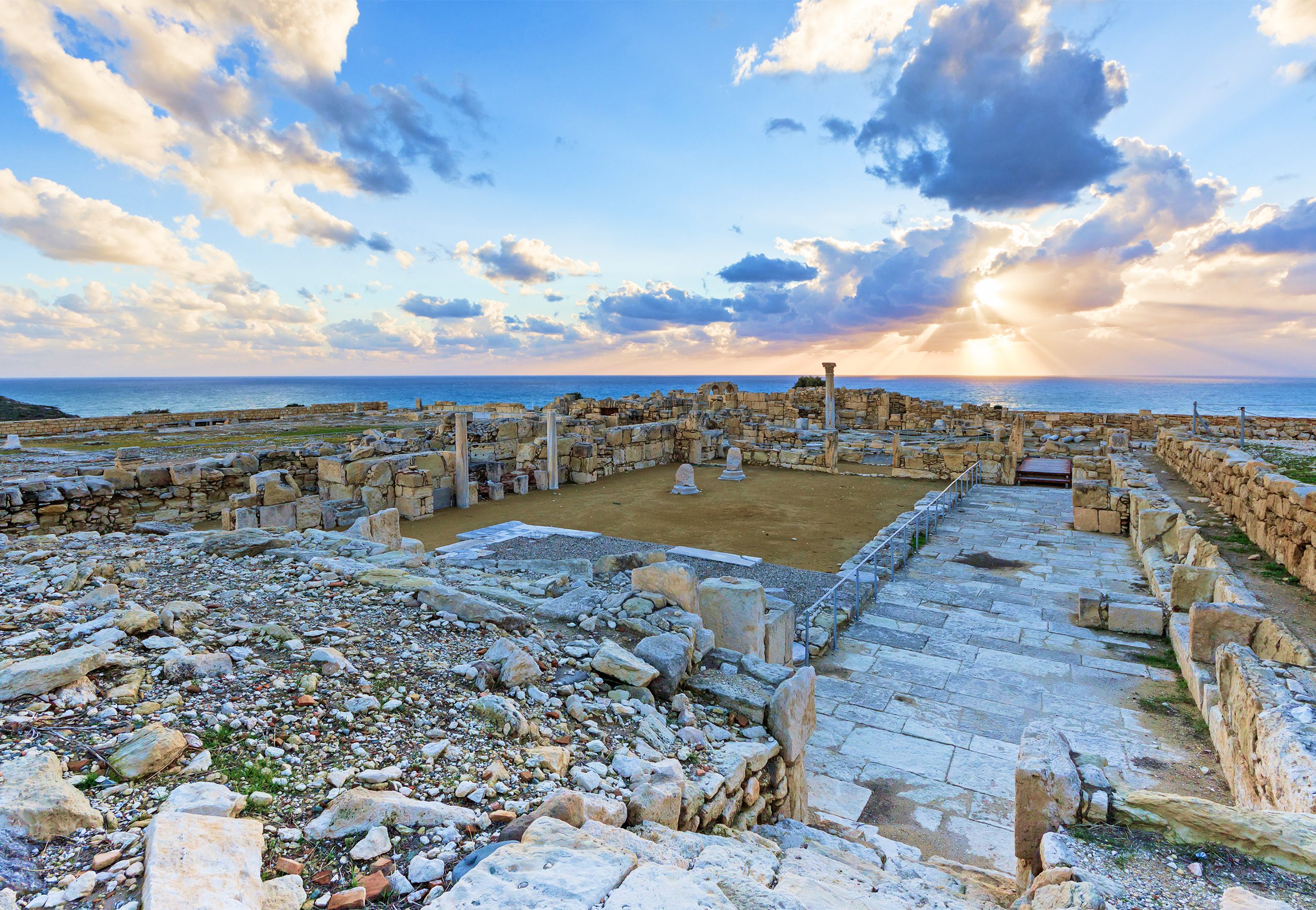
This article explains how disaster opened the ground for change, how the Episcopal Complex reshaped the city’s core, and how mosaic imagery at sites like the House of Eustolios shows a community rebuilding identity as well as architecture.
Apollo Hylates and Old Order
For centuries, Kourion thrived as a Greco-Roman city, complete with temples, baths, theatres, and elite villas. Public life revolved around civic institutions and traditional religious cults, most notably the Sanctuary of Apollo Hylates. Christianity was present early, introduced to Cyprus in the first century, but in Kourion it remained largely private and unobtrusive.
Everything changed in the mid-fourth century. A catastrophic earthquake, most notably the one in 365 CE, devastated the city. Entire neighbourhoods collapsed, public monuments were abandoned, and the old religious landscape effectively ended. The destruction was not symbolic. It was physical, sudden, and comprehensive. When rebuilding began, it followed a new logic.
Instead of restoring pagan sanctuaries, Kourion was reorganised around Christian authority. The centre of gravity shifted from temples to basilicas, from civic elites to bishops. The mosaics that survive from this period are part of that transformation, recording not just rebuilding, but redefinition.
A City Rebuilt Around the Church
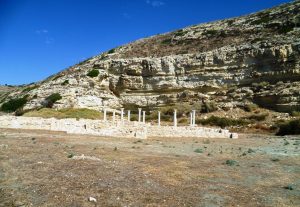
The heart of Christian Kourion was the Episcopal Complex, built near the former Roman forum. This was not a single building but a carefully planned precinct that combined worship, administration, and residence. At its centre stood the Episcopal Basilica, a large three-aisled church constructed directly over the ruins of a Roman secular basilica destroyed by the earthquakes.
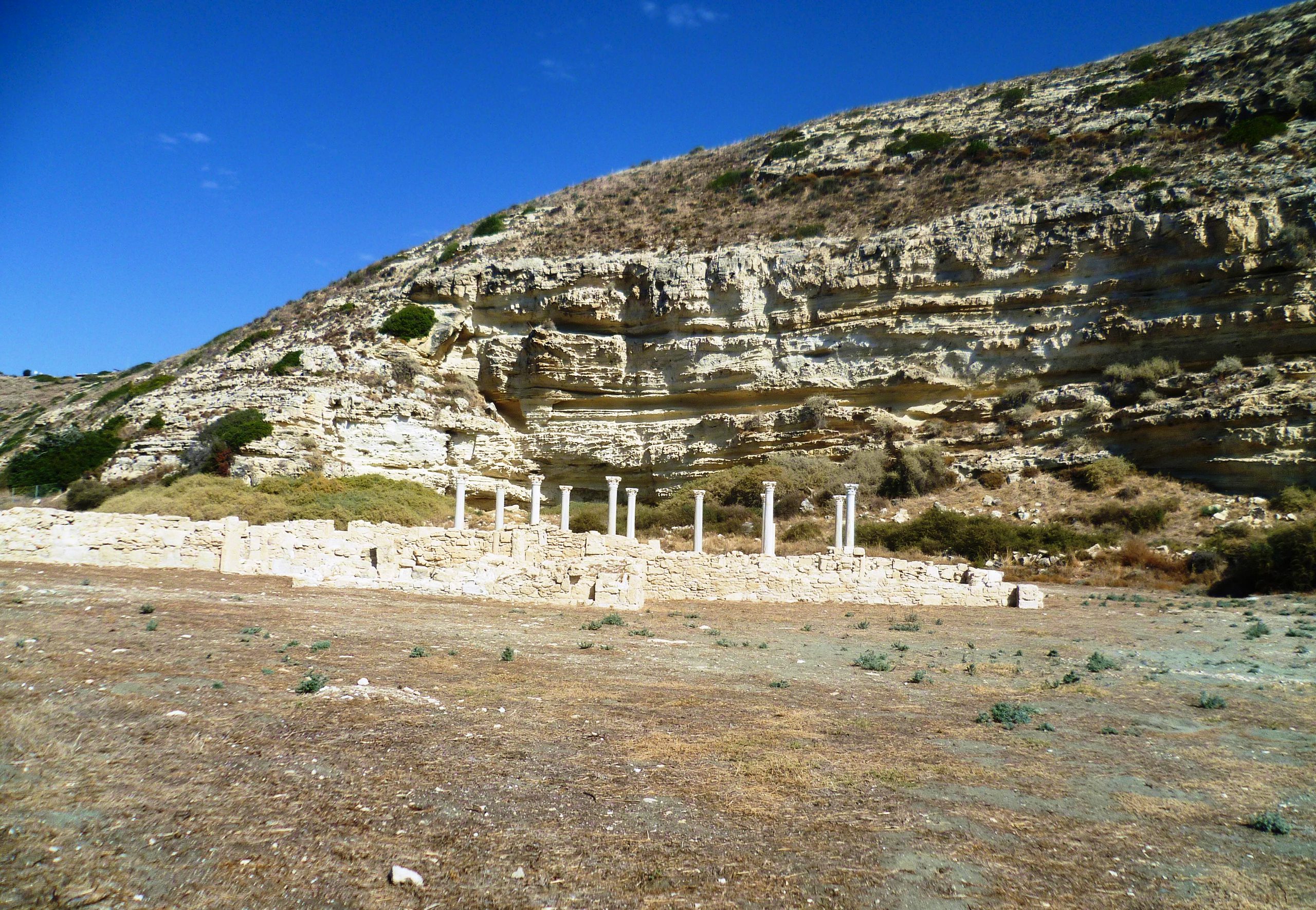
This architectural choice was deliberate. Reusing foundations and materials was practical, but it was also ideological. Columns, capitals, and stone taken from earlier buildings were repurposed to support the new Christian structure. The city was not erasing its past. It was claiming it.
Surrounding the basilica were a baptistery, an atrium with a ritual fountain, service rooms, and the bishop’s residence. Together, these spaces formed a new urban core where religious authority replaced civic administration.
A Basilica on Roman Foundations
In this rebuilt city, mosaics took on a new role. They were no longer simply markers of wealth or refinement, nor were they confined to private villas as expressions of personal taste. Instead, they became a visual system through which belief was communicated, and space was organised.
Floors, walls, and ceilings were covered with carefully arranged stone and glass, turning movement through the city into a guided experience. Patterns directed attention. Materials are of great importance. The faithful learned where to walk, where to pause, and where to gather through imagery rather than instruction.
The technical skill behind these mosaics was considerable. Artisans worked with local limestone, imported marble, brick fragments, coloured glass, and yellow paste to create surfaces that responded to light and shadow. In some areas, especially ceilings and upper walls, mother-of-pearl replaced gold tesserae, producing a shimmering effect that would have animated interiors during worship. These choices shaped the atmosphere as much as appearance.
Eustolios and Ktisis
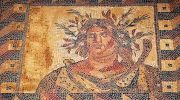
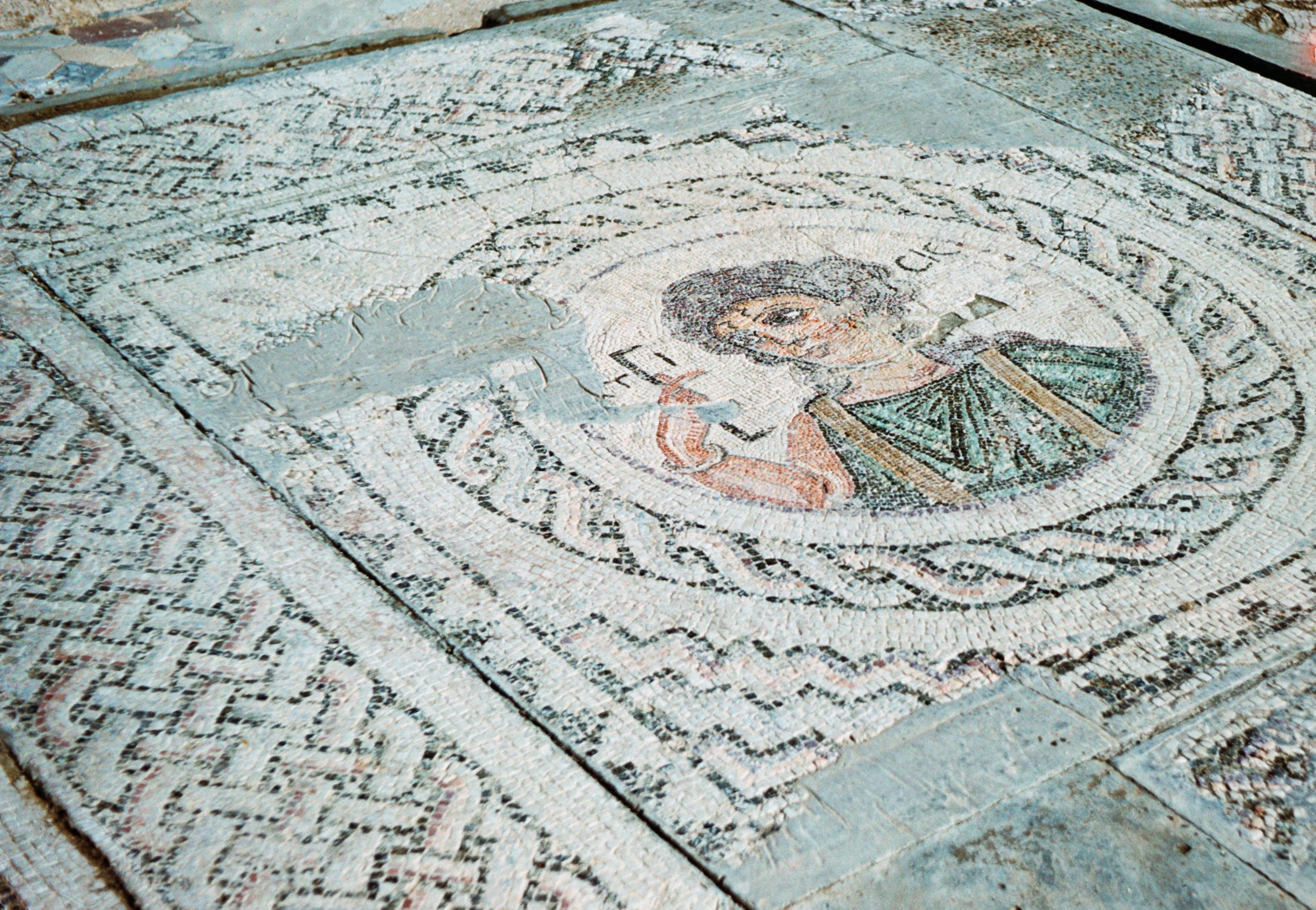
One of the most revealing mosaic programs at Kourion survives in the House of Eustolios, a grand residence that later assumed public and possibly ecclesiastical functions. At the centre of its bath complex lies a mosaic medallion depicting a female figure identified by inscription as Ktisis, meaning ‘Foundation’ or ‘The Act of Founding.
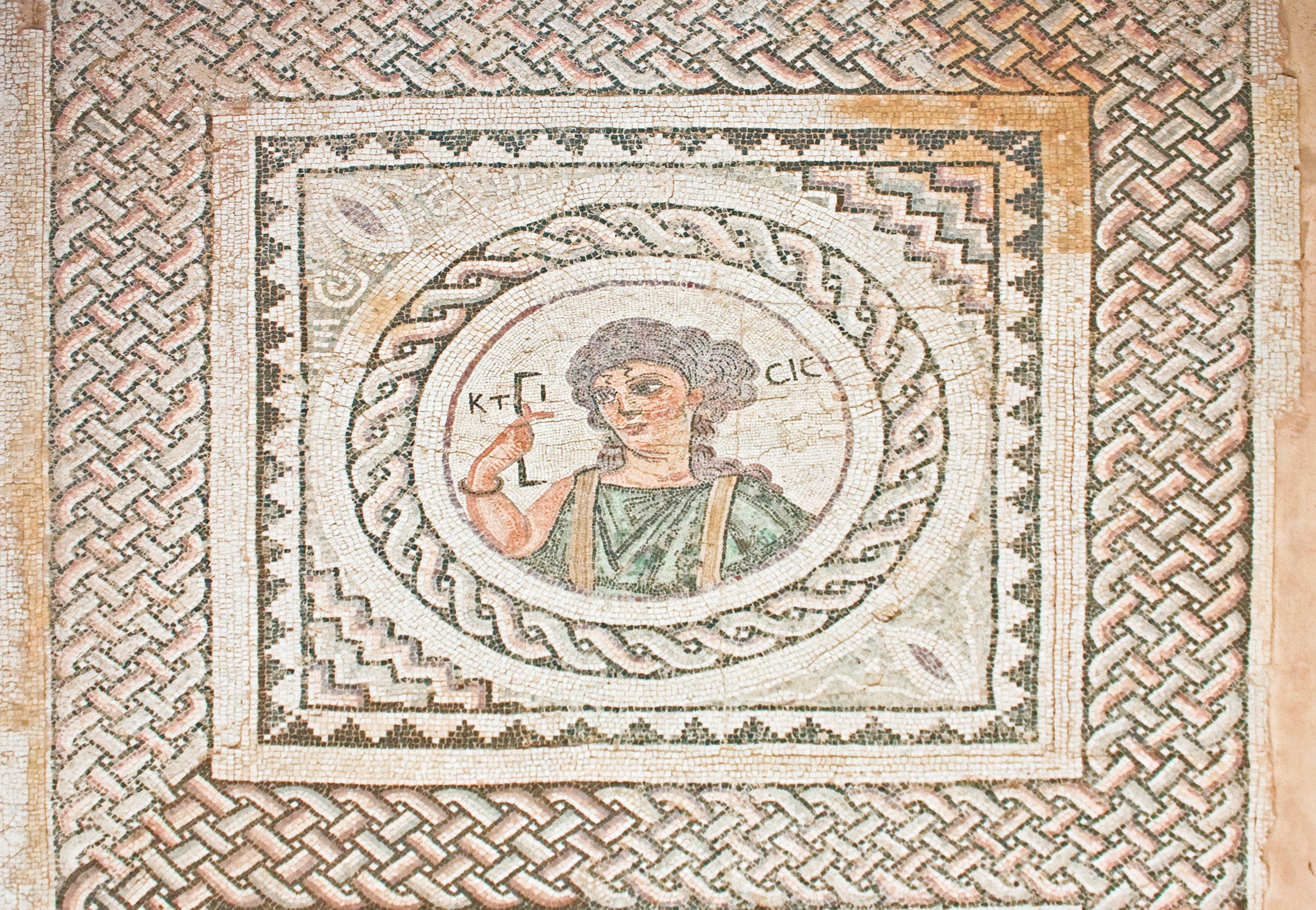
She holds a measuring rod, a symbol of order, proportion, and reconstruction. In the context of a city repeatedly damaged by earthquakes, this image carries particular weight. Ktisis is no longer a classical abstraction alone. She becomes a visual expression of divine order restored after chaos, suggesting that rebuilding was not merely physical but moral and spiritual.
Surrounding motifs of birds, fish, and vegetation preserve the elegance of classical design while adopting Christian associations. Fish echoed baptism and Christ. Birds suggested care, continuity, and shelter. Nature itself was woven into the Christian worldview rather than rejected by it.
Words Set Into Stone
Images at Kourion were frequently paired with words, and these inscriptions played a crucial role in shaping interpretation. In the atrium of the Episcopal Complex, a verse from Psalm 29 declares that the voice of the Lord is upon the waters, linking the fountain directly to purification and renewal. The physical act of washing became inseparable from spiritual meaning.
Elsewhere, inscriptions reinforced the idea that faith, rather than material strength, sustained the city. In the House of Eustolios, a mosaic proclaims that the building stands not through stone or iron, but through the signs of Christ. This message resonates powerfully in a place where physical structures had repeatedly failed. The mosaics speak quietly but insistently, reminding viewers that endurance now rested on belief.
Rare Images from a Pre-Iconoclast World
Fragments recovered from the basilica include figural wall mosaics depicting the Theotokos (Mother of God) with Child and an archangel. Such images are rare survivals from before the period of iconoclasm, when religious imagery was systematically destroyed across the Byzantine world.
Their presence at Kourion reveals a community deeply engaged with early Christian visual culture. These were not marginal decorations placed out of sight. They occupied administrative and ritual spaces, reinforcing the idea that leadership, governance, and worship were intertwined. Authority was presented not only through architecture, but through sacred imagery embedded into daily function.
Patterns That Guide Movement
The mosaics of Kourion were designed to be experienced in motion. Geometric patterns marked processional routes through the basilica, subtly guiding worshippers toward focal points. Shifts in colour and material signalled transitions from communal areas to sacred zones without the need for walls or barriers.
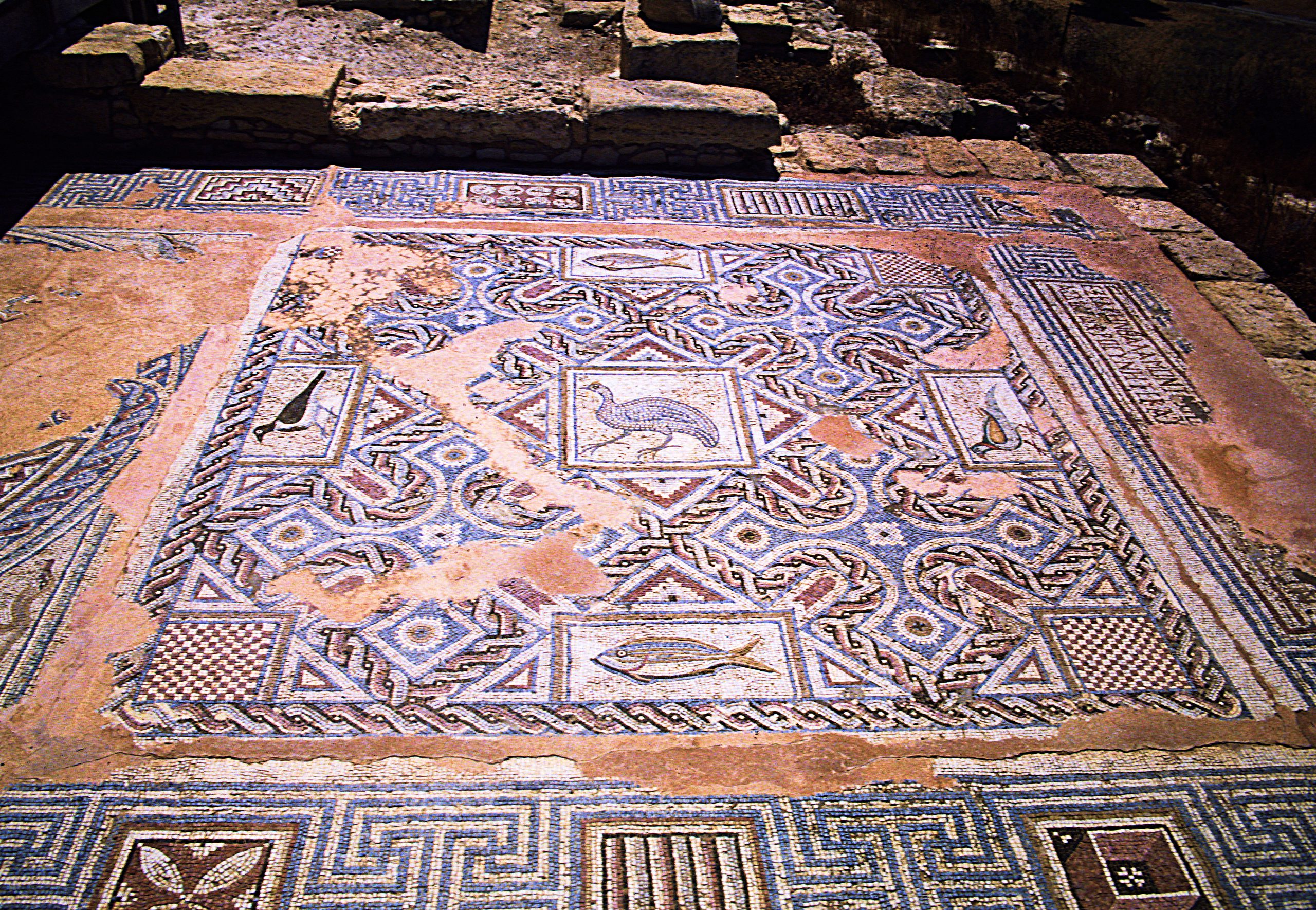
In the baptistery, flowing water, enclosed space, and symbolic imagery combined to create an immersive environment. Initiation into the Christian community was not abstract or distant. It was felt through temperature, texture, and light. Architecture and mosaic worked together to turn belief into experience.
Visiting Kourion Today
Today, Kourion remains one of the most accessible archaeological sites in Cyprus. Located west of Limassol near Episkopi, the site is protected but open, with modern shelters preserving the most delicate mosaics, particularly those in the House of Eustolios. Raised walkways allow visitors to move through the space without damaging the floors, echoing the ancient paths once traced by worshippers and residents.
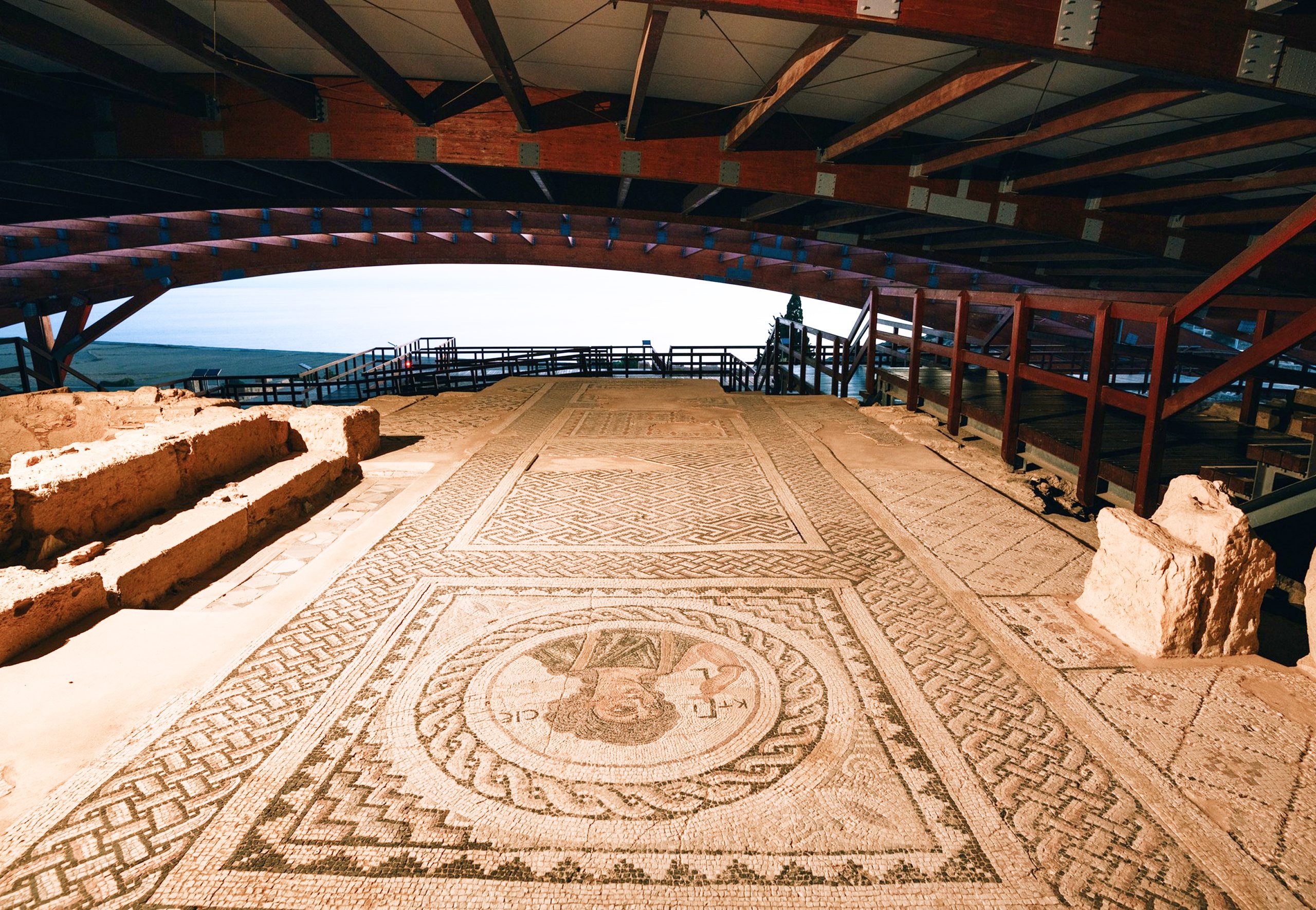
Even in silence, the mosaics continue to communicate. They organise space. They draw the eye. They retain their meaning without explanation.
What Kourion Still Teaches
The mosaics of Kourion matter because they show how a society responds when certainty collapses. After earthquakes erased the physical symbols of the classical world, the city did not simply rebuild what was lost. It redefined itself.
Through stone, glass, and light, Kourion absorbed its past and redirected it toward a new centre of meaning. The mosaics are not remnants of decline. They are evidence of adaptation, continuity, and intention. In learning to speak a Christian visual language, the city ensured that its story would survive long after its streets fell quiet, still visible beneath open sky above the Mediterranean.