Amathus projected authority through stone: colossal vessels and carved reliefs that required skill, labour coordination, and long-term planning on a civic scale.
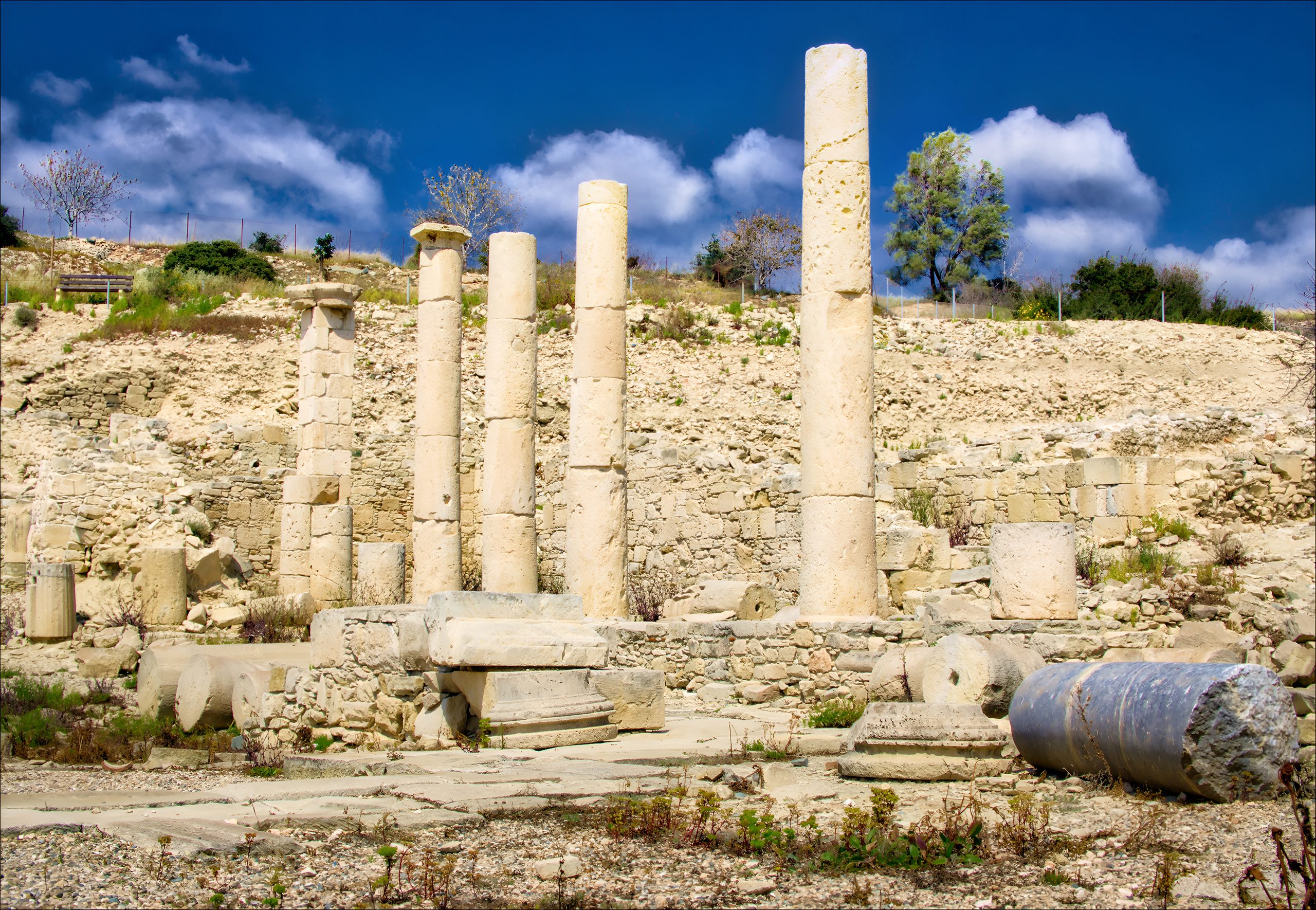
These monuments turned ritual spaces into political statements, using weight, repetition, and hybrid symbols to make royal legitimacy feel permanent and divinely protected. This article traces how vessels, reliefs, and funerary sculpture worked together to communicate power at Amathus without relying on lengthy inscriptions.
Monumental Scale, Local Identity
Located on Cyprus’s southern coast, Amathus developed as one of the island’s most distinctive city-kingdoms during the early first millennium BCE. Unlike other centres that aligned themselves quickly with Greek traditions, Amathus retained a strong indigenous identity, often described as Eteocypriot. This sense of cultural independence was not passive. It was actively constructed and displayed.
Rather than emphasising monumental temples or written inscriptions, the rulers of Amathus invested in stone on an extraordinary scale. Large vessels, relief-carved blocks, and sculpted architectural elements were placed in prominent ritual and political spaces. These objects did more than decorate the city. They made authority visible and unavoidable.
Why Limestone Becomes a Message
In most ancient societies, stone was associated with endurance. At Amathus, this association was amplified by scale. The choice to work with massive limestone blocks required advanced knowledge, labour coordination, and long-term planning. These were not accidental by-products of wealth. They were deliberate signals of control over both resources and people.
Stone vessels and reliefs functioned as permanent witnesses. They outlasted ceremonies, rulers, and even the kingdom itself. In doing so, they embedded royal presence into the physical landscape of the Acropolis and palace complex.
The Colossal Vessel on the Acropolis
Among the most striking survivals from Amathus are the colossal limestone vessels associated with the sanctuary on the acropolis. The most famous example, now housed in the Louvre, was carved from a single block of local shell limestone and reached nearly two metres in height.
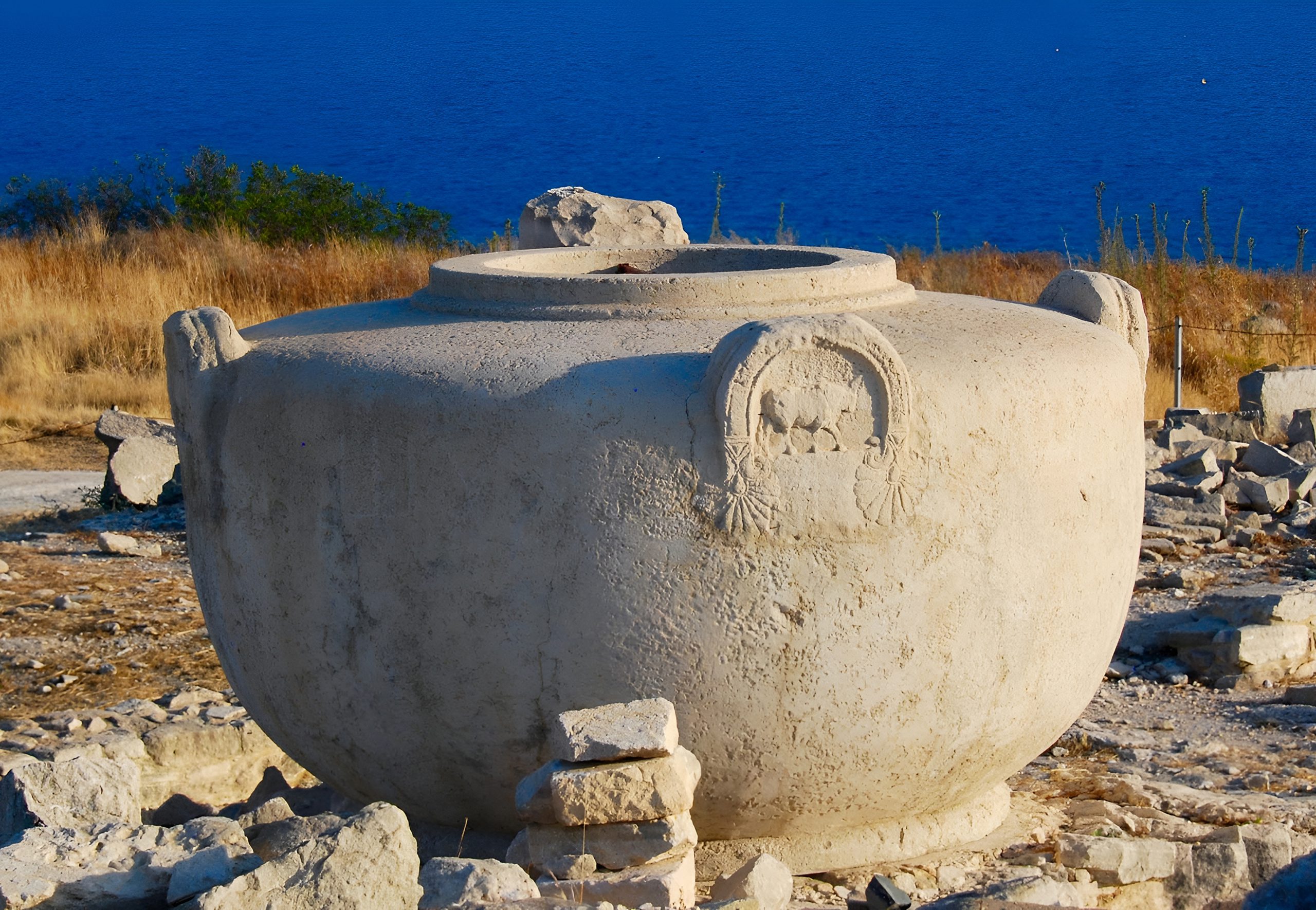
Its size alone demands explanation. Hollowing out such a mass without fracturing it required exceptional skill. Transporting it uphill to the Acropolis required organisation on a civic scale. These challenges were part of the message. The vessel demonstrated that the rulers of Amathus could command materials, specialists, and labour with precision.
The decoration reinforces this reading. Bull-shaped handles connect the vessel to long-standing Cypriot symbols of fertility, strength, and divine protection. The vessel was not merely functional. It was a statement about the relationship between land, ruler, and goddess.
Bull Handles and Divine Signals
These monumental vessels were likely used in the storage and ceremonial distribution of water, an element that carried both practical necessity and symbolic weight. The Acropolis itself lacked natural water sources, which meant that water appearing there was never accidental. Its presence signalled planning, authority, and control.
Archaeological evidence and ancient accounts suggest that multiple vessels once stood together, arranged deliberately to create a coordinated ritual environment rather than a collection of isolated objects. Within this setting, acts such as libations became more than religious gestures. They became public affirmations of royal stewardship, performed in full view of the community and inseparable from the physical authority embodied in stone.
Ritual Water, Public Authority
Stone reliefs at Amathus extended this visual strategy beyond individual objects and into the fabric of architecture itself. Relief-carved blocks were integrated into palace walls, gateways, and ceremonial buildings, shaping how space was experienced as much as how it was seen.
These reliefs were not narrative scenes designed to be read sequentially. Instead, they communicated through repetition and symbol. Lions, chariots, and dominant human figures appeared again and again, each carrying established associations of protection, command, and elite status. As people moved through these spaces, meaning was reinforced through familiarity rather than explanation, turning architecture into a silent but persistent political language.
Borrowed Symbols, Local Authority
One of the most distinctive features of Amathusian reliefs is their cultural hybridity. Motifs drawn from Egyptian, Near Eastern, and Persian traditions appear alongside indigenous Cypriot forms, creating a visual vocabulary that was both recognisable and carefully controlled.
This blending was not the result of imitation or uncertainty. It was a strategic choice. By adopting symbols associated with powerful imperial cultures, the rulers of Amathus aligned themselves with a wider Mediterranean elite. At the same time, by adapting these symbols to local religious contexts, they ensured that authority remained anchored in Cypriot tradition. Power was made legible to outsiders without being surrendered to them.
Reliefs That Controlled Space
The presence of Hathoric imagery reveals this strategy particularly clearly. Architectural elements bearing the face of the Egyptian goddess Hathor were incorporated into both palace and sanctuary contexts, embedding divine symbolism directly into spaces of governance and ritual.
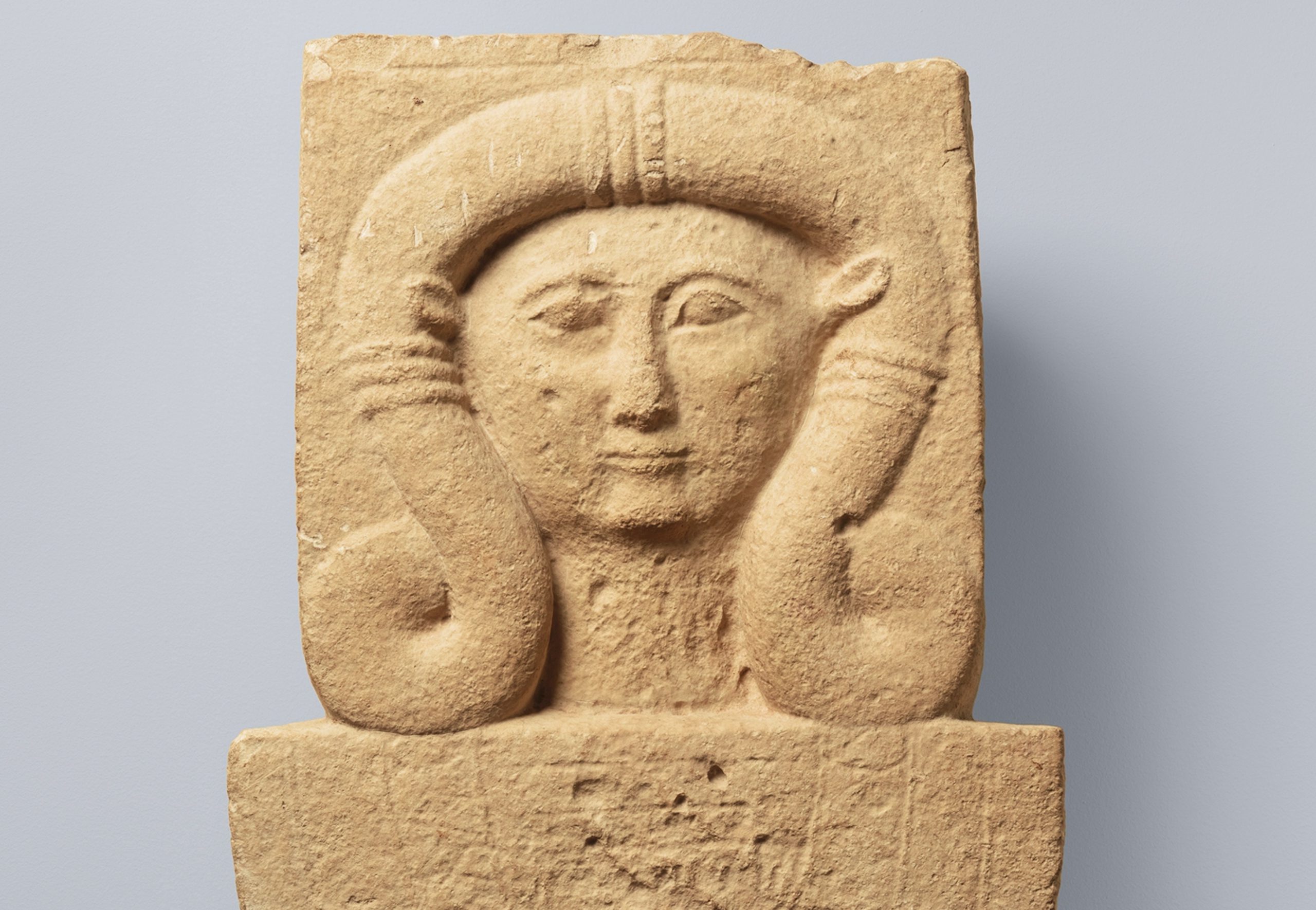
In Egyptian belief, Hathor functioned as both nurturer and protector, closely associated with kingship and legitimacy. At Amathus, her imagery was adapted to represent the island’s Great Goddess, merging foreign prestige with local religious continuity. The implication was unmistakable. Royal authority was not merely political. It was divinely sanctioned, protected by powers older and more enduring than any human ruler, and rendered permanent through stone.
Lions, Chariots, Repeated Power
This visual language did not end at the boundaries of public architecture. It extended into funerary space, where stone continued to shape perceptions of authority beyond death. The Amathus Sarcophagus, discovered in the nineteenth century and now housed in New York, stands as one of the most ambitious funerary monuments of Classical Cyprus.
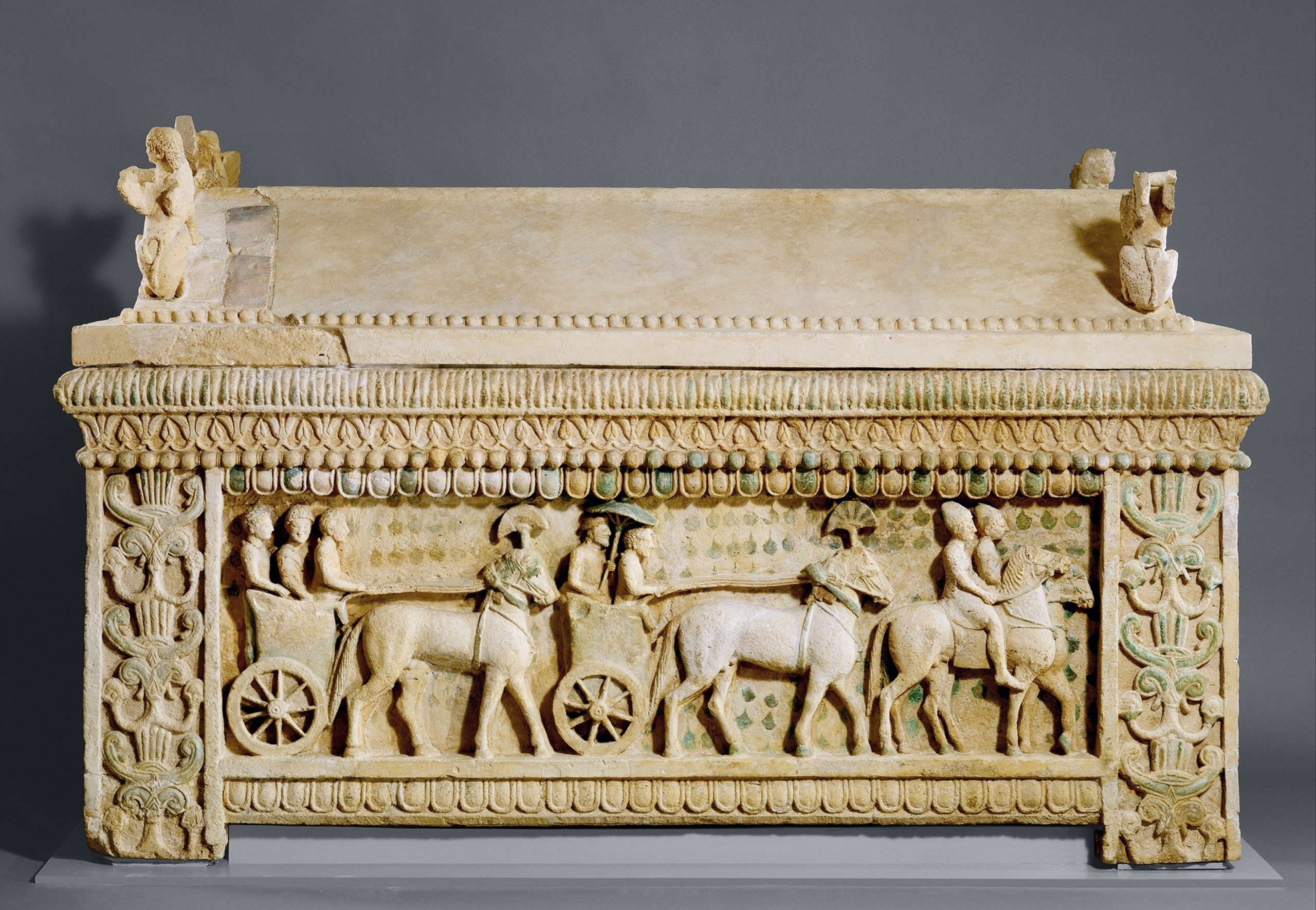
Its carved processions, divine figures, and protective motifs combine Greek, Egyptian, and Near Eastern elements into a single, carefully orchestrated composition. The deceased is not portrayed as a private individual but as a figure of lasting significance, accompanied by symbols of divine favour and elite status. In death, as in life, authority was expressed through material permanence.
Why Amathus Chose Monumentality
Amathus did not compete with larger Mediterranean powers through territorial expansion or military dominance. Instead, it asserted itself through visibility, endurance, and control of space. Monumental stone objects allowed the kingdom to project stability in a region marked by shifting alliances and imperial pressure.
By shaping stone on a scale associated with great empires, Amathus claimed a place among them. The technical difficulty of its monuments was not incidental but essential. Each object served as proof of capability, coordination, and confidence, embedding political power into the landscape itself.
What These Stones Still Tell Us
Today, the acropolis of Amathus is far quieter than it once was, and many of its most impressive objects now reside in museums beyond Cyprus. Yet the logic that shaped them remains clear. Stone was chosen not simply because it endured, but because it spoke.
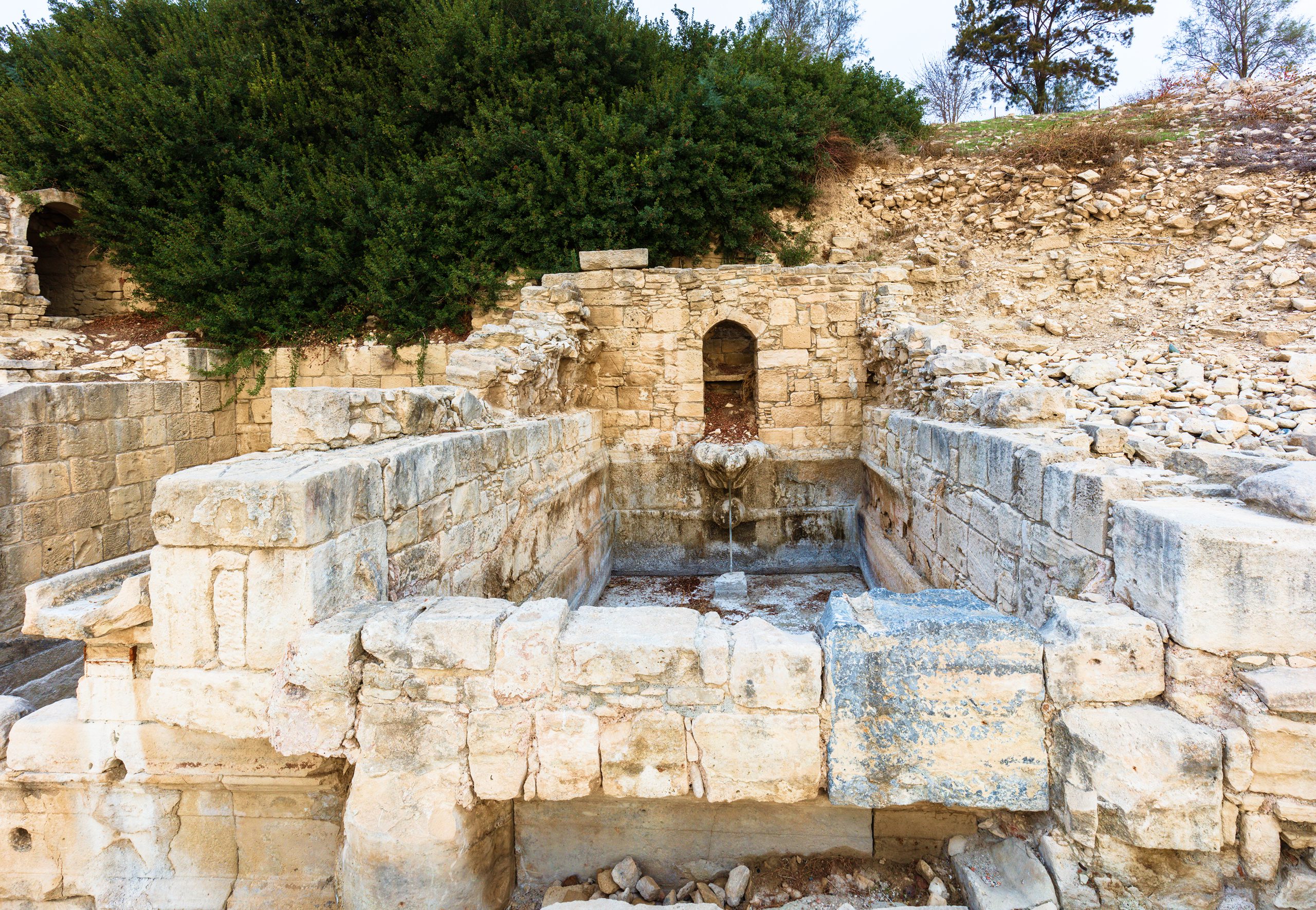
Through scale, weight, and craftsmanship, the vessels, reliefs, and monuments of Amathus demonstrate how authority can be communicated without inscriptions or proclamation. They show how belief, governance, and identity can be made physically undeniable. In doing so, Amathus left behind more than remarkable artefacts. It left a lasting example of how material culture can carry political meaning across centuries, long after the voices that commissioned it have fallen silent.