Cyprus is famous for its orchids, mouflons, and reptiles, but some of its most remarkable wildlife is so small that it often goes unnoticed. Across the island, hundreds of insect species have evolved in isolation, and many exist nowhere else on Earth. They are tiny treasures that tell the story of Cyprus itself.
An Island that Creates Its Own Species
Insects are the most diverse animals on Earth. They pollinate flowers, recycle dead plants, control pests, and provide food for birds, reptiles, and mammals. Without them, ecosystems would simply collapse.
Cyprus is particularly special because it is an island. For millions of years, populations of insects became separated from their mainland relatives. With little opportunity to mix with other populations, they slowly evolved into unique species adapted to Cyprus’ mountains, forests, salt lakes, and rocky coastlines.
Scientists currently recognize well over 300 endemic terrestrial species in Cyprus, with insects forming one of the largest portions of this remarkable biodiversity. Every year, researchers continue to discover species that are completely new to science, suggesting that many more remain hidden.
An Ancient Evolutionary Laboratory
Cyprus rose from the floor of the ancient Tethys Ocean around 90 million years ago, but it only became colonized by land animals after it emerged above sea level.
Unlike continental Europe or Asia, the island was never permanently connected to surrounding land during recent geological history. Every insect that arrived had to cross the sea – often blown by winds, carried on floating vegetation, or accidentally transported by birds.
Those few successful colonists found an island filled with empty ecological niches. Over hundreds of thousands – and sometimes millions – of years, natural selection transformed many of them into species found nowhere else.
The island’s remarkable variety of habitats accelerated this process. Snow-covered peaks of the Troodos Mountains, cedar forests, Mediterranean scrublands, dry river valleys, wetlands, and coastal dunes all provided opportunities for insects to specialize.
Tiny Creatures, Extraordinary Diversity
Although most people immediately think of butterflies, endemic insects belong to almost every major insect group.
Beetles – The Champions of Diversity
Beetles are by far the richest group of endemic insects in Cyprus. Many belong to families such as:
- Ground beetles (Carabidae)
- Weevils (Curculionidae)
- Darkling beetles (Tenebrionidae)
- Leaf beetles (Chrysomelidae)
Some live only in cedar forests, while others survive exclusively among limestone rocks or beneath the bark of old pine trees.
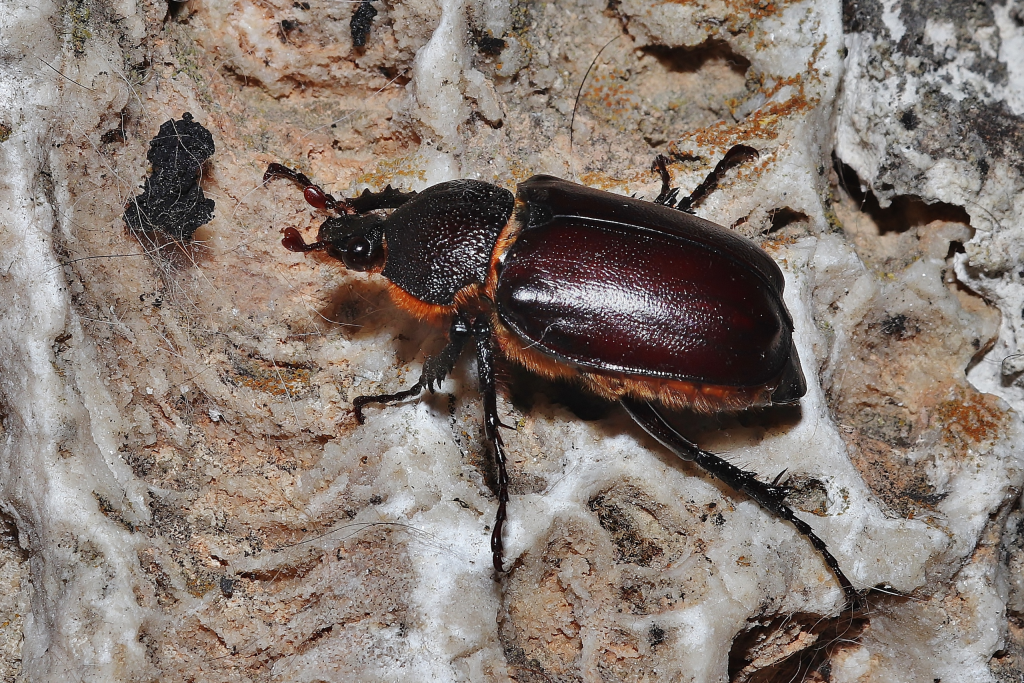
Several endemic weevils have even lost the ability to fly – a common evolutionary trend on islands where strong winds make flight risky.
Saproxylic beetle – Προπόμακρος ο κυπριακός – Propomacrus bimucronatus ssp. cypriacus (Alexis & Makris, 2002) – Endemic subspecies of Cyprus © George Konstantinou biodiversitycyprus.blogspot.com
Butterflies and Moths
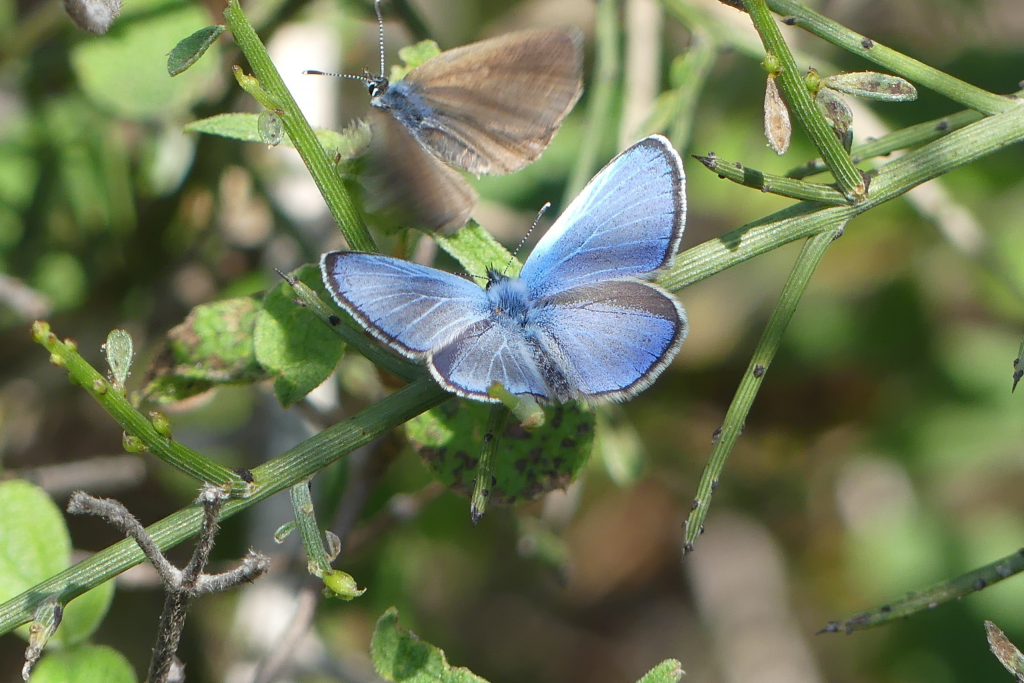
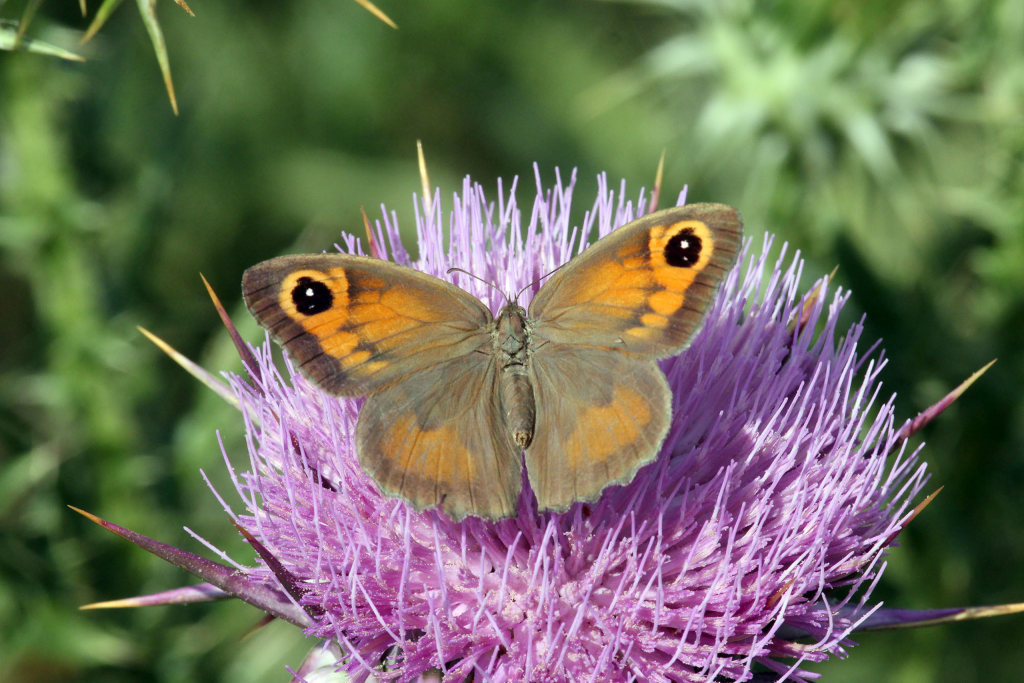
Cyprus has relatively few endemic butterflies, but of its most celebrated are the Cyprus Meadow Brown (Maniola cypricola) and Paphos blue (Glaucopsyche paphos), which evolved from mainland ancestors and now flies only on Cyprus.
Moths show even greater diversity. Numerous endemic species inhabit the Troodos Mountains, where cool forests have acted as refuges since the Ice Ages.
Grasshoppers and Crickets
Mountain meadows and rocky slopes support several endemic grasshoppers and bush-crickets. Many produce songs unlike those of their mainland relatives, helping individuals recognize members of their own species.
Bees, Wasps and Ants
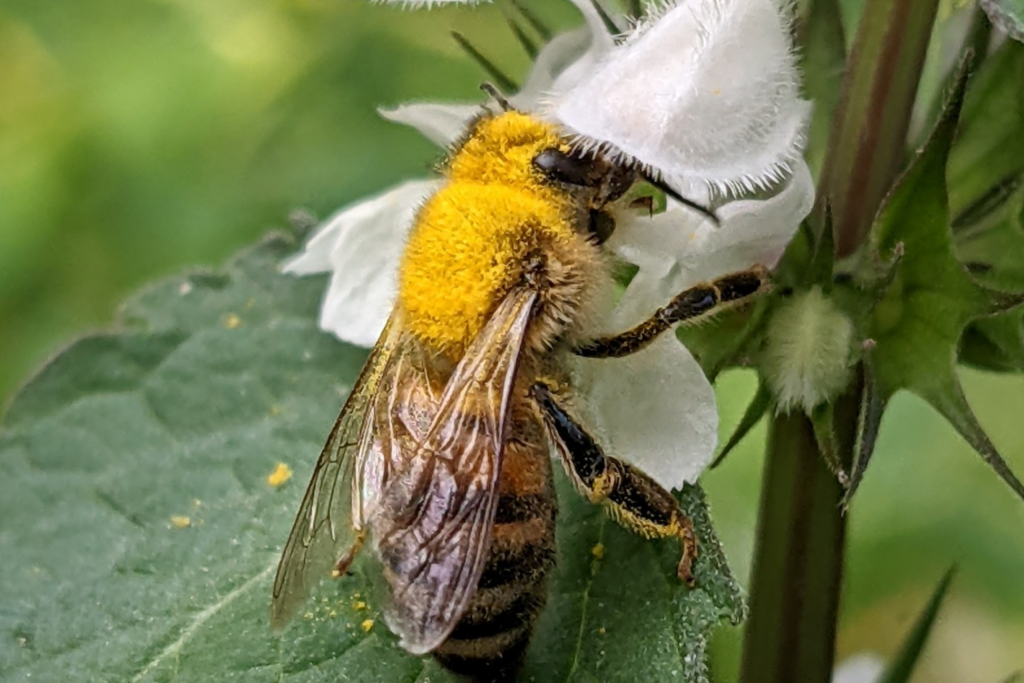
Many native solitary bees have become highly specialized pollinators of Cyprus’ unique flowering plants. Numerous endemic ants inhabit mountain forests, while parasitoid wasps continue to be discovered almost every year.
Flies and True Bugs
Even groups that receive little public attention contain endemic species. Tiny flies, shield bugs, lace bugs, and plant bugs have all diversified alongside Cyprus’ unique vegetation.
A Closer Look at Some Remarkable Endemic Insects
Paphos Blue (Glaucopsyche paphos)
Glaucopsyche paphos is one of Cyprus’ most celebrated endemic butterflies. This small butterfly, with shimmering blue males and more subtly coloured females, is found only on the island, mainly in the western regions around Paphos and the Akamas Peninsula. Adults appear in spring for just a few weeks, laying their eggs on native leguminous plants. Because of its limited range and brief flight season, spotting a Paphos Blue is a memorable experience for butterfly enthusiasts.
Cyprus Meadow Brown (Maniola cypricola)
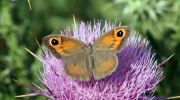
One of Cyprus’ few endemic butterflies, it is commonly seen in mountain meadows during summer. Its soft brown wings blend perfectly with dry grasses.
Troodos Ground Beetles
Several species of flightless ground beetles occur only in the Troodos Mountains. Living beneath stones and fallen logs, they are important predators of smaller invertebrates.
Endemic Weevils
Cyprus hosts dozens of endemic weevil species. Their elongated snouts help them feed on seeds, leaves, or roots of particular native plants, and many cannot survive anywhere else.
Mountain Moths
Many endemic moths fly only for a few weeks each year. Some are known from only a single mountain valley, making them among Europe’s rarest insects.
Fun Facts
- 🦋 More endemic insect species are discovered on Cyprus almost every year.
- 🪲 Some endemic beetles have completely lost the power of flight.
- 🌲 The ancient cedar and black pine forests of Troodos protect many insects found nowhere else.
- 🌙 Numerous endemic moths fly only at night and are rarely seen by people.
- 🎵 Scientists often identify grasshopper species by recording their songs rather than examining their appearance.
- 🔬 Some endemic insects are only a few millimetres long and remained unknown to science until recent decades.
- 🦋 The Paphos Blue butterfly lives nowhere else on Earth, making Cyprus one of the few places where visitors can see this beautiful species in the wild.
Why Are There So Many Endemic Insects?
Island evolution follows several fascinating rules.
First, geographic isolation prevents populations from mixing with mainland relatives.
Second, Cyprus contains many isolated habitats separated by mountains, dry valleys, and forests. Even insects living on the same island may rarely meet.
Finally, many insects depend on specific plants. Because Cyprus also possesses numerous endemic plants, insects feeding on them often evolved alongside their hosts.
This close relationship between plants and insects makes conservation especially important: protecting one often means protecting the other.
Why They Matter Today
Most endemic insects are excellent indicators of environmental health. Because they are adapted to very specific habitats, they quickly disappear when forests are cleared, wetlands are drained, or natural landscapes become fragmented.
Climate change also poses new challenges. Species restricted to cool mountain forests have nowhere higher to climb if temperatures continue to rise.
Fortunately, many endemic insects live inside protected areas such as the Troodos National Forest Park, the Akamas Peninsula, and the Natura 2000 network. Continued research is helping scientists understand which species need the greatest protection.
Where Can You Discover Them?
Unlike large mammals, endemic insects reward patient observation rather than long journeys.
Some of the best places include:
- Troodos Mountains – home to the greatest concentration of endemic forest insects.
- Cedar Valley – ancient cedar woodland rich in specialized beetles and moths.
- Akamas Peninsula – diverse habitats supporting unique pollinators and grasshoppers.
- Madari and Papoutsa forests – excellent locations for endemic beetles and butterflies.
- Spring wildflower meadows – ideal places to observe native bees and butterflies.
Visiting in spring or early summer offers the greatest diversity, when flowers are blooming and insect activity reaches its peak.
Small Creatures with a Big Story
Cyprus’ endemic insects remind us that extraordinary wildlife is not always large or spectacular. Many spend their entire lives beneath stones, inside flowers, or among pine needles, quietly performing the essential work that keeps ecosystems alive.
Each endemic species is the product of millions of years of evolution on this Mediterranean island. Protecting them means preserving an irreplaceable chapter of Cyprus’ natural history – one that cannot be found anywhere else on Earth.