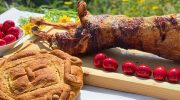
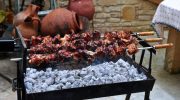
Souvla is a traditional Cypriot dish made with large chunks of meat slow-roasted on long metal skewers over charcoal. The name comes from the Greek word for skewer. The meat is cut into fist-sized pieces, often kept on the bone, and cooked on a rotisserie grill called a foukou.
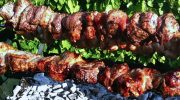
The cooking process takes between 90 minutes and three hours, depending on the meat type and fire intensity. Souvla uses lamb, pork, or chicken, with lamb being the most traditional choice for major celebrations.
Ancient Roots and Cultural Development
The tradition of cooking meat on skewers in Cyprus dates back to ancient times. Archaeological evidence from the Bronze Age shows that Greeks were already using grilling racks for skewered meat before the 17th century BC. Homer mentioned meat roasted on spits in the Iliad, and later Greek writers including Aristophanes and Xenophon documented similar cooking methods.
Over centuries, this ancient practice evolved into the souvla tradition that Cypriots now associate with family gatherings and religious holidays. The dish became particularly linked with Easter celebrations, where lamb souvla serves as the centerpiece of the post-Lenten feast. By the late 20th century, souvla had become such a central part of Cypriot culture that it transformed from occasional celebratory food into a regular weekend ritual.
Characteristics That Define Souvla
The defining feature of souvla is its size and cooking method. Unlike souvlaki, which uses small meat pieces on wooden sticks, souvla features chunks the size of a medium onion or larger. The meat comes from specific cuts: traditionally the neck and shoulder of lamb, pork shoulder or neck, and chicken thighs or drumsticks. The pieces are threaded onto long metal skewers with the weight distributed evenly so the meat rotates uniformly.
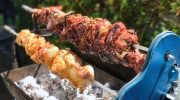
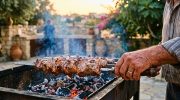
Cooking happens on a foukou, a traditional Cypriot charcoal grill equipped with a rotisserie mechanism. The skewers start positioned far from the charcoal, then gradually lower as the meat cooks. This creates a crispy, golden-brown exterior while keeping the inside tender and juicy. The marinade remains simple: olive oil, salt, oregano, and lemon. Some regional variations exist, such as Lysiotiki souvla from the village of Lysi, which adds specific local spices.
Details That Make It Memorable
Souvla cooking is traditionally a male-dominated activity in Cyprus. The person tending the grill must monitor the charcoal temperature constantly, turn the skewers at the right intervals, and know exactly when to lower the meat closer to the coals. Many Cypriot families own a foukou in their backyard specifically for souvla. Modern versions include electric motors to rotate the skewers automatically, though traditional cooks still turn them by hand.

The smell of charcoal-roasted meat can permeate entire neighborhoods during peak cooking times. Cypriots often prepare multiple types of meat simultaneously, with chicken taking the shortest time and lamb requiring the longest. The final step involves sprinkling fresh lemon juice and additional oregano over the finished meat.
The Cooking Process and Serving Tradition
Preparing souvla requires advance planning and patience. The meat marinates for two to twelve hours before cooking. Cooks light the charcoal about an hour before placing the meat on the skewers, waiting until the coals turn white-hot. The skewers must be loaded carefully, alternating fatty and lean pieces for even flavor distribution. During cooking, the meat needs regular basting with the marinade.
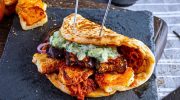
The outside should develop a slight char while the inside remains springy to the touch. Testing for doneness involves the fork twist test for lamb and pork, and checking for clear juices in chicken. Souvla is never served alone. It comes with warm Cypriot pita bread, fresh horiatiki salad, tzatziki or talattouri, halloumi cheese, and roasted potatoes. Many families also prepare traditional sides like koupepia and makaronia tou fournou.
Religious and Festive Significance Today
Souvla holds special importance during Orthodox Easter and Christmas in Cyprus. Easter Sunday sees entire communities preparing lamb souvla to celebrate Christ’s resurrection after 40 days of Lenten fasting. The tradition connects to the ancient Jewish Passover custom of sacrificing lambs, which early Christians adopted. On Easter, families gather in backyards and village squares, with the aroma of outdoor barbecues filling the air across the island.
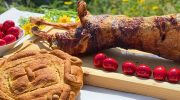
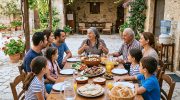
Christmas celebrations also feature souvla, typically made with pork or chicken. The dish represents more than just food in Cypriot culture. It symbolizes hospitality, community gathering, and the island’s connection to its Mediterranean and Orthodox Christian heritage. The slow cooking process encourages extended socializing, with friends and family spending hours together while the meat roasts.
Experiencing Souvla in Cyprus
Visitors can experience souvla in several ways throughout Cyprus. Traditional tavernas serve it year-round, though the most authentic versions appear during Easter and other major celebrations.
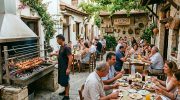
Some restaurants offer mini-souvla portions or souvla sandwiches in pita for those wanting a quicker meal. The best experience comes from attending a home gathering or village festival where families prepare souvla in the traditional manner. Watching the entire process, from lighting the charcoal to the final serving, provides insight into Cypriot social culture.
Souvla Sundays have become a widespread tradition, with many Cypriots dedicating their weekend afternoons to this ritual. Beach areas and countryside locations often feature outdoor grills where groups gather for souvla picnics.
A Culinary Symbol of Cypriot Identity
Souvla represents the intersection of Cyprus’s ancient heritage and contemporary culture. It demonstrates how traditional cooking methods survive and thrive in modern times, adapted but not fundamentally changed. The dish embodies core Cypriot values: taking time for what matters, prioritizing family and community, and maintaining connections to the past while embracing the present.
Every time Cypriots prepare souvla, they participate in a ritual that links them to thousands of years of island history. The simplicity of the ingredients, the patience required for proper cooking, and the communal nature of the meal all reflect the Cypriot approach to life. For visitors, understanding souvla means understanding a fundamental aspect of what makes Cyprus distinctive in the Mediterranean world.