Cyprus coastal monuments showcase classical architecture where ancient stone columns rise against Mediterranean horizons, creating dramatic vistas that combine archaeological significance with natural beauty. The most impressive examples include the Greco-Roman theatre at Kourion perched on coastal cliffs 70 meters above sea level, the Sanctuary of Apollo Hylates with its partially restored temple columns, and the Tombs of the Kings in Paphos featuring underground burial chambers decorated with Doric pillars.
These structures date primarily from Hellenistic and Roman periods between the 4th century BC and 4th century AD, when Cyprus prospered under successive empires. The architectural elements follow classical Greek orders with refinements from Roman building techniques, creating monuments that have withstood earthquakes, invasions, and two millennia of Mediterranean weather.
The coastal positioning of these sites provided strategic advantages for ancient communities while offering modern visitors spectacular combinations of archaeological ruins and sweeping sea views that define Cyprus as a destination where history meets landscape.
Kourion’s Clifftop Theatre and Coastal Views
The ancient theatre at Kourion was built in the 2nd century BC and extended during the 2nd century AD to accommodate 3,500 spectators. The structure occupies the most southern part of the city, positioned on dramatic coastal cliffs that provided both practical acoustics and majestic views toward the Mediterranean. The semicircular seating arrangement carved from limestone faces the sea, creating a natural backdrop that modern performances still exploit during summer cultural events.
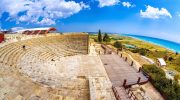
The theatre’s restoration in the 20th century returned it to functional use for open-air musical and theatrical performances, making it one of Cyprus’s most popular settings for high-quality cultural events. The restored stone seating, stage area, and supporting arches demonstrate Roman engineering adapted to Cypriot coastal terrain. To the left and right of the stage, two arched pathways once allowed viewers to enter, architectural features that managed crowd flow while maintaining structural integrity against seismic activity.
The site overlooks the fertile Kouris River valley that sustained the ancient city kingdom from its 11th century BC foundation through the devastating 365 AD earthquake that destroyed most structures. Archaeological evidence suggests Kourion’s inhabitants believed themselves descendants of Greek Argos colonists, a connection reflected in building styles that replicate mainland Greek architecture adapted to Cyprus’s volcanic geology and limestone resources.
The Sanctuary of Apollo Hylates
Located 2.5 kilometers west of Kourion along the ancient Paphos road, the Sanctuary of Apollo Hylates represents one of Cyprus’s most important religious centers where Apollo was worshiped as god of the woodlands from the 8th century BC to the 4th century AD. The sanctuary’s coastal proximity allowed it to function as a landmark for ships approaching Cyprus, while its inland positioning provided sacred distance from the busy port activities of Kourion itself.
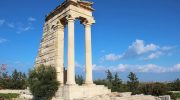
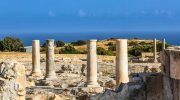
The temple features a four-column porch with unfluted columns of simplified Corinthian architecture placed on a modular platform. This prostyle temple design, added during Emperor Trajan’s reign around 101 AD, replaced earlier structures that archaeological investigation dates to the 8th and 7th centuries BC. The columns that survive today, partially restored in 1980, demonstrate Roman architectural modifications to earlier Hellenistic foundations, creating a layered history visible in the standing stones.
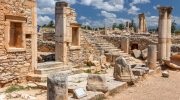
The sanctuary complex includes the Temple of Apollo at the end of a sacred processional route, a palaestra with central courtyard surrounded by columns where athletes practiced, Roman bath complexes with five separate rooms, and north and south buildings possibly used for displaying votive offerings or accommodating pilgrims. A wall surrounded the entire precinct with entrances through the Kourion Gate and Paphos Gate, controlling access to the sacred space while collecting terracotta figurines and pottery that pilgrims left as offerings from the 5th century BC through the Roman period.
Tombs of the Kings and Underground Architecture
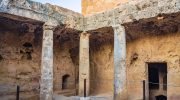
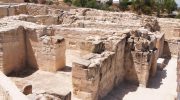
The Tombs of the Kings in Paphos, despite their name, served as burial sites for Paphian aristocracy and high-ranking officials rather than actual royalty. These 4th century BC underground tombs carved from solid rock demonstrate architectural ambitions that transformed functional burials into monumental statements. Some tombs feature impressive Doric columns supporting underground atriums, creating spaces that replicate above-ground classical architecture in subterranean contexts.
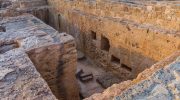
The columns carved from bedrock follow classical proportions with fluted shafts and simple capitals, demonstrating stonemasons’ mastery of architectural orders typically executed in assembled blocks. The underground courtyards surrounded by columns created open-air spaces within earth, allowing light and air to reach burial chambers while providing architectural grandeur that proclaimed family status. Frescoed walls once decorated some tombs, though few paintings survive two millennia of exposure and vandalism.
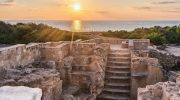
The necropolis location approximately two kilometers north of Paphos Harbor placed it outside the ancient city proper, following Greek and Roman customs that banned burials within city walls. The coastal setting provided impressive views across the Mediterranean while the rocky terrain offered suitable geology for excavating large underground chambers. The proximity to the sea also connected the deceased symbolically to Aphrodite, whose cult centered at nearby Palaipaphos.
Paphos Archaeological Park Monuments
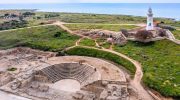
The Kato Paphos Archaeological Park preserves multiple coastal monuments including four Roman villas with exceptional mosaic floors, an Odeon theatre carved from limestone, ruins of the Saranta Kolones Fortress, and remains of early Christian basilicas. The site’s coastal location made it the capital of Roman Cyprus from 58 BC onward, concentrating administrative, religious, and cultural functions in structures that exploited the dramatic meeting of land and sea.
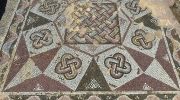
The House of Dionysos, named for the god featured in several mosaics, occupies 2,000 square meters with 556 square meters covered in mosaic floors depicting mythological scenes, vintage activities, and hunting. The structure surrounds a central courtyard or atrium that functioned as the architectural and social core. Built in the late 2nd century AD, the villa was destroyed in 4th century earthquakes but its floor mosaics survived protected under accumulated debris.
The Odeon, a 2nd century Roman amphitheatre, features 12 rows of limestone seating built in a crescent around a central stage. The structure hosts contemporary performances during summer months, continuing its original function as a public entertainment venue. The positioning near the harbor allowed residents and visiting merchants to attend theatrical performances and musical concerts that reinforced Paphos’s status as a cultural center within the eastern Roman Empire.
Classical Architectural Elements and Building Techniques
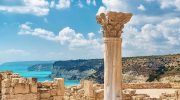
The columns at these coastal sites follow classical Greek orders with local adaptations. Doric columns, the oldest and simplest order, appear in the Tombs of the Kings with characteristic fluted shafts and plain capitals. Corinthian columns at the Sanctuary of Apollo Hylates demonstrate the most ornate classical style, though Cypriot versions simplified the elaborate acanthus leaf capitals typical of mainland examples.
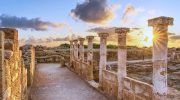
Roman builders introduced new construction techniques including concrete foundations, brick-faced walls, and vaulted ceilings that allowed larger interior spaces without columns. The combination of Greek architectural vocabulary and Roman structural innovations created hybrid styles visible across Cyprus coastal monuments. The use of local limestone provided excellent carving properties while creating distinctive golden hues that reflect Mediterranean light.
The survival of these structures through repeated earthquakes demonstrates both skillful engineering and fortunate geology. Cyprus sits on the boundary between the Anatolian and African tectonic plates, creating seismic activity that destroyed many ancient structures. The monuments that remain represent the strongest construction, often rebuilt after earthquake damage using salvaged materials and traditional techniques that maintained architectural continuity across centuries of occupation.
Contemporary Significance and Tourism Value
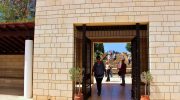
These coastal monuments attract hundreds of thousands of annual visitors who come to experience where ancient Mediterranean civilization meets natural beauty. The combination of archaeological significance, architectural achievement, and dramatic coastal settings creates unique tourism products that differentiate Cyprus from competitors offering only beaches or only ruins. The functioning ancient theatres at Kourion and the Paphos Odeon demonstrate how classical structures can serve contemporary culture while preserving historical integrity.
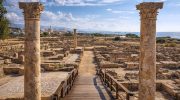
UNESCO World Heritage designation for Paphos archaeological sites in 1980 recognized the outstanding universal value of these monuments, bringing international attention and conservation support. The designation requires maintaining authenticity while allowing public access, a balance that challenges site managers attempting to protect fragile stonework from millions of footsteps annually. Modern visitor infrastructure including walkways, informational signage, and shade structures attempts to enhance experiences without compromising archaeological values.
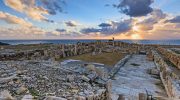
The enduring power of classical architecture positioned against eternal seas connects modern visitors to ancient experiences of beauty, power, and mortality that transcend specific cultures or historical periods. The columns rising above blue waters represent human aspirations toward permanence expressed through stone that outlasts empires, religions, and the individuals who conceived these monuments millennia ago.